Ecuador and the Galápagos with a week-long cruise
Ten days among the Andes and volcanoes, then seven days on board among the remotest Galápagos islands: Genovesa, Fernandina, Isabela, Española.
- Quito
- Cotopaxi
- Chimborazo
- Guayaquil
- Galápagos
- Genovesa
- Fernandina
- Española
Day by day
- Day 1
Arrival in Quito
This seventeen-day trip combines the Andes of Ecuador with a week-long cruise in the Galápagos: first Quito, Otavalo, the Cotopaxi and Chimborazo volcanoes, the Quilotoa lagoon, Baños and the colonial city of Cuenca, then seven days on a boat among Genovesa, Isabela, Fernandina, Floreana, Española and San Cristóbal.
Before you go: Italian citizens can enter Ecuador without a visa for tourism for up to 90 days, with a passport valid for at least six months from arrival. For the Galápagos you also need travel health insurance, the Transit Control Card and the park entry fee. Other nationalities should check their own rules. The United Kingdom advises against all but essential travel to the coastal provinces, including Guayas with Guayaquil, except airport transit, and within 20 kilometres of the border with Colombia; in November 2026 the state of emergency was extended in eight provinces, including Pichincha, with more police and soldiers on the streets. This trip does not enter the areas advised against: in Guayaquil you only pass through the airport, arriving and leaving by plane.
You arrive in Quito, the capital, at about 2,850 metres. Reach the centre by booked taxi: the airport is outside the city, about an hour away. Rest and, if you have the energy, take a short walk near your accommodation.
Sleep in Quito, for two nights.
Practical tip: you feel the altitude straight away, so on the first day walk slowly, drink plenty of water and limit alcohol; if you have health problems, ask your doctor for advice before you travel.
- Day 2
Quito's historic centre and the Mitad del Mundo
Today you discover the capital, one of the most beautiful colonial cities in South America.
In the morning walk through the historic centre, one of the first places to be declared a UNESCO World Heritage Site. Start at the Plaza Grande, with the government palace and the cathedral, then go into the Compañía church, covered in gold inside, and the great convent of San Francisco, with its stone square. Continue along La Ronda, a narrow street with wooden balconies and small workshops. Climb up to the Basílica del Voto Nacional too, a Gothic church where tortoises, iguanas and other animals of Ecuador take the place of gargoyles. Check prices and times.
In the afternoon go north of the city to the Mitad del Mundo, the complex with the monument marking the line of the equator. Take a photo with one foot in each hemisphere and visit the small museums on the culture of the country. Check prices and times.
At sunset, if the sky is clear, ride the TelefériQo, the cable car that climbs the slopes of Pichincha volcano, to see Quito spread out in the valley among the mountains. Check prices and times.
In the evening have locro de papa for dinner, the potato soup with cheese and avocado.
Sleep in Quito.
Practical tip: in the city use only booked or registered taxis and do not accept drinks from strangers, because the United Kingdom reports express kidnappings and drugged drinks.
- Day 3
Otavalo and the Imbabura valley
Today you head north, among lakes, volcanoes and indigenous villages.
In the morning leave Quito along the Pan-American Highway: after about two hours on the road, among maize fields with Imbabura volcano in the background, you reach Otavalo. Its market is one of the largest in South America. At its heart is the Plaza de los Ponchos, full of stalls selling woollen textiles, blankets, hammocks, bags and jewellery. The market runs every day, but on Saturdays it is much bigger and spreads into the surrounding streets.
Most of the sellers are Kichwa Otavalo people, famous for centuries as weavers and traders. The women wear embroidered white blouses and golden necklaces, the men a long plait and a hat. Bargain calmly and with a smile: it is part of the game.
In the afternoon visit a weaving workshop in one of the nearby villages, where you see how wool is spun and dyed, or walk around Cuicocha lagoon, inside a crater, with two islets in the middle. Check prices and times.
In the evening return to Quito, always travelling by day.
Sleep in Quito.
Practical tip: bring small dollar notes, because large ones are often refused, and keep your backpack on your front in the market crowds.
- Day 4
Cotopaxi National Park
Today you travel down the valley that Alexander von Humboldt called the avenue of the volcanoes.
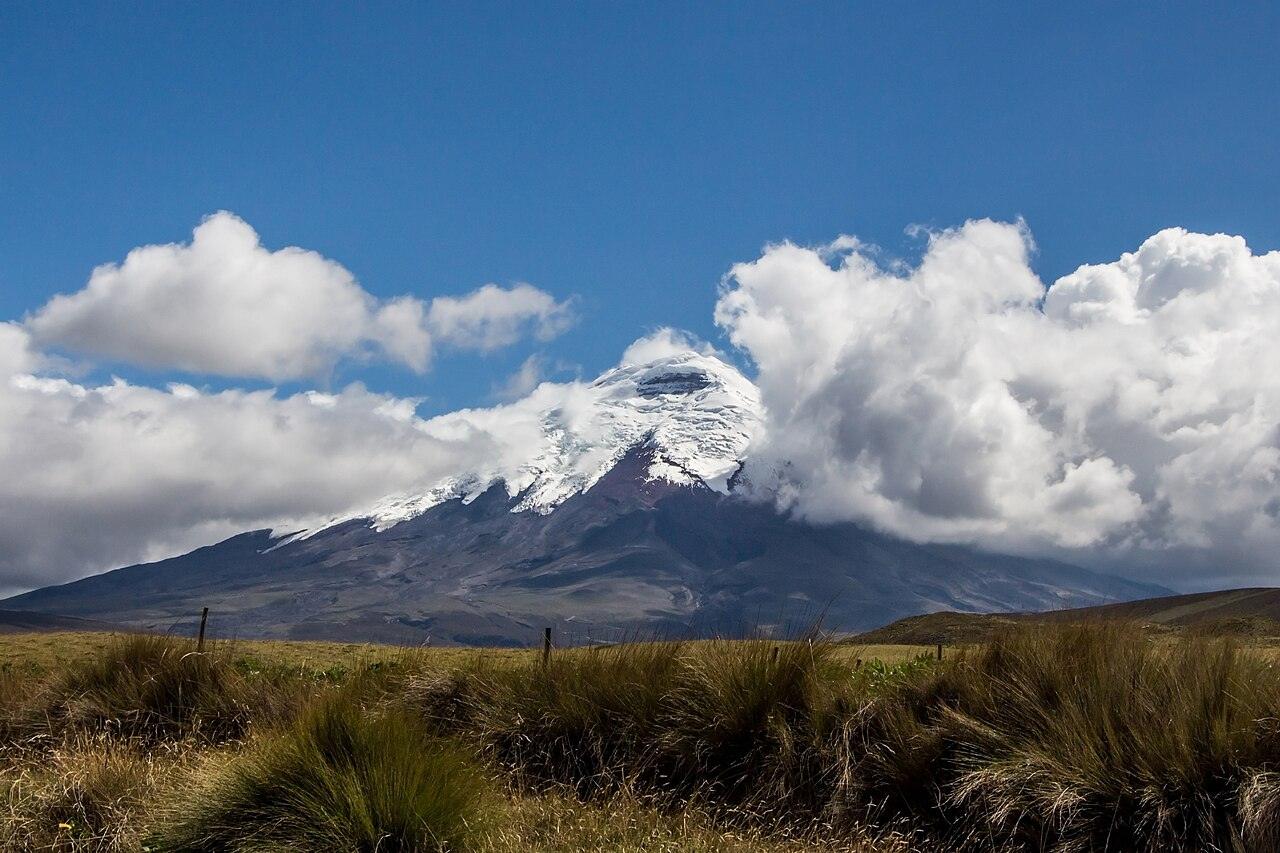
In the morning head south and enter Cotopaxi National Park. The volcano, 5,897 metres high, has an almost perfect cone covered by a glacier, which on clear mornings can be seen from afar above the páramo, the high-altitude grassland. Check prices and times, and before you set off look at the volcano's status in the bulletins of the Geophysical Institute of Ecuador, because Cotopaxi is active and some areas of the park may be closed.
Walk around Limpiopungo lagoon, at about 3,800 metres, an easy loop of about an hour. Watch the birds on the water, the wild horses in the tall grass and, with a bit of luck, the Andean condor. If you feel well, climb with a guide towards the refuge, on the steep path of volcanic sand: from there you see the glacier up close.
The United Kingdom points out that around glaciated volcanoes the risk of mudflows is high: always follow the instructions of the authorities.
In the afternoon go down towards Latacunga or stop at a farm near the park, with the fire lit in the evening.
Sleep near Cotopaxi or in Latacunga.
Practical tip: at this altitude the sun burns even through the clouds and the wind is cold: bring sun cream, sunglasses, gloves and a waterproof jacket.
- Day 5
The Quilotoa lagoon
Today you reach a turquoise lake inside the crater of a volcano.
In the morning take the road that climbs west among cultivated fields, pastures and Kichwa villages. You pass through Zumbahua, a highland town with a Saturday market, and Tigua, the village of the painters who paint colourful scenes of Andean life on sheepskin. The journey takes about two hours from Latacunga.
You arrive at the village of Quilotoa, at about 3,900 metres, run by the local community, which asks for an entry contribution. Check prices and times. From the viewpoint you look down into the crater, about three kilometres wide, with the lagoon shifting from green to blue depending on the light and the clouds.
Walk down to the shore on a steep, sandy path: the descent takes about half an hour, the climb back much longer, because of the altitude. On the shore sit in silence and look at the crater walls. If you want to walk more, follow the rim trail for a stretch, with views over the lake and the distant volcanoes.
In the afternoon return towards the valley and continue to Baños, passing through Ambato.
Sleep in Baños.
Practical tip: if you have a strong headache, nausea or breathlessness that does not ease with rest, do not go any higher and descend: these are signs of altitude sickness.
- Day 6
Baños, waterfalls and hot springs
Today you ride down among the waterfalls of the Pastaza valley.
Baños is a small town at about 1,800 metres, at the foot of Tungurahua volcano, in a green valley full of water. After the days at altitude, the warmer air will do you good.
In the morning hire a bicycle and ride the Ruta de las Cascadas, the road that runs down the Pastaza river towards the Amazon. It is mostly downhill, with tunnels and waterfalls tumbling from the valley walls. Stop at the Manto de la Novia waterfall and ride on to the village of Río Verde. From here a path goes down to the Pailón del Diablo, one of the most powerful waterfalls in the country, which crashes with a tremendous roar into a gorge. Stairs and walkways take you very close to the water: you will get wet. Check prices and times. To get back, load the bike onto a pick-up.
In the afternoon relax in the public thermal pools, with hot water coming down from the volcano. Check prices and times.
In the evening stroll through the centre and try melcocha, the sugar cane toffee that sellers pull by hand from a hook in the shop doorways.
Sleep in Baños.
Practical tip: the United Kingdom points out that rafting, zip lines and other adventure sports have caused accidents: use only licensed operators and check that your insurance covers them.
- Day 7
Chimborazo, the highest mountain in Ecuador
Today you climb onto the slopes of the highest volcano in the country.
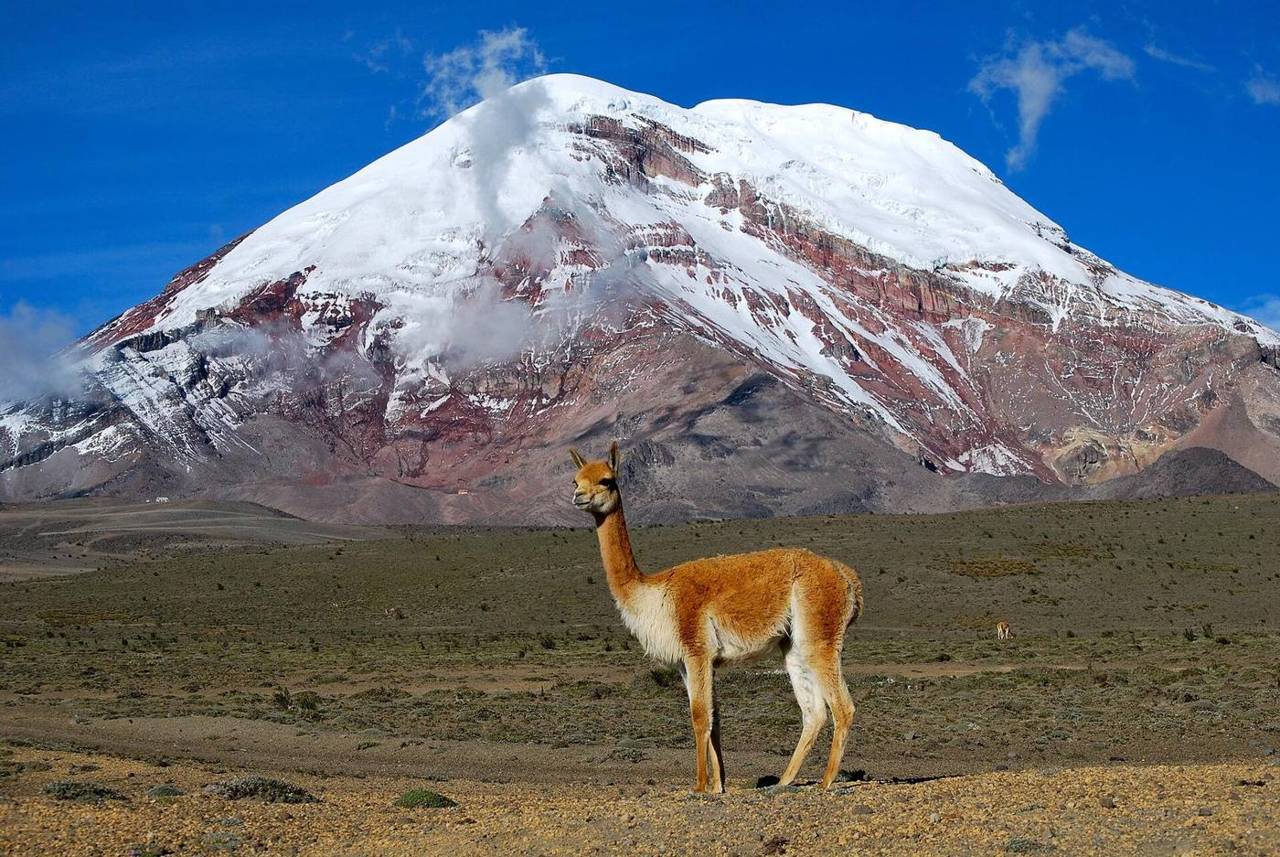
In the morning leave Baños and head south to Riobamba, then climb into the Chimborazo Fauna Production Reserve. Chimborazo rises above 6,200 metres and is covered in glaciers. Because of the shape of the Earth, which is wider at the equator, its summit is the point on the planet's surface furthest from its centre. Check prices and times.
In the reserve you see the bare, windswept páramo and herds of vicuñas, wild relatives of the llama, with sand-coloured coats. A dirt road climbs to the first refuge, at around 4,800 metres. From here, if you feel well, walk slowly with a guide towards the second refuge, a little higher, on a path of sand and gravel. At this altitude every step is heavy: stop often and turn back if you have a strong headache or breathlessness.
In the afternoon go down to Riobamba, a city on an Andean plain, with squares and churches, at the foot of the volcano.
In the evening have a hot dish for dinner, such as sopa de quinua or cuy, roast guinea pig, a typical dish of the Andes.
Sleep in Riobamba.
Practical tip: go up Chimborazo only after a few days at altitude, never on your first day, and bring warm clothes even if the sun is shining in Riobamba.
- Day 8
Ingapirca and arrival in Cuenca
Today you head south to the most elegant city of the Ecuadorian Andes.
In the morning leave Riobamba along the Pan-American Highway, which runs through farmed valleys, villages and mountains. The journey is long and takes several hours: leave early and travel by day, because the United Kingdom advises against road journeys after dark.
Halfway, stop at Ingapirca, in Cañar province, the largest Inca site in Ecuador. First the Cañari and then the Inca lived here, and the Inca built the Temple of the Sun, an oval structure of squared stones fitted together without mortar, on a hill above the valley. Walk among the remains of houses, storehouses and channels, and visit the small museum. Check prices and times.
In the afternoon continue to Cuenca, at about 2,500 metres, the third city of the country, crossed by the Tomebamba river. Its historic centre is a UNESCO World Heritage Site. Take a first walk along the river, below the colonial houses perched on the high bank known as the Barranco.
In the evening have dinner in the centre and try mote pillo, white maize with eggs and onion, typical of Cuenca.
Sleep in Cuenca, for two nights.
Practical tip: at Ingapirca the wind is strong and the sun intense: bring a jacket, a hat and water.
- Day 9
Cuenca and Cajas National Park
Today you discover Cuenca and the mountain lakes of Cajas.
In the morning go to Cajas National Park, west of the city, on the road that climbs into the mountains. The park is a páramo plateau, above 3,000 metres, dotted with hundreds of lakes and lagoons, with groves of polylepis, low trees with red bark that peels like paper. Walk with a guide on one of the trails around Toreadora lagoon, among grass, rocks and the small flowers of the páramo. Check prices and times. The weather changes quickly: mist, rain and sun alternate within a few hours.
In the afternoon return to the city. Visit the new cathedral, with the large blue domes you can see from all over the centre, and Parque Calderón in front of it. Pass by the flower market, beside the Carmen church, and a workshop making toquilla straw hats, the ones the world calls Panama hats but which come from Ecuador. The traditional weaving of the toquilla straw hat is on UNESCO's list of intangible heritage. Check prices and times.
In the evening pack your bags for the Galápagos.
Sleep in Cuenca.
Practical tip: after Cajas do not continue on the road towards the coast, which goes down into Guayas province: return to Cuenca the same way.
- Day 10
The flight to the Galápagos and boarding
Today you leave the mainland and go aboard for your week-long cruise.
In the morning go to Cuenca airport. Take a flight that connects with the flight to Baltra, changing planes in Guayaquil or Quito without leaving the airport; check which connections are available. Do not go to Guayaquil by road, because you would cross Guayas province. Before the flight to the islands collect the Transit Control Card at the desk of the Galápagos Governing Council, or apply online on the official portal, where you can also check the cost. Your luggage goes through a biosecurity check.
At Baltra you pay the Galápagos National Park entry fee: according to the Galápagos Governing Council, it is 200 dollars for non-resident foreign adult visitors. The islands are one hour behind the mainland. The United Kingdom reports flooding on Santa Cruz, with a state of emergency declared on 31 October and disruption on the way to Baltra airport: confirm flights and transfers.
The naturalist guide takes you to the boat. In the afternoon, depending on the itinerary, you visit the Santa Cruz highlands, where giant tortoises live in the wild. Always stay at least two metres from the animals. In the evening listen to the briefing on the park rules.
Sleep on board.
Practical tip: the park assigns each boat a fixed itinerary: before you book, check which islands your cruise really visits.
- Day 11
Genovesa, the island of birds
Today you are at Genovesa, an island in the north of the archipelago, formed by the rim of a crater partly flooded by the sea.
During the night the boat sails for a long time and crosses the line of the equator. In the morning you enter Darwin Bay, the great bay inside the crater, and land on the white sand beach. The trail passes among low bushes where red-footed boobies nest, the only boobies that perch in trees, and frigatebirds, with the male inflating his large red throat pouch to attract females. You also see swallow-tailed gulls, with a red ring around the eye.
Around midday snorkel along the crater wall: tropical fish, rays, sea lions and sometimes hammerhead sharks passing in the depths, although they are never guaranteed.
In the afternoon climb the rock steps of El Barranco, also called Prince Philip's Steps, up to a lava plateau. Here live Nazca boobies, colonies of storm petrels that fly in swarms above the rocks and the short-eared owl, which hunts these very birds by day.
Sleep on board.
Practical tip: the crossing to Genovesa is one of the longest and roughest of the cruise: take something for seasickness before dinner.
- Day 12
Isabela, the west coast
Today you reach the west coast of Isabela, the largest island, formed by six volcanoes joined by lava flows.
The cold, rich waters arriving from the west bring very abundant marine life here. While sailing watch the sea: sometimes you see dolphins and, at certain times of year, whales. Always keep the distances the park requires: at least two metres from animals on foot and in the water, four metres in a dinghy or kayak.
In the morning snorkel or take a dinghy ride along the cliffs of Punta Vicente Roca, at the foot of an old volcano. Sea turtles, sea lions and Galápagos penguins swim here, and sometimes you meet the ocean sunfish, a huge, flat fish.
In the afternoon you land at Tagus Cove, a sheltered bay where sailors of the past carved the names of their ships into the rocks: the oldest inscriptions are almost two centuries old. A trail climbs through dry vegetation to the rim of Darwin Lake, a saltwater lake inside a crater, with views over the volcanoes of Isabela and the sea. Along the trail look for Darwin's finches, moving among the bushes.
Sleep on board.
Practical tip: the water in the west is cold even in the warm months: ask the boat for a wetsuit and always wear it for snorkelling.
- Day 13
Fernandina and Urbina Bay
Today you visit Fernandina, the youngest island and one of the most active in the archipelago.
In the morning you land at Punta Espinoza, a tongue of black lava reaching into the sea. Here lives one of the largest colonies of marine iguanas: hundreds of dark iguanas, piled on top of each other to warm up in the sun, which now and then sneeze to expel the salt from the seawater. Beside them you see flightless cormorants, with tiny wings drying in the wind, and sea lions lying on the lava. Look at the lava cacti too, pioneer plants that grow on the most recent flows. Walk only on the marked trail and be careful not to step on the iguanas, which blend in with the rocks.
In the afternoon the boat crosses the Bolívar Channel and you return to Isabela, to Urbina Bay. Here, in the 1950s, the seabed rose suddenly and lifted a stretch of coral reef out of the water. On the trail you see large yellow land iguanas and sometimes giant tortoises.
In the evening, on deck, watch the sunset behind Fernandina's volcano and listen to the guide explaining how the islands were born from volcanoes, with the youngest in the west and the oldest in the east.
Sleep on board.
Practical tip: at Punta Espinoza the landing is dry, onto rocks: wear closed shoes with a good sole for walking on the sharp lava.
- Day 14
Floreana, the whalers' post office and flamingos
Today you are at Floreana, the island with the most curious history in the archipelago.
In the morning you land at Post Office Bay, where from the late eighteenth century whalers left letters in a wooden barrel, so that ships heading home would carry them to their destination. The tradition continues: leave a postcard without a stamp and take one addressed near your home, to deliver by hand. It is one of the nicest ways to take home a memory of the islands.
Then snorkel at the Devil's Crown, the remains of a volcanic cone rising from the sea. Among the rocks swim shoals of tropical fish, sea turtles, sea lions and sometimes white-tip reef sharks. The currents can be strong: always follow the guide.
In the afternoon you land at Punta Cormorant, on a greenish beach coloured by olivine crystals in the sand. The trail leads to a salt lagoon where pink flamingos often live, and then to another beach of fine white sand, where rays and sea turtles swim close to the shore. Do not go into the water where the guide forbids it.
Sleep on board.
Practical tip: always carry a reusable water bottle: on the islands no rubbish is left behind and single-use plastic is restricted.
- Day 15
Española, boobies and albatrosses
Today you land on Española, one of the oldest islands in the archipelago.
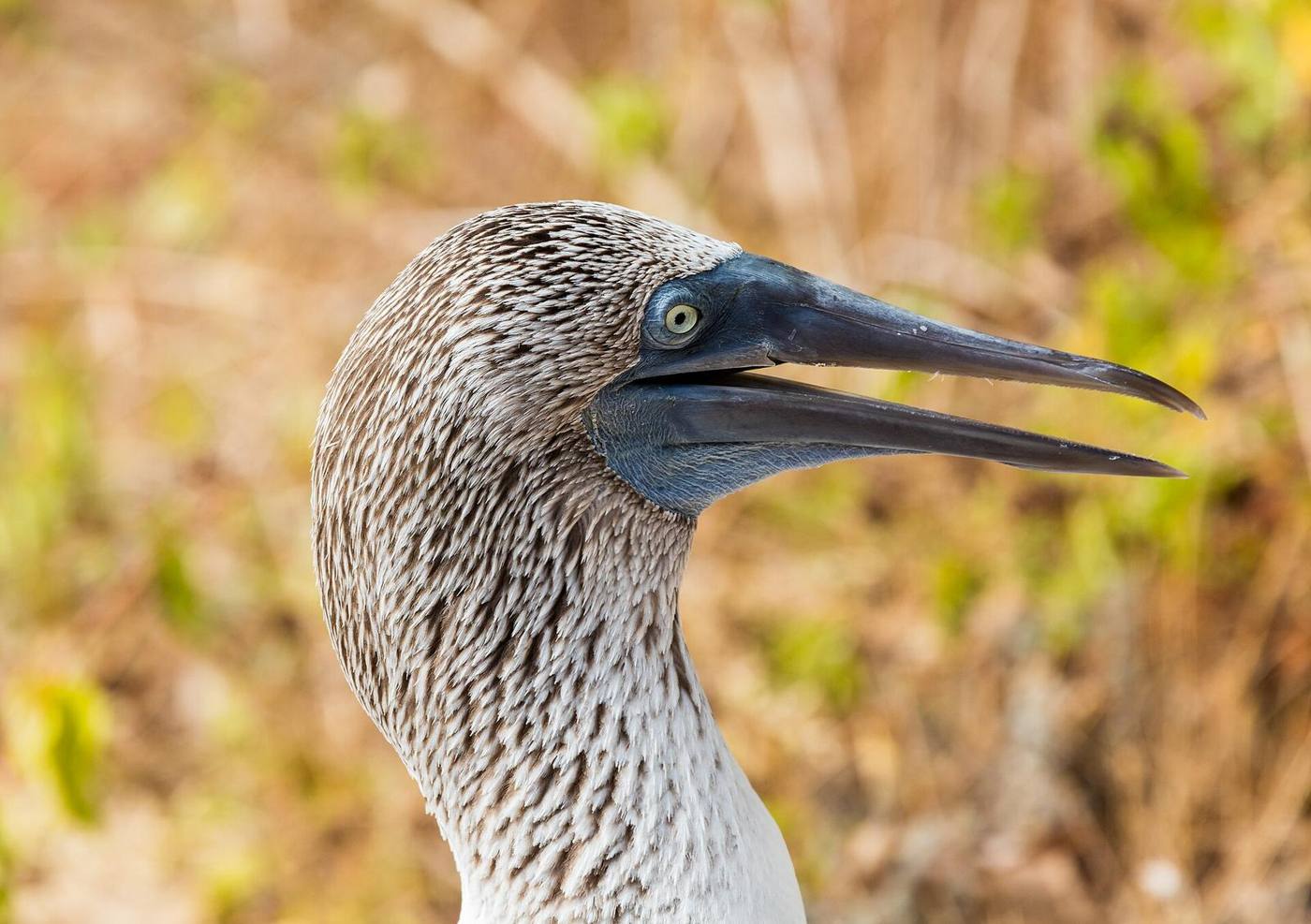
In the morning walk the rocky trail of Punta Suárez, among colonies of seabirds. You will see blue-footed boobies doing their courtship dance, lifting their feet one after the other, Nazca boobies, swallow-tailed gulls and the marine iguanas of Española, with red and green patches. From about April to December there are also waved albatrosses, which nest almost only here and take off from the cliffs. At the end of the trail there is a blowhole, where the waves shoot water high between the rocks.
In the afternoon land on the white beach of Gardner Bay, full of sea lions sleeping on the sand. Snorkel near the islets, with tropical fish and sometimes young sea lions playing around you. Do not touch them and do not go near the large males, which defend their stretch of beach.
Along the beach look out for the Española mockingbird, a curious bird that comes up to visitors: do not give it food or water.
In the evening, on deck, look at the stars far from the lights.
Sleep on board, for your last night on the boat.
Practical tip: photos are taken without flash, which is banned in the park: use a zoom lens instead of getting closer to the animals.
- Day 16
San Cristóbal and Kicker Rock
Today is the last day of the cruise, around San Cristóbal, the island where Charles Darwin landed in 1835.
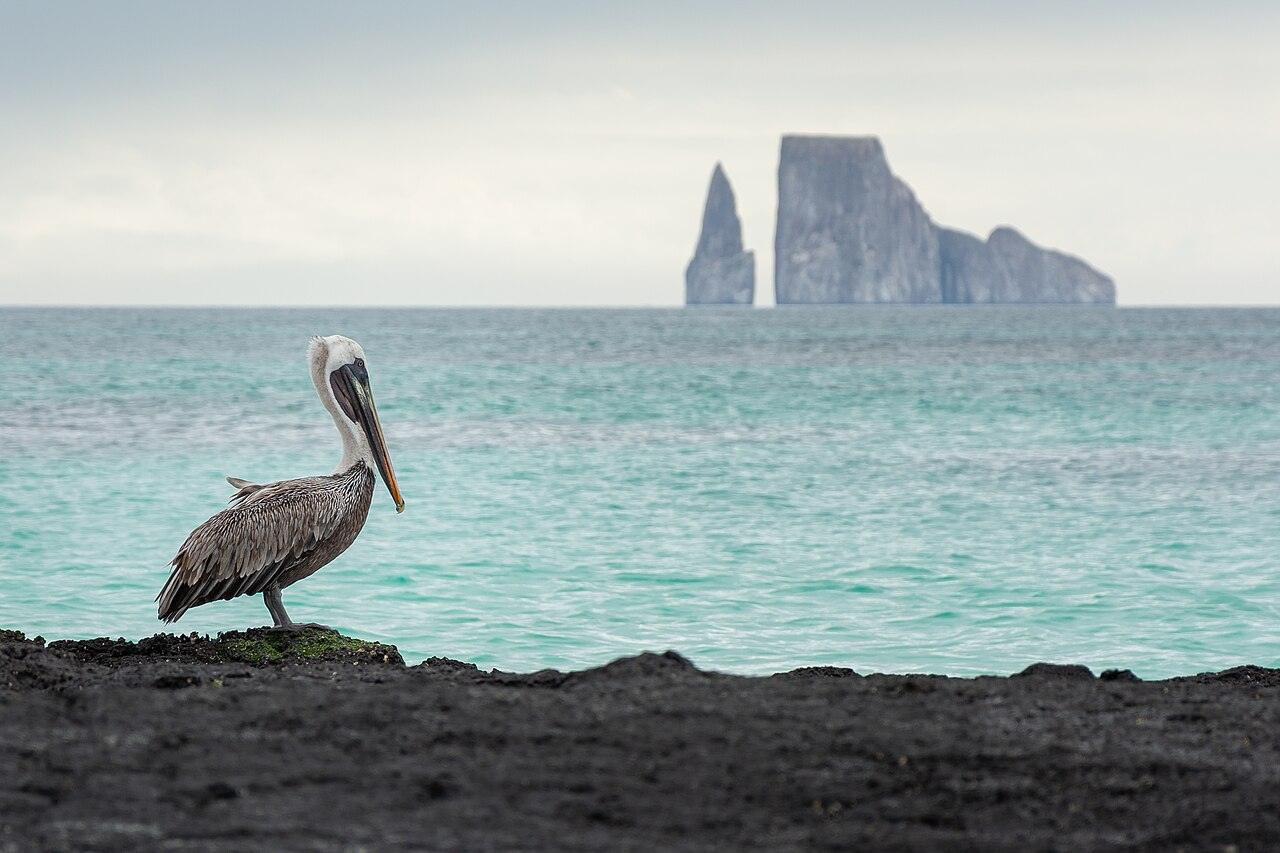
In the morning the boat approaches León Dormido, also called Kicker Rock, a rocky islet rising straight out of the sea, split in two by a narrow channel. Here you snorkel along the walls: you see sea turtles, rays, shoals of fish and sometimes white-tip reef sharks or hammerheads in the deeper water. Sharks are never guaranteed, and the currents can be strong: follow the guide.
Depending on the itinerary, you then land at Cerro Brujo, a long white beach with sea lions and herons, or in another bay on the coast.
In the afternoon you reach Puerto Baquerizo Moreno, the capital of the Galápagos province. Visit the National Park interpretation centre, which tells the natural and human history of the islands, and walk up Cerro Tijeretas, the hill of the frigatebirds, with a view over the bay. Check prices and times. On the seafront sea lions sleep on the benches and on the harbour beach.
In the evening say goodbye to the crew and the guide, leaving a tip if you enjoyed the service.
Sleep on board or in town, depending on the itinerary.
Practical tip: do not take sand, shells, coral or lava stones from the islands: it is forbidden and luggage is checked.
- Day 17
The flight to Guayaquil and departure
Today you leave the Galápagos and Ecuador.
In the morning go to San Cristóbal airport, close to town. At the exit check show your transit card. You fly to Guayaquil: here stay inside the airport and take your international flight the same day, without going into the city. If the connections do not allow this, return via Quito instead.
In short: in seventeen days you have seen the two souls of Ecuador. In the Andes you walked through colonial Quito, bargained among the textiles of Otavalo, passed at the foot of Cotopaxi and Chimborazo, looked at the Quilotoa lagoon, rode down among the waterfalls of Baños and saw the Inca ruins of Ingapirca and the blue domes of Cuenca. Then a week on a boat in the Galápagos: the red-footed boobies of Genovesa, the marine iguanas and cormorants of Fernandina, the penguins of Isabela, the whalers' post office on Floreana, the albatrosses of Española and Kicker Rock. The cruise is the most expensive part of the trip, but only by boat can you reach the most remote islands.
When to go: you can travel all year. From December to May the sea in the Galápagos is calmer and warmer, excellent for snorkelling. From June to November the water is colder and the sea rougher, but marine life is richer. In the Andes the driest season runs from June to September. The albatrosses of Española are there from about April to December.
Practical tip: keep a digital copy of your transit card, insurance and fee receipts until the end of the trip.
The trip of a lifetime for nature lovers: in the Galápagos animals have no fear of people. The cruise is the expensive part, but only by boat do you reach the finest islands. The park entry fee is $200. Every season works: from June to November the sea is richer but colder.
Before you go
- Documents and visa
- Passport valid for at least six months from arrival. No visa is needed for tourism for up to 90 days in a year. For the Galápagos you also need travel health insurance, the Transit Control Card, obtained before the flight, and the park entry fee. Travellers entering overland from Colombia or Peru must show an apostilled criminal record certificate.
- Health and vaccines
- Quito is at about 2,850 metres and many Andean areas are higher: ask your doctor for advice on altitude. The yellow fever vaccine is recommended for the Amazon. Protect yourself from mosquitoes on the coast. Drink bottled water. Emergencies: 911.
- Money and payments
- US dollar. Bring small notes, because large ones are often refused; in villages and on some Galápagos islands there are few cash machines.
- Power sockets
- Type A and B, 120 volts: you need an adapter, and check that your devices accept 120 volts.
- Time zone
- UTC-5 on the mainland, UTC-6 in the Galápagos, all year.
- Safety
- The United Kingdom advises against all but essential travel to the coastal provinces of Esmeraldas, Manabí, Santa Elena, Guayas (including Guayaquil, except airport transit), El Oro, Los Ríos and Santo Domingo de los Tsáchilas, and within 20 km of the border with Colombia (except some areas of Carchi). In November 2026 the state of emergency was extended in eight provinces, including Pichincha, and in the cantons of La Maná, Las Naves and Camilo Ponce Enríquez. Beware of express kidnappings in taxis hailed in the street and of drugged drinks. Official advice: GOV.UK.
Information checked in November 2026 for Italian and EU citizens. Rules change: always check before you travel.
Variations
Shorter: thirteen days, skipping Chimborazo and Cuenca and flying from Quito to the islands after Baños.
Longer: twenty days, adding three days in the Amazon rainforest of the upper Napo, heading down from Baños.
Frequently asked questions
How much is the park fee?
According to the Galápagos Governing Council, it is 200 dollars for foreign adult visitors not resident in Ecuador. On top of this there is the Transit Control Card, whose cost you can check on the official portal.
Can I pass through Guayaquil?
The United Kingdom advises against all but essential travel to Guayas province, except airport transit. On this trip you arrive in and leave Guayaquil only by plane and stay inside the airport; if a connection forces you to leave it, go via Quito instead.
Does one cruise really visit all these islands?
The park assigns each boat a fixed itinerary, and not all week-long cruises combine Genovesa, the west and Española. Before you book, check the list of islands and landing sites for your boat.
Indicative itinerary written by World Atlas. Before booking, check timetables, seasonal openings, documents and safety.
 7 daysModerate
Galápagos by cruise
A five-day cruise between the islands: giant tortoises, marine iguanas, boobies and snorkelling with sea lions.
 15 daysModerate
Andes, Amazon and Galápagos
Three worlds in two weeks: the volcanoes of Cotopaxi and Quilotoa, the Amazon rainforest and the Galápagos.
 17 daysModerate
Ecuador: volcanoes, the Amazon and indigenous peoples
The Avenue of the Volcanoes with Cotopaxi and Chimborazo, indigenous markets, the descent into the Amazon along the rivers and the coast at Guayaquil.