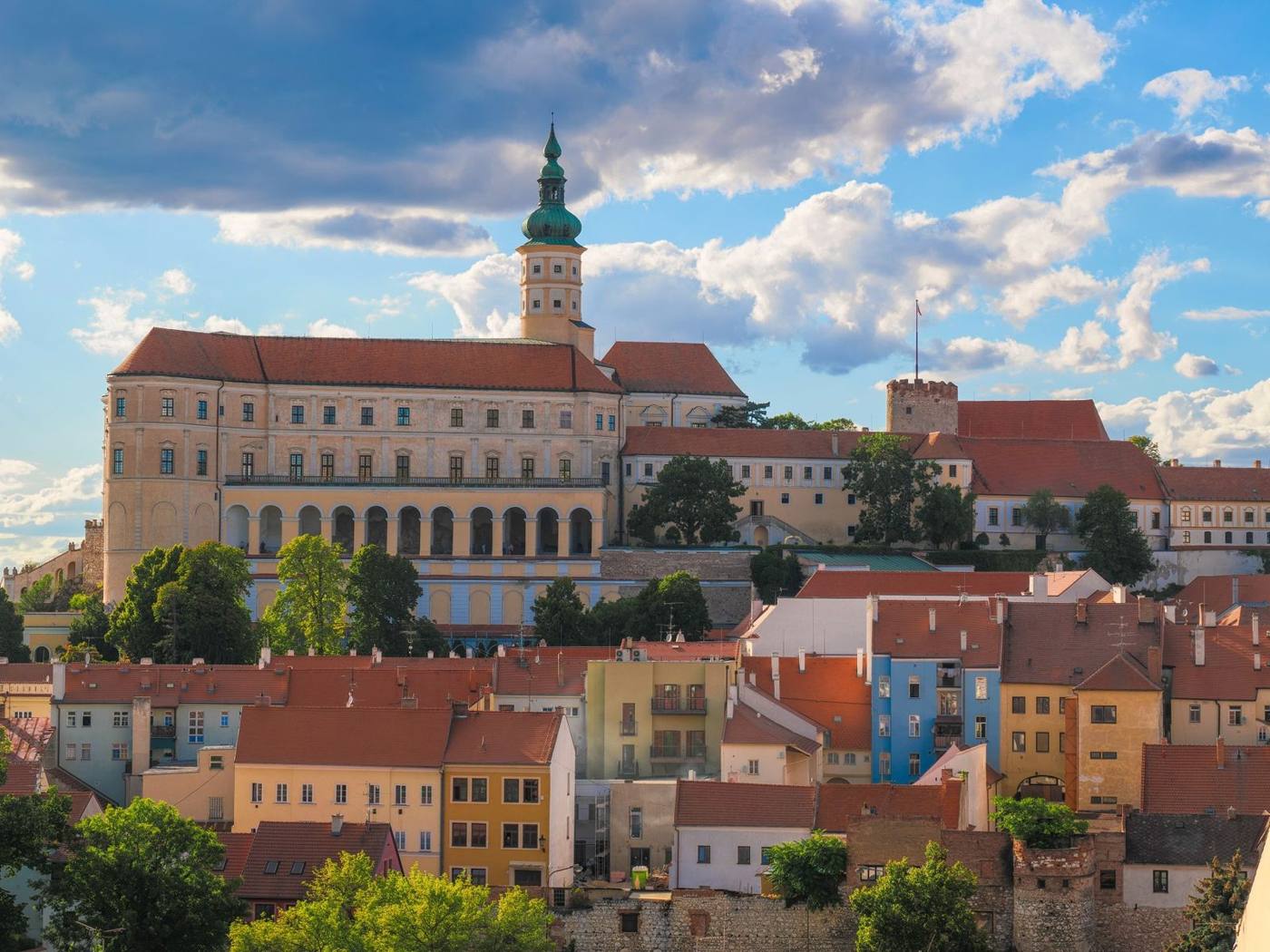
Moravian wine country
Mikulov and its limestone hills, the UNESCO Lednice-Valtice complex with castles and gardens, the cellar lanes and the city of Brno.
- Brno
- Mikulov
- Pálava
- Lednice
- Valtice
Day by day
- Day 1
Brno and Villa Tugendhat
This trip is a four day tour of South Moravia, the wine region of the Czech Republic: Brno with Villa Tugendhat, Mikulov on the limestone hills of Pálava, the UNESCO landscape of Lednice and Valtice to explore by bike and the wine cellars of the villages. It is a different Czech Republic, of white wine and gentle countryside, an hour from Vienna.
Before you go: the Czech Republic is part of the European Union and the Schengen area, but it uses the Czech koruna. Italian citizens only need a valid electronic identity card or passport; the paper identity card has not been valid for travel abroad since 3 August 2026. Other nationalities should check their own rules. The United States rates the country level 1, the lowest. The drink driving limit is zero, with no tolerance: on a wine trip, whoever drives does not drink.
Arrive in Brno by train or car. The most important visit is Villa Tugendhat, built between 1928 and 1930 by the architect Ludwig Mies van der Rohe and a UNESCO World Heritage Site. It is a modern house of glass and steel, with a large living space opening onto the garden, an onyx wall and windows that drop down into the floor. It can only be visited with a guide and a booking, often weeks ahead: buy your ticket on the official website. Check prices and times.
In the afternoon walk around the centre: Freedom Square, the Old Town Hall with the dragon hanging at the entrance, the Zelný trh market and the Cathedral of St Peter and St Paul on Petrov hill.
Sleep in Brno.
Practical tip: if you cannot get a place at Villa Tugendhat, look at the garden and the outside from the street. Tickets are sometimes released at the last minute on the official website.
- Day 2
Mikulov, Svatý kopeček and the wine cellars
In the morning head down to Mikulov, less than an hour south of Brno, almost on the Austrian border. It is a small white town beneath a large Baroque castle, surrounded by vineyards and by the limestone hills of Pálava, a UNESCO biosphere reserve.
Visit the castle, with its historic rooms and, in the cellars, a gigantic seventeenth century wine barrel. Check prices and times. Then go down to the old Jewish quarter, one of the most important in Moravia, with its synagogue and the large Jewish cemetery on the hillside, with thousands of headstones. Check prices and times.
In the afternoon climb Svatý kopeček, the Holy Hill, a hill of white limestone above the town. The path follows a Way of the Cross up to the Chapel of St Sebastian at the top. From up there you see Mikulov, the vineyards, the lakes of the Dyje river and the Pálava hills. It is also the best place for sunset.
In the evening visit a cellar in a nearby village. In Moravia many cellars are small buildings dug into the hillside, in rows along a lane, where winemakers let you taste their wine. The wines here are mostly white: Ryzlink vlašský, Veltlínské zelené and Pálava, an aromatic grape variety created in Moravia.
Sleep in Mikulov, for two nights.
Practical tip: in September try burčák, the fermenting young wine, sweet and slightly sparkling. It is sold only for a few weeks, in the cellars and at roadside stalls.
- Day 3
Lednice and Valtice by bike
Today is bike day. Hire one in Mikulov or Valtice and set off into the cultural landscape of Lednice and Valtice, a UNESCO World Heritage Site. For centuries these lands belonged to the princes of Liechtenstein, who turned them into a vast park with castles, ponds, tree-lined avenues and small romantic buildings scattered across the countryside.
Start in Valtice, with its Baroque castle on the square. Then follow the cycle paths through fields and woods. Along the way you find the Reistna colonnade on a hill, the Temple of the Three Graces, the hunting lodge and the Rendez-vous, a triumphal arch in the middle of the forest. Distances are short and the ground is almost flat.
By midday you reach Lednice. The castle is in English neo-Gothic style, with richly decorated rooms and a large iron and glass greenhouse full of tropical plants. Check prices and times. In the park walk to the minaret, a tower about sixty metres tall built as a folly, and take the boat on the pond, if it is running. Further on, in the woods along the Dyje river, stands Janův hrad, a fake ruined castle built for hunting.
In the afternoon ride back to Valtice or Mikulov on the cycle paths.
Practical tip: the zero alcohol limit also applies on a bike, so save the tastings for the evening. Bring water, sun cream and a map of the cycle paths. The buildings in the park are far apart and some open only on certain days: check prices and times.
- Day 4
The Valtice Wine Salon and departure
Last day. In the morning go back to Valtice to visit the Wine Salon of the Czech Republic, in the old castle cellars. Every year a jury chooses the country's hundred best wines, and here you can taste them in a guided or self-guided tasting, under brick vaults. It is the best way to understand Moravian wine. Check prices and times.
Then take a final stroll through the centre of Valtice and the castle gardens. From here Vienna is about an hour away by car, Brno less than an hour.
In these four days you have seen wine country Moravia: Villa Tugendhat in Brno, Mikulov with its castle, Jewish quarter and Svatý kopeček, the village wine cellars, the castles and parks of Lednice and Valtice by bike and the Wine Salon. It is a slow trip, ideal for anyone who loves wine, cycling and gentle landscapes.
When to go: the best months are May to October. In May and June the countryside is green and the days are long. September is harvest time, with wine festivals in the villages and burčák. July and August are hot and there is little shade on the cycle paths. In winter many castles are closed.
Practical tip: if you buy wine to take home, ask for a rigid box and put it in your checked luggage. In wine country Moravia prices are lower than in the shops of Prague.
A different Czech Republic of white wine, cycling and gentle landscapes, very close to Vienna. Villa Tugendhat can only be visited by booking, often weeks ahead. The village cellars are simple and welcoming. A bike is the best way to get around between the castles.
Before you go
- Documents and visa
- EU citizens need a valid identity card or passport: the Czech Republic is in the EU and the Schengen area, so no visa is needed. Always carry your document. Other nationalities should check the Schengen rules.
- Health and vaccines
- No vaccines required. EU citizens should bring their EHIC, which covers urgent care only: insurance with repatriation is recommended. Woods and countryside have ticks that can carry encephalitis: ask your doctor about the vaccine. Emergencies: 112, ambulance 155, police 158, fire 150.
- Money and payments
- Czech koruna, not the euro. Cards are accepted almost everywhere. Avoid street money changers and exchange offices with hidden fees: use bank cash machines or change money at a bank. Motorways need an electronic vignette: buy it only on the official edalnice.cz website. The drink driving limit is zero.
- Power sockets
- Type E, 230 volts: you need an adapter for British plugs.
- Time zone
- Central European Time (UTC+1, summer UTC+2).
- Safety
- A safe country: the United States rates the Czech Republic level 1, the lowest. In Prague pickpocketing is common in Wenceslas Square, on Charles Bridge, at Můstek station, on trams and on airport transport. Do not hail taxis in the street, use known companies or apps. Beware of fake plainclothes police asking to see your passport and money. Official advice: GOV.UK.
Information checked in November 2026 for Italian and EU citizens. Rules change: always check before you travel.
Variations
In 3 days: Mikulov with Svatý kopeček, Lednice and Valtice by bike and the Wine Salon, starting from Vienna or Brno.
In 6 days: add the Znojmo area with Podyjí National Park and two days in Brno with the caves of the Moravian Karst.
Frequently asked questions
Do you need to book Villa Tugendhat?
Yes, always. It can only be visited with a guide and tickets often sell out weeks ahead. Buy on the official website and check prices and times.
How do you get around the cellars if you are drinking?
Without a car and without a bike. In the Czech Republic the alcohol limit is zero, cyclists included. Use the local trains and buses, which link Mikulov, Valtice and Lednice, or choose cellars you can reach on foot.
Can you do the trip from Vienna?
Yes. Mikulov and Valtice are about an hour from Vienna. You can start in the south and finish in Brno, reversing the route.
Indicative itinerary written by World Atlas. Before booking, check timetables, seasonal openings, documents and safety.
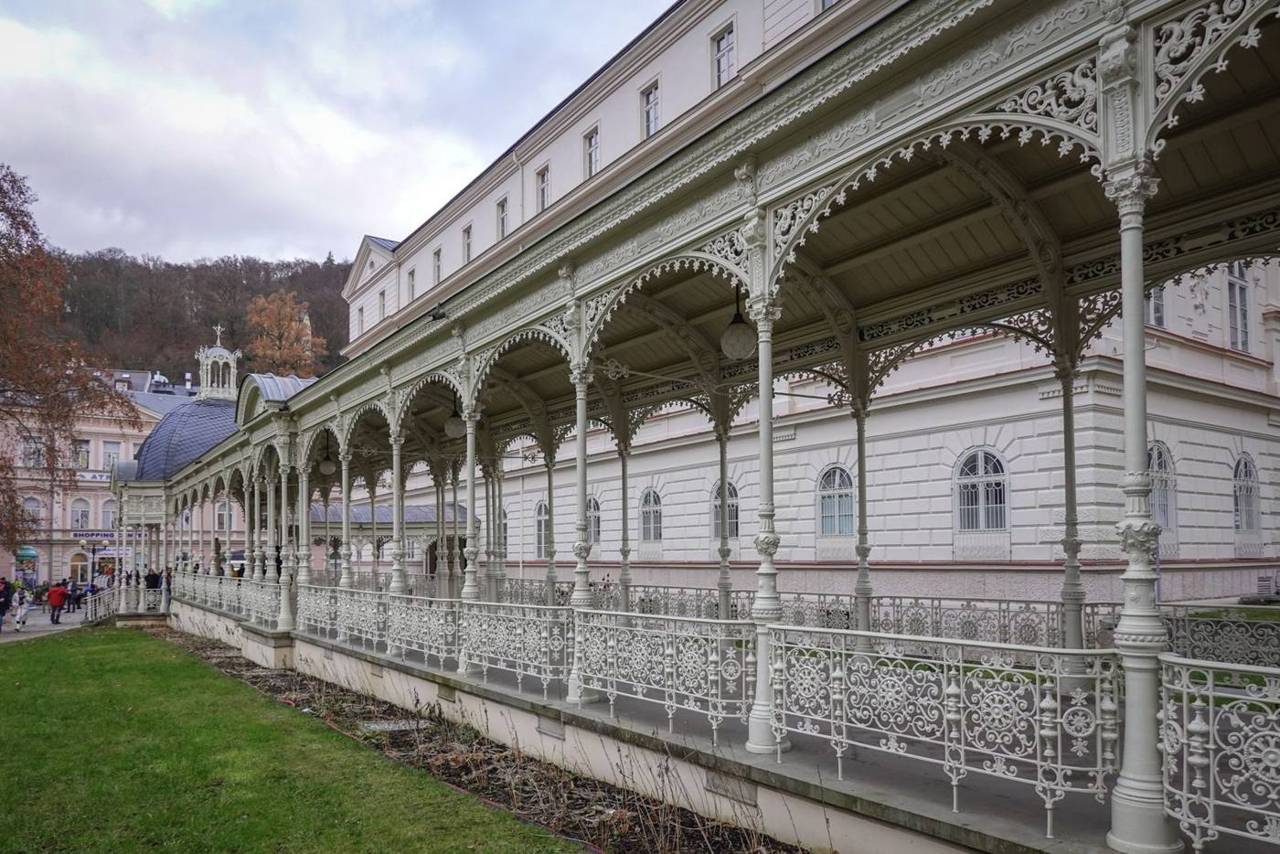 4 daysEasy
The Bohemian spa towns
The UNESCO spa triangle: the colonnades of Karlovy Vary, the park and singing fountain of Mariánské Lázně, Františkovy Lázně and the Plzeň brewery.
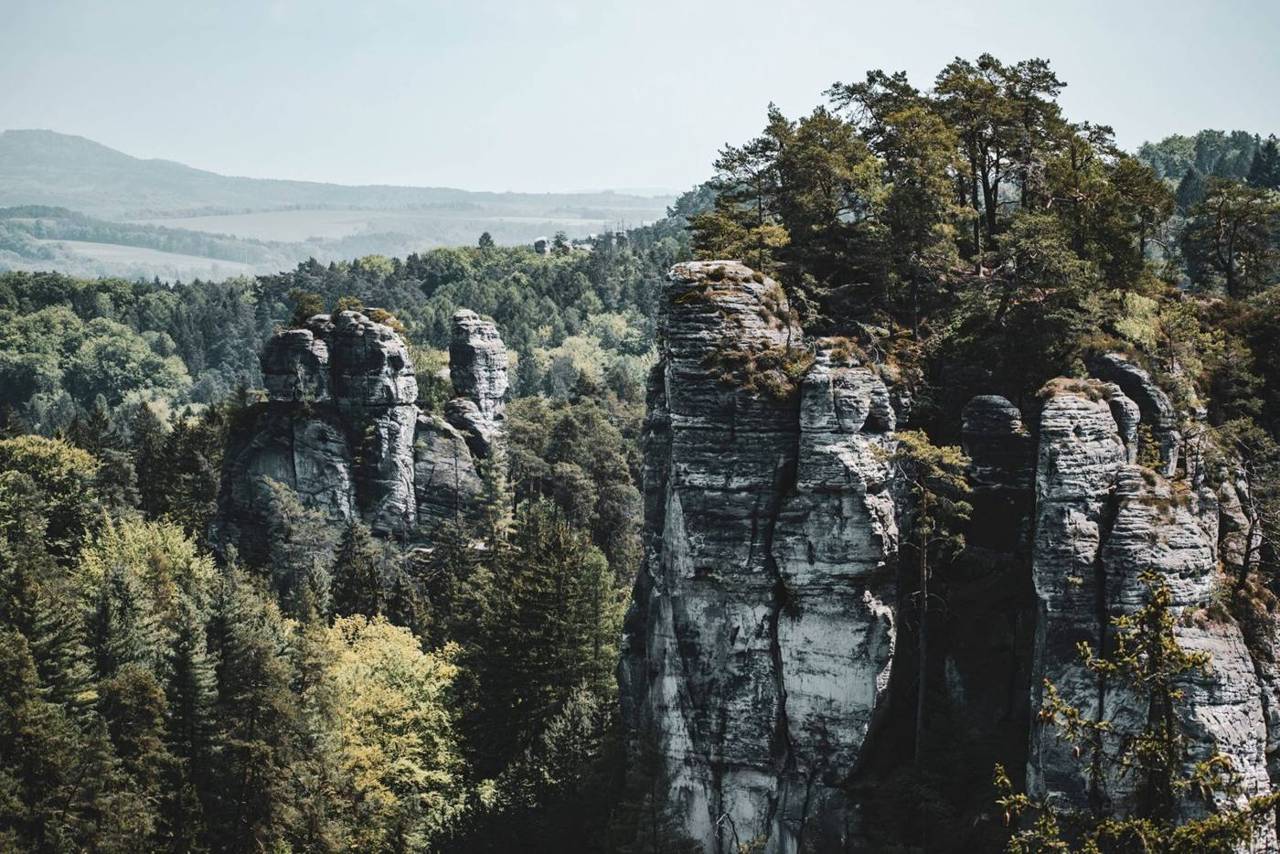 3 daysEasy
Bohemian Paradise
The rock towns of Prachov, the ruins of Trosky Castle on two volcanic towers and Hrubá Skála Castle, an hour from Prague.
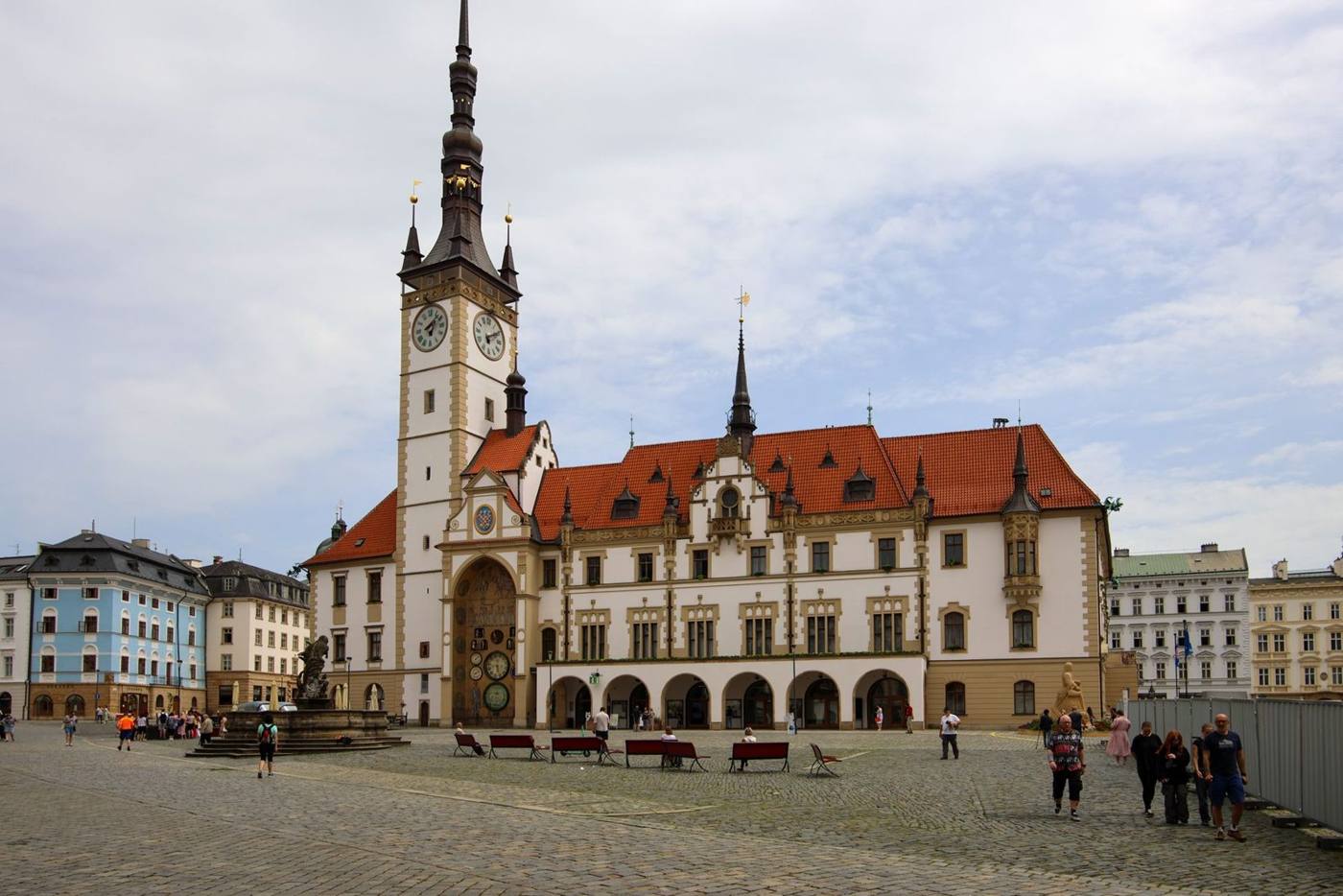 4 daysEasy
Brno and Olomouc
The cities of Moravia: Brno with Villa Tugendhat, the St James ossuary and its cafés, Olomouc with the UNESCO Holy Trinity Column and tvarůžky cheese.