Larnaca and Ayia Napa
St Lazarus church in Larnaca, the salt lake with flamingos and the Hala Sultan Tekke mosque, then Cape Greco and the beaches of Ayia Napa and Protaras.
- Larnaca
- Salt Lake
- Hala Sultan Tekke
- Cape Greco
- Ayia Napa
- Protaras
Day by day
- Day 1
Larnaca: the Church of St Lazarus and the seafront
This trip takes you along the south-east coast of Cyprus: Larnaca with the Church of St Lazarus, the salt lake with its flamingos and the Hala Sultan Tekke mosque, then the cliffs of Cape Greco and the beaches of Ayia Napa and Protaras. You sleep in Larnaca and then in Protaras, travelling by rental car.
Before you go: Italian citizens can enter Cyprus with an electronic identity card or a passport. Cyprus is in the EU but not in the Schengen area, so documents are checked on arrival. Other nationalities should check their own rules. The currency is the euro. You drive on the left. This trip stays in the Republic of Cyprus; to go north, cross only at official crossing points, with separate car insurance. Between Larnaca and Ayia Napa the road crosses the British base area of Dhekelia: do not stop near military installations or photograph them. Follow the news on the Middle East before you leave.
Larnaca airport is a few minutes from the town. Drop off your bags and walk to the Church of St Lazarus, in golden stone. Tradition says that Lazarus, raised from the dead by Jesus, came to Cyprus and became bishop of Kition, ancient Larnaca. The church was built over his tomb at the end of the ninth century. Inside look at the large gilded wooden iconostasis, then go down into the crypt with its stone sarcophagi. Check times and cover your shoulders and knees.
In the late afternoon stroll along the Finikoudes seafront, with its palm trees and town beach. Walk as far as the small medieval fort by the sea and the old Turkish quarter, with its low houses and pottery workshops.
Practical tip: central Larnaca is easy to explore on foot; pick up the rental car only on the second day and save a day of parking.
- Day 2
The salt lake, the flamingos and Hala Sultan Tekke
Today you stay a few minutes from Larnaca, among salt water, birds and one of the most important holy places for the Muslims of Cyprus.
The salt lake stretches south-west of the town, near the airport. In winter it fills with water and hosts thousands of migrating birds, above all pink flamingos, usually seen between November and March. In summer the water evaporates, leaving a white expanse of salt that shines in the sun. A path follows the shore: walk it at dawn or sunset, with binoculars, without getting too close to the birds.
On the western shore, among palms and cypresses, stands Hala Sultan Tekke. It is an Ottoman mosque built around the tomb of Umm Haram, whom Islamic tradition describes as a relative of the Prophet Muhammad, who died here in the seventh century after falling from a mule. Go in barefoot, with shoulders and knees covered; women cover their hair with a scarf. Check times.
In the afternoon, on the road to Limassol, stop at the Kamares aqueduct, built in the eighteenth century under Ottoman rule to bring water to the town. Its stone arches cross the fields on the edge of Larnaca.
For dinner try kleftiko, lamb slow-cooked in the oven, with potatoes and salad.
Practical tip: in summer the lake is dry and the flamingos have gone; if you want to see them, travel from January to March, early in the morning.
- Day 3
Cape Greco: sea caves and the clifftop path
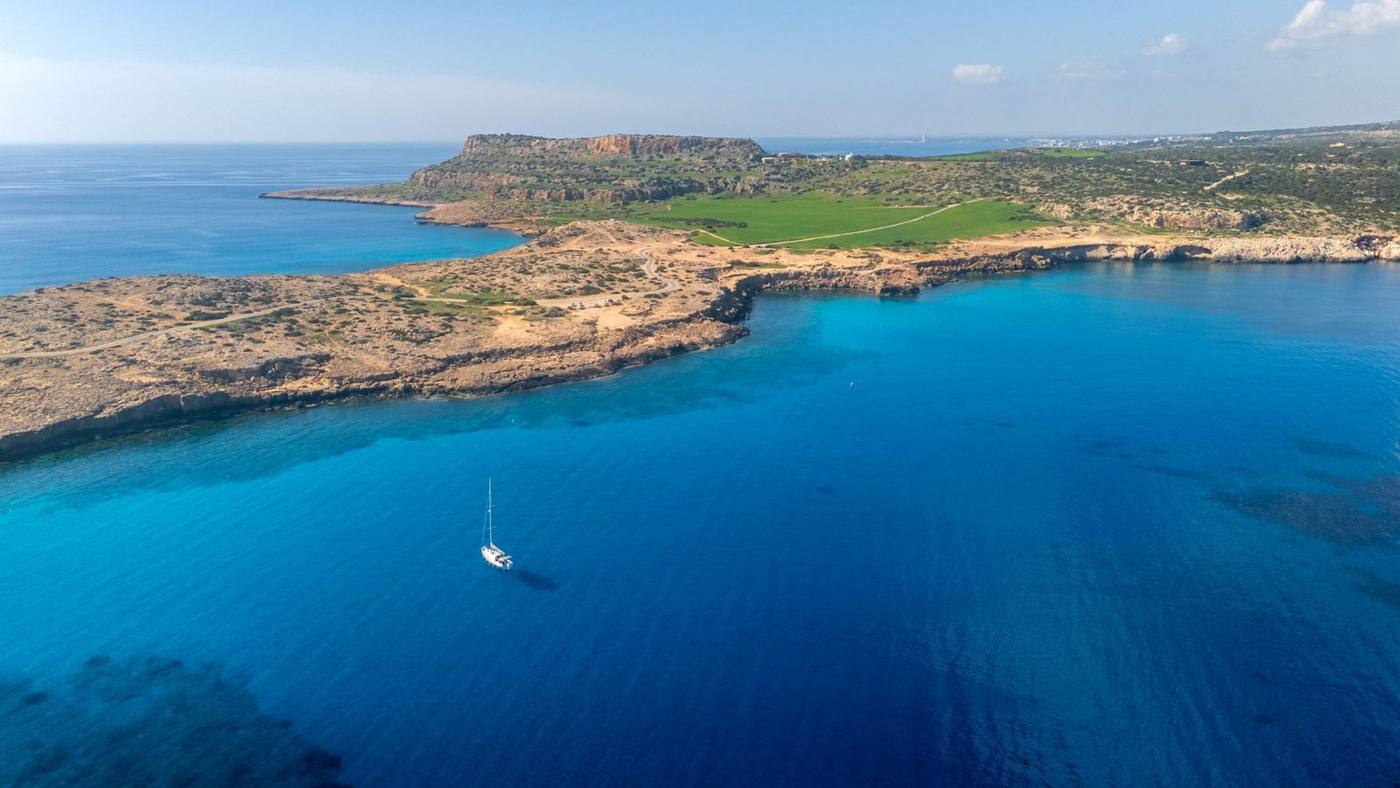
Today you leave Larnaca and drive east for about fifty minutes to Cape Greco, between Ayia Napa and Protaras. The cape is a national forest park: plateaus of white rock, junipers, scrub and cliffs dropping into a deep blue sea.
Leave the car in one of the park's car parks and follow the marked trails. One of the finest runs along the coast, above sea caves carved into the rock by the waves. You see the Love Bridge, a natural arch over the sea, and further on the small church of Agioi Anargyroi, with steps leading down to the caves. From above look at Konnos Bay, with pale sand and turquoise water.
You can also see the caves from the sea, on boats leaving from Ayia Napa and Protaras, or with mask and snorkel on calm days. Do not jump from the cliffs: the water below can be shallow and the currents strong.
In the afternoon go down for a swim in Konnos Bay, then drive to the Protaras area, where you sleep for two nights. It is quieter than Ayia Napa, which in summer is a very noisy nightlife resort.
At sunset climb the hill of the Prophet Elias above Protaras, with its small white church on top and the view over the coast.
Practical tip: there is very little shade at Cape Greco; start early, carry at least one and a half litres of water each and a hat, and walk in closed shoes.
- Day 4
The beaches of Fig Tree Bay and Nissi, and Ayia Napa monastery
Today is a beach day, between two of the most famous beaches in Cyprus.
In the morning go to Fig Tree Bay in Protaras. The beach takes its name from an old fig tree growing behind the sand. The water is shallow, clear and calm, with an islet a few dozen metres from the shore that many people swim to. It is ideal for families with children and for snorkelling among the rocks.
Around midday drive for about twenty minutes to Ayia Napa. Visit the monastery of Ayia Napa, from the Venetian period, in the centre of the town. It has a courtyard with a domed fountain, a large sycamore tree and a church partly carved into the rock. It is a quiet corner in the middle of the resort. Check times and dress appropriately.
In the afternoon go to Nissi Beach, west of the centre. The sand is pale and fine, and you can reach a low islet by wading across a strip of sand. In summer the beach is very busy and lively; out of season it is calmer.
Return to Protaras for dinner. Try the grilled fish of the day, squid and a village salad with feta cheese.
Practical tip: arrive early at the beaches in July and August; sunbeds must be paid for and fill up, and there are few areas without them.
- Day 5
Back to Larnaca and departure
On the last day you return towards Larnaca, about fifty minutes by road from Protaras.
If your flight is in the afternoon, stop in the Larnaca area for a final walk. You can visit ancient Kition, in the town centre, with the remains of Phoenician temples and walls, or the marina district. Check prices and times. If you prefer the sea, take a last swim at Mackenzie Beach, near the airport, where you can watch the planes coming in to land.
Return the car and go to the airport, a few minutes from the town.
Trip summary: in five days you saw the Church of St Lazarus and the Larnaca seafront, the salt lake with its flamingos and the Hala Sultan Tekke mosque, the Kamares aqueduct, the caves and trails of Cape Greco, the beaches of Fig Tree Bay and Nissi and the Venetian monastery of Ayia Napa. It is an easy trip, with clear sea a few minutes from the airport. If you are a certified diver, you can add a dive on the Zenobia wreck off Larnaca with a licensed centre.
When to go: from April to June and from September to October for the sea without the strongest heat; from January to March for the flamingos on the salt lake, with mild days but cool water. July and August are very hot and Ayia Napa is crowded.
Practical tip: fill up with petrol before returning the car; rental companies charge high rates for missing fuel.
Clear, convenient sea, minutes from the airport. In summer Ayia Napa is a very loud nightlife resort: for calm choose Protaras or Cape Greco. The Zenobia wreck off Larnaca is one of the Mediterranean's best dives.
Before you go
- Documents and visa
- EU citizens need a valid identity card or passport: Cyprus is in the EU but not in the Schengen area, so documents are checked on arrival. Enter only through Larnaca or Paphos airports or the ports of Limassol and Larnaca: arriving via Ercan airport or northern ports is illegal under the law of the Republic of Cyprus. Traffic drives on the left. Other nationalities should check their own rules.
- Health and vaccines
- No vaccines required. EU citizens can use public healthcare with their EHIC; insurance with medical cover and repatriation is still advised. Emergencies: 112.
- Money and payments
- Euro. Cards are accepted almost everywhere; carry some cash in mountain villages.
- Power sockets
- Type G, 240 volts: the same plugs as in the UK.
- Time zone
- Eastern European Time (UTC+2, summer UTC+3).
- Safety
- A safe country with low crime. The UN buffer zone divides the island: cross only at official crossing points, such as Ledra Street and Ledra Palace in Nicosia, showing an identity card or passport; crossing elsewhere is illegal and dangerous, partly because of minefields. Do not take photos in the buffer zone or near military sites. Cars hired in the south usually have no insurance cover in the north: buy separate cover, sold at some crossing points. Wildfire risk is high from April to October. Official advice: GOV.UK.
Information checked in November 2026 for Italian and EU citizens. Rules change: always check before you travel.
Variations
In 3 days: Larnaca and the salt lake, then a full day between Cape Greco and Fig Tree Bay.
In 7 days: add Lefkara and Choirokoitia inland and, if you are certified, two days of diving on the Zenobia.
Frequently asked questions
Where should I stay for a quiet holiday?
In Larnaca for the first days and then in Protaras or near Cape Greco. In summer Ayia Napa is a very noisy nightlife resort.
When can I see the flamingos?
Usually between November and March, when the Larnaca salt lake is full of water. In summer the lake dries up and the flamingos are gone.
Do I need a car?
It is useful for Hala Sultan Tekke, Cape Greco and the beaches. In Cyprus you drive on the left; there are also buses between Larnaca, Ayia Napa and Protaras, but they are less frequent.
Indicative itinerary written by World Atlas. Before booking, check timetables, seasonal openings, documents and safety.
 4 daysEasy
Limassol and Kourion
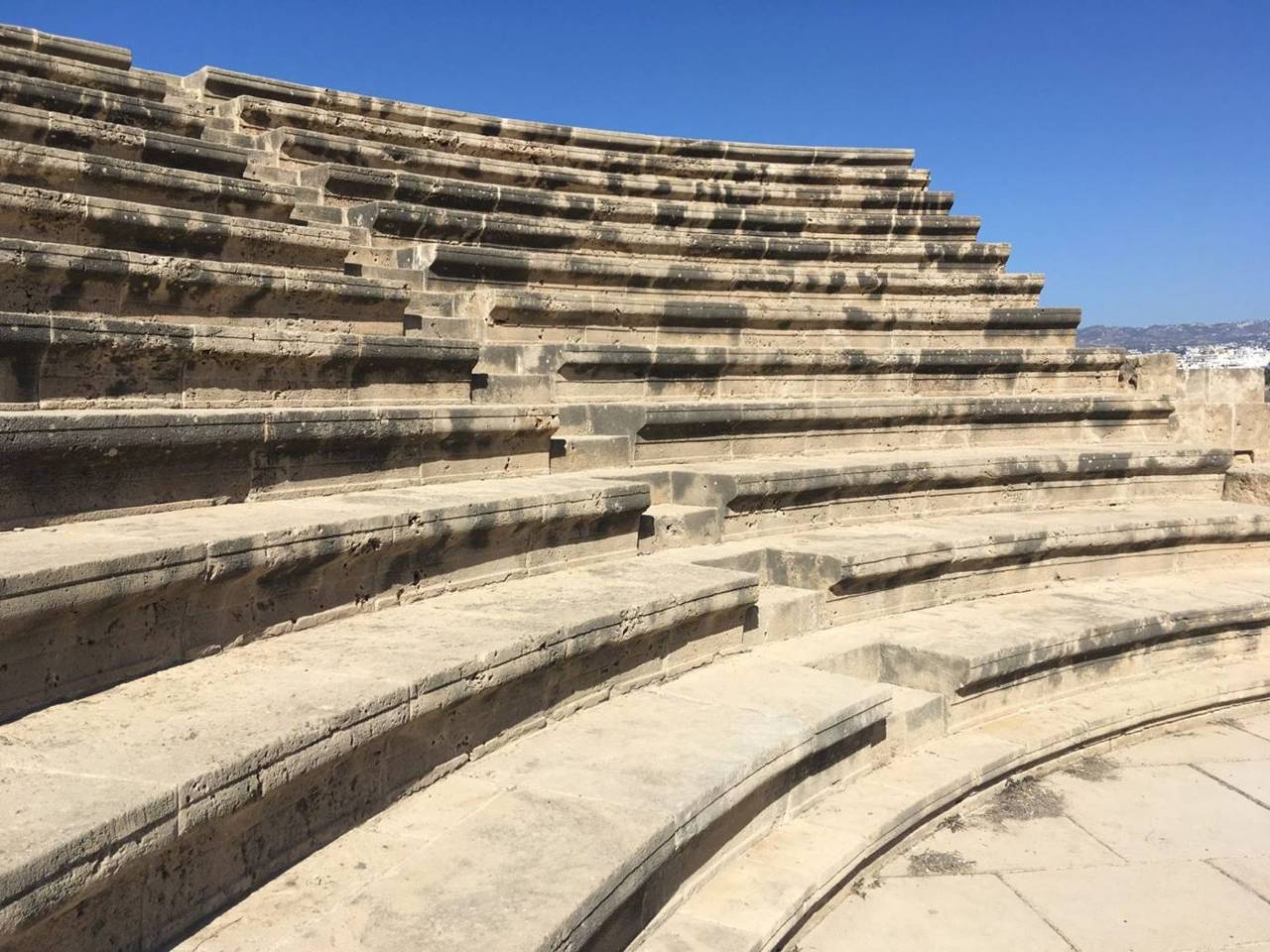
Limassol's old town and marina, the Greco-Roman theatre of Kourion on its cliff, the Knights' castle of Kolossi and the ruins of Amathus.
 4 daysEasy
The wine routes
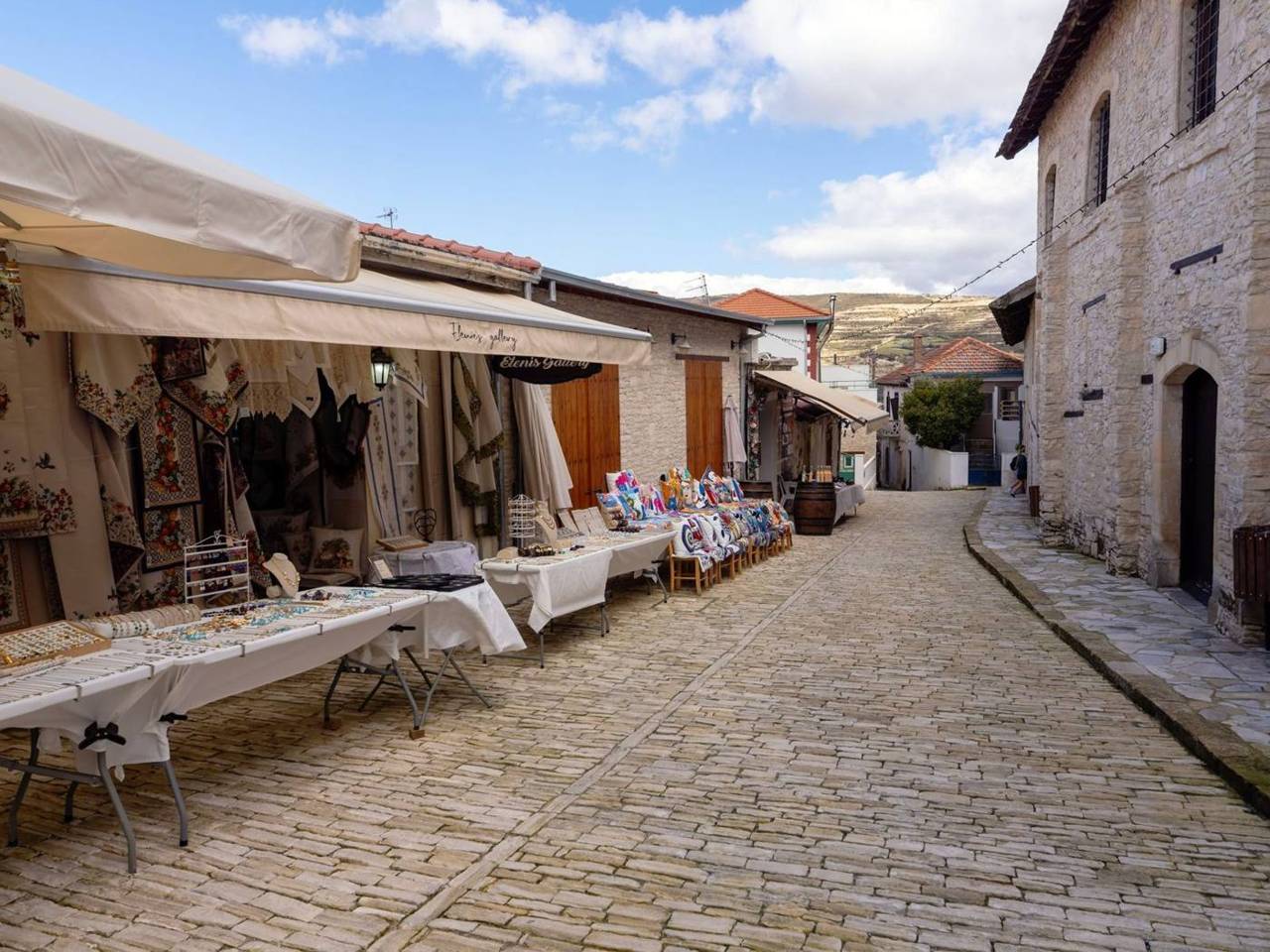
The krasochoria, the wine villages on the Troodos slopes: native Xynisteri and Maratheftiko grapes, Commandaria, one of the world's oldest wines, and village meze.
 4 daysEasy
The Karpas peninsula
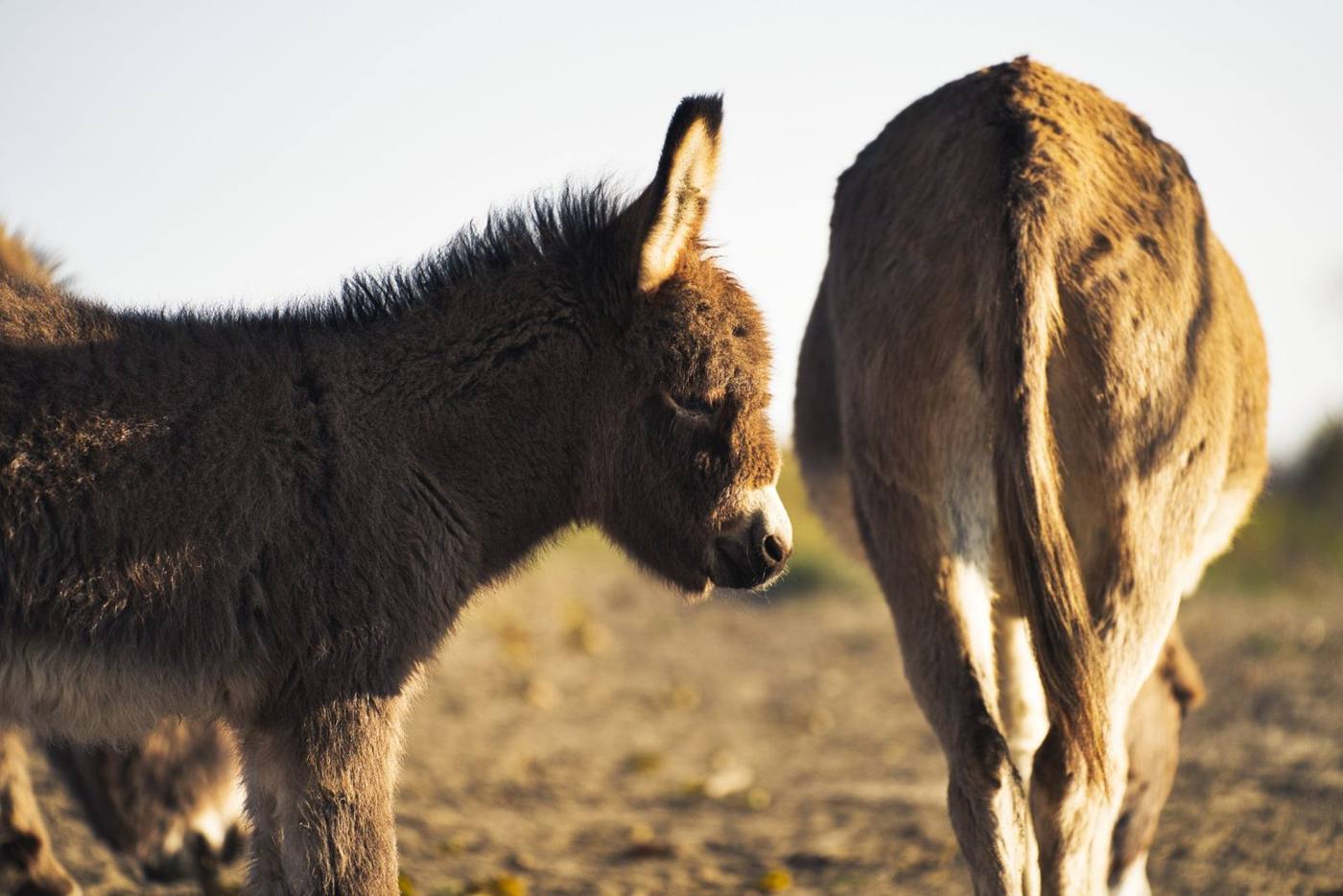
The 'panhandle' of Cyprus in the north: wild donkeys, Golden Beach where turtles nest, the Apostolos Andreas monastery and abandoned churches.