The coffee region and the Cocora Valley
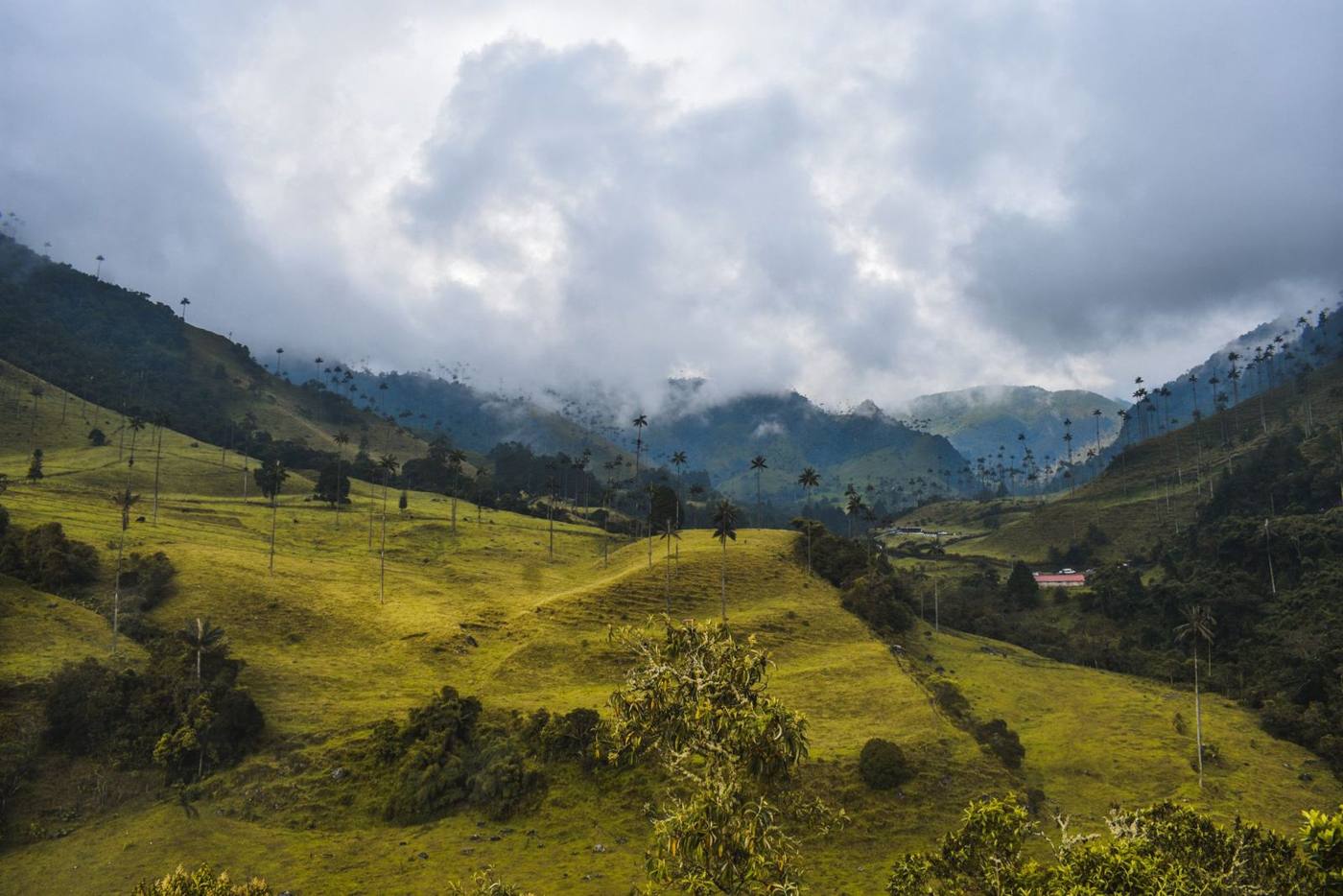
Coffee farms between Salento and Filandia, the sixty-metre wax palms of the Cocora Valley and the Santa Rosa hot springs.
- Pereira
- Salento
- Cocora Valley
- Filandia
- Santa Rosa de Cabal
- Pereira
Day by day
- Day 1
From Pereira to Salento
EU citizens enter Colombia without a visa for tourism for up to ninety days; before the flight, between seventy-two hours and one hour before departure, you fill in the no-cost Check-MIG form online on the Migración Colombia website.
The coffee region, called the Eje Cafetero, lies in the central Andes, across the departments of Caldas, Risaralda and Quindío. The Coffee Cultural Landscape of Colombia, a pattern of cultivated hills, farms and mountain towns, has been a UNESCO World Heritage site since 2011. You fly to Pereira, with flights of about an hour from Bogotá and Medellín, or to Armenia.
From Pereira airport Salento is about an hour by car or bus, through hills covered with coffee and banana plantations. Salento is a mountain town at about 1,900 metres, with colonial houses whose balconies and wooden doors are painted in bright colours: red, blue, green, yellow.
In the afternoon walk along Calle Real, the main street, with its craft shops, and climb the stairs to the Alto de la Cruz lookout, from which you see the Cocora Valley and the green mountains around. In the evening, on the square, try tejo, Colombia's national sport, in which a metal disc is thrown at a target holding small gunpowder charges that explode.
Practical tip: in the mountains the temperature drops in the evening and rain is frequent in the afternoon; bring a waterproof jacket and a jumper.
- Day 2
The Cocora Valley and the wax palms
Today is the Cocora Valley, about half an hour from Salento, one of Colombia's most famous landscapes. You get there in Willys jeeps, old American off-roaders that leave Salento's square early in the morning packed with people, sometimes standing on the back.
In the valley grow Quindío wax palms, Colombia's national tree and the tallest palms in the world, which can exceed sixty metres: with their slim, pale trunks and crowns at the top, they look drawn in the mist over the green hills. It is a protected species, threatened in the past by cutting for wax and leaves.
The classic loop hike takes five or six hours: it starts from Cocora village, climbs along the Quindío River through Andean cloud forest, crossing streams on small wooden suspension bridges, to the Acaime reserve, where you see a great many hummingbirds. Then it climbs again to Finca La Montaña and descends into the valley of the palms, with the finest views. The trail is often muddy: you need boots or rubber wellies, which can be rented in Salento.
Alternatively, if you want to walk less, you can do just the palm section, going up and down on the same side in about two hours.
Practical tip: leave early on the first jeeps, when the mist lifts and the valley is quieter; it often rains in the afternoon. Carry cash for entry to the private reserves along the trail.
- Day 3
A coffee farm
Today is devoted to coffee, the product that shaped this region's history. Colombia is one of the world's largest producers of arabica coffee, grown on small mountain farms called fincas, often family-run, on slopes between 1,200 and 2,000 metres.
Visit a finca near Salento, on foot or by jeep, for a tour of two or three hours. You walk among the coffee plants, shaded by banana and taller trees, and learn the whole process: hand-picking of the ripe red berries, called cherries, one by one, because they ripen at different times on the plant; pulping; fermentation; washing; sun-drying and finally roasting. Many tours let you pick a few cherries with a basket tied at the waist, as the pickers do.
At the end you taste coffee prepared in different ways, with explanations of the differences in flavour, and learn why the best coffee was once exported while the coffee drunk in Colombia was often simpler. Many fincas now sell their own coffee directly.
In the afternoon rest in Salento or walk the trails through the hills around the town, among coffee fields and pastures.
Practical tip: the main harvest takes place twice a year, at different times depending on the area; ask the finca when the season is, to see the pickers at work.
- Day 4
Filandia and the valley lookout
In the morning take the bus or a car to Filandia, about an hour from Salento, a quieter, less touristy mountain town with colourful houses and wooden balconies similar to Salento's, and a square with its church. Filandia is famous for hand-woven baskets made from plant fibres, a traditional craft you see in the town's workshops.
Stroll through the central streets and stop in the cafés, where you taste coffee from nearby fincas. Then climb the Filandia lookout, a wooden tower several storeys high, a few minutes from the centre: from the top you see the whole coffee region, with hills, plantations, distant towns and, on clear days, the snowy peaks of Los Nevados National Park, which rise above five thousand metres.
In the afternoon walk one of the trails around Filandia, among hills and groves of guadua, the giant bamboo used in the region's buildings, with canes up to twenty metres tall.
In the evening try the local cooking: bandeja paisa, a generous plate of beans, rice, minced meat, chicharrón, egg, avocado and arepa, and mountain trout.
Practical tip: the coffee region is considered calm, but be careful with taxis at night and prefer those called by hotels; do not leave valuables visible in cars.
- Day 5
The hot springs of Santa Rosa de Cabal
Today is a day of relaxation at the hot springs of Santa Rosa de Cabal, about an hour and a half from Salento, near Pereira. The springs rise at the foot of the volcano in the mountains of Los Nevados park, and the thermal water flows into outdoor pools at different temperatures, surrounded by a great waterfall almost a hundred metres high and very green mountain forest.
There are several thermal resorts, some larger and busier, others quieter and set in nature, with hot pools and natural basins of cold water from the waterfall. You spend the day moving between pools, with mist rising from the forest in the cool hours. In the evening, with the pools lit, the atmosphere is magical.
The town of Santa Rosa de Cabal is also famous for its chorizos, pork sausages grilled over embers and served with arepa, Colombia's typical corn bread.
On the way you pass more coffee country and the city of Pereira, with Plaza de Bolívar and its great statue of the naked Bolívar, an unusual sculpture of South America's liberator on horseback and unclothed.
Practical tip: bring a swimsuit, towel and flip-flops to the springs; at weekends and on holidays the pools are crowded, so it is better to go on a weekday.
- Day 6
Back and departure from Pereira
The last day is for the journey back. From Salento or Santa Rosa de Cabal you reach Pereira airport in about an hour, for flights to Bogotá or Medellín, where international flights depart.
If your flight leaves in the afternoon, in the morning you can visit the Coffee Park near Armenia, a theme park with a museum on the history of coffee, plant gardens and shows, or the Quindío Botanical Garden in Calarcá, with a large tropical butterfly house and forest trails.
Alternatively take a last walk in Salento in the early morning, when the town is still quiet and the mountains are wrapped in mist.
Things to take home: coffee from the fincas, as beans or ground, bought directly from producers; panela, unrefined cane sugar; Filandia baskets; guadua bamboo crafts; coffee sweets and Colombian chocolate.
Practical tip: the US State Department rates Colombia at level 3, reconsider travel, because of crime and terrorism in some regions: the coffee region is one of the calmest in the country, but normal precautions apply. For international flights from Bogotá or Medellín reach the airport at least three hours early. Allow a margin of time, because mountain fog sometimes delays local flights. Keep coffee beans in your checked luggage, well sealed.
Colombia's green heart, pleasant and safe, with a cool climate at 1,800 metres. Salento has become very touristy, so for more peace stay on a coffee farm or in Filandia. It often rains in the afternoon, so walk in the morning. It pairs well with Medellín, five hours away by bus.
Before you go
- Documents and visa
- Valid passport; no visa for tourism up to 90 days for EU citizens. Before the flight, between 72 hours and one hour before departure, you fill in the no-cost Check-MIG form online.
- Health and vaccines
- No compulsory vaccines arriving from Europe; yellow fever is recommended for forest areas and some parks. Protect yourself against mosquitoes because of dengue. In Bogotá, at 2,600 metres, the altitude is noticeable. Emergencies: 123.
- Money and payments
- Colombian peso. Cards work in cities; use cash machines inside banks or shopping centres, by day.
- Power sockets
- Types A and B, 110 volts: you need an adapter and devices must accept 110 volts.
- Time zone
- UTC-5 all year: Colombia does not use daylight saving time.
- Safety
- The United States rates Colombia level 3 for crime and terrorism, with level 4 for Arauca, Cauca except Popayán, Valle del Cauca except Cali, Norte de Santander and 10 km from the Venezuelan border. Use app taxis and never accept drinks from strangers. Official advice: GOV.UK.
Information checked in November 2026 for Italian and EU citizens. Rules change: always check before you travel.
Variations
In 4 days: Salento, the Cocora Valley and a coffee finca, with a last morning in Filandia, skipping the hot springs.
In 10 days: add Medellín and the town of Guatapé with the great El Peñol rock, or Cartagena and the Rosario Islands.
Frequently asked questions
How do you get to the coffee region?
By air to Pereira or Armenia, with flights of about an hour from Bogotá and Medellín. From Pereira, Salento is about an hour by car or bus.
How long is the Cocora Valley hike?
The classic loop, with the hummingbird reserve and the valley of wax palms, takes five or six hours. If you want to walk less, you can do only the palm section, in about two hours.
Do I need a visa for Colombia?
No: EU citizens enter without a visa for tourism for up to ninety days. Before the flight, between seventy-two hours and one hour before departure, you fill in the no-cost Check-MIG form online.
Indicative itinerary written by World Atlas. Before booking, check timetables, seasonal openings, documents and safety.
 7 daysChallenging
Trek to the Ciudad Perdida
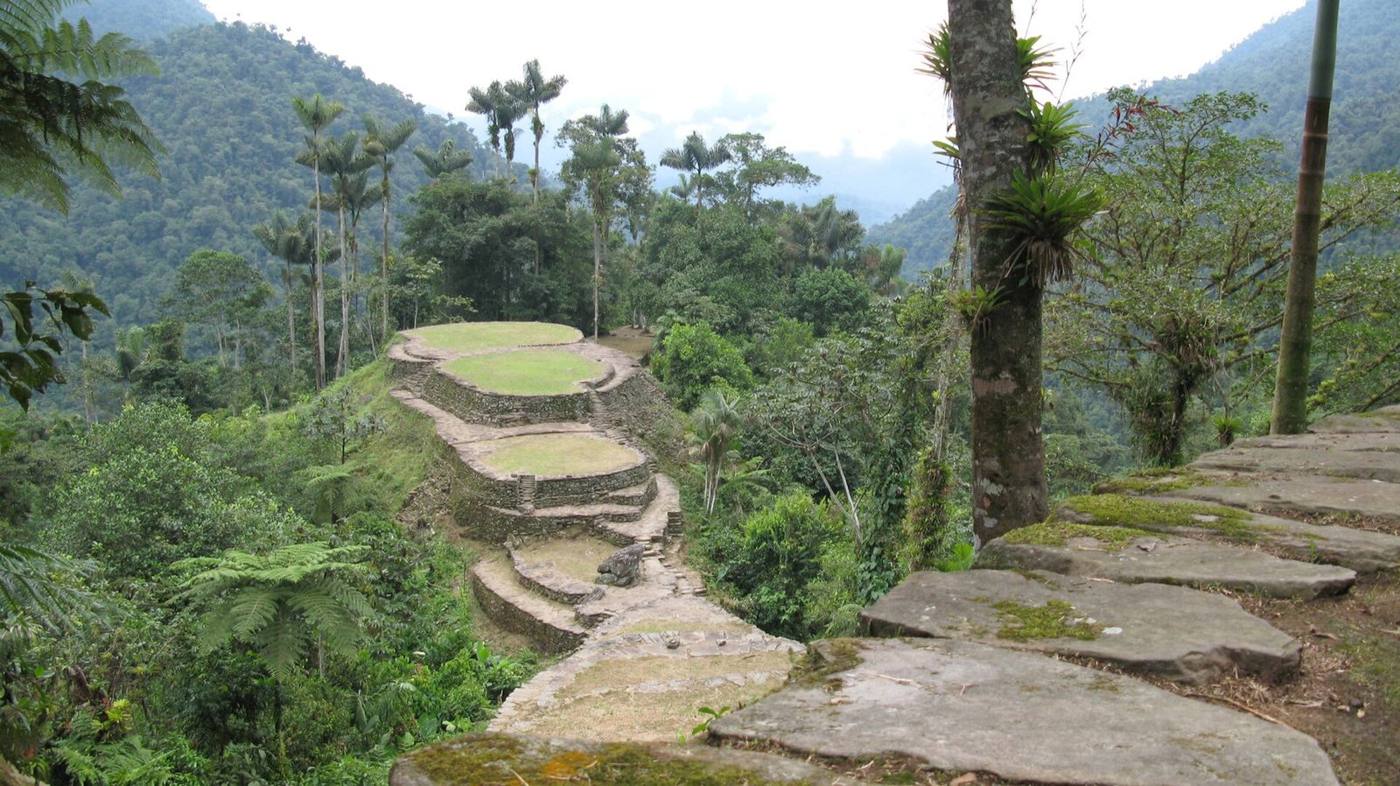
Four days on foot in the Sierra Nevada de Santa Marta, fording rivers and passing Kogi villages, to the lost city of the Tayrona.
 7 daysEasy
Tayrona, Minca and Palomino
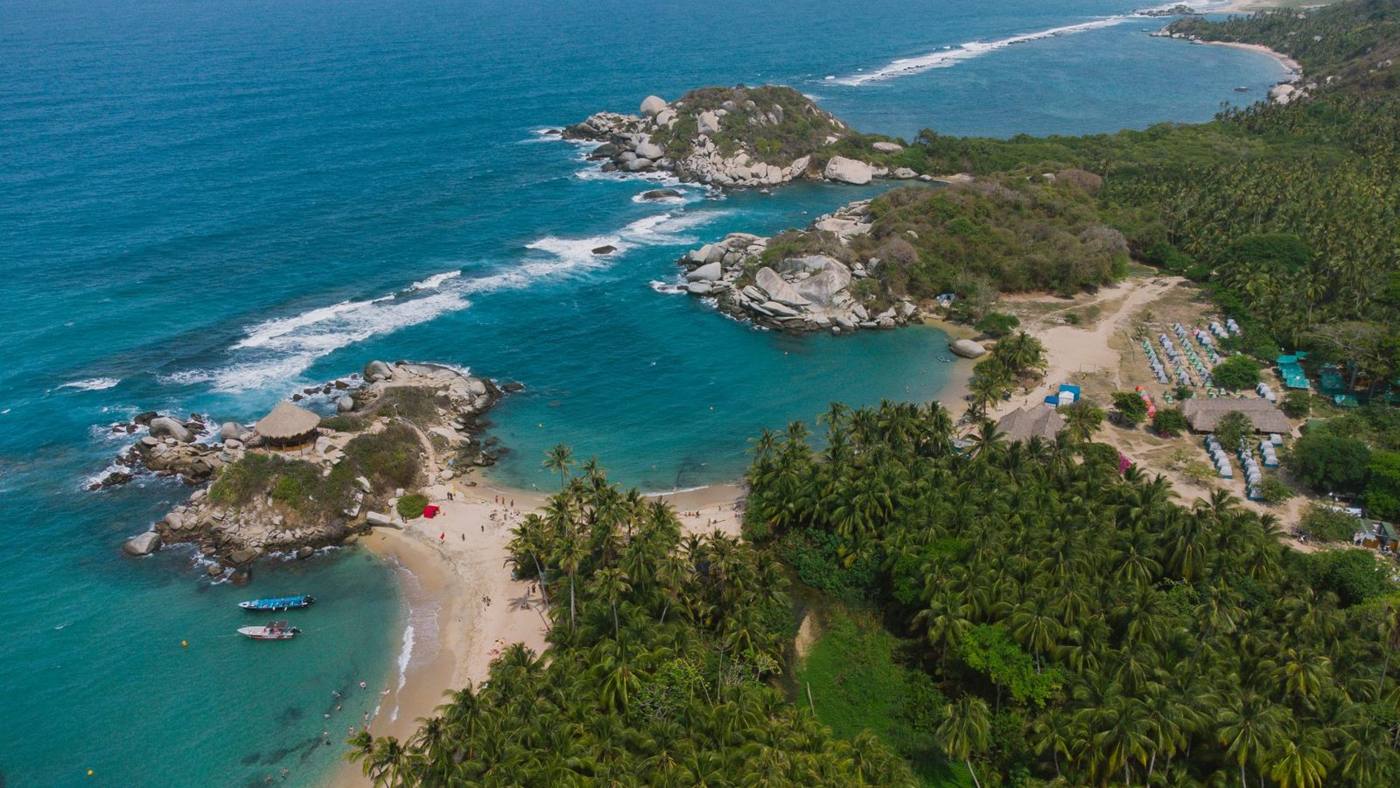
The Caribbean coast below the Sierra Nevada: the jungle beaches of Tayrona park, the waterfalls and coffee of Minca, the river at Palomino.
 5 daysEasy
Medellín and Guatapé
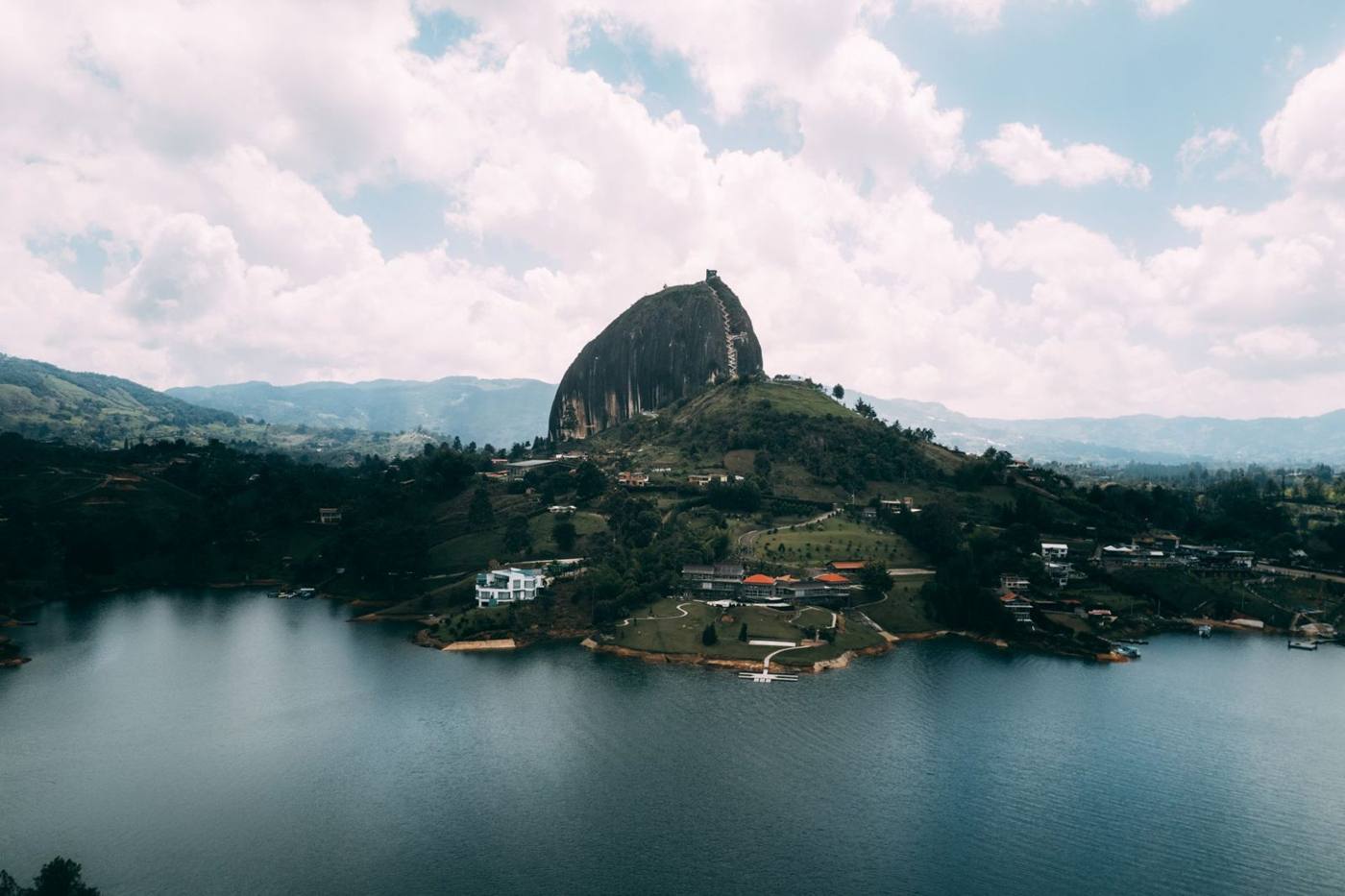
The city of eternal spring and its rebirth, Comuna 13 with its escalators and murals, then the lake and the Peñol rock at Guatapé.