Phnom Penh and the Mekong
The Royal Palace and the memory of the Khmer Rouge in Phnom Penh, Kratie with its Irrawaddy dolphins and villages along the river.
- Phnom Penh
- Tuol Sleng
- Choeung Ek
- Kampong Cham
- Kratie
- Koh Trong
Day by day
- Day 1
Phnom Penh, the Royal Palace and the National Museum
This six day trip tells the story of Cambodia today and its recent history: Phnom Penh with the Royal Palace and the places of memory of the Khmer Rouge, then the Mekong northwards, with Kampong Cham, Kratie, the Irrawaddy dolphins and the island of Koh Trong by bike. You get around by tuk-tuk and by car with driver.
Before you go: Italian citizens need a visa for Cambodia. Apply for the tourist e-visa only on the official website evisa.gov.kh, with a passport valid for at least six months from entry, and before arrival also fill in the electronic arrival form. Other nationalities should check their own rules.
Safety: the British government advises against all but essential travel within 20 kilometres of the land border with Thailand, far from this route. In Phnom Penh keep your bag and phone away from the road, because of snatch thefts from motorbikes. In the Kratie countryside stay on well used paths, because unexploded ordnance may still be present.
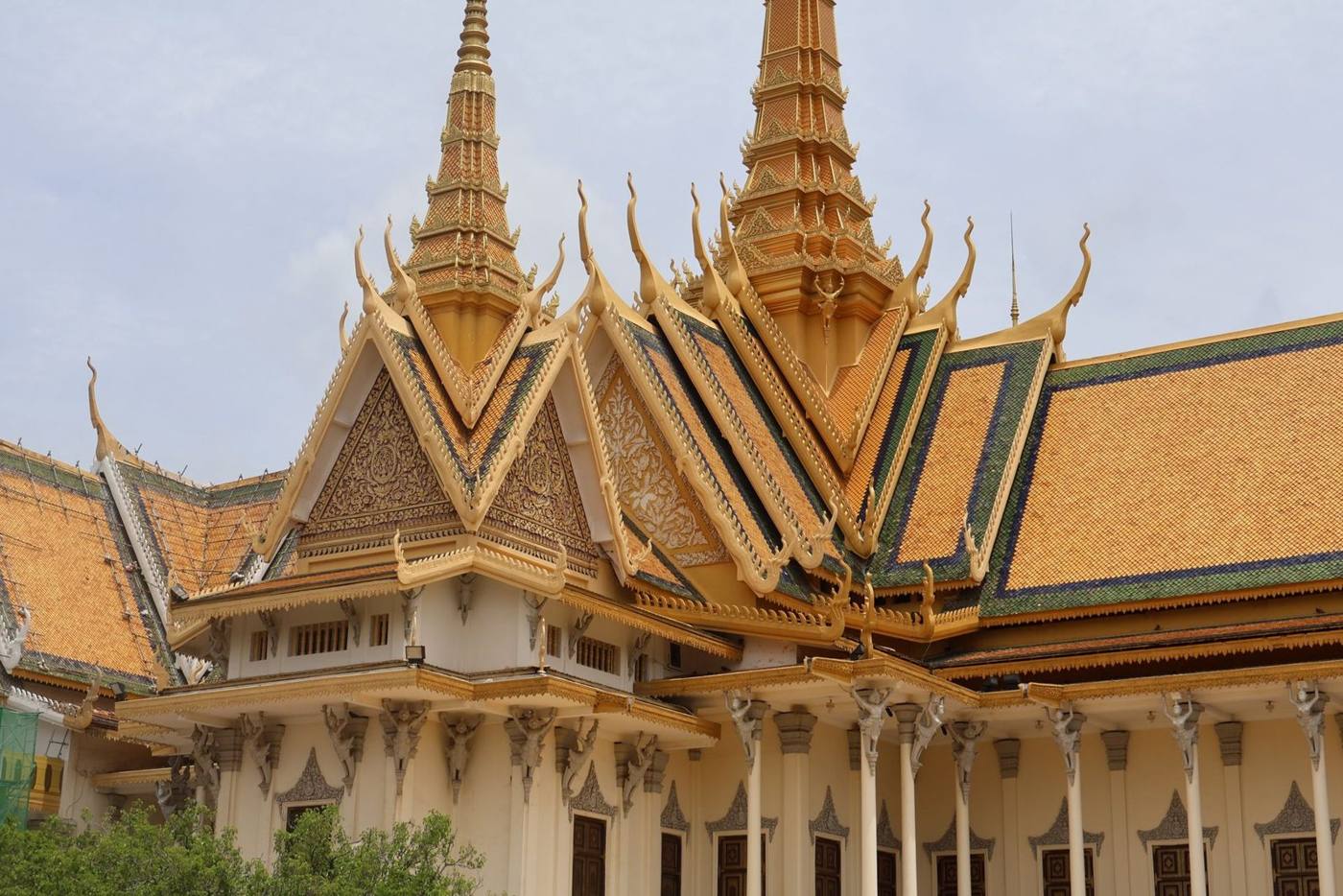
In the morning visit the Royal Palace, with its pointed golden roofs and the throne hall, the residence of the king. In the same compound stands the Silver Pagoda, named after its floor covered with thousands of silver tiles, with the Emerald Buddha and a large golden Buddha. Shoulders and knees must be covered. Check prices and times.
Next door, in the red Khmer style building, is the National Museum, with the most important collection of Khmer sculpture in the world: sandstone deities, bronzes and statues from Angkor and the older temples.
At sunset walk along the riverside, where the Tonle Sap joins the Mekong.
Sleep in Phnom Penh, for two nights.
Practical tip: use ride hailing apps for tuk-tuks, so you know the price before you set off.
- Day 2
Tuol Sleng and Choeung Ek, the memory of the Khmer Rouge
Today is the hardest day of the trip, but it is necessary to understand Cambodia. Between 1975 and 1979 the Khmer Rouge regime emptied the cities and caused the death of a huge part of the population.
In the morning go to the Tuol Sleng Genocide Museum, a former secondary school turned into the S-21 prison. In the classrooms remain the iron beds, the brick cells built in haste and the walls with thousands of photographs of prisoners, taken on their arrival. The audio guide tells the stories of the victims and of the few survivors. Take the time you need and pause in the courtyard. Tuol Sleng and Choeung Ek are part of the Cambodian memorial sites inscribed by UNESCO on the World Heritage list. Check prices and times.
In the early afternoon take a tuk-tuk to Choeung Ek, about fifteen kilometres south of the centre. This was one of the killing fields where prisoners from S-21 were taken. Follow the route with the audio guide among the mass graves, now covered in grass, to the memorial stupa holding the skulls of the victims. Silence is part of the visit.
On the way back stop at Wat Phnom, the small hill with the pagoda that gave the city its name, and pass by the Central Market, under its great yellow dome.
In the evening have a simple dish for dinner, such as lok lak, stir fried beef with a lime and pepper sauce.
Practical tip: at Tuol Sleng and Choeung Ek dress soberly, speak quietly and do not photograph human remains close up.
- Day 3
Kampong Cham and the bamboo bridge
Today you leave the capital and travel up the Mekong to Kampong Cham, about three hours by road to the north east.
Along the road you see villages with wooden houses on stilts, tobacco fields and rubber plantations. In Kampong Cham, a quiet provincial town on the riverbank, the big bridge over the Mekong built with Japanese help is the sign of modern times.
Just outside town visit Wat Nokor, an Angkorian era temple in sandstone and laterite, with a modern pagoda built inside it. Among the ancient stones you see colourful paintings, monks and families at prayer. Then climb the hills of Phnom Pros and Phnom Srei, the hill of the man and the hill of the woman, linked to a local legend, with pagodas and monkeys.
In the afternoon head for the island of Koh Paen, in the Mekong. For decades, in the dry season, the islanders rebuilt a long bamboo bridge every year to reach it. Today there is a concrete bridge, but in the dry season some residents still put up a pedestrian bamboo bridge for visitors: ask locally whether it is open. On the island cycle among vegetable plots, stilt houses and sandbanks.
At sunset sit on the riverside and watch the boats crossing the Mekong.
Sleep in Kampong Cham.
Practical tip: in the villages greet people with your palms pressed together and always ask before photographing anyone.
- Day 4
Kratie and the dolphins of Kampi
Today you reach Kratie and see the Irrawaddy dolphins, one of the rarest animals in Asia.
In the morning set off for Kratie, about two and a half hours further north by road. It is a small town on the Mekong with old French colonial houses, a lively market and a riverside where in the evening people sit and watch the water.
In the afternoon, when the light softens, go to Kampi, some fifteen kilometres to the north. Here the river forms a deep pool among islets and flooded trees, home to a group of Irrawaddy dolphins. They are grey freshwater dolphins, with round heads and no beak. In the Cambodian stretch of the Mekong just over a hundred remain, according to official estimates from 2026. Board a small boat and wait in silence: with the engine off or under oars, the dolphins surface to breathe with a soft puff.
Respect the local rules: no food in the water, no noise, keep your distance from the animals. The boatmen know the areas where it is allowed to get closer.
On the way back stop at sunset on the Kratie riverside, one of the most beautiful in Cambodia, with the sun setting behind the island of Koh Trong.
Sleep in Kratie, for two nights.
Practical tip: bring binoculars and a telephoto lens, because the dolphins often stay a few dozen metres from the boat.
- Day 5
The island of Koh Trong by bike
Today you explore the island of Koh Trong, opposite Kratie, in the middle of the Mekong.
In the morning take the small boat that crosses the river, with bikes, mopeds and local people. There are no cars on the island: hire a bicycle and follow the concrete road that circles the island, a loop of a few kilometres, flat and easy. You pedal among pomelo orchards, vegetable plots, wooden stilt houses with flowers on the terraces and buffaloes resting in the shade. Children wave at you from the doorways.
Along the bank you find a small floating fishing village and a peaceful pagoda. Stop for a sugar cane juice or a fresh coconut at the family stalls. In the dry season, towards the tip of the island, long sandy beaches appear on the river.
In the afternoon, if you like, go further north to Sambor, home to the pagoda of the hundred columns, Wat Sasar Moi Roi, linked to a legend of the ancient kingdom. Along the road you pass villages with wooden houses lined up along the river.
In the evening go back to Kratie and have dinner of grilled Mekong fish or amok, fish cooked in coconut milk with spices, at the night market.
Sleep in Kratie.
Practical tip: set off on the bike early, before ten, and bring water and a hat, because there is little shade on the island.
- Day 6
Back to Phnom Penh
Today you return to Phnom Penh, about five hours by road to the south.
Leave early in the morning and stop along the way for a snack. At the village markets you will see bamboo tubes filled with sticky rice, beans and coconut milk, cooked over embers: they are the travel food of Cambodians. You reach the capital in the early afternoon.
If you have time before your flight, take a stroll around the Russian Market, with textiles, handicrafts and street food, or go back to the riverside for a last walk at sunset.
Trip summary: in six days you have seen two faces of Cambodia. In Phnom Penh you discovered the elegance of the Royal Palace and the Silver Pagoda, the great Khmer art of the National Museum and the painful memory of Tuol Sleng and Choeung Ek. Along the Mekong you visited the temples of Kampong Cham, crossed the river to Koh Paen, watched the dolphins at Kampi and cycled through the orchards of Koh Trong.
When to go: the best period runs from November to February, with the coolest and driest weather. From March to May the heat is intense, but the low water makes it easier to see the dolphins. From June to October the rains arrive and the river swells: the landscape is green, but the roads can be slower and the island of Koh Trong may partly flood.
Practical tip: for a useful souvenir buy a krama scarf in Phnom Penh, the Cambodian checked cloth that protects you from sun and dust.
A trip that helps you understand the country's recent history, with emotionally heavy but necessary visits. The Mekong dolphins are very few and are watched from rowing boats or with engines off. In Phnom Penh beware of bag snatching from motorbikes.
Before you go
- Documents and visa
- Passport valid for at least six months from entry and a tourist visa: apply for the e-visa only on the official website evisa.gov.kh. Before arrival, also fill in the electronic arrival form.
- Health and vaccines
- Ask your doctor about recommended vaccines at least eight weeks before, and about malaria prevention if you visit forest areas. Protect yourself from mosquitoes against dengue and drink only bottled water. Emergencies: 117 police, 118 fire service, 119 ambulance.
- Money and payments
- Cambodian riel, but the US dollar is used everywhere for larger amounts and change often comes in riel. Bring undamaged dollar notes and check the ones you receive: counterfeit notes circulate.
- Power sockets
- Universal sockets for type A and C plugs, sometimes also G, 230 volts: a universal adapter is useful.
- Time zone
- UTC+7 all year.
- Safety
- The UK advises against all but essential travel within 20 km of the land border with Thailand: after the 2025 fighting there is a ceasefire, but the situation remains tense, the crossings are closed and there are landmines in the area. The temples of Preah Vihear, Ta Krabey and Tamone Thom are closed. In the countryside and around temples stay on well used paths, as landmines and unexploded ordnance remain and are often unmarked. In Phnom Penh watch out for bag snatching from motorbikes. Official advice: GOV.UK.
Information checked in November 2026 for Italian and EU citizens. Rules change: always check before you travel.
Variations
Shorter version: in four days do Phnom Penh and Kratie, without the stop in Kampong Cham.
Longer version: add two days north of Kratie, as far as Stung Treng, on the Mekong towards Laos.
Frequently asked questions
Are the visits to Tuol Sleng and Choeung Ek suitable for children?
They are very harrowing places, with images and accounts of violence. With young children it is better to skip them; with teenagers prepare them beforehand and use the audio guide together.
Can you always see the dolphins at Kampi?
Almost always, but they often stay at a distance. The best times are early morning and late afternoon, in the dry season, when the water is low.
How do you get from Phnom Penh to Kratie?
By car with driver or by minibus, with a stop in Kampong Cham. Without stops it takes about five hours by road.
Indicative itinerary written by World Atlas. Before booking, check timetables, seasonal openings, documents and safety.
 6 daysEasy
Kampot, Kep and the islands
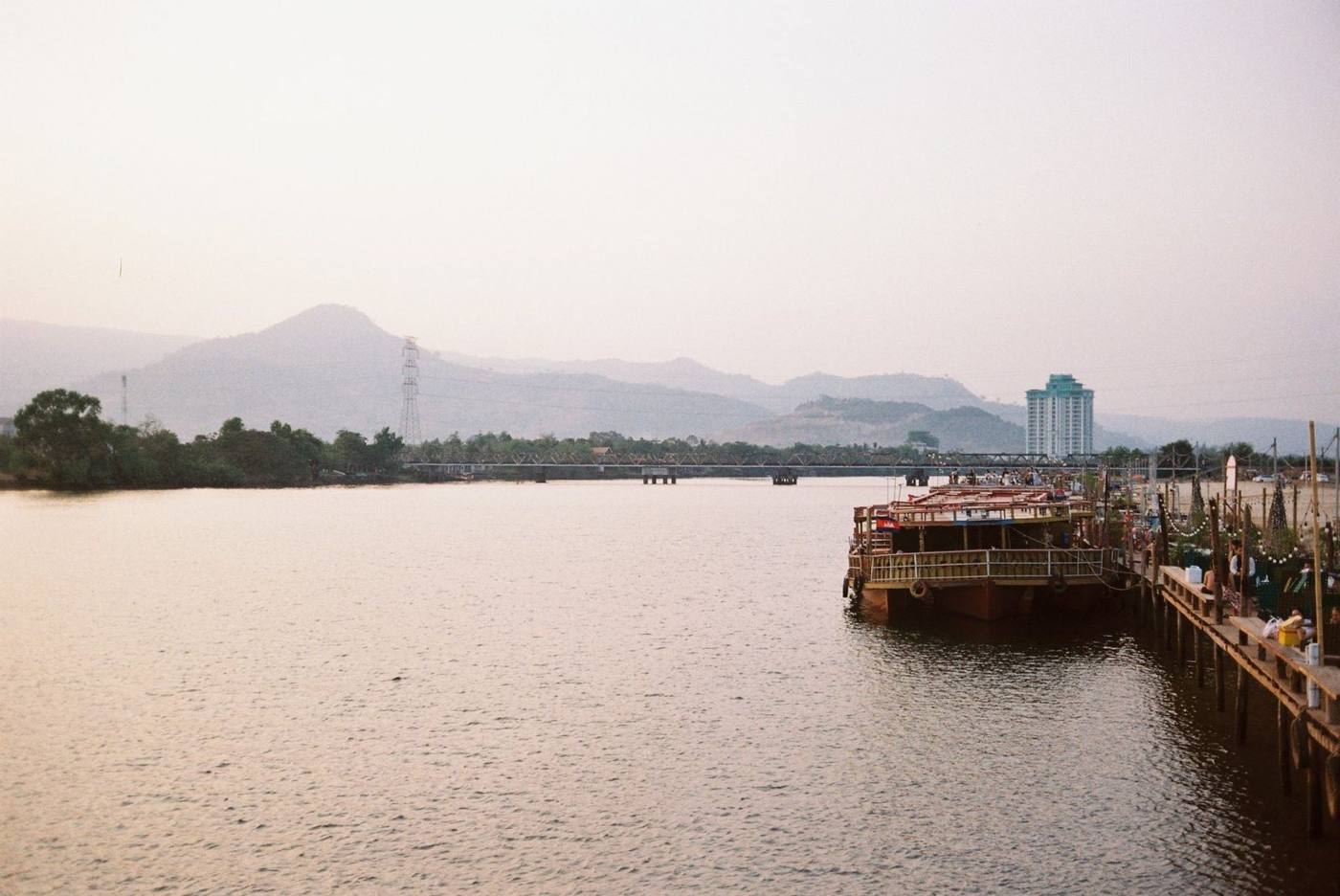
Kampot pepper, the Kep crab market, Bokor and the beaches of Koh Rong Sanloem island.
 3 daysEasy
Battambang
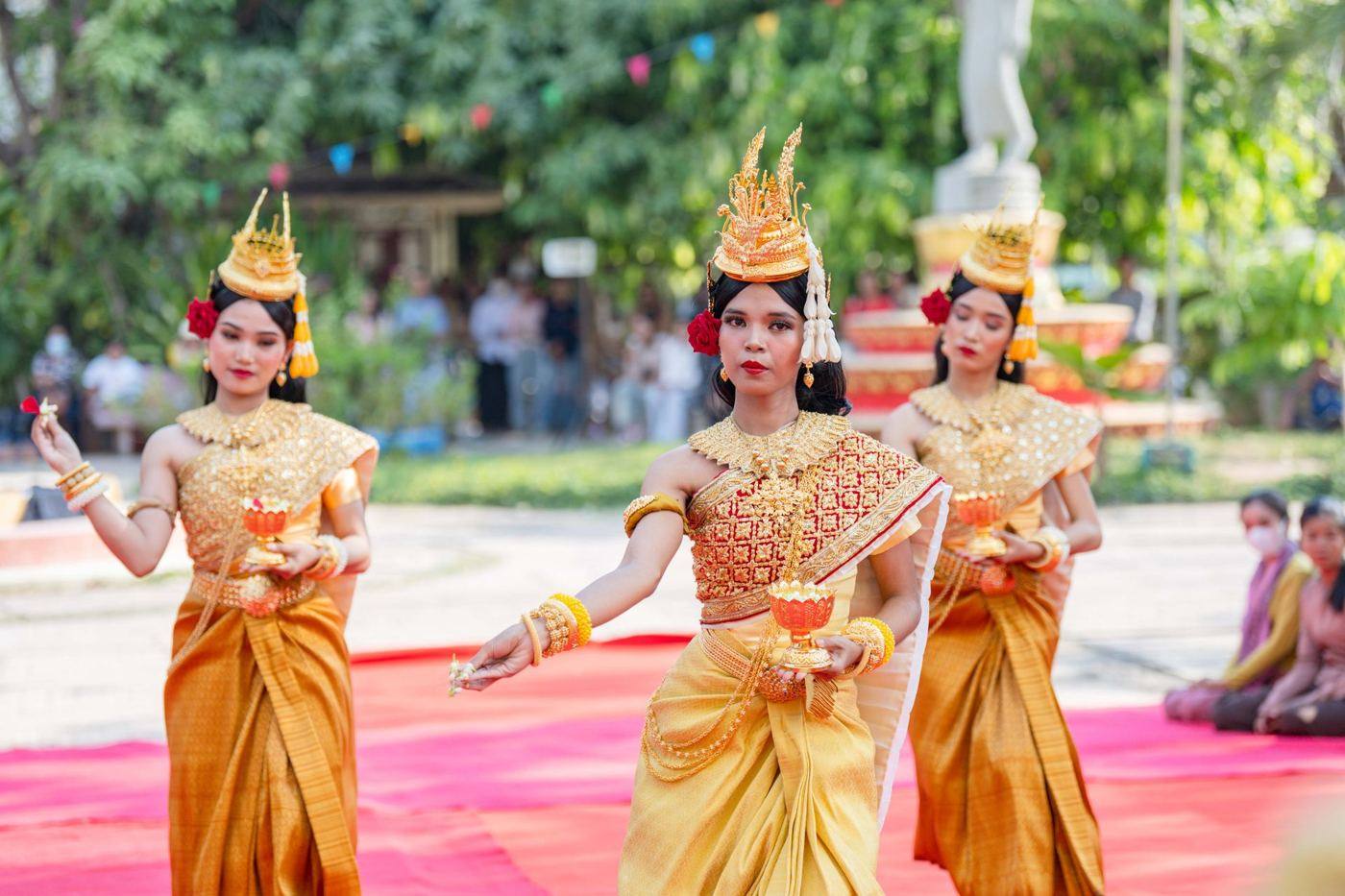
Cambodia's second city with its colonial houses, the bamboo train, Phnom Sampeau hill with millions of bats streaming out at dusk and the Phare circus.
 2 daysEasy
Koh Ker and Beng Mealea
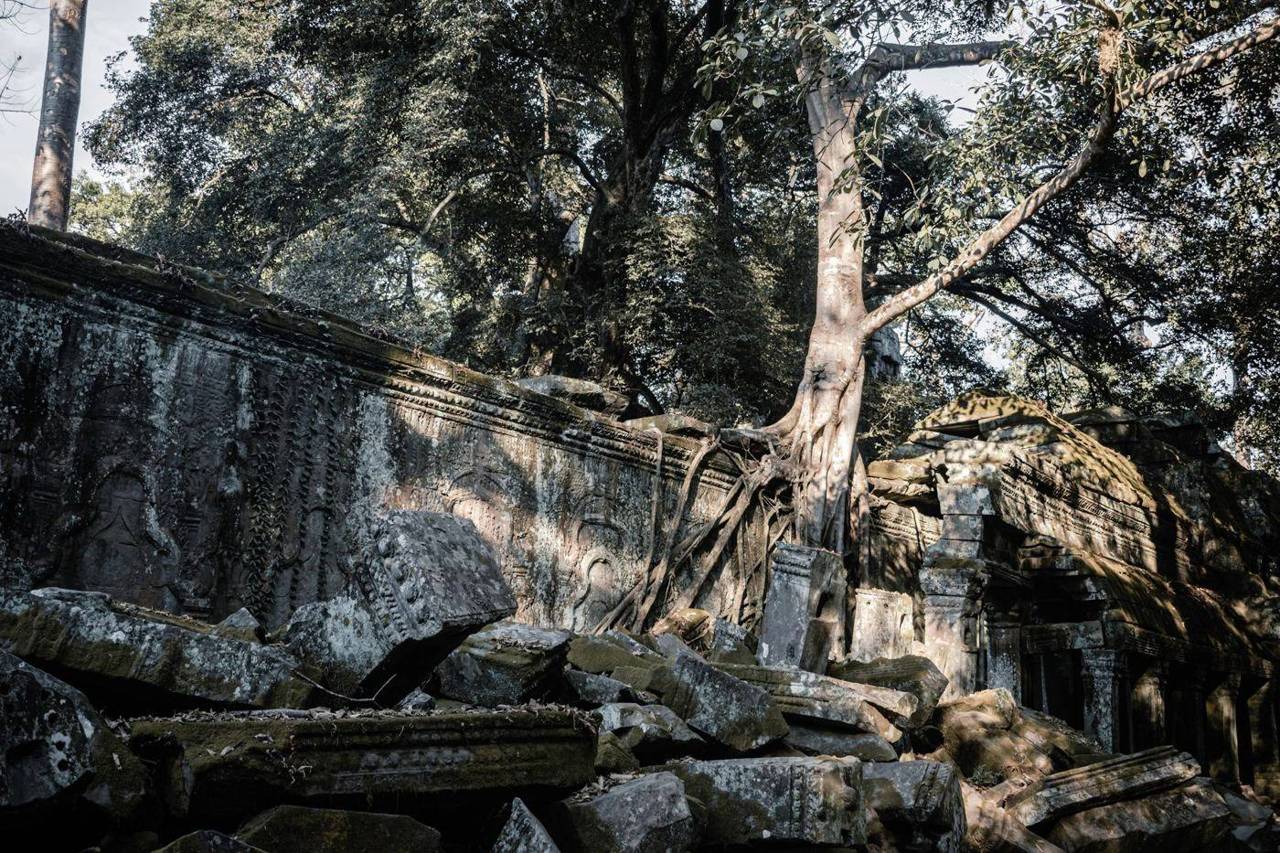
The temples far from Angkor: jungle-swallowed Beng Mealea and the seven-tiered pyramid of Prasat Thom at Koh Ker, a UNESCO-listed former Khmer capital.