Trancoso and Caraíva
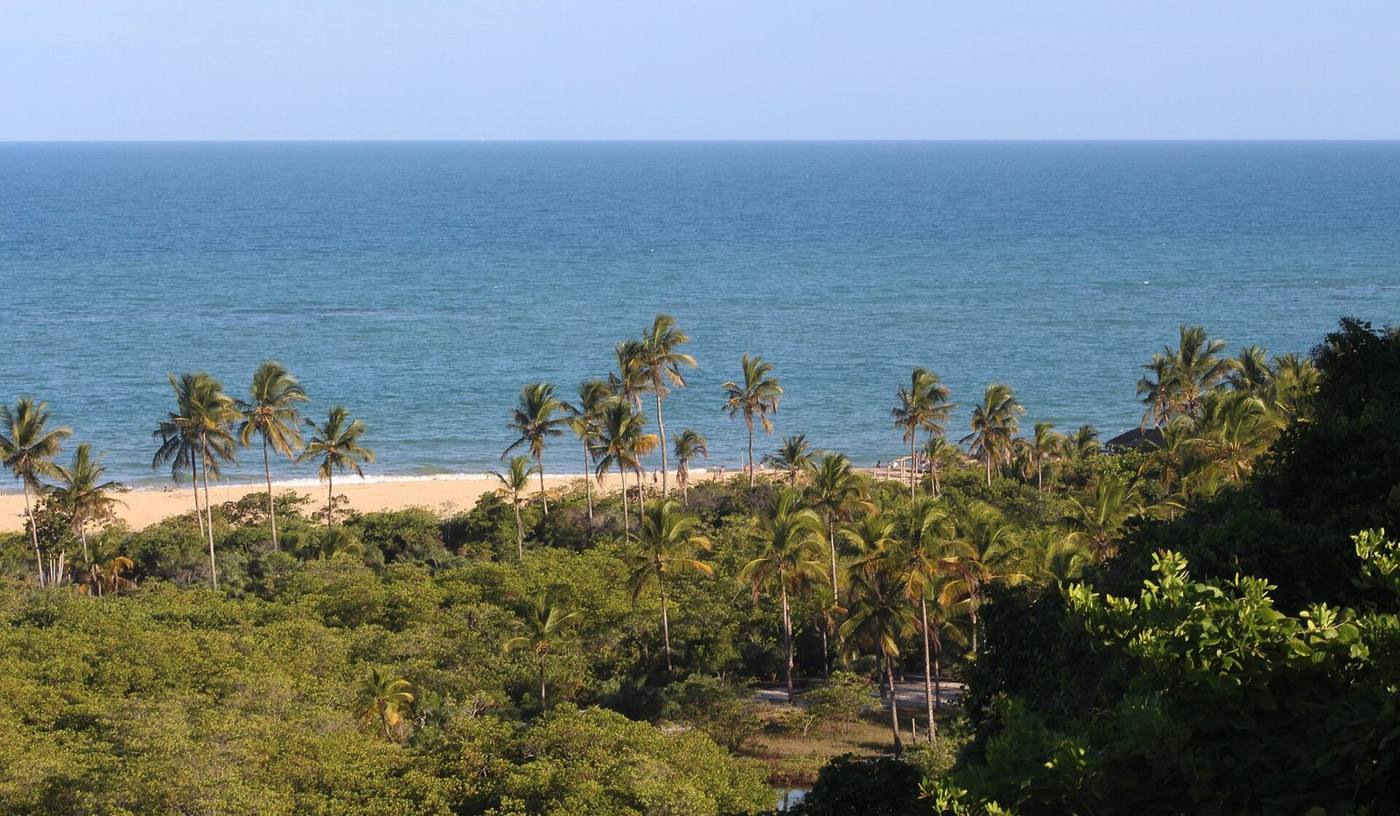
The coast where Brazil was discovered, south of Porto Seguro: the Quadrado of Trancoso with its colourful houses and white church above the sea, the cliffs of Arraial d'Ajuda, the village closed to cars of Caraíva with no paved roads and the Pataxó village of Barra Velha.
- Porto Seguro
- Arraial d'Ajuda
- Trancoso
- Caraíva
Day by day
- Day 1
Porto Seguro and the historic upper town
The Costa do Descobrimento, the coast of the discovery, lies in the south of Bahia state, in north-east Brazil. It is where Pedro Álvares Cabral's Portuguese ships arrived in 1500, the first Europeans to reach Brazil. Today it is a coast of long beaches below red and ochre cliffs, coconut palms, coral reefs close to shore, rivers and small villages, some still without paved roads. In six days you go from Porto Seguro to Arraial d'Ajuda, Trancoso and Caraíva.
Porto Seguro can be reached by air from São Paulo, Rio de Janeiro or Salvador.
In the afternoon, go up to the Cidade Histórica, the upper town, on a hill above the sea. It is one of the first Portuguese settlements in Brazil, with small colourful houses from the sixteenth and seventeenth centuries, the church of Nossa Senhora da Pena, the old town hall and jail, and the cross recalling the first mass. From the viewpoint you see the coast to the horizon.
Just north, at Coroa Vermelha, a cross and a small museum mark the place where the Portuguese celebrated the first mass on Brazilian soil in 1500, in front of the indigenous people. The Pataxó, one of the region's indigenous peoples, still live in the area and sell crafts.
In the evening, in town, walk along the Passarela do Álcool, the pedestrian street full of stalls, music and bars, and try moqueca baiana, fish stew with coconut milk, palm oil and coriander.
Practical tip: Italian citizens can enter Brazil without a visa for tourism. Bring cash for the smaller villages, where you cannot always pay by card.
- Day 2
Arraial d'Ajuda and the beaches below the cliffs
In the morning, take the ferry across the Buranhém river from Porto Seguro, in a few minutes, then go up to Arraial d'Ajuda, a village on a hill above the sea, about a quarter of an hour away.
Arraial d'Ajuda grew up around a small sixteenth-century white church dedicated to Nossa Senhora d'Ajuda, a pilgrimage site, on a terrace overlooking the sea. The Rua do Mucugê, the main street, runs down to the beach between craft shops, ice-cream parlours and bars.
The day is devoted to the beaches. To the south come the beaches of Mucugê, Parracho, Pitinga and Taípe, long stretches of sand below cliffs coloured red, yellow and white, with warm, calm water protected by coral reefs. At low tide, natural pools of clear water form on the reefs, where colourful fish swim.
Taípe beach, the most spectacular, has cliffs tens of metres high, and can be reached by walking along the shore for about an hour, or by car.
In the evening, return to the village for dinner and music. Arraial is known for its summer parties and for forró, the traditional music and dance of north-east Brazil.
Practical tip: the natural pools appear only at low tide. Check the tide table and plan your beach walks accordingly.
- Day 3
Trancoso: the Quadrado at sunset
In the morning, continue south to Trancoso, about forty minutes by car or bus. Trancoso is a small village on the cliffs above the sea that has become one of Brazil's best-loved destinations for its quiet beauty.
The heart of the village is the Quadrado, a large rectangular lawn surrounded by small colourful houses, now turned into shops, galleries and restaurants. At the end of the lawn, on the edge of the cliff, stands the white church of São João Batista, built by the Jesuits in the sixteenth century, with views over the sea and the river mouth. All the houses face the lawn, where children play football and horses graze.
In the afternoon, go down from the cliff to the beaches below the village: Praia dos Nativos and Praia do Rio Verde, where the river meets the sea forming small lagoons of warm fresh water. Along the beach are shacks where you eat fish under the palms.
At sunset, return to the Quadrado, when the lights of the houses and trees come on and the lawn becomes the village's living room, with tables outdoors and music.
In the evening, try Bahian dishes: acarajé, a bean fritter filled with prawns, and bobó de camarão, a cassava cream with prawns.
Practical tip: Trancoso is much more expensive than the nearby villages, especially in high season, from December to February. Book accommodation well in advance.
- Day 4
The beaches of Coqueiros and Espelho
Today is a day for the beaches south of Trancoso, among the most beautiful on the Bahia coast.
In the morning, go to Praia dos Coqueiros, a long beach with coconut palms, calm water and pale sand, just south of the village. You can walk along the shore for kilometres.
In the afternoon, continue to Praia do Espelho, the mirror beach, about half an hour by car on a dirt road. It is considered one of the most beautiful beaches in Brazil: a bay of white sand below coloured cliffs, with green and blue sea. At low tide, the coral reefs near the shore form natural pools of transparent water that reflect the sky like a mirror, hence the name. In the pools you see fish, starfish and corals.
Next to it is Praia do Curuípe, with cliffs and a river running into the sea, reachable on foot along the beach.
In this area tourism is controlled and there are few facilities, which keeps the beaches quiet even in high season.
In the evening, return to Trancoso and watch the starry sky from the Quadrado.
Practical tip: do not walk on or touch the corals: they are alive and break easily. Wear water shoes and use a reef-safe sunscreen.
- Day 5
Caraíva: canoe on the river and the Pataxó village
In the morning, continue south to Caraíva, about an hour and a half on a mostly unpaved road. Caraíva is a fishing village on a sand spit between the Caraíva river and the sea, with no paved roads and no cars: the streets are sand, and electricity arrived only a few years ago.
On arrival you leave the car on the opposite bank and cross by canoe in a few minutes. The village is made of small colourful houses among palms, with sandy streets, horses and carts. People walk barefoot.
In the afternoon, take a canoe trip on the river among the mangroves, or float with the current on an inflatable down to the river mouth, where it meets the sea.
About an hour's walk north along the beach, or by boat, is Barra Velha, the main village of the Pataxó, one of the indigenous peoples living on this coast before the Portuguese arrived. With a community guide you visit the village, hear the story of the people and their struggle for land, and see crafts made of seeds, feathers and wood.
In the evening, in Caraíva, people dance forró in small halls and outdoors, to accordion, triangle and zabumba drum, often until late.
Practical tip: there are no reliable cash machines in Caraíva. Bring enough cash for your whole stay.
- Day 6
A last morning in Caraíva and the return
On your last morning, walk on Caraíva beach at dawn, when fishermen haul in their nets and boats. To the south, the beach continues empty for kilometres, to Monte Pascoal National Park, the mountain the Portuguese first saw from the sea in 1500.
The park protects one of the last areas of Mata Atlântica, the Atlantic forest that once covered the whole coast of Brazil and today survives only in small fragments. With a guide you can climb the mountain, in about two hours, for views over the coast and the forest. The park is also part of the Pataxó territory, and some trails are guided by members of the community.
Then cross the river again by canoe and head back to Porto Seguro, in about two and a half hours, for your flight home.
This trip combines well with Salvador da Bahia to the north, with the historic Pelourinho, Afro-Brazilian culture and Bahian cooking, or with the southern Bahia coast, with Itacaré, Boipeba and Morro de São Paulo.
Practical tip: Italian citizens can enter Brazil without a visa for tourism. The US government rates Brazil level 2 of 4, exercise increased caution, with some higher-risk border areas. In the coastal villages, do not leave valuables on the beach.
Beautiful sea and a relaxed style, though Trancoso has become expensive. Espelho beach is at its best at low tide. Caraíva is only reached by dirt road and then canoe: travel light. At New Year and Carnival prices soar and everything is full.
Before you go
- Documents and visa
- Valid passport; no visa for tourism up to 90 days for EU citizens.
- Health and vaccines
- No compulsory vaccines arriving from Europe; yellow fever is recommended for the Amazon and some inland areas. Protect yourself against mosquitoes because of dengue. Emergencies: 190 police, 192 ambulance, 193 fire.
- Money and payments
- Brazilian real. Cards and instant payments are everywhere; carry little cash.
- Power sockets
- Type N, plus C, 127 or 220 volts depending on the city: check the voltage before plugging in devices.
- Time zone
- Rio and São Paulo are UTC-3 all year: Brazil does not use daylight saving time.
- Safety
- The United States rates Brazil level 2 for crime, with level 4 within 160 km of land borders (except Foz do Iguaçu and the Pantanal). No favelas without a community guide. Official advice: GOV.UK.
Information checked in November 2026 for Italian and EU citizens. Rules change: always check before you travel.
Variations
In 3 days: Trancoso only, with the Quadrado and Praia do Espelho.
In 9 days: add Salvador da Bahia at the start of the trip.
Frequently asked questions
When is the best time to go?
From September to March, with warm weather and less rain. From April to July it rains more. December, January and Carnival are high season, with higher prices.
Do I need a car?
It is convenient, but the roads to Caraíva and Praia do Espelho are partly unpaved. There are also local buses and taxis between the villages.
What documents do I need?
A passport. Italian citizens can enter Brazil without a visa for tourism.
Indicative itinerary written by World Atlas. Before booking, check timetables, seasonal openings, documents and safety.
 5 daysEasy
Paraná: Curitiba, Serra Verde and Ilha do Mel
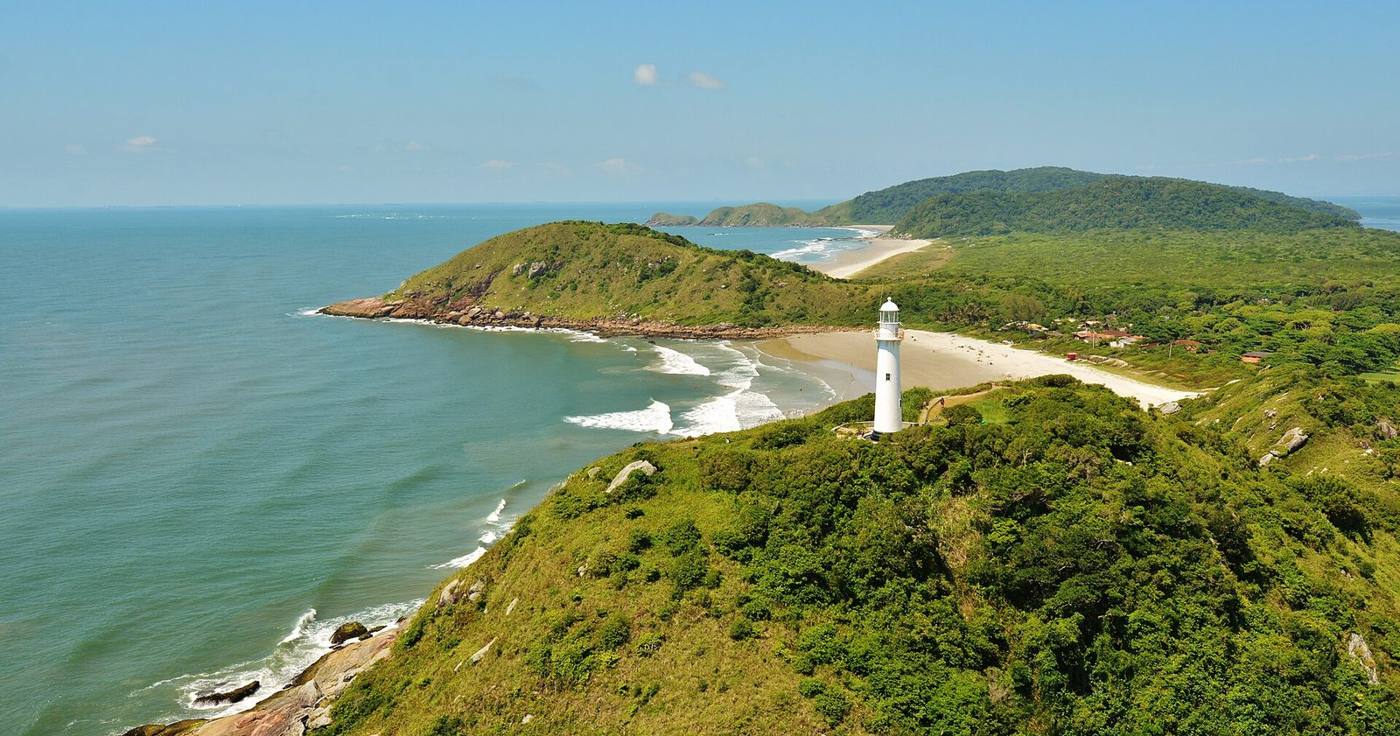
Curitiba, the city of parks, the scenic train descending through the Atlantic forest of the Serra do Mar to Morretes and its barreado stew, and Ilha do Mel, a island closed to cars with lighthouses, caves and wild beaches.
 7 daysEasy
Florianópolis and the Santa Catarina coast
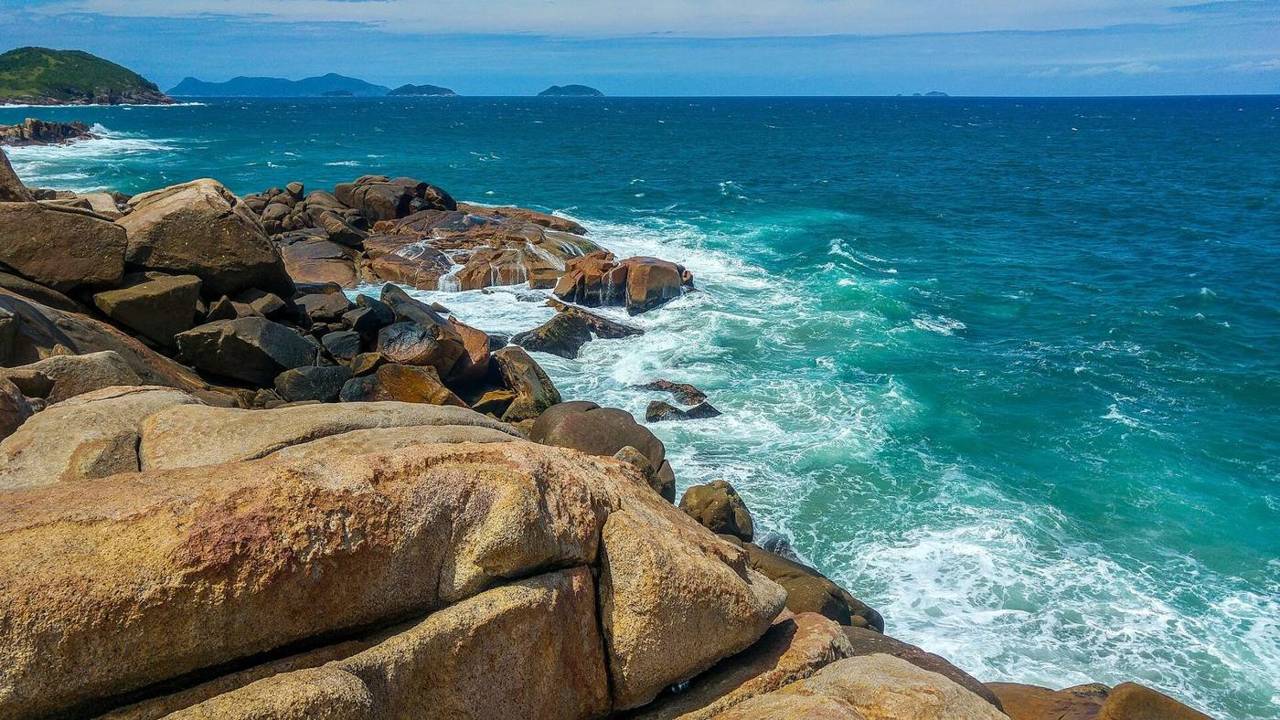
The island of Florianópolis with over forty beaches, Conceição lagoon and fishing villages of Azorean origin, then the coast to the south: Guarda do Embaú between river and sea and Praia do Rosa, where southern right whales arrive in winter.
 7 daysEasy
Serra Gaúcha: wines and canyons
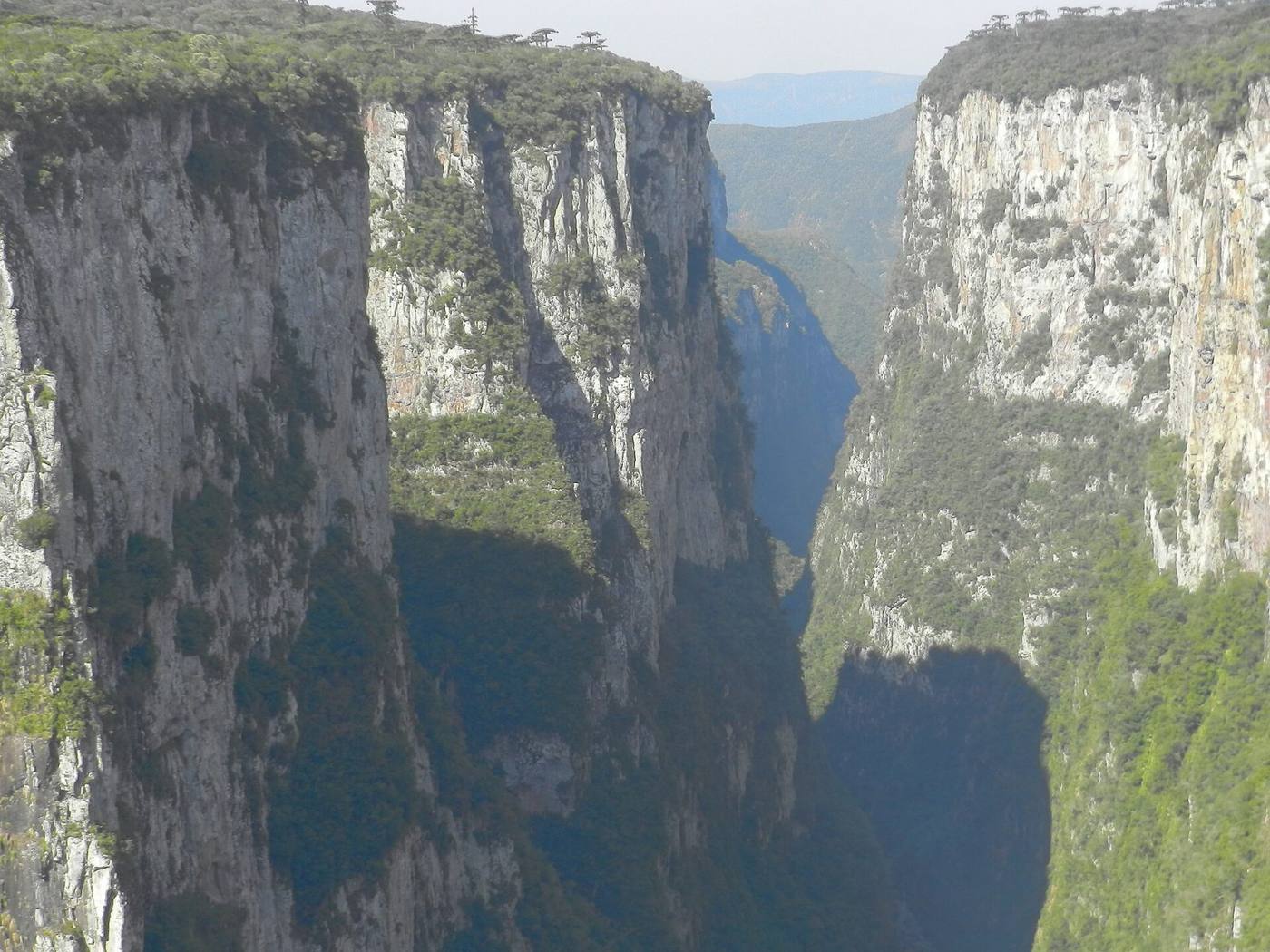
The Brazil of Italian and German immigrants: the wineries of the Vale dos Vinhedos in Bento Gonçalves, Gramado and Canela with the Caracol falls, and the Itaimbezinho and Fortaleza canyons, 700-metre walls opening towards the Atlantic.