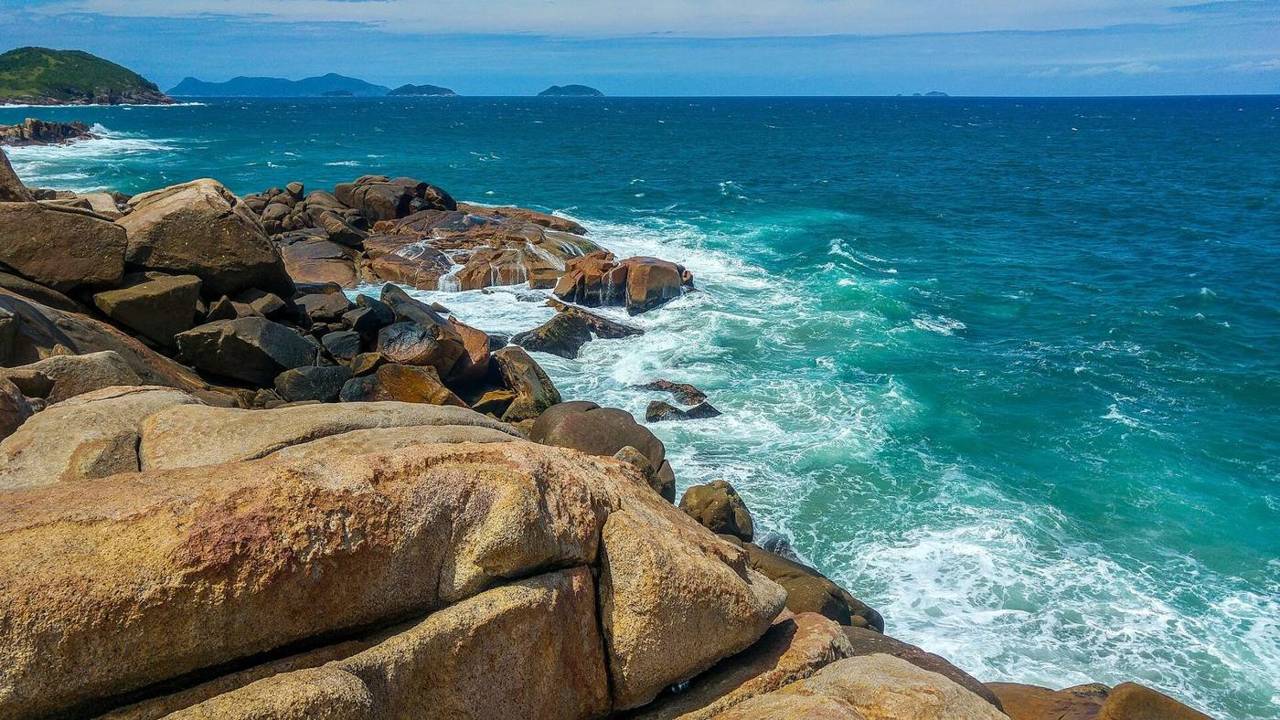
Florianópolis and the Santa Catarina coast
The island of Florianópolis with over forty beaches, Conceição lagoon and fishing villages of Azorean origin, then the coast to the south: Guarda do Embaú between river and sea and Praia do Rosa, where southern right whales arrive in winter.
- Florianópolis
- Lagoa da Conceição
- Santo Antônio de Lisboa
- Campeche
- Guarda do Embaú
- Praia do Rosa
Day by day
- Day 1
Florianópolis: the old centre, the market and the Hercílio Luz bridge
Florianópolis is the capital of the state of Santa Catarina in southern Brazil. Most of the city sits on a long green island linked to the mainland by bridges, with more than forty beaches, lagoons, dunes and hills covered in Atlantic forest. The climate is cooler than in the north of the country and the atmosphere is relaxed. Over seven days you explore the island, the villages founded by Azorean settlers, the beaches and the coast to the south as far as Praia do Rosa, where whales arrive in winter.
The international airport is on the island, about twenty minutes from the centre, with flights from São Paulo, Rio de Janeiro and Buenos Aires.
The first day is for the centre. The main square, Praça XV de Novembro, is dominated by a huge century old fig tree whose branches are held up by poles. Next to it are the cathedral and the Cruz e Sousa palace, home to a history museum. Nearby, the Public Market, a yellow nineteenth century building, is full of fish, prawn and spice stalls and small bars serving fried fish.
Towards evening go and see the Hercílio Luz bridge, a large suspension bridge from the 1920s and the city's symbol, reopened after a long restoration. It is beautiful when lit up at night.
Spend the night in Florianópolis, in the centre or around Lagoa da Conceição.
Practical tip: check visa requirements for Brazil for your nationality before you travel; Italians do not need a visa for tourism. In the city, get around by taxi or ride hailing apps, especially at night, and keep your phone out of sight in crowded areas.
- Day 2
Santo Antônio de Lisboa, oysters and Lagoa da Conceição
In the morning go to Santo Antônio de Lisboa, a small village on the west coast of the island, facing the calm waters of the bay. It was founded in the eighteenth century by settlers from the Azores in Portugal, and keeps the low colourful houses, white church and stone lanes of that time. Locals still speak with a distinctive accent, and the women make bobbin lace, a tradition brought from the Azores.
Santa Catarina produces more oysters than any other region of Brazil, and you can see the oyster farms in the sea in front of the village. At lunch try them raw, grilled or steamed on the seafront. At sunset the village is one of the best places on the island to watch the sun sink into the sea.
In the afternoon cross the island to Lagoa da Conceição, a large brackish lagoon in the middle of the island, surrounded by green hills and white dunes. The village on its shore is lively, with shops, bars and venues where you can hear music in the evening.
Stop at the viewpoint on the road down to the lagoon to see it all from above: the water, the Joaquina dunes and the ocean beyond. People go sandboarding on the dunes, sliding down on a board.
In the evening have dinner by the lagoon and spend the night nearby.
Practical tip: the island has few, narrow roads, and traffic is very heavy on summer weekends. Set off early and allow plenty of time between areas.
- Day 3
The trail to Lagoinha do Leste or the boat to Campeche Island
Today you choose between two days in nature. The first is the trail to Lagoinha do Leste, considered one of the most beautiful and unspoilt beaches on the island. There is no road: you get there only on foot or by boat. The trail starts in the village of Pântano do Sul in the south of the island and climbs through Atlantic forest for an hour and a half to two hours before dropping to the sea. From above you see the beach with a small freshwater lagoon behind it and hills all around. The path is steep and slippery in places: you need proper shoes.
The second option is Campeche Island, a small island off the beach of the same name, with clear water and white sand. It is a protected area for its natural and archaeological value: ancient rock engravings can be seen on the stones. Boats leave from Campeche beach or Armação, and the number of daily visitors is limited: book and check the rules. On the island there are short guided trails and you can snorkel near the shore.
Either way, take water, food and sunscreen, as there are no facilities on the wild beaches.
In the late afternoon head back to Pântano do Sul, a fishing village where you can eat the catch of the day with a sea view.
Spend the night on the island.
Practical tip: currents can be strong on the ocean beaches. Swim only where there are lifeguards and ask for advice before going in at isolated beaches.
- Day 4
Beaches of the north and south of the island
Today you tour the island by car to see different beaches. The north is the most built up and busiest part, with calmer, warmer water that suits families. Jurerê is the smart beach, with luxury homes and quiet sea. Nearby stands the fortress of São José da Ponta Grossa, built by the Portuguese in the eighteenth century to defend the island, restored and open to visitors, with a fine sea view.
Further east are Praia Brava and Santinho, with bigger waves popular with surfers. At Santinho, on the rocks at the end of the beach, there are more ancient rock engravings, similar to those on Campeche.
In the afternoon head down to the south of the island, wilder and less developed. Here you find the beaches of Armação, with its little fishermen's church, Matadeiro, reached by a short walk and a small bridge, and the village of Ribeirão da Ilha, another Azorean settlement with an eighteenth century church and colourful houses by the sea. Oysters are farmed here too, and the seafront restaurants serve them in many ways.
At sunset head back north or to the lagoon. The southern coast road, between hills and sea, is one of the most beautiful on the island.
Spend the night on the island.
Practical tip: in summer, from December to February, the northern beaches are very crowded. In March and April the sea is still warm and there are far fewer people.
- Day 5
Guarda do Embaú and the river you cross on foot
Today you leave the island and head south along the coast. After about an hour you reach Guarda do Embaú, a surf village inside a nature park, the Serra do Tabuleiro state park, a large protected area of mountains, forest and coast.
The village is separated from the beach by a river, the Rio da Madre, which meets the sea right here. To reach the sand you cross the river: at low tide the water comes up to your waist or a little higher and you wade across holding your bag up high; otherwise small boats ferry people back and forth. It is one of the most fun moments of the trip.
On the other side the beach is long and wild, with dunes and green hills behind it. The waves are famous among Brazilian surfers. If you do not surf, relax in the sun or walk to the rocks at the end of the beach.
In the afternoon hike the Pedra do Urubu trail, a short but steep walk up the hill above the village. From the top you see the river winding between the sand and the sea, one of the most photographed views on the coast.
In the evening continue south and spend the night in Guarda do Embaú or nearby.
Practical tip: wade across the river only when the current is weak, and ask locals when the tide is right. Do not leave valuables unattended on the beach.
- Day 6
Praia do Rosa: clifftop trails and whales from the shore
Today you continue south for about an hour to Praia do Rosa, in the municipality of Imbituba. It is one of the most beautiful bays in southern Brazil: a crescent beach enclosed by green hills and cliffs, with a village of houses scattered among the trees.
The area is part of a protected zone for the southern right whale. Every year, roughly from July to November, these great whales come up from the cold Antarctic waters to give birth and nurse their calves in the calm bays of this coast. They often swim very close to shore and can be seen well from land, from the cliffs and viewpoints. Boat trips to watch them have been suspended or restricted for years to protect them: check the current rules.
The area is lovely out of season too. Trails lead from the beach along the cliffs to nearby bays, such as Praia Vermelha, a small red beach hidden among the rocks, and the Ibiraquera lagoon, where people kitesurf and watch the sunset over calm water.
In the afternoon relax on the beach or take a surf lesson. In the evening the village has small restaurants and a peaceful atmosphere.
Spend the night in Praia do Rosa.
Practical tip: bring binoculars for the whales. Never approach whales in the water, whether swimming or on a board or kayak: the protected area's rules forbid it.
- Day 7
A last morning by the sea and the journey back
Spend your last morning slowly in Praia do Rosa. If you are there in season, climb early to one of the clifftop viewpoints: the morning light and calm sea make it easier to spot the whales' blows and their tails rising from the water.
Out of season, take a walk on the beach or along the trail to the tip of the bay, where waves break on the rocks and you often see sea turtles and birds fishing.
Late in the morning pack up and drive back to Florianópolis, about an hour and a half to two hours depending on traffic. If you have time, stop in Garopaba, a fishing town with a small church by the sea and a pleasant old centre, or in Pinheira, with its long quiet beach.
Back on the island, return the car and head to the airport. If your flight is the next day, spend your last evening in Santo Antônio de Lisboa or Ribeirão da Ilha for a final dinner of oysters as the sun goes down.
Practical tip: traffic on the southern coast road can be slow at weekends and on public holidays. Leave well ahead so as not to risk your flight, and allow at least three hours for international departures.
A calm and safe Brazil, with a hot summer and a cool winter. Whales are watched from the coast: boat trips to approach them are banned in the protected area. Campeche island has a visitor limit and the boat must be booked. In January and February the island is full of Brazilian and Argentine tourists.
Before you go
- Documents and visa
- Valid passport; no visa for tourism up to 90 days for EU citizens.
- Health and vaccines
- No compulsory vaccines arriving from Europe; yellow fever is recommended for the Amazon and some inland areas. Protect yourself against mosquitoes because of dengue. Emergencies: 190 police, 192 ambulance, 193 fire.
- Money and payments
- Brazilian real. Cards and instant payments are everywhere; carry little cash.
- Power sockets
- Type N, plus C, 127 or 220 volts depending on the city: check the voltage before plugging in devices.
- Time zone
- Rio and São Paulo are UTC-3 all year: Brazil does not use daylight saving time.
- Safety
- The United States rates Brazil level 2 for crime, with level 4 within 160 km of land borders (except Foz do Iguaçu and the Pantanal). No favelas without a community guide. Official advice: GOV.UK.
Information checked in November 2026 for Italian and EU citizens. Rules change: always check before you travel.
Variations
In 4 days: just Florianópolis island, with the centre, the lagoon and the beaches.
In 10 days: add the Serra Gaúcha, with its canyons and wine towns, in the neighbouring state.
Frequently asked questions
When is the best time to go?
December to March for warm sea. July to November for the whales, with cooler temperatures but often fine days.
Do I need a car?
Yes, it is the easiest way to get around the island and down the coast. In the city, taxis or ride hailing apps are enough.
Can I swim all year?
The water is warm from December to April. In winter, from June to August, it is cool and you need a wetsuit for surfing.
Indicative itinerary written by World Atlas. Before booking, check timetables, seasonal openings, documents and safety.
 7 daysEasy
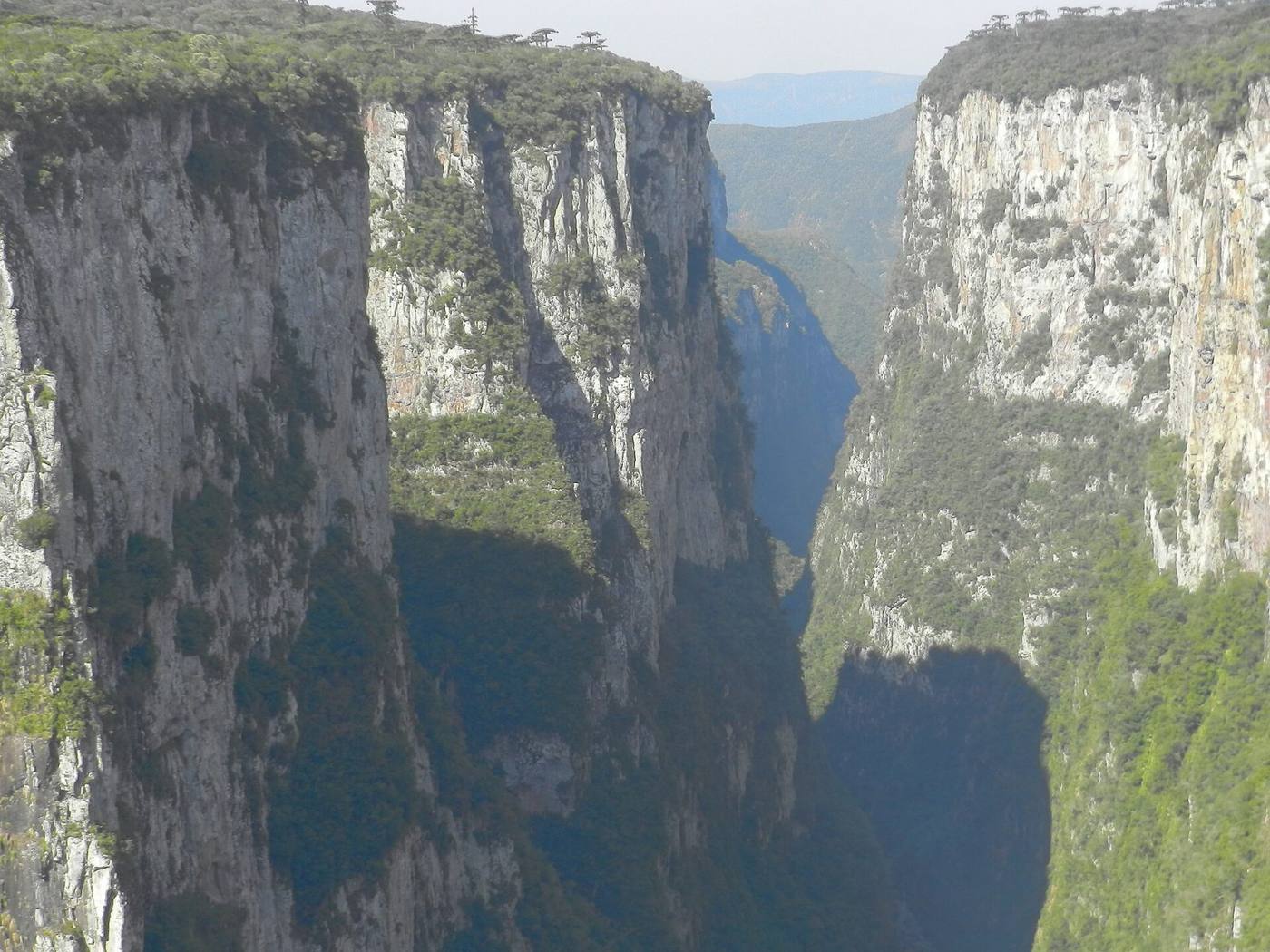
Serra Gaúcha: wines and canyons
The Brazil of Italian and German immigrants: the wineries of the Vale dos Vinhedos in Bento Gonçalves, Gramado and Canela with the Caracol falls, and the Itaimbezinho and Fortaleza canyons, 700-metre walls opening towards the Atlantic.
 5 daysModerate
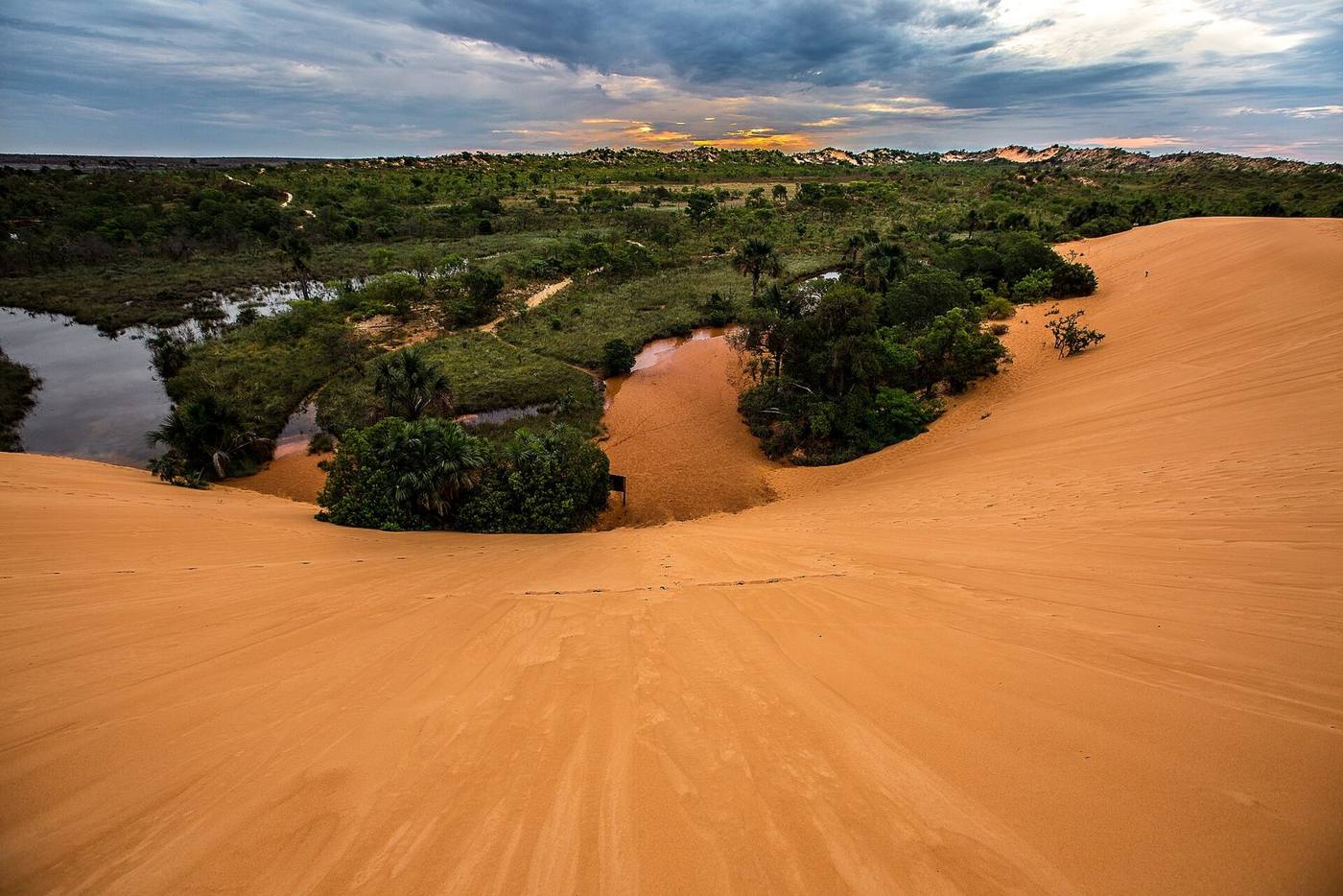
Jalapão: dunes and fervedouros
One of Brazil's most remote areas, in Tocantins: orange dunes in the savanna, the fervedouros, spring-fed pools where the sand pushes you up so you cannot sink, waterfalls, the Pedra Furada rock arch and golden grass crafts.
 6 daysModerate
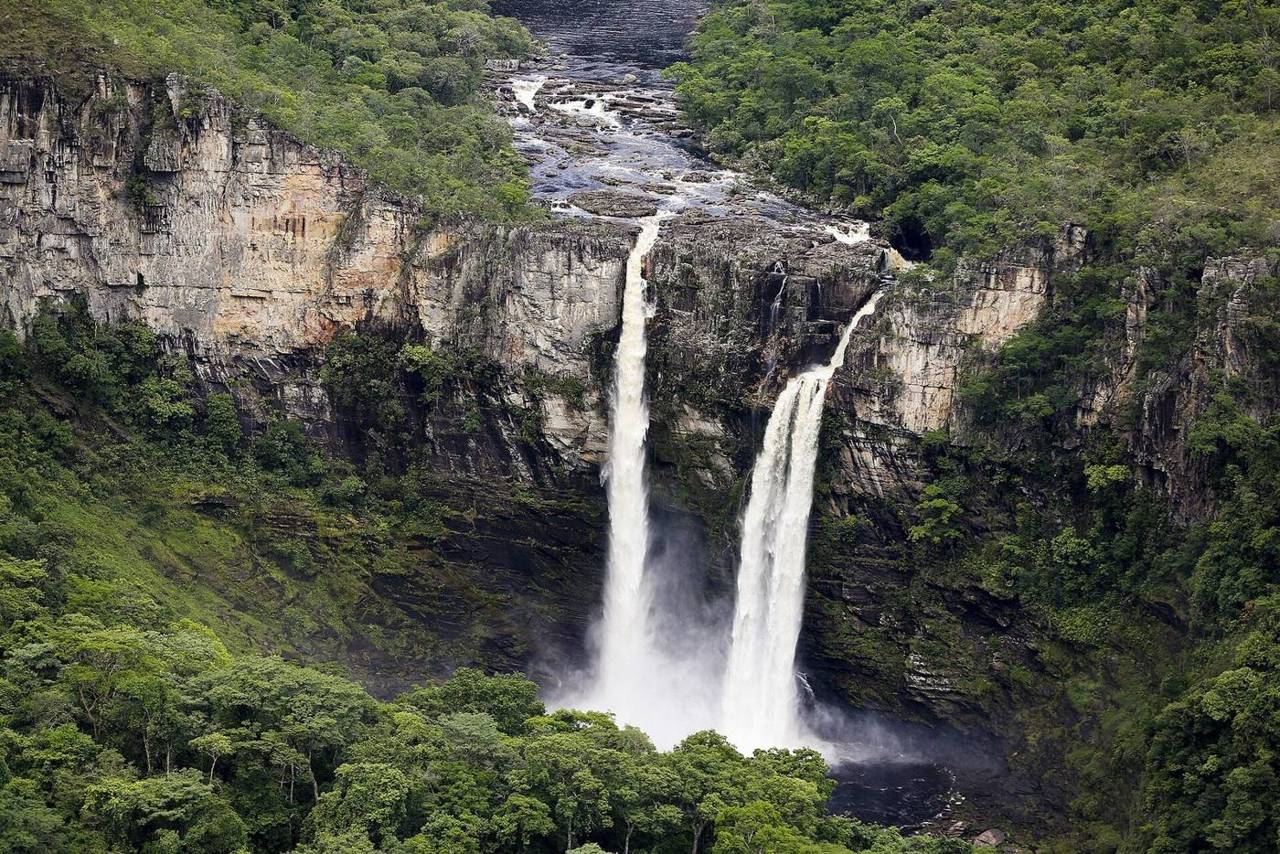
Brasília and the Chapada dos Veadeiros
Oscar Niemeyer's modernist capital, a UNESCO World Heritage site, and the Chapada dos Veadeiros plateau in the cerrado, with canyons, waterfalls, quartz rocks and the Valley of the Moon.