Paraná: Curitiba, Serra Verde and Ilha do Mel
Curitiba, the city of parks, the scenic train descending through the Atlantic forest of the Serra do Mar to Morretes and its barreado stew, and Ilha do Mel, a island closed to cars with lighthouses, caves and wild beaches.
- Curitiba
- Serra do Mar
- Morretes
- Paranaguá
- Ilha do Mel
Day by day
- Day 1
Curitiba: the Jardim Botânico, the Ópera de Arame and the Oscar Niemeyer Museum
EU citizens can enter Brazil without a visa for tourism for up to ninety days with a passport valid for at least six months. Check the rules for your nationality.
Curitiba, capital of the state of Paraná in southern Brazil, is a city on the plateau at about nine hundred metres, with a cooler climate than the rest of the country. It is famous worldwide for its urban planning: it was one of the first cities in the world to create bus-only lanes, with glass tube-shaped stops, and it has many parks and green spaces. It received large Italian, Polish, German and Ukrainian immigration, visible in its districts and cooking. From the airport you reach the centre in about half an hour.
In the morning visit the Jardim Botânico, the botanical garden and symbol of the city, with its large art nouveau iron and glass greenhouse full of tropical plants, in front of French-style gardens with geometric flowerbeds.
Then reach the Ópera de Arame, the wire opera house, a theatre built of steel tubes and transparent panels in the middle of a pond in an old quarry, surrounded by vegetation and reached by a walkway over the water.
In the afternoon visit the Oscar Niemeyer Museum, designed by the great Brazilian architect and called the eye museum for its main part, a huge eye-shaped volume raised on a yellow column, with exhibitions of Brazilian and international modern and contemporary art.
In the evening stroll through the historic Largo da Ordem district, with colonial houses and bars.
Practical tip: Curitiba's weather often changes within the same day, even in summer; bring a light jacket.
- Day 2
The Serra Verde train to Morretes, barreado and Antonina
In the morning take the Serra Verde Express train linking Curitiba with Morretes across the Serra do Mar, the mountain range separating the plateau from the coast, in about four hours. The railway, built in the nineteenth century, is considered one of Brazil's boldest engineering works: it drops about nine hundred metres over bridges and viaducts suspended above gorges, through tunnels and along rock walls, amid the Mata Atlântica, the Atlantic Forest, one of the world's most species-rich forests, protected as UNESCO World Heritage. From the window you see waterfalls, canyons and, on clear days, the coastal plain and the sea. The train does not run every day and seats must be booked ahead: check the timetable on the official website.
In Morretes, a colonial town on the Nhundiaquara river with colourful houses and a church, have lunch of barreado, the signature dish of the Paraná coast: beef cooked slowly for many hours in a clay pot sealed with flour paste, served with manioc flour and bananas.
In the afternoon continue to Antonina, about twenty minutes away, a small colonial port on Paranaguá Bay, with nineteenth-century houses, a hilltop church and views over the bay and mountains.
In the evening stay in Morretes or go on to Paranaguá on the coast.
Practical tip: for the best views from the train, sit on the left side on the descent to Morretes; bring a jacket, as it is cool in the mountains.
- Day 3
The boat to Ilha do Mel: Nova Brasília and the Conchas lighthouse
In the morning reach Pontal do Sul on the coast, about an hour from Paranaguá, and take the boat to Ilha do Mel, the island of honey, at the entrance to Paranaguá Bay, in about half an hour. There are also slower direct boats from Paranaguá.
Ilha do Mel is a small island protected as a nature reserve, with no cars, sandy paths, beaches, forest, rocks and small fishing villages. The number of visitors allowed on the island at the same time is limited, especially in high season, to protect nature: book accommodation in advance and check the rules before going. The two main areas are Nova Brasília in the north and Encantadas in the south, linked by a coastal path.
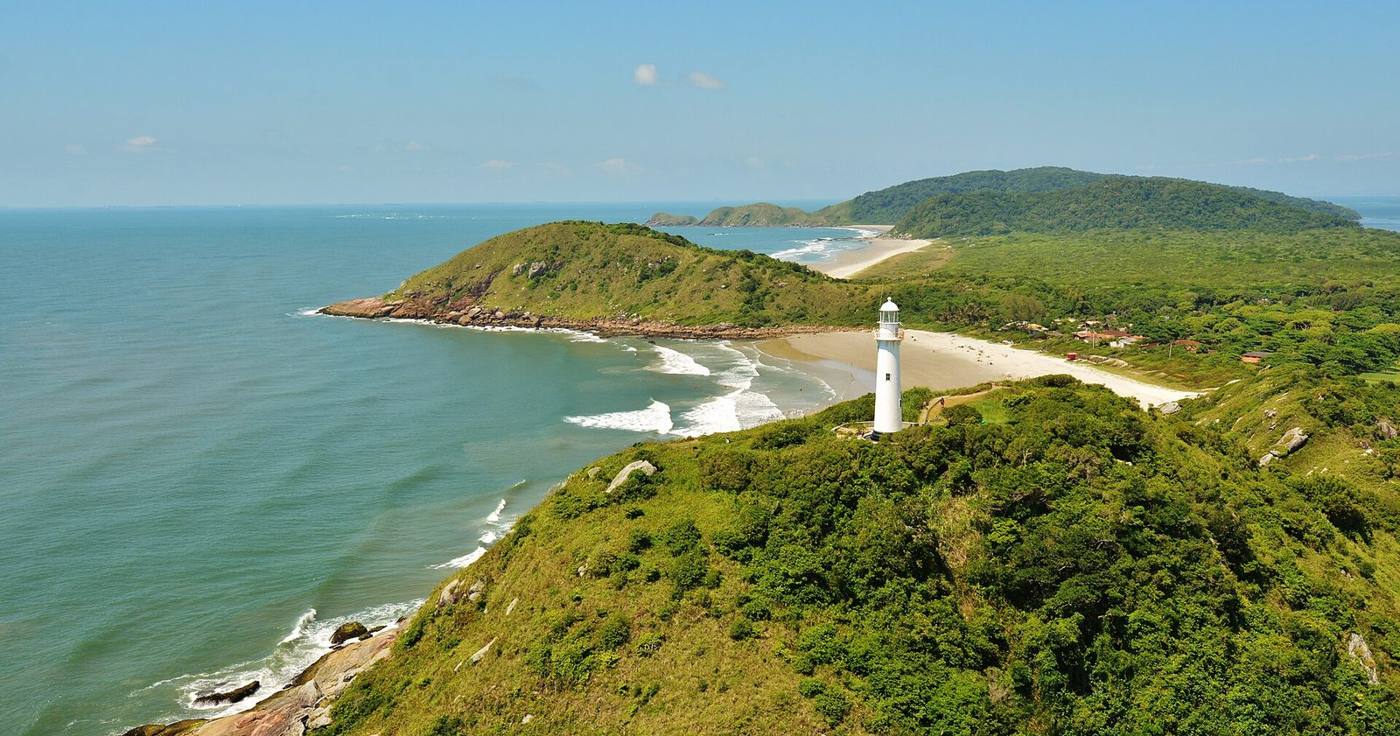
Stay two nights in Nova Brasília. In the afternoon walk to the Conchas lighthouse, built in 1872 on a hill above the village, with iron parts brought from Scotland. You climb a staircase to the top, from where you see the whole island, the beaches, the bay and the open sea. At sunset it is one of the island's most beautiful spots.
In the evening have fresh fish or prawns at one of the small wooden places on the beach.
Practical tip: there are few or no cash machines on the island; bring cash in reais. You always walk on sand: wear comfortable shoes and bring a backpack rather than a wheeled suitcase.
- Day 4
The Encantadas cave, the fortress and the beaches of Ilha do Mel
Today is a whole day on the island, on foot.
In the morning walk south along the coast from the beaches of Nova Brasília to Encantadas, on a path of about two hours through beaches, dunes and rocky passages, best done at low tide. Alternatively take a boat between the two villages. At Encantadas visit the Gruta das Encantadas, a sea cave carved into the rock, reached by a short path and linked to fishermen's legends of mermaids singing inside.
Then swim at Praia de Fora, the beach facing the open sea, with waves popular with surfers, or at the calmer beaches on the bay side.
In the afternoon head back north to the Fortaleza de Nossa Senhora dos Prazeres, an eighteenth-century stone fortress built by the Portuguese at the north-eastern tip of the island to defend the entrance to Paranaguá Bay from enemy ships, with cannons still pointing out to sea. From here a path climbs to the viewpoint on the hill above the fortress.
In the evening, if the sky is clear, watch the stars on the beach: there are few lights on the island.
Practical tip: on the coastal paths check the tide times, and do not swim where currents are strong or where swimming is prohibited.
- Day 5
Back to Curitiba
In the morning take a last walk on the beach, then the boat back to Pontal do Sul and the bus or car to Curitiba, about two and a half hours, on the road climbing the Serra do Mar.
Alternatively, if you have time, return to Curitiba on the Estrada da Graciosa, a historic eighteenth-century cobbled road climbing through the mountains and the Atlantic Forest, with viewpoints, waterfalls and small rest stops. It is slower but far more scenic than the main road.
In Curitiba, if your flight leaves in the evening, visit Santa Felicidade, the Italian immigrants' district, with houses of the first settlers from the Veneto and large restaurants serving polenta, chicken and pasta, or Tanguá park, with its artificial waterfall and city views, or the Bosque do Papa, with the wooden houses of Polish settlers.
Afonso Pena airport is about half an hour from the centre.
Things to take home: honey and Atlantic Forest products, cachaça from Morretes, the Brazilian sugarcane spirit, dried bananas, and indigenous and caiçara handicrafts, made by the coastal people.
Practical tip: in Brazilian cities, do not hold your phone in your hand in the street, and use ride apps in the evening. The United States has a medium advisory level for Brazil. Check your government's travel advice before leaving.
A short, easy trip, ideal for combining city, forest and sea. The train is best under clear skies: fog is frequent in the Serra do Mar. Ilha do Mel has a daily cap on visitors to protect the environment: in high season book your lodging and the boat.
Before you go
- Documents and visa
- Valid passport; no visa for tourism up to 90 days for EU citizens.
- Health and vaccines
- No compulsory vaccines arriving from Europe; yellow fever is recommended for the Amazon and some inland areas. Protect yourself against mosquitoes because of dengue. Emergencies: 190 police, 192 ambulance, 193 fire.
- Money and payments
- Brazilian real. Cards and instant payments are everywhere; carry little cash.
- Power sockets
- Type N, plus C, 127 or 220 volts depending on the city: check the voltage before plugging in devices.
- Time zone
- Rio and São Paulo are UTC-3 all year: Brazil does not use daylight saving time.
- Safety
- The United States rates Brazil level 2 for crime, with level 4 within 160 km of land borders (except Foz do Iguaçu and the Pantanal). No favelas without a community guide. Official advice: GOV.UK.
Information checked in November 2026 for Italian and EU citizens. Rules change: always check before you travel.
Variations
In 3 days: Curitiba on day one, the train to Morretes on day two and back to Curitiba in the evening, without Ilha do Mel.
In 9 days: add the Iguaçu Falls in western Paraná with a flight from Curitiba, or Superagui island and the Guaraqueçaba coast.
Frequently asked questions
Do I need a visa for Brazil?
EU citizens need no visa for tourist stays of up to ninety days, with a passport valid for at least six months.
Does the Serra Verde train run every day?
No: times and days change with the season, and seats must be booked. Check the official website before planning.
Can you visit Ilha do Mel as a day trip?
Yes, but it is better to stay at least one night. Visitor numbers on the island are limited, especially in high season: book accommodation ahead.
Indicative itinerary written by World Atlas. Before booking, check timetables, seasonal openings, documents and safety.
 7 daysEasy
Florianópolis and the Santa Catarina coast
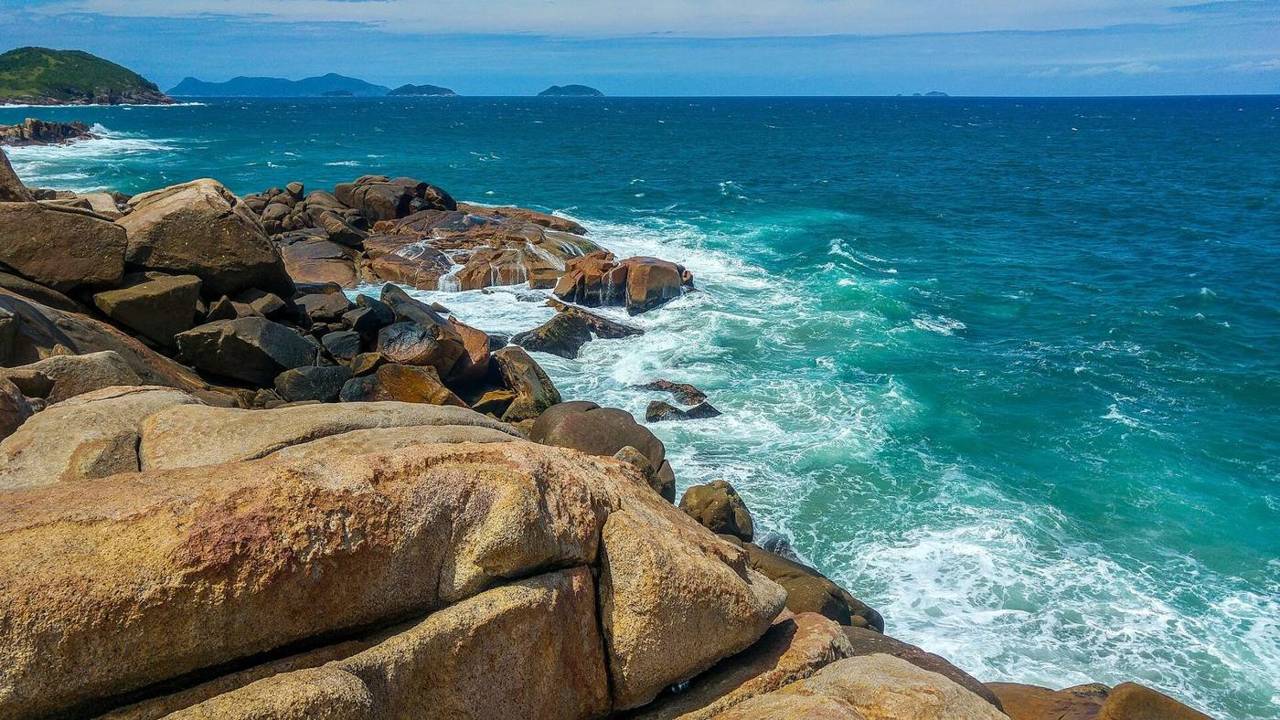
The island of Florianópolis with over forty beaches, Conceição lagoon and fishing villages of Azorean origin, then the coast to the south: Guarda do Embaú between river and sea and Praia do Rosa, where southern right whales arrive in winter.
 7 daysEasy
Serra Gaúcha: wines and canyons
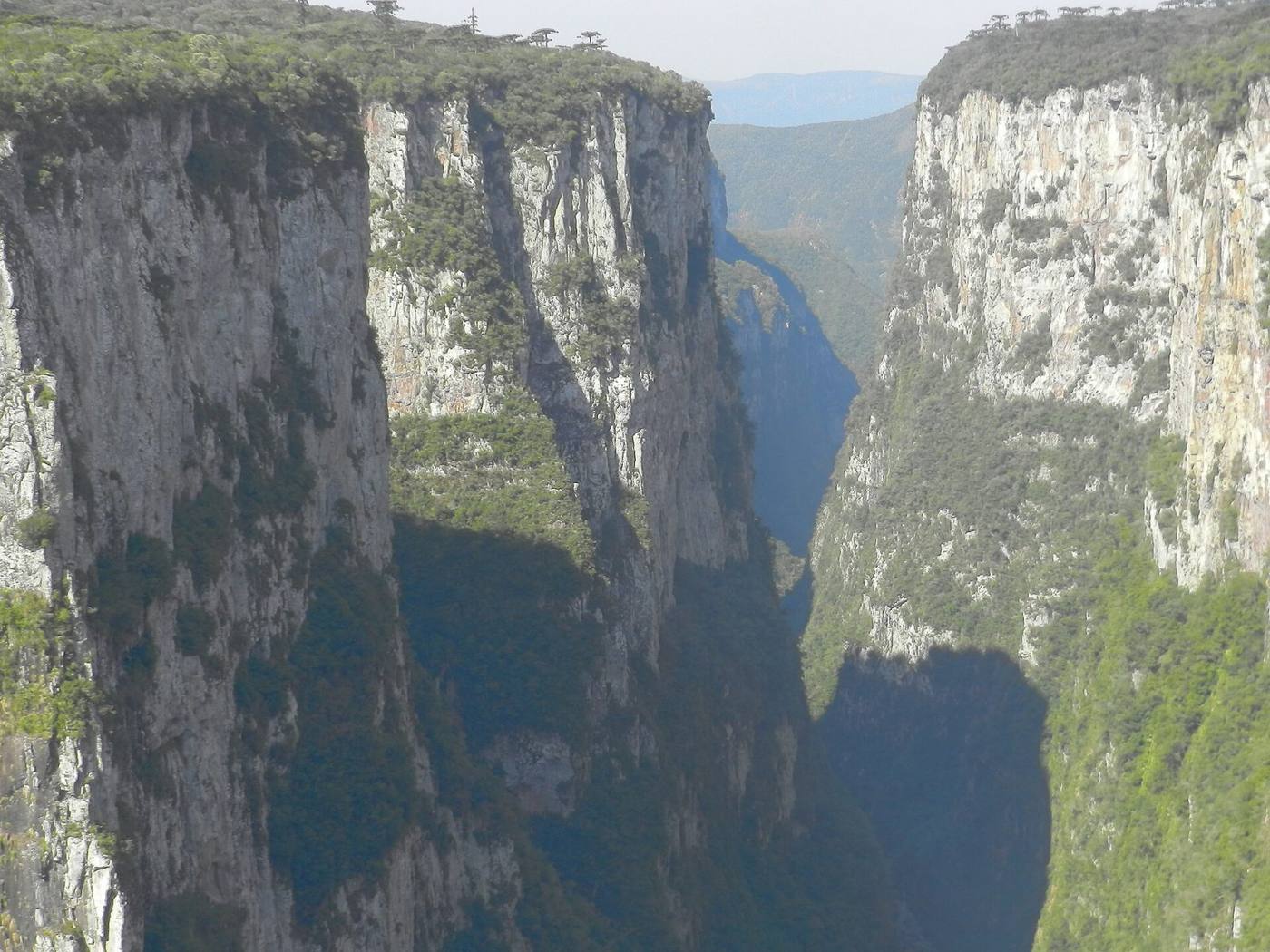
The Brazil of Italian and German immigrants: the wineries of the Vale dos Vinhedos in Bento Gonçalves, Gramado and Canela with the Caracol falls, and the Itaimbezinho and Fortaleza canyons, 700-metre walls opening towards the Atlantic.
 5 daysModerate
Jalapão: dunes and fervedouros
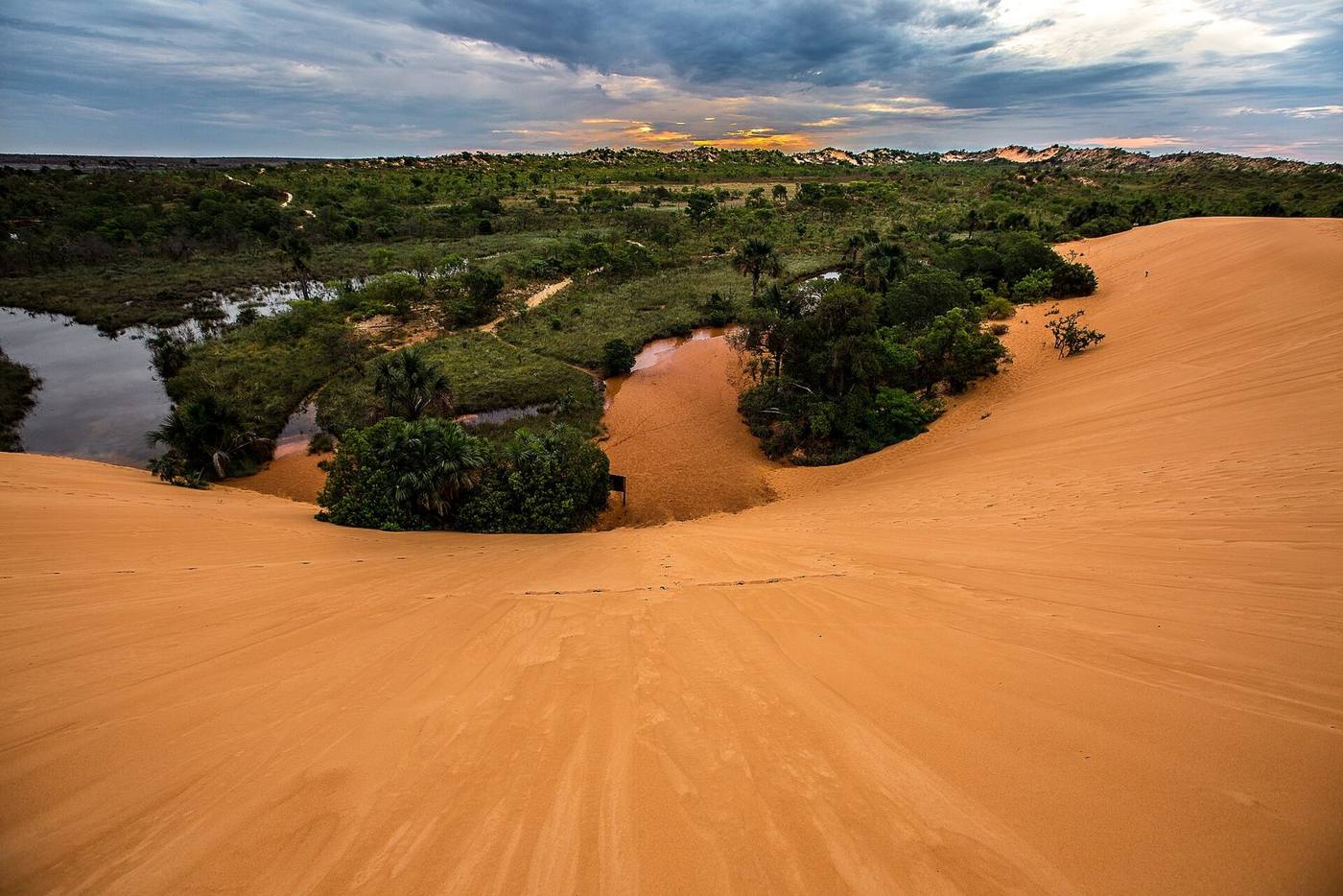
One of Brazil's most remote areas, in Tocantins: orange dunes in the savanna, the fervedouros, spring-fed pools where the sand pushes you up so you cannot sink, waterfalls, the Pedra Furada rock arch and golden grass crafts.