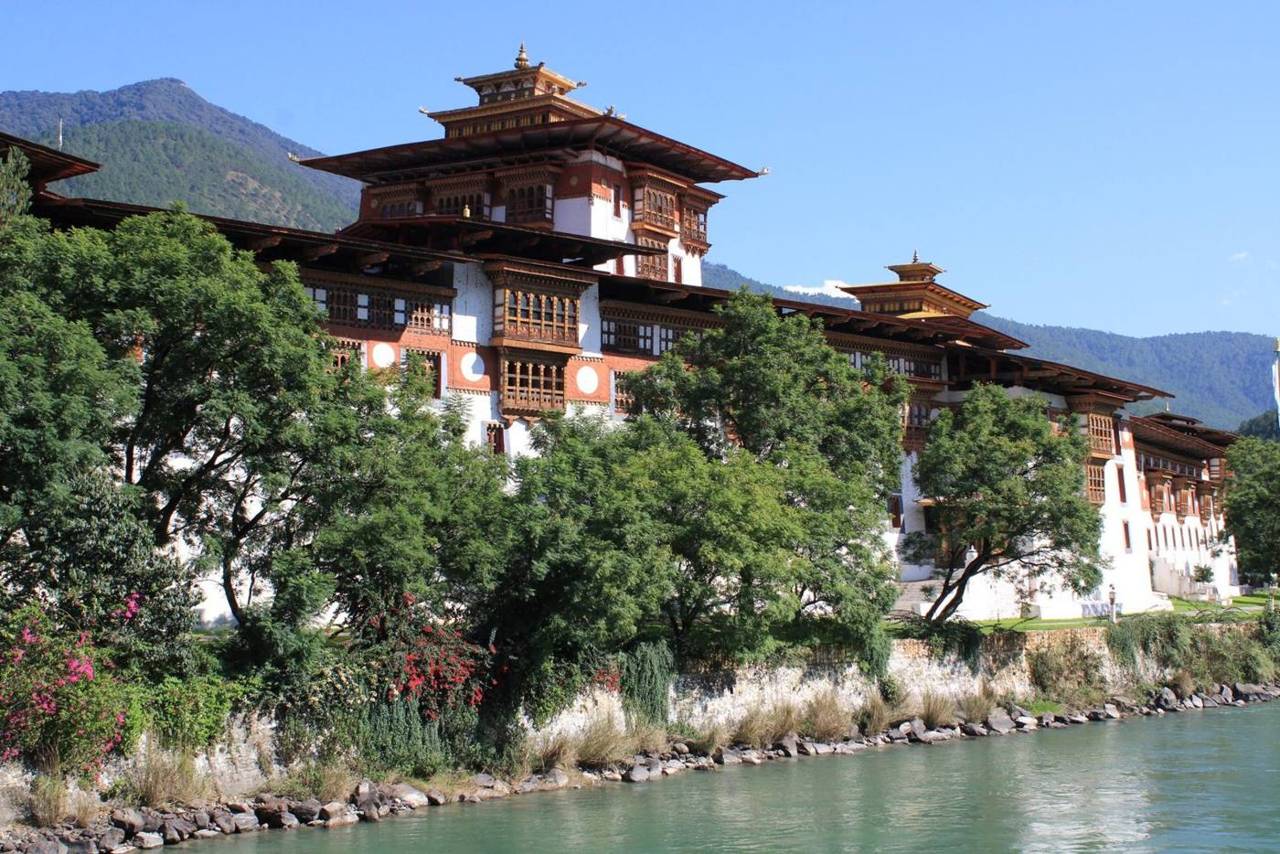
The Bumthang valley
Central Bhutan: the Phobjikha valley with its black-necked cranes, Trongsa, the ancient temples of Bumthang and its tsechu festivals.
- Paro
- Thimphu
- Punakha
- Phobjikha
- Trongsa
- Jakar
- Bumthang
Day by day
- Day 1
Arrival in Paro
This nine day trip takes you from western Bhutan to the spiritual heart of the country. After Paro, Thimphu and Punakha, you cross the glacial valley of Phobjikha and Trongsa Dzong and reach Bumthang, the land of the oldest temples, of saints and of tsechu festivals.
Before you go: for Bhutan you need a passport valid for at least six months after you leave the country and a visa, applied for in advance online on the official immigration portal; it costs 40 dollars, non refundable, and is stamped on arrival. For every night you pay the Sustainable Development Fee, the SDF: 100 dollars a night for an adult, 50 for children aged 6 to 11, while children under 6 do not pay; the government has confirmed this rate until 31 December 2029. You must be accompanied at all times by a licensed guide, but you do not have to book through a tour operator: you can arrange certified hotels, a guide and a car yourself. Insurance is not compulsory, but it is strongly recommended. Other nationalities should check their own rules.
The mountain roads of central Bhutan are slow and narrow, with possible landslides in the monsoon: each move between valleys takes almost a day. Travel by day and allow time for delays.
Today you land in Paro, in a narrow valley between forested mountains. In the afternoon visit Rinpung Dzong, the fortress monastery above the river, and cross the covered wooden bridge. If you still have energy, climb to Ta Dzong, the watchtower that houses the National Museum. Check prices and times.
Practical tip: on the first day walk slowly and drink plenty. Paro is above 2,000 metres and in the coming days you will cross even higher passes.
- Day 2
Thimphu, the capital
In the morning leave for Thimphu, just over an hour's drive along the river. It is a small capital, surrounded by hills with prayer flags.
Start at the Memorial Chorten, where old people walk round the white stupa reciting mantras and turning the prayer wheels. Do at least one round with them, clockwise.
Then go up to Buddha Dordenma, the large golden statue that dominates the valley. From the square there is a wide view over the city and the mountains. Before entering the hall at the base, take off your shoes.
In the afternoon choose between two visits. At the institute of the thirteen traditional arts you can watch students learning to paint thangkas, carve wood and embroider. At the textile museum you discover the patterns of the kira and the gho and their meaning. Check prices and times.
At sunset, if your guide confirms the visiting time, go into Tashichho Dzong, seat of the government and of the monastic body, with its white courtyards and golden roofs.
In the evening try momo and ema datshi, chillies with cheese, the national dish of Bhutan. Ask for a milder version if you are not used to it.
Practical tip: Thimphu has the widest choice of cash machines on the trip. Take out cash here: in central Bhutan you will find fewer.
- Day 3
Dochula and the Punakha valley
Today you leave the capital and climb to the Dochula pass, at about 3,100 metres, with its 108 white chortens arranged in circles on the hill. On clear days, especially in autumn and early winter, you can see the Himalayan range from here.
Then go down to Punakha, a low, warm valley with rice paddies, banana trees and orange trees. The change of climate in a few hours is striking.
Visit Punakha Dzong, built in the seventeenth century by Zhabdrung Ngawang Namgyal where the Pho Chhu and the Mo Chhu meet. It is one of the most beautiful buildings in Bhutan, with its covered wooden bridge, courtyards and painted temples. Go in with shoulders and knees covered and follow your guide's rules: you cannot take photographs inside the temples.
After the visit walk to the suspension bridge, long and decorated with flags, which sways above the river.
In the late afternoon, if you want an easy walk through the rice fields, reach Chimi Lhakhang, the temple dedicated to Drukpa Kunley, the saint known for his unconventional teachings.
In the evening you sleep in the valley, where the air is mild even in autumn.
Practical tip: from Dochula to Punakha the road drops with many bends. If you suffer from car sickness, sit in the front and take a break at the pass.
- Day 4
Phobjikha and Gangtey monastery
Today you climb towards the Black Mountains. You pass near Wangdue Phodrang, then the road climbs through oak and rhododendron forests to the Phobjikha valley, at about 3,000 metres.
The valley is a wide glacial bowl, green, with a marshy floor and a river winding through the meadows. The houses are scattered on the slopes and around them there are pine forests. It is a protected and very quiet area.
Between late October and February black necked cranes arrive here from Tibet, rare birds much loved by the Bhutanese. Visit the crane information centre to understand their life and watch them from a distance, without going near the meadows where they feed. In November a festival dedicated to the cranes is usually held in the monastery courtyard: check the dates.
Climb to Gangtey monastery, on the hill that overlooks the valley. It is one of the main centres of the Nyingma school in Bhutan. Go in respectfully and, if it is the right time, listen to the monks' prayers.
In the afternoon follow the valley nature trail, an easy walk of a couple of hours through pines and meadows.
The evening is cold. Ask whether there is a wood stove or the hot stone bath, the dotsho, where you are staying.
Practical tip: bring binoculars. Cranes are best watched from far away, and up close they must not be disturbed.
- Day 5
The Pele La pass and Trongsa Dzong
Today you cross the Black Mountains towards the centre of the country. The road climbs to the Pele La pass, at over 3,300 metres, through dwarf bamboo where yaks sometimes graze. The pass marks the boundary between western and central Bhutan.
On the way down stop at Chendebji Chorten, a large white stupa in Nepalese style, with painted eyes, near the river. According to tradition it was built to subdue an evil spirit of the valley.
In the afternoon you reach Trongsa. The dzong appears from afar, long and white, clinging to a ridge above a deep gorge. It is one of the largest and most dramatic dzongs in the country. From here the royal family began to unify Bhutan: by tradition, the heir to the throne receives the title of governor of Trongsa before becoming king.
Go in with your guide, with shoulders and knees covered, and walk through the courtyards, stairs and temples. Do not take photographs inside the temples.
Above the dzong stands Ta Dzong, the old watchtower, now a museum devoted to the monarchy and religious art. Check prices and times.
In the evening Trongsa is quiet. From the town you see the dzong lit up above the gorge.
Practical tip: this stage is long and mountainous. Leave Phobjikha early, so you have time for stops and arrive in daylight.
- Day 6
Bumthang, Jambay Lhakhang and Kurjey Lhakhang
Today you cross Yotong La and drop into the valleys of Bumthang. On the way you pass through the Chumey valley, famous for yathra, the handwoven woollen cloth with geometric patterns. Stop to watch the women at their looms in front of the houses.
Bumthang is made up of four main valleys. The centre is Jakar, a small town of wooden houses below Jakar Dzong. Here the landscape is different from the rest of the country: wide valleys, meadows, pine woods and buckwheat fields.
Visit Jambay Lhakhang, one of the oldest temples in Bhutan. According to tradition it was founded in the seventh century by the Tibetan king Songtsen Gampo, like Kyichu Lhakhang in Paro. In autumn it hosts a famous festival, with a night fire ceremony: check the dates.
A little further on is Kurjey Lhakhang, one of the most sacred places in the country. According to tradition, Guru Rinpoche meditated here and left the imprint of his body in the rock, kept in one of the temples. Go in quietly, with your head uncovered, and walk clockwise.
If you have time, cross the river on a suspension bridge and visit Tamshing Lhakhang, founded in 1501 by Pema Lingpa, the great saint of Bumthang, with old wall paintings.
Practical tip: Bumthang is cooler than Paro. Bring a heavy jumper and a jacket even in October.
- Day 7
The Tang valley and Mebar Tsho
Today you explore the Tang valley, the most remote in Bumthang, with farming villages and scattered pastures. The road climbs along a river through woods and fields.
The first stop is Mebar Tsho, the «burning lake». In fact it is a deep stretch of the river, in a narrow gorge, with rocks covered in prayer flags. According to tradition, Pema Lingpa found hidden religious treasures here, called terma, holding a lit lamp that did not go out under water. The place is sacred: move carefully on the rocks, which can be slippery, and do not throw anything into the water.
Then continue up the valley and take a walk among the villages. You see houses of wood and stone, buckwheat fields and families at work. Your guide can arrange a visit to a farmhouse, with a cup of butter tea.
In the afternoon head back towards Jakar. If you have energy, climb to Jakar Dzong, on the hill above the town, with a fine view over the valley.
In the evening taste the products of Bumthang: cheese, honey, apples and khuli, buckwheat pancakes. In many homes people also eat puta, buckwheat noodles.
Practical tip: if you travel in autumn, ask your guide whether there is a festival at a temple in the area during these days. Bumthang has several, with lunar dates.
- Day 8
Back towards Paro
Today you leave Bumthang. There are two options. The first is a short domestic flight from Bumthang airport to Paro, if a flight is operating that day. From above you see the valleys and mountains you crossed by car. Flights depend a lot on the weather and can be cancelled: ask your guide for a backup plan.
The second is the road, very long, which goes back over all the passes of the trip. In a single day it is too much: if you choose the car, add a day and sleep halfway, for example in the Punakha valley.
If you fly, you reach Paro in the morning and have the afternoon to spare. Visit Kyichu Lhakhang, one of the oldest temples in the country, in the Paro valley, where families come to pray every day. Then walk among the rice fields with your guide.
If you still have time and energy, you can take a short walk towards the viewpoint over Taktsang, the Tiger's Nest, the monastery clinging to the rock above the valley. The climb to the monastery itself takes four or five hours, though: you need an extra day for it.
In the evening take a last stroll along the main street of Paro, among the painted wooden houses.
Practical tip: keep medicines, documents and a warm layer in your hand luggage. On domestic flights baggage weight limits can be low: check them beforehand.
- Day 9
Departure from Paro
Today is the last day. If your flight is late, spend the morning calmly in the Paro valley. Look for a souvenir: a piece of Bumthang yathra, a small wooden mask, incense or a prayer flag.
Trip summary: in nine days you have crossed Bhutan from the west to the centre. You have seen Paro and Rinpung Dzong, the capital Thimphu, the Dochula pass and Punakha Dzong at the meeting of two rivers. You climbed into the glacial valley of Phobjikha with Gangtey monastery and the black necked cranes, crossed Pele La to Trongsa Dzong and arrived in Bumthang, with Jambay Lhakhang, Kurjey Lhakhang, Tamshing Lhakhang and Mebar Tsho in the Tang valley. It is Bhutan at its most spiritual and rural.
When to go: the best time is October and November, with clear skies, dry roads and several festivals in Bumthang. The Phobjikha cranes arrive between late October and February. In spring, from March to May, the rhododendrons flower. In summer the monsoon brings rain and landslides on the roads; in winter the passes can have snow and ice.
Festivals follow the lunar calendar and change every year: check the dates on the official Bhutan tourism website before you book.
Practical tip: get to Paro airport well in advance. Flights depend on the weather and times can change at the last minute.
Bhutan at its most spiritual and rural. Mountain roads are slow: a full day to move between valleys. The Phobjikha cranes arrive between late October and February.
Before you go
- Documents and visa
- Passport valid for at least six months after you leave the country and a visa applied for in advance online on the official immigration portal (40 dollars, non refundable), stamped on arrival. Sustainable Development Fee (SDF): 100 dollars a night per adult, 50 for children aged 6 to 11, nothing under 6, confirmed until 31 December 2029. A licensed guide is compulsory for the whole trip; booking through a tour operator is not.
- Health and vaccines
- No compulsory vaccinations if you arrive from the UK. Watch out for altitude on passes above 3,000 metres: climb slowly and drink plenty. Drink bottled or boiled water. Insurance is no longer compulsory but is strongly recommended, covering medical costs and evacuation. Emergencies: ambulance 112, police 113, fire 110.
- Money and payments
- Ngultrum, equal in value to the Indian rupee, which is accepted almost everywhere. Cards work in hotels and some city shops; elsewhere you need cash. Bring dollars or euros to change.
- Power sockets
- Types D, F and G, 230 volts: British plugs often fit, but bring a universal adapter.
- Time zone
- UTC+6 all year, six hours ahead of the UK in winter, five in summer.
- Safety
- Bhutan is a safe country with low crime, and the UK does not advise against any area. The main risk is the mountain roads, narrow and slow, with landslides in the monsoon: avoid travelling at night. Guides are compulsory for visiting places of interest. Official advice: GOV.UK.
Information checked in November 2026 for Italian and EU citizens. Rules change: always check before you travel.
Variations
Shorter version: six days, with Paro, Thimphu, Punakha and Phobjikha, without Trongsa and Bumthang.
Longer version: add two days for the climb to Taktsang and the return from Bumthang by road.
Frequently asked questions
When can I see the black necked cranes?
Usually between late October and February, in the Phobjikha valley. Watch them from a distance, without disturbing them.
Is there a flight from Bumthang to Paro?
Sometimes, with a short domestic flight, but it depends on the weather and the schedule. Check with your guide and keep a road plan ready.
When are the festivals in Bumthang?
Several festivals take place in autumn and others in summer, according to the lunar calendar. The dates change every year: check them before you book.
Indicative itinerary written by World Atlas. Before booking, check timetables, seasonal openings, documents and safety.
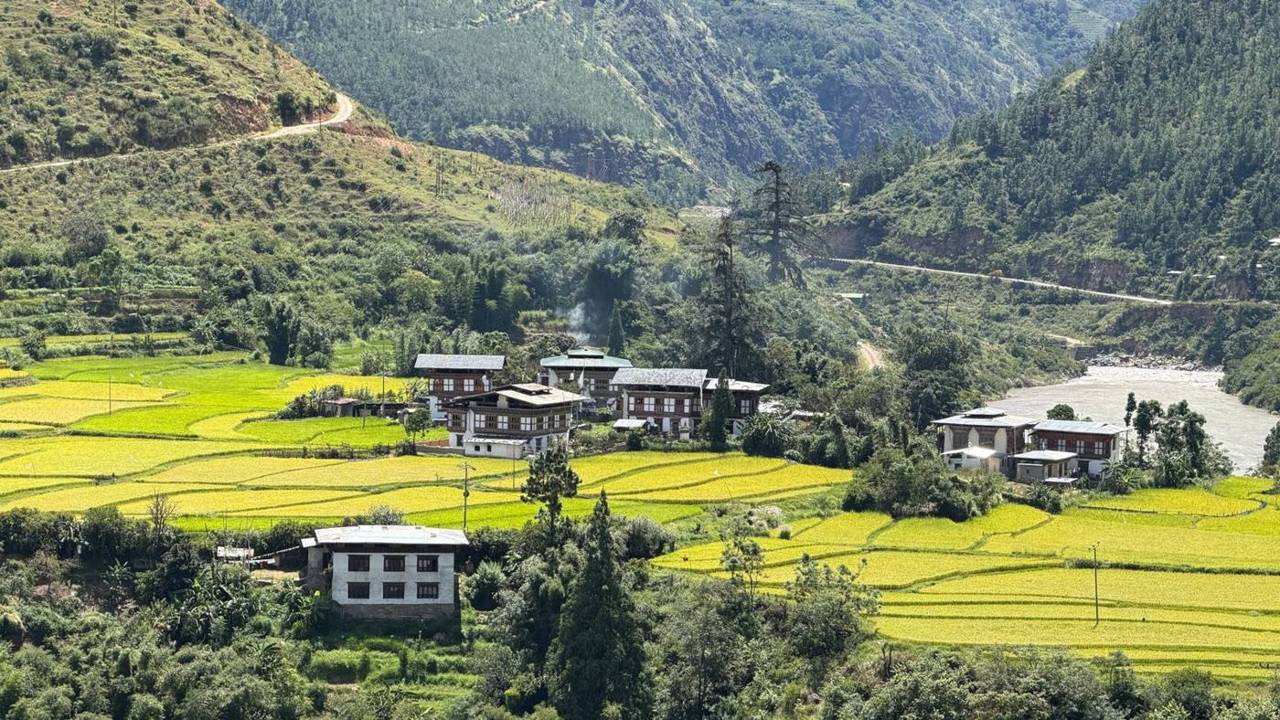 8 daysChallenging
The Druk Path trek
The classic trek from Paro to Thimphu past high lakes, rhododendron forests and Himalayan views.
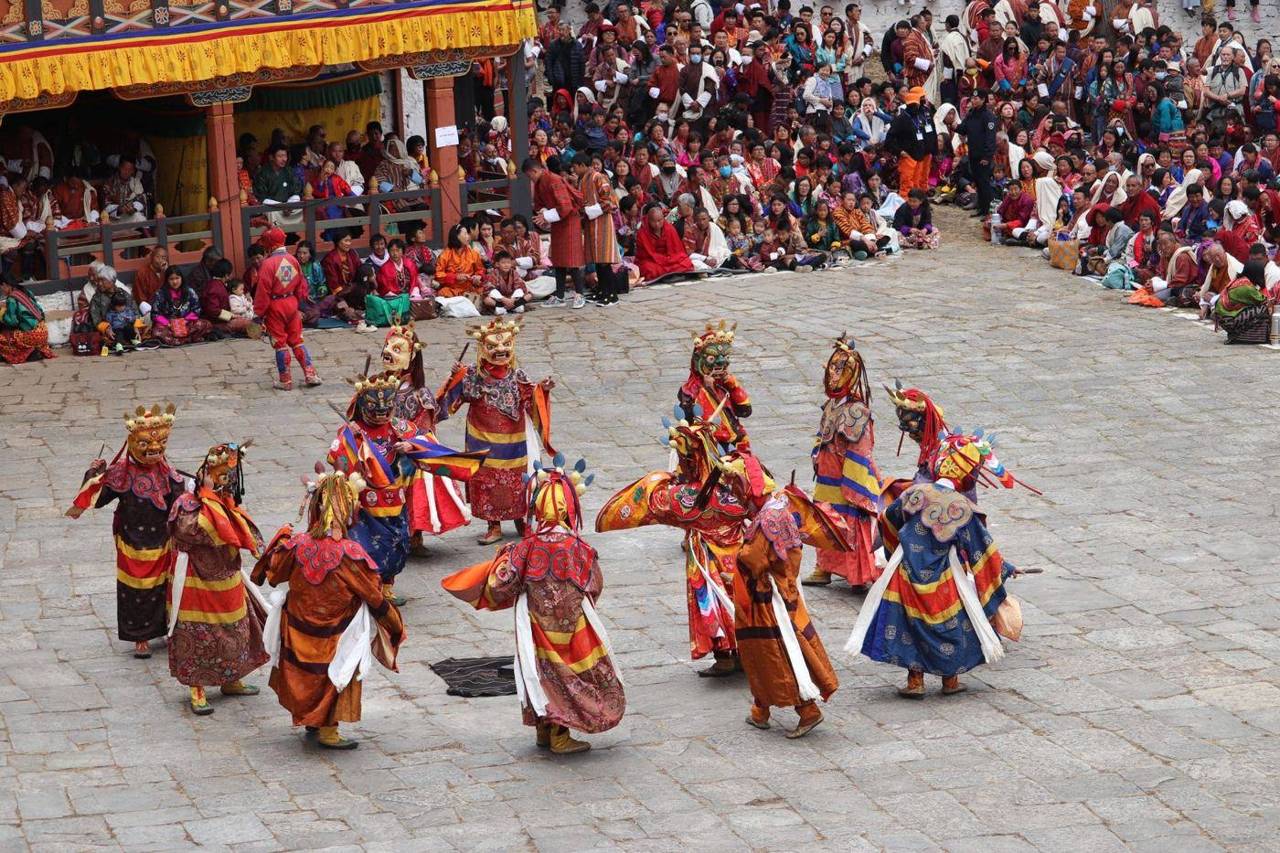 6 daysEasy
The Paro festival
The Paro tsechu in spring, with masked dances in the dzong courtyard and the huge thangka unveiled at dawn on the last day, with Thimphu and Taktsang.
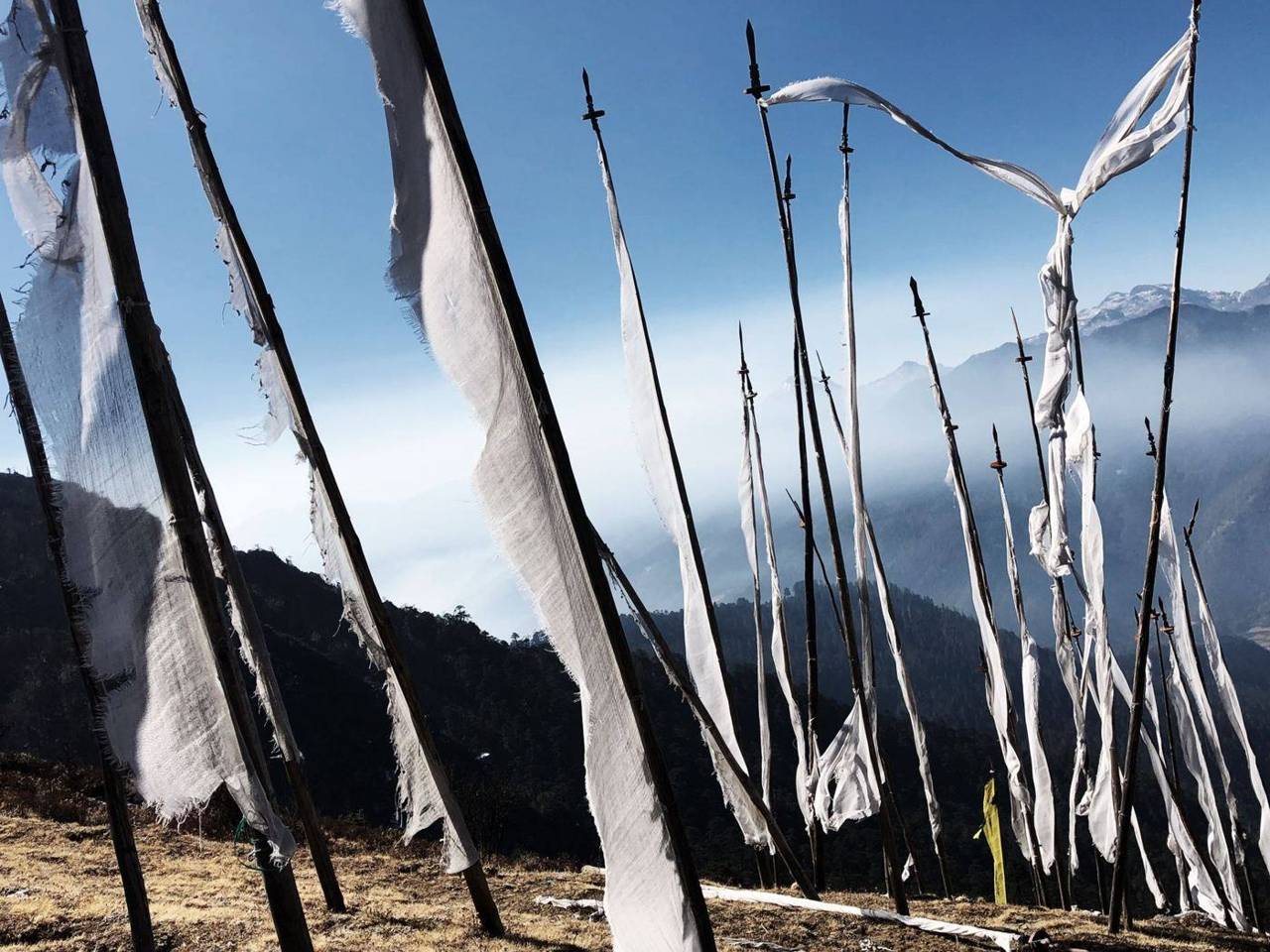 3 daysEasy
The Haa valley
Chele La pass at nearly 4,000 metres with its prayer flags and view of Jomolhari, the Haa valley with its white and black temples and a night in a farmhouse.