Paro, Thimphu and Punakha
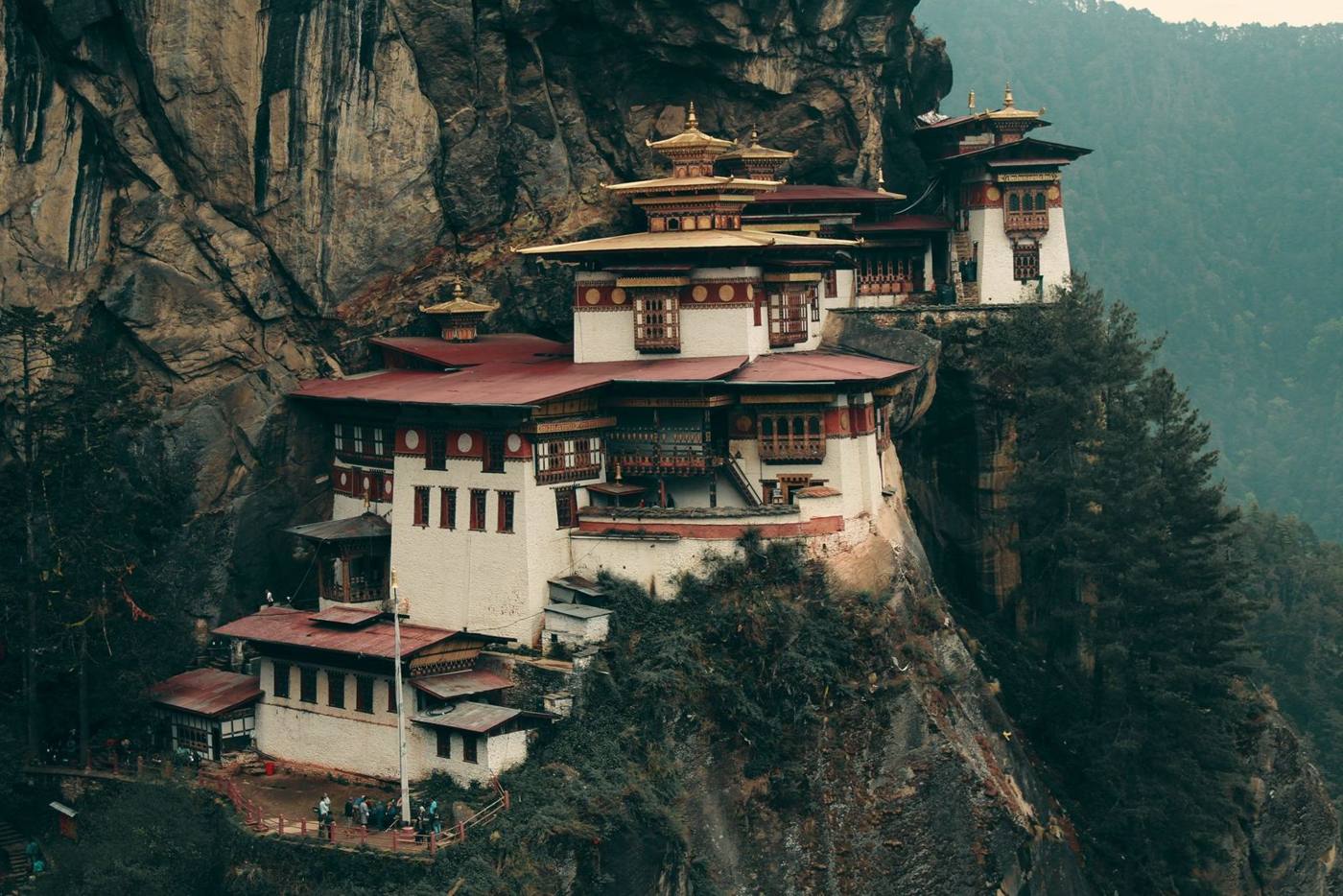
Punakha Dzong at the meeting of two rivers, the Dochula pass with its 108 chortens, Thimphu and the hike to Tiger's Nest monastery.
- Paro
- Thimphu
- Dochula
- Punakha
- Taktsang
Day by day
- Day 1
Landing in Paro and Rinpung Dzong
This seven day trip is the classic tour of western Bhutan. You see Paro, the capital Thimphu, the Dochula pass with its 108 chortens and Punakha Dzong at the meeting of two rivers, and you finish with the climb to Taktsang, the Tiger's Nest.
Before you go: for Bhutan you need a passport valid for at least six months after you leave the country and a visa, applied for in advance online on the official immigration portal; it costs 40 dollars, non refundable, and is stamped on arrival. For every night you pay the Sustainable Development Fee, the SDF: 100 dollars a night for an adult, 50 for children aged 6 to 11, while children under 6 do not pay; the government has confirmed this rate until 31 December 2029. You must be accompanied at all times by a licensed guide, but you do not have to book through a tour operator: you can arrange certified hotels, a guide and a car yourself. Insurance is not compulsory, but it is strongly recommended. Other nationalities should check their own rules.
The arrival is already an adventure. The plane descends between forested mountains and lands in a narrow valley: it is considered one of the most spectacular landings in the world. Sit by the window.
Your guide and driver wait for you at the exit. In the afternoon visit Rinpung Dzong, the fortress monastery that overlooks Paro. Like all dzongs it houses both district offices and monks. Arrive on foot over the covered wooden bridge on the river, which gives the best view of the walls.
In the evening stroll along the main street, with its hand painted wooden façades.
Practical tip: to enter the dzongs cover your shoulders and knees. Keep a long sleeved shirt in your bag even on hot days.
- Day 2
Thimphu, Buddha Dordenma and Tashichho Dzong
In the morning leave for Thimphu, the capital, just over an hour's drive away. The road follows the Paro river to its meeting with the Thimphu river, marked by three chortens in different styles.
Thimphu is a small, quiet capital, where traffic in the main square is directed by a policeman in a little booth. Start at the Memorial Chorten, the white stupa where old people walk round all day reciting prayers.
Then go up to Buddha Dordenma, the huge golden statue of the seated Buddha on the hill of Kuensel Phodrang. From the square you see the whole valley. Inside the base there are thousands of small Buddha statues. Take off your shoes and go in quietly.
In the afternoon visit Changangkha Lhakhang, an old temple above the city, where families bring newborn babies to receive a name and a blessing. Then, if you have time, go to the Motithang reserve to see the takin, the national animal, which looks half goat and half ox.
At sunset visit Tashichho Dzong, seat of the government, the king's office and the monastic body. Visiting hours are limited and can change: your guide confirms them on the day.
In the evening, if it is the weekend, walk round the city's covered market, with vegetables, chillies, dried cheese and incense.
Practical tip: in Thimphu walk around the centre with your guide and take time to stop. It is one of the few capitals where you can explore on foot without hurrying.
- Day 3
The Dochula pass and the descent to Punakha
Today you cross the first big mountain of the trip. The road from Thimphu climbs through pines and rhododendrons to the Dochula pass, at about 3,100 metres. Here the 108 white chortens wait for you, arranged in circles on a hill, built in memory of the soldiers who died in 2003, together with the Druk Wangyal temple.
If the sky is clear, usually from October to January, from the pass you see the snowy peaks of the Bhutanese Himalaya. Stop for at least half an hour, walk among the chortens clockwise and drink a hot tea.
Then go down to the Punakha valley. In just over an hour the road loses a lot of height and the landscape changes: from the cold forest you pass to rice fields, banana trees and orange trees. Punakha has a mild climate and was the capital of Bhutan until the middle of the twentieth century.
In the afternoon walk through the rice fields to Chimi Lhakhang, on a small hill. It is dedicated to Drukpa Kunley, the saint famous for his irreverent ways and his funny stories. The houses in the nearby village are decorated with fertility symbols painted on the walls: for the Bhutanese they are symbols of protection, not a joke.
In the evening you sleep in the Punakha valley.
Practical tip: the Dochula road has many bends. If you suffer from car sickness, take something before you leave and sit in the front.
- Day 4
Punakha Dzong and the suspension bridge
Today is the day of Punakha Dzong, for many the most beautiful in Bhutan. It stands where the Pho Chhu and the Mo Chhu meet, the father river and the mother river. It was built in the seventeenth century by Zhabdrung Ngawang Namgyal, the man who unified the country, and it is still the winter residence of the head of the monks.
You arrive over the covered wooden bridge and enter between high white walls and courtyards full of light. Inside you see temples with paintings of the life of the Buddha and large prayer wheels. Respect the monks, do not take photos inside the temples and always follow your guide. In spring purple jacarandas bloom around the dzong.
After the visit walk to the Punakha suspension bridge, one of the longest in the country, covered with prayer flags. From the middle you see the river rushing beneath your feet.
In the afternoon, if you want a walk, climb with your guide to Khamsum Yulley Namgyal Chorten, a stupa shaped temple above the valley. The path crosses the rice fields, then climbs through the pines in about an hour. From the terrace at the top the view over the valley is wide.
In the evening try the dishes of the valley, such as red rice, seasonal vegetables and kewa datshi, potatoes with cheese.
Practical tip: in summer and autumn bring strong sun cream. The sun in Punakha is intense and there is no shade in the rice fields.
- Day 5
Back towards Paro, with Simtokha
Today you head back west. You cross Dochula again: if the view was hidden on the way out, this is another chance to see the mountains. Take a short break among the chortens and leave a prayer flag, if you like: your guide explains the colours and their meaning.
Before Thimphu stop at Simtokha Dzong, built in 1629 by the Zhabdrung and considered one of the oldest dzongs in the country. It is small and intimate, and today it houses a school of Buddhist studies and of the Dzongkha language. Look at the carved slates along the walls and the prayer wheels around the building.
If you left something unseen in Thimphu, now is the right time. You can visit the institute of the thirteen traditional arts, where students learn painting, sculpture and weaving, or the textile museum. Check prices and times.
In the afternoon continue to Paro. If you arrive in time, visit Kyichu Lhakhang, one of the oldest temples in Bhutan, which according to tradition dates back to the seventh century. Local families come here every day to pray and turn the prayer wheels.
In the evening pack your bag for tomorrow: water, a warm layer, a rain jacket and a snack.
Practical tip: have dinner early and sleep well. The climb to Taktsang is the hardest day of the trip.
- Day 6
The climb to the Tiger's Nest
Today you climb to Taktsang, the most famous monastery in Bhutan, built at the end of the seventeenth century on a rock face, hundreds of metres above the Paro valley. According to tradition, Guru Rinpoche flew here on the back of a tigress and meditated in a cave.
The walk takes four to five hours in all, there and back. The path climbs through the woods in zigzags, among prayer flags and water driven prayer wheels. Halfway there is a refreshment stop with a view. From there the monastery appears in front of you, white and red on the rock.
The last stretch is a long staircase that drops towards a waterfall and then climbs again to the entrance. Here you leave your bag and camera: you cannot take photographs inside. Visit the rooms with your guide. In one of them you see the meditation cave.
The highest point is close to 3,000 metres. Walk at your own pace and stop often. If you have heart, lung or joint problems, ask your doctor before the trip. For the first part of the climb you can hire horses, but you walk down on foot.
Go back down to the valley in the early afternoon. In the evening many houses offer the hot stone bath, the dotsho, ideal for tired legs.
Practical tip: start early to avoid the heat and the queues. Wear shoes with a good sole and check prices and entry times with your guide.
- Day 7
Departure from Paro
Today is the last day. If your flight is in the afternoon, spend the morning calmly in the Paro valley. You can go up to Ta Dzong, the watchtower that houses the National Museum, with masks, old weapons and thangkas. Check prices and times. Or take a walk through the fields with your guide, greeting the farmers at work.
If you want a souvenir, look for a handwoven textile, a carved wooden object, a packet of incense or prayer flags. Always ask whether the item is made in Bhutan.
Trip summary: in seven days you have seen western Bhutan. You landed in Paro and visited Rinpung Dzong, then the capital Thimphu with Buddha Dordenma and Tashichho Dzong. You crossed the Dochula pass with its 108 chortens, went down into the warm Punakha valley with its dzong, the suspension bridge and Chimi Lhakhang, came back past Simtokha Dzong and finished with the climb to Taktsang, hanging on the rock.
When to go: the best months are March to May, with rhododendrons and jacarandas in flower, and October and November, with clear skies and views of the mountains. In summer the monsoon brings rain and cloud; in winter the days are cold but often bright.
Practical tip: get to Paro airport well in advance. Flights depend on the weather and their times can change.
A unique country that limits tourism with a daily Sustainable Development Fee, currently 100 dollars per person per night. The trip must be booked through a licensed operator, guide included. The Tiger's Nest hike takes 4-5 hours return.
Before you go
- Documents and visa
- Passport valid for at least six months after you leave the country and a visa applied for in advance online on the official immigration portal (40 dollars, non refundable), stamped on arrival. Sustainable Development Fee (SDF): 100 dollars a night per adult, 50 for children aged 6 to 11, nothing under 6, confirmed until 31 December 2029. A licensed guide is compulsory for the whole trip; booking through a tour operator is not.
- Health and vaccines
- No compulsory vaccinations if you arrive from the UK. Watch out for altitude on passes above 3,000 metres: climb slowly and drink plenty. Drink bottled or boiled water. Insurance is no longer compulsory but is strongly recommended, covering medical costs and evacuation. Emergencies: ambulance 112, police 113, fire 110.
- Money and payments
- Ngultrum, equal in value to the Indian rupee, which is accepted almost everywhere. Cards work in hotels and some city shops; elsewhere you need cash. Bring dollars or euros to change.
- Power sockets
- Types D, F and G, 230 volts: British plugs often fit, but bring a universal adapter.
- Time zone
- UTC+6 all year, six hours ahead of the UK in winter, five in summer.
- Safety
- Bhutan is a safe country with low crime, and the UK does not advise against any area. The main risk is the mountain roads, narrow and slow, with landslides in the monsoon: avoid travelling at night. Guides are compulsory for visiting places of interest. Official advice: GOV.UK.
Information checked in November 2026 for Italian and EU citizens. Rules change: always check before you travel.
Variations
Shorter version: five days, with Paro, Thimphu and Taktsang, without Punakha.
Longer version: add two days for the Phobjikha valley and Gangtey monastery.
Frequently asked questions
How hard is the climb to Taktsang?
It is a walk of four to five hours there and back, steep but with no technical difficulty. You get close to 3,000 metres: walk slowly and ask your doctor for advice if you have health problems.
Do I need a guide in Thimphu too?
Yes. In Bhutan you must be accompanied at all times by a licensed guide, in the city as well.
What should I wear in the dzongs?
Cover your shoulders and knees, take off your hat and, where asked, your shoes. You cannot take photographs inside the temples.
Indicative itinerary written by World Atlas. Before booking, check timetables, seasonal openings, documents and safety.
 9 daysModerate
The Bumthang valley
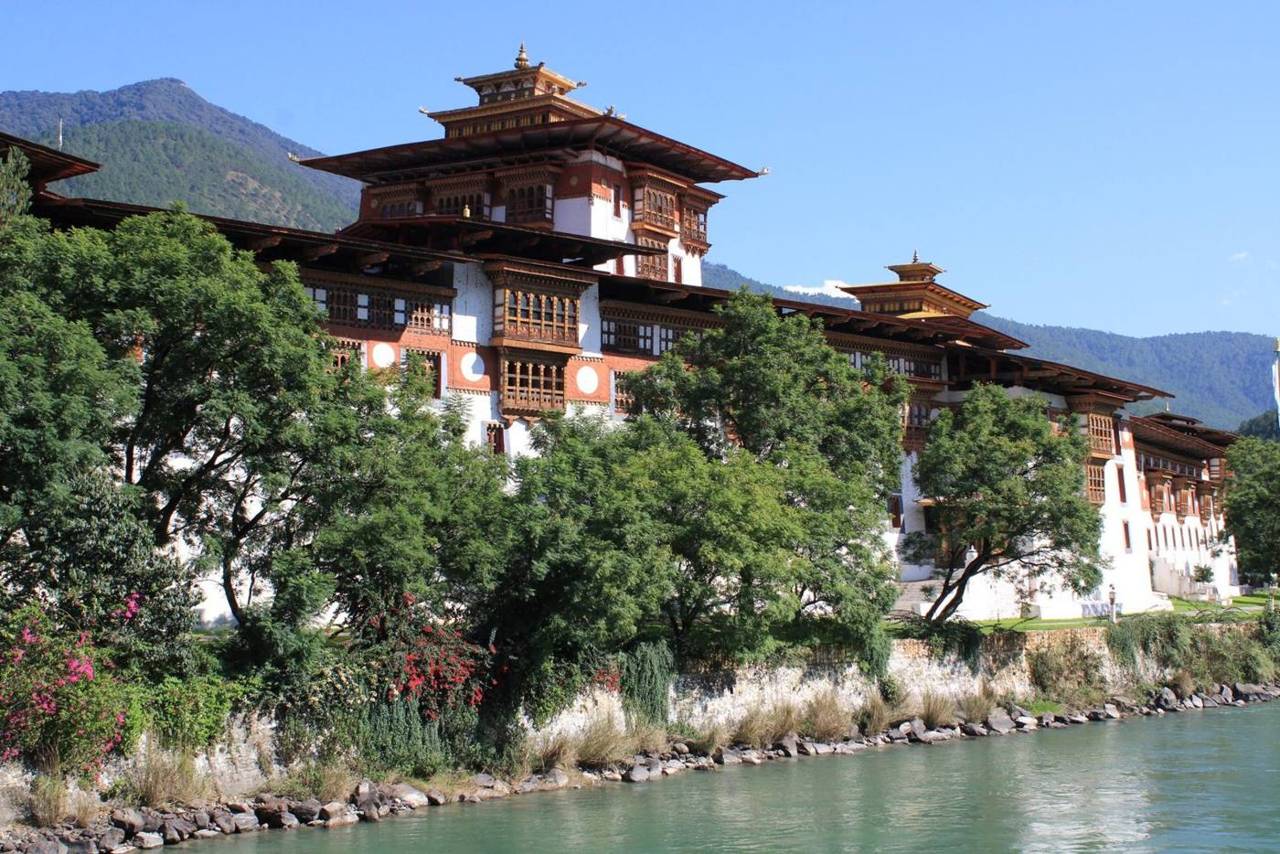
Central Bhutan: the Phobjikha valley with its black-necked cranes, Trongsa, the ancient temples of Bumthang and its tsechu festivals.
 8 daysChallenging
The Druk Path trek
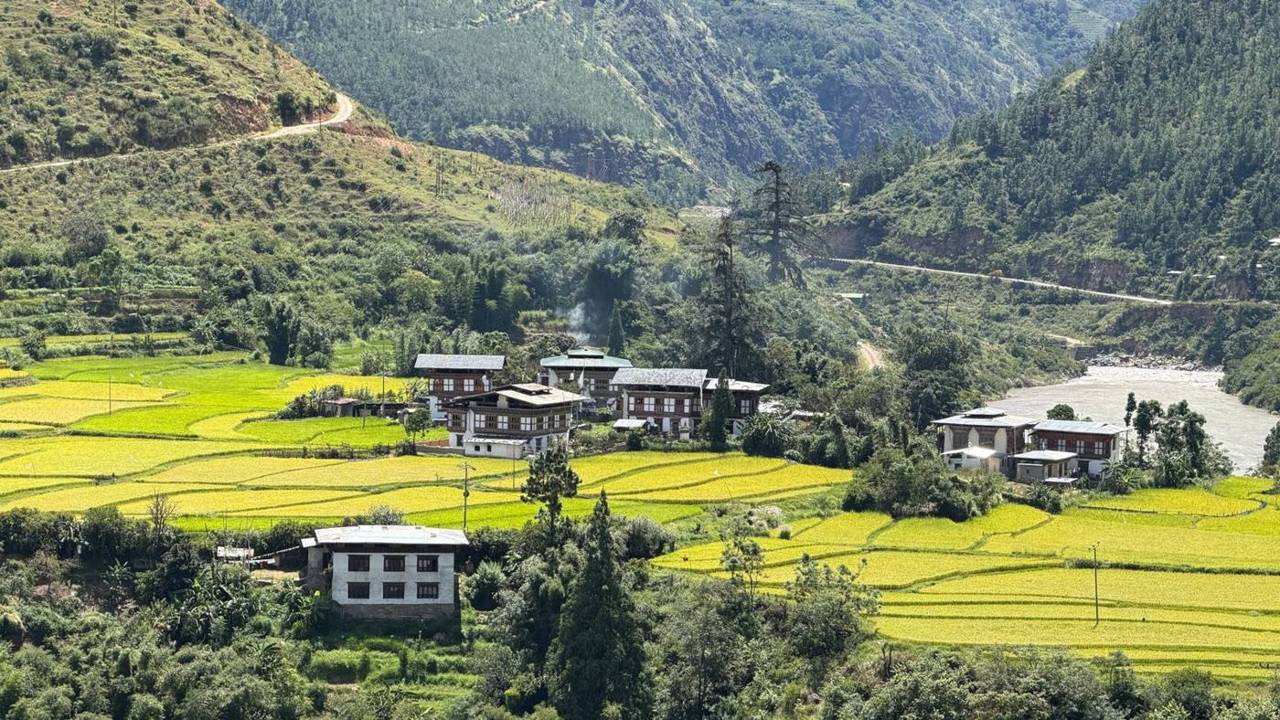
The classic trek from Paro to Thimphu past high lakes, rhododendron forests and Himalayan views.
 6 daysEasy
The Paro festival
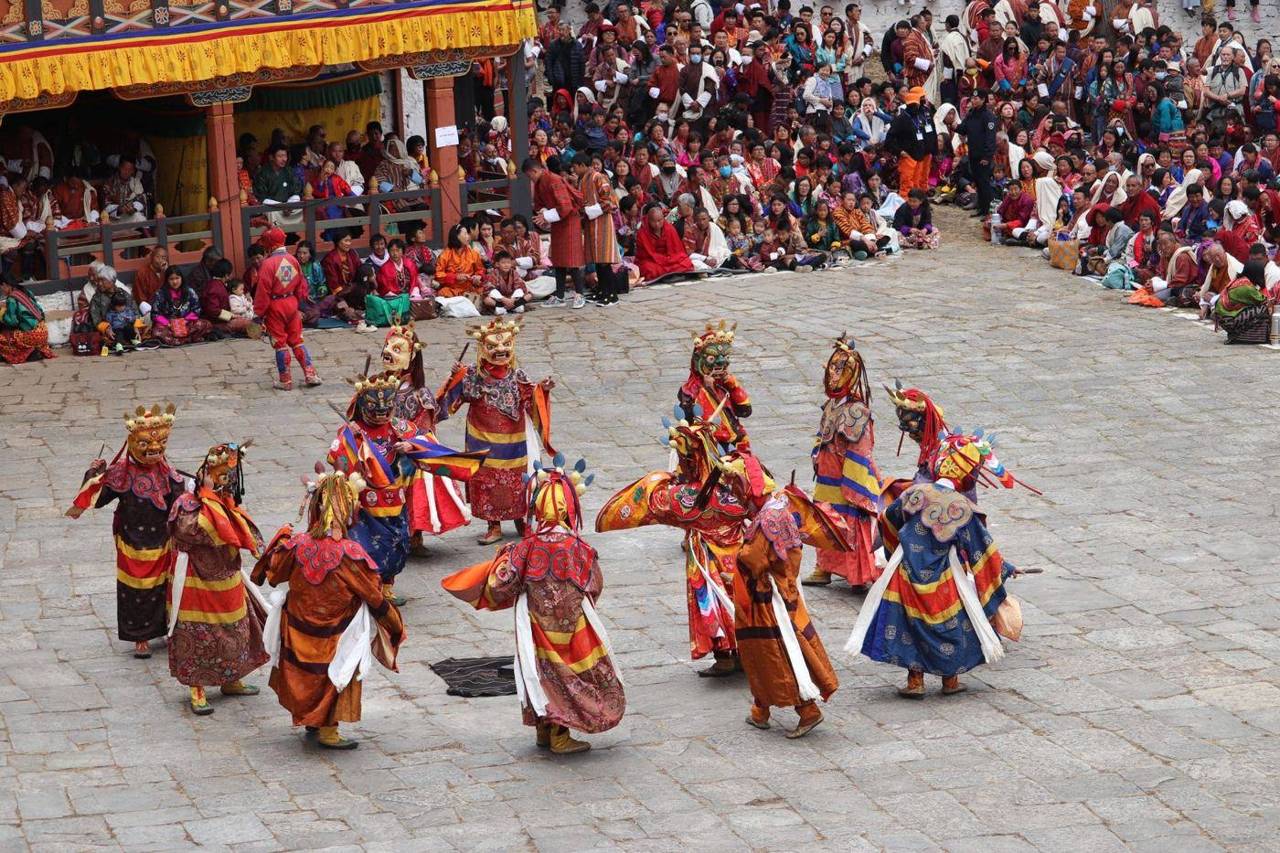
The Paro tsechu in spring, with masked dances in the dzong courtyard and the huge thangka unveiled at dawn on the last day, with Thimphu and Taktsang.