The coast and Ouidah
Cotonou, the lake village of Ganvié on stilts, Ouidah with the python temple and the Door of No Return, and Porto-Novo.
- Cotonou
- Ganvié
- Ouidah
- Porto-Novo
Day by day
- Day 1
Cotonou and the Dantokpa market
This trip takes you to southern Benin, the cradle of vodun: Cotonou and its huge market, the stilt village of Ganvié on Lake Nokoué, Ouidah with the Slave Route and the Python Temple, and Porto-Novo, the official capital. You travel by car with a driver and by pirogue.
Before you go: Italian citizens enter Benin with a passport, valid for the whole length of the stay, and an electronic visa, to be requested only on the official website evisa.bj a few days before departure. Yellow fever vaccination is compulsory: since September 2026 the certificate is no longer routinely checked on arrival, but it can be requested, so always carry it. Talk to your doctor about malaria prevention. Other nationalities should check their own rules. Italy, the UK and the United States advise against the north of the country, with the W and Pendjari parks and the borders with Burkina Faso and Niger, because of terrorism and kidnapping: this trip stays in the south, far from those areas.
You land at Cotonou airport. Cotonou is the largest city and the economic centre of the country, between the ocean and Lake Nokoué.
In the afternoon visit the Dantokpa market, one of the largest open-air markets in West Africa, along the lagoon. Among the stalls you find fabrics, spices, dried fish and, in a special section, objects for vodun. The Italian government advises visiting it with trusted local people: go with a guide.
At sunset pass by the large Amazon statue, dedicated to the women warriors of the kingdom of Dahomey.
Sleep in Cotonou, for four nights.
Practical tip: at Dantokpa wear your backpack on your front and carry only the money you need.
- Day 2
Ganvié by pirogue on Lake Nokoué
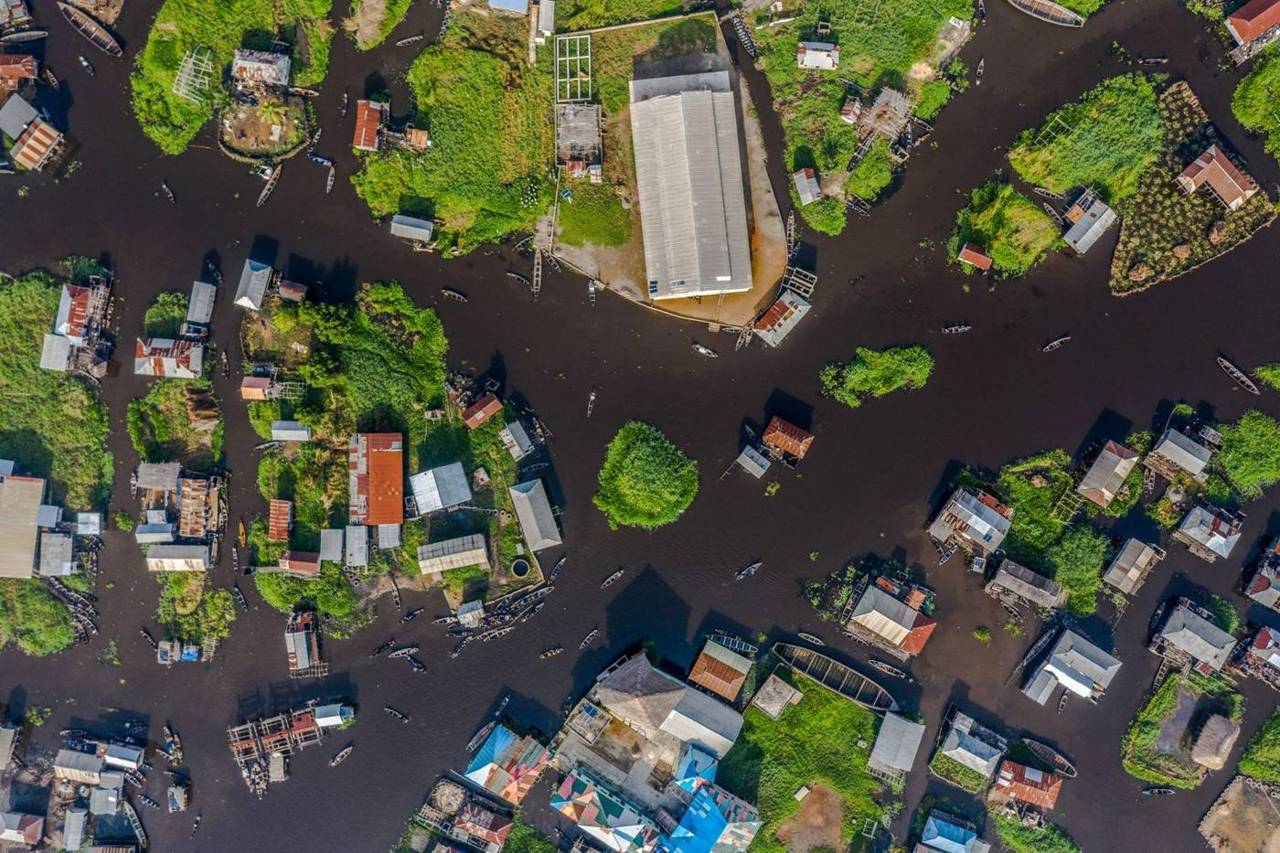
Today you visit Ganvié, the most famous stilt village in Africa, on Lake Nokoué, north of Cotonou.
From Cotonou you drive to the Abomey-Calavi jetty, on the shore of the lake. Here you board a motor or paddle pirogue and cross the lake for about half an hour. Ganvié is built entirely on the water: houses of wood and bamboo on tall stilts, schools, churches, mosques and shops, all linked by channels. Tens of thousands of people live here and you can only get around by boat.
According to tradition, the village was founded by the Tofinu people to escape the slave raids of the warriors of the kingdom of Dahomey, who for religious reasons could not enter the water. The lake thus became a safe refuge.
By pirogue you follow the main channels and see daily life: women selling fruit and fish from their boats at the floating market, children paddling to school, fishermen mending their nets. Around the village there are acadja, enclosures of branches planted in the lake bed, where fish breed.
You can stop at a house or a small craft workshop, if the guide suggests it, and leave a contribution for the community.
In the afternoon you return to Cotonou.
Sleep in Cotonou.
Practical tip: in Ganvié always ask before photographing people, especially the women at the market. Many residents do not want to be photographed and say so clearly. Agree the price of the pirogue in advance, and confirm whether it includes the guide and the stops.
- Day 3
Ouidah: the Slave Route, the pythons and the sacred forest
Today you visit Ouidah, about an hour's drive west of Cotonou, the historic town of vodun and of the slave trade.
In the morning enter the Python Temple, opposite the Basilica of the Immaculate Conception. The python is sacred to the vodun of Ouidah and lives in a small shrine: the keeper may place one on your shoulders, it is a harmless snake. Then visit, if it is open, the history museum in the old Portuguese fort, which tells the story of the slave trade and the links between Ouidah and Brazil. Check prices and times.
On foot you reach the Kpassè sacred forest, where according to tradition King Kpassè turned into a tree. Among the trees there are statues of the vodun deities.
In the afternoon walk the Slave Route, about four kilometres from the town to the beach. It was the path walked by thousands of people who had been captured and sold, before being shipped to the Americas. Along the way are the auction square, the tree of forgetting and the Zoungbodji memorial. At the end, on the beach, rises the Door of No Return, a large arch in memory of the people deported.
Stay a few minutes in silence in front of the ocean. It is one of the most powerful places in the whole of West Africa.
You return to Cotonou in the evening.
Sleep in Cotonou.
Practical tip: take a local guide for the Slave Route. The guide tells the story of each stop and helps you understand the meaning of the monuments and the vodun symbols.
- Day 4
Porto-Novo and the da Silva museum
Today you visit Porto-Novo, the official capital of Benin, about an hour's drive east of Cotonou.
Porto-Novo is a quiet city, very different from chaotic Cotonou. It was the capital of an ancient kingdom and then of the French colony. In its streets you still see Afro-Brazilian houses, built in the nineteenth century by former slaves who returned from Brazil, with colourful facades, columns and decorated windows.
Start with the da Silva museum, in a large Afro-Brazilian house, dedicated to the history of the returns from Brazil and to the Afro-Brazilian culture of Benin, with photos, furniture, objects and documents. Check prices and times.
Then visit the ethnographic museum, with a fine collection of gelede masks, used in ceremonies honouring mothers and elderly women, and objects from traditional life. Check prices and times.
Pass by the Great Mosque, built in the early twentieth century in Afro-Brazilian style, with a facade that recalls the churches of Salvador de Bahia. If it is open, also visit the palace of King Toffa, a former royal residence.
In the afternoon walk in the garden of plants and nature, a small sacred wood in the city centre, with giant trees.
You return to Cotonou in the evening. For your last dinner try amiwo, red maize paste cooked with tomato, and grilled chicken.
Sleep in Cotonou.
Practical tip: in Porto-Novo many museums close at lunchtime and on some days of the week. Check the times before leaving Cotonou.
- Day 5
Departure from Cotonou
Today you leave Benin from Cotonou airport.
If your flight leaves late, in the morning take a walk along the beach in Cotonou, or visit the city's craft centre, where appliqué textiles, wooden and bronze statuettes, masks and baskets are sold. Only buy objects whose origin you know and ask for a receipt. Antique objects may need export permits.
In five days you have seen southern Benin and its roots: the great Dantokpa market in Cotonou, the stilt village of Ganvié on Lake Nokoué, Ouidah with the Python Temple, the sacred forest and the Slave Route to the Door of No Return, and Porto-Novo with its Afro-Brazilian houses, the da Silva museum and the gelede masks.
When to go: the best period is from November to March, in the dry season. Between December and February the harmattan may blow, the dry wind from the Sahara. At the beginning of January Ouidah hosts the Vodun Days, the great national festival of vodun: in 2027, according to the government of Benin, from 2 to 9 January. Check the dates every year and book months in advance. From April to July come the long rains, and in autumn there is a second, shorter rainy season.
If you have a few more days, you can add Abomey and its royal palaces, about three hours from Cotonou.
Have a good trip.
Practical tip: spend your CFA francs before leaving or keep them for another trip to West Africa. In Europe they are hard to change.
The cradle of vodun, with a powerful historical heritage. The national Vodun festival on 10 January in Ouidah is a unique event. The north, on the borders with Burkina Faso and Niger, is advised against because of armed groups: stay in the south.
Before you go
- Documents and visa
- Passport valid for at least the whole length of your stay and a compulsory visa: the electronic visa is requested only on the official website evisa.bj, a few days in advance. Beware of unofficial websites offering visas for Benin. A return ticket is also required.
- Health and vaccines
- Yellow fever vaccination is compulsory to enter Benin: since September 2026 the certificate is no longer routinely checked on arrival, but it can be requested, so always carry it. Malaria prevention is recommended, after medical advice; dengue is also present. Healthcare facilities are basic: you need insurance covering medical costs and repatriation. Drink only bottled water.
- Money and payments
- West African CFA franc, with a fixed exchange rate to the euro. Almost everything is paid in cash; cards work mainly in large hotels and cash machines accepting foreign cards are rare outside Cotonou.
- Power sockets
- Type C and E, 220 volts: you need an adapter for British plugs.
- Time zone
- UTC+1 all year.
- Safety
- The north is advised against by the UK, the United States and Italy because of terrorism and kidnapping: the W and Pendjari parks and nearby hunting zones, the borders with Burkina Faso and Niger, Kandi, Tanguiéta, Malanville and the north-eastern border with Nigeria. The UK also advises against all but essential travel to the rest of Alibori and Atacora and to the area between the RNIE 2 road, from Tchaourou to Malanville, and Nigeria. The south is calmer; in Cotonou watch out for theft in crowded markets such as Dantokpa and in the outskirts after dark. Official advice: GOV.UK.
Information checked in November 2026 for Italian and EU citizens. Rules change: always check before you travel.
Variations
In 3 days: Cotonou with Ganvié and Ouidah, without Porto-Novo.
In 8 days: add Abomey with its royal palaces and a night on Lake Ahémé, in Possotomé.
Frequently asked questions
What documents do I need for Benin?
Italian citizens enter with a passport and an electronic visa, to be requested only on the official website evisa.bj. Yellow fever vaccination is compulsory: always carry the certificate. Other nationalities should check their own rules.
When is the vodun festival?
The Vodun Days take place in Ouidah at the beginning of January. In 2027, according to the government of Benin, from 2 to 9 January. Check the dates every year.
Is southern Benin safe?
The areas advised against are in the north, on the border with Burkina Faso and Niger. In Cotonou watch out for theft in crowded places such as the Dantokpa market and do not walk alone at night. Check your government's travel advice before leaving.
Indicative itinerary written by World Atlas. Before booking, check timetables, seasonal openings, documents and safety.
 4 daysEasy
Abomey and the royal palaces
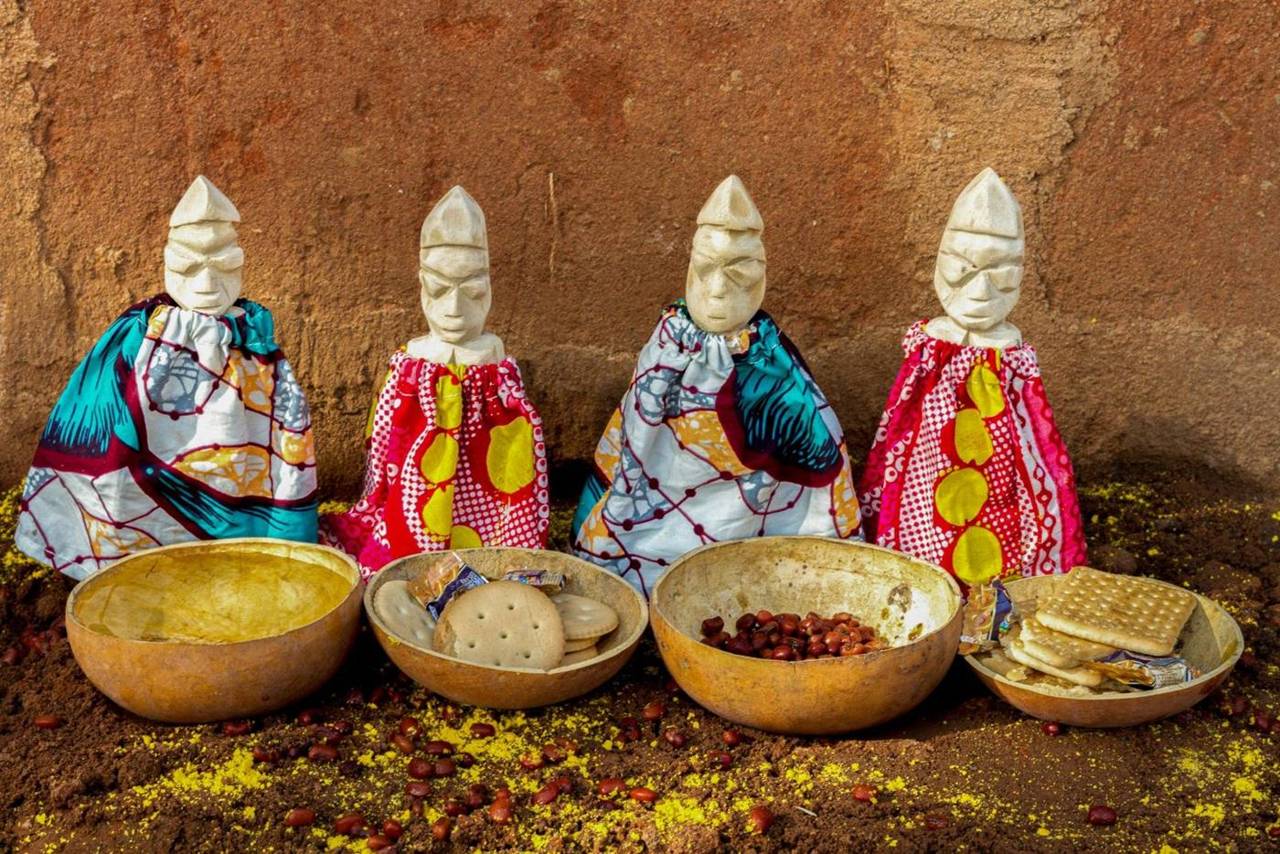
The UNESCO royal palaces of the Kingdom of Dahomey with their bas-reliefs, the treasures returned by France and the hills of Dassa.
 3 daysEasy
Grand-Popo and the Bouche du Roy
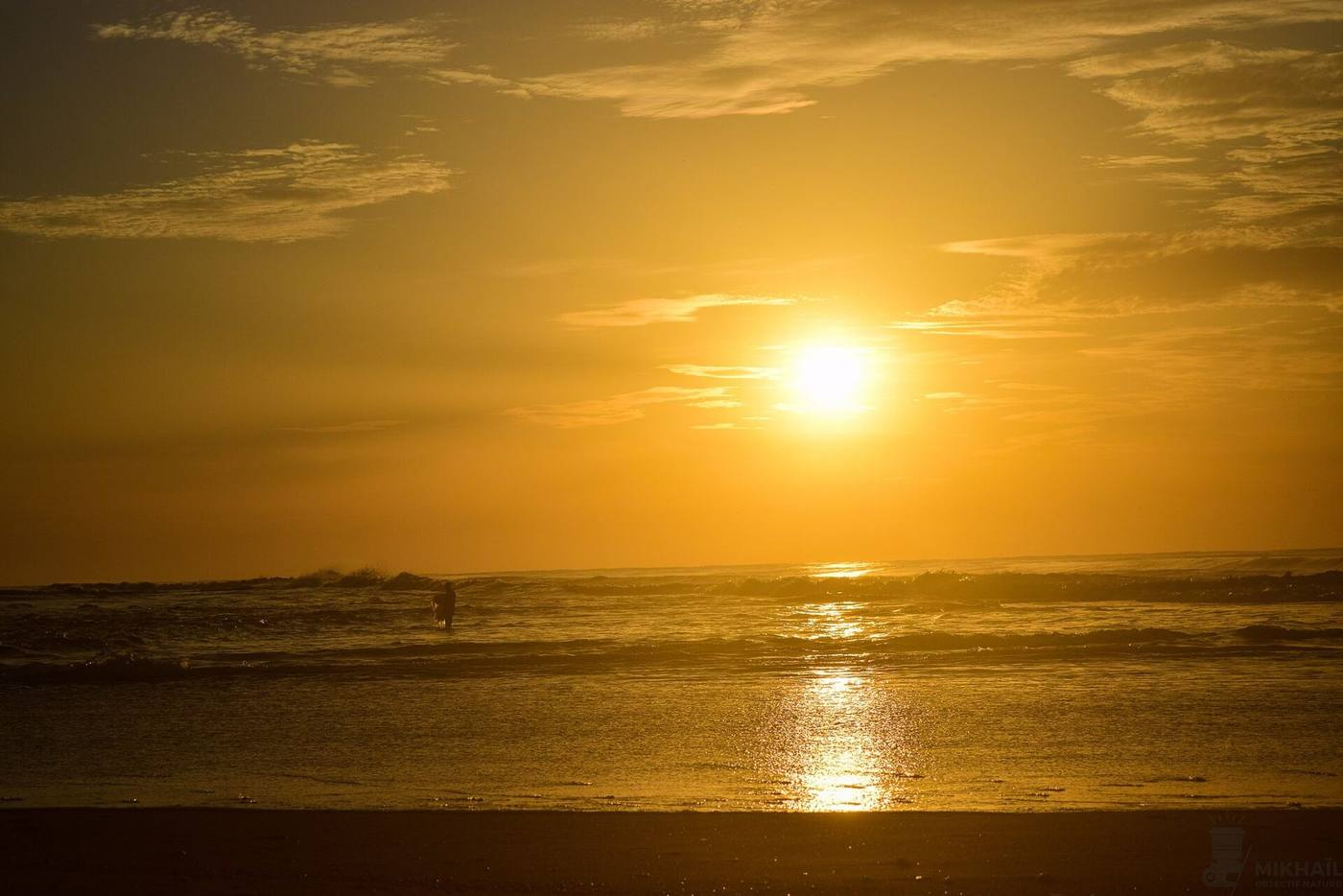
The quiet coast towards Togo: the palm-lined beaches of Grand-Popo, the boat through the lagoon among mangroves and fishing villages to the Bouche du Roy, where the Mono River meets the ocean.
 2 daysEasy
Lake Ahémé and Possotomé
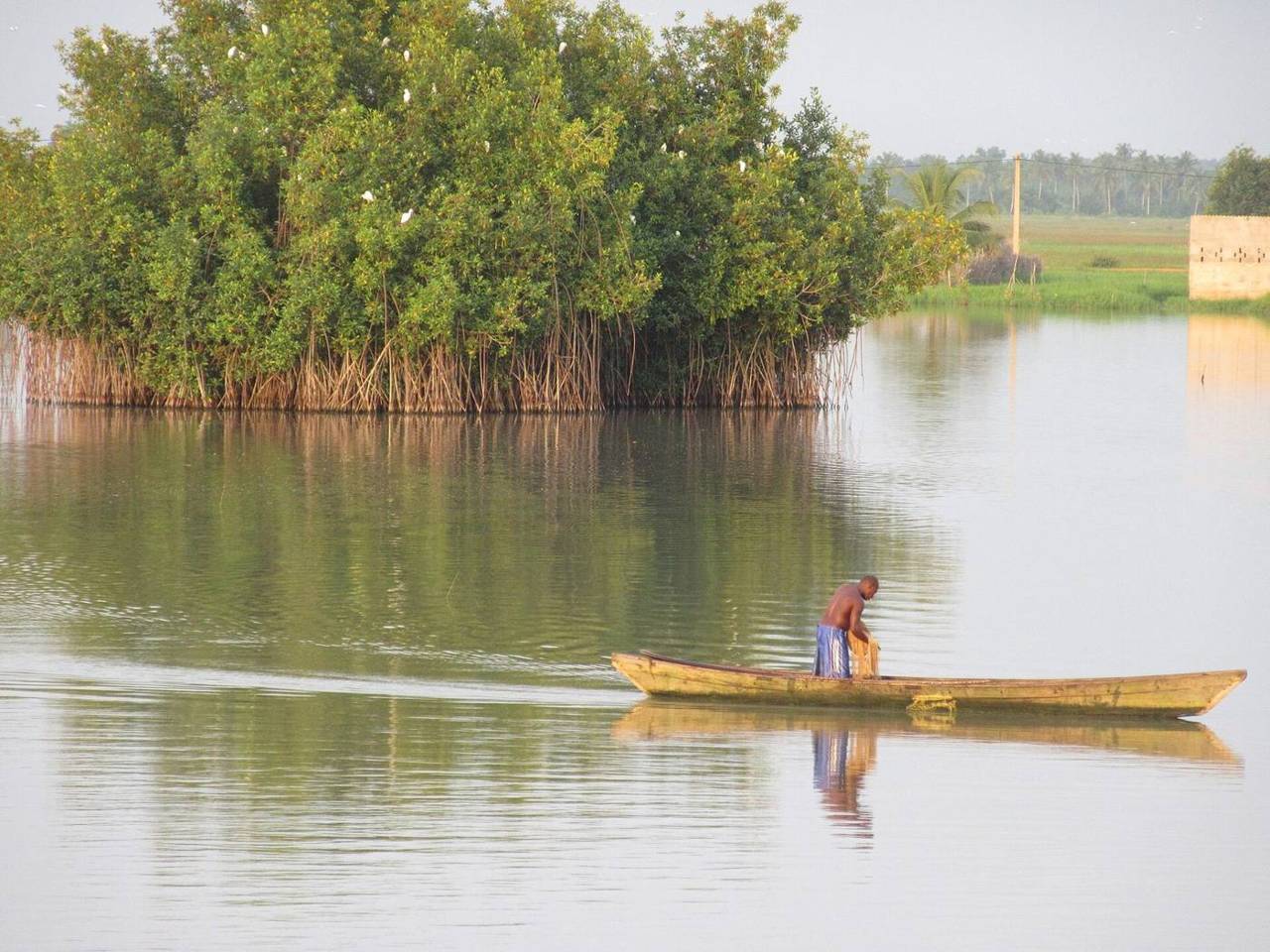
Lake Ahémé with its fishermen and their branch traps, the acadja, the village of Possotomé with its spring and walks among medicinal plants and vodun ceremonies.