Gabala and Ismayilli
The Caucasus forests around Gabala, the Tufandağ cable car, Lake Nohur, the Yeddi Gozal waterfalls and the villages of Ismayilli.
- Baku
- Ismayilli
- Gabala
- Nohur
- Tufandağ
Day by day
- Day 1
From Baku to the villages of Ismayilli
This four-day trip takes you to the green mountains where Azerbaijanis go on holiday: the villages of Ismayilli, Gabala with its ancient capital, Lake Nohur, the Tufandağ cable car and the Seven Beauties waterfalls.
Before you go: Italian citizens need a passport, valid for at least three months beyond the expiry of the visa, and an e-visa, applied for online only on the official website evisa.gov.az: it is valid for one entry and up to 30 days and is not issued at the airport. Other nationalities should check their own rules. You can only enter by air. Viaggiare Sicuri, the Italian government's travel service, advises against the areas along the Armenian border and the UK against the districts around Karabakh, while the United States, at level 3 since 2026, advises against the border with Iran: Gabala and Ismayilli are in the north, far from all these areas.
In the morning leave Baku westwards, by car or with a driver. After Shamakhi the road crosses a pass in the hills and drops into a valley of woods and orchards. In about three and a half hours you reach the Ismayilli district.
Stop at Basqal, an old stone village famous for kelaghayi, the hand-printed silk headscarf, a craft recognised by UNESCO as intangible heritage. In the village workshops you can see how the designs are dyed and printed with wooden blocks.
In the afternoon continue to Ivanovka, a village founded in the nineteenth century by the Molokans, a Russian religious community exiled to the Caucasus, with colourful wooden houses, gardens and cultivated fields. Sleep in the Ismayilli district or in Gabala.
Practical tip: in Basqal buy your kelaghayi directly in the workshops, where you see it being made; always ask whether it is real silk and check prices and quality.
- Day 2
Gabala, the ancient capital and Lake Nohur
Today you discover the history of Gabala and its most famous lake.
In the morning visit the archaeological site of Chukhur Gabala, a few kilometres from the modern town. Here stood Gabala, for centuries the capital of Caucasian Albania, an ancient Christian kingdom of the eastern Caucasus that has nothing to do with Albania in the Balkans. You see the remains of the walls, the city gates and the excavations, in a landscape of meadows between two rivers. Check prices and times.
Then return to town: Gabala is a modern small town, with avenues, parks and large hotels, built to welcome domestic tourism. Walk through the centre and taste fruit from the market, above all pomegranates, walnuts and hazelnuts in autumn.
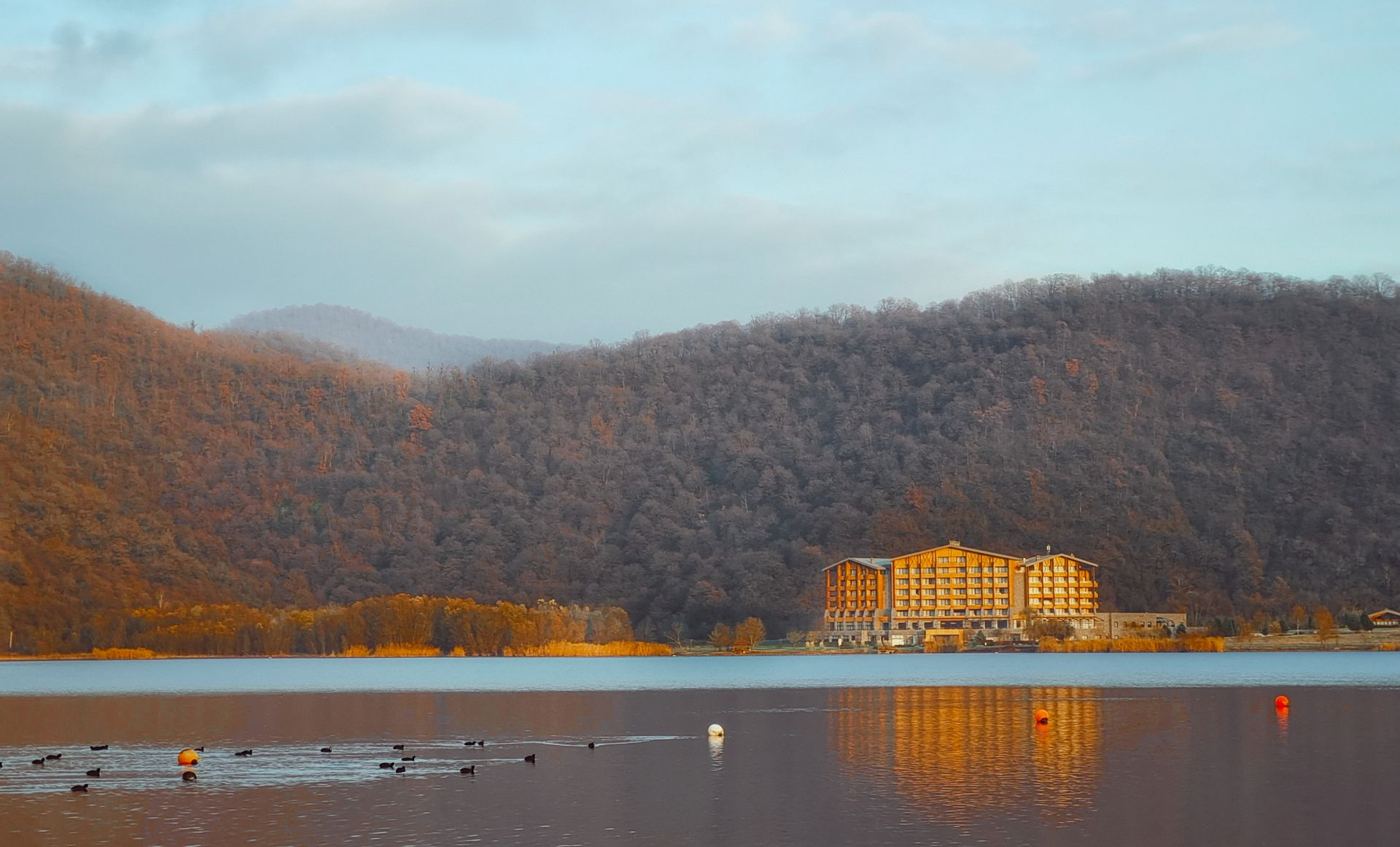
In the afternoon reach Lake Nohur, a few kilometres from town, a sheet of water surrounded by woods and hills, with the peaks of the Greater Caucasus in the background. Walk along the shore, sit on a bench or take a rowing boat if the rental is open. Check prices and times.
At sunset the light turns the mountains pink and the lake becomes very still: it is the best moment for photos.
In the evening taste meat and pumpkin qutab, dolma and black tea served with cherry or green walnut jam.
Sleep in Gabala.
Practical tip: Gabala is very busy at summer weekends and during national holidays; if you can, plan these days from Monday to Friday and book your accommodation in good time.
- Day 3
The Tufandağ cable car and the Yeddi Gozal waterfalls
Today you go high up and walk to the waterfalls.
In the morning go to Tufandağ, the mountain resort north of Gabala, at the foot of the Greater Caucasus. The gondolas climb in several stages from the woods to high meadows, with views over the Gabala valley, the villages and the snowy peaks. In winter people ski here, in summer they walk the paths near the lifts. Check lift prices and times; they can close in strong wind.
At the top take a walk among the pastures and breathe the fresh air. Even in summer the temperature at altitude is much lower than in the valley.
In the afternoon go down and reach the village of Vandam, then the road to the Yeddi Gozal waterfalls, the Seven Beauties. The water falls in seven drops one after another in a narrow gorge among the woods. A path with steps and walkways climbs beside the falls. Check prices and times.
Along the road there are stalls selling homemade jams, honey, dried fruit and pomegranate juice: it is the right moment for some shopping.
In the evening return to Gabala and have shashlik for dinner, lamb skewers cooked over embers, with grilled vegetables and fresh herbs.
Sleep in Gabala.
Practical tip: the waterfall path is damp and slippery, especially after rain; wear shoes with a good sole and keep an eye on children on the steps.
- Day 4
Back to Baku
Today you leave the mountains and return to the capital.
In the morning, if you still have a little time, take a walk in the woods around Gabala, among oaks, chestnuts and walnut trees, or visit one of the orchards of the valley, where pomegranates are picked in autumn.
Then head back to Baku, about four hours. The road returns towards Ismayilli and climbs again towards Shamakhi. Stop for tea at one of the viewpoints on the hairpin bends, from where you see rounded hills covered with meadows and flocks of sheep.
If you fancy one last visit, in Shamakhi go into the Friday Mosque, one of the oldest in the Caucasus, or climb to the seven domes of the khans' mausoleums on the hill. Remember to dress modestly.
In the afternoon you arrive in Baku.
In these four days you have seen the green mountain Azerbaijan: the villages of Basqal and Ivanovka, the ruins of the ancient capital at Gabala, Lake Nohur, the Tufandağ cable car and the Seven Beauties waterfalls, with the food and fruit of one of the richest valleys in the country.
When to go: the best time is from May to October. In spring the woods are very green, in summer the mountains are cool when Baku is very hot, and in autumn come the pomegranates and the colours of the forests. In winter Tufandağ is open for skiing.
Practical tip: if you want to continue instead of returning to Baku, Sheki is close to Gabala, about an hour and a half by road: it is the finest combination in the north of the country.
The green mountains where Azerbaijanis go on holiday. Hotels are large and modern. It pairs well with Sheki.
Before you go
- Documents and visa
- Passport valid for at least three months beyond the expiry of the visa, and an e-visa, applied for online only on the official website evisa.gov.az: it is valid for one entry and up to 30 days, with an urgent service at a higher cost. Visas are not issued at the airport. Today you can only enter by air: land borders are closed to arrivals, except in exceptional authorised cases. A previous visit to Karabakh without Azerbaijani permission can lead to refused entry. Stays over 15 days require registration with the State Migration Service, which hotels often do for you.
- Health and vaccines
- No compulsory vaccinations. Tap water is not safe to drink: drink bottled water. You need insurance covering medical costs and repatriation. Air pollution is high in Baku. Emergencies: 112.
- Money and payments
- Azerbaijani manat. In Baku cards are accepted almost everywhere; in villages and markets carry cash.
- Power sockets
- Types C and F, 220 volts.
- Time zone
- UTC+4 all year.
- Safety
- The UK advises against all travel within 5 km of the Armenian border and against all but essential travel to the war-affected districts of the south-west, around Karabakh, which are full of mines and need an official permit. In 2026 the United States raised the country to level 3 and advises against travel to the border region with Iran. Official advice: GOV.UK.
Information checked in November 2026 for Italian and EU citizens. Rules change: always check before you travel.
Variations
In 3 days: Gabala, Lake Nohur and Tufandağ, without the villages of Ismayilli.
In 6 days: add two days in Sheki, with the Khan's Palace and the church of Kish.
Frequently asked questions
What was Caucasian Albania?
It was an ancient Christian kingdom of the eastern Caucasus, with its capital at Gabala, which has nothing to do with Albania in the Balkans. The remains of the city are at the Chukhur Gabala site.
Is Tufandağ open in summer too?
Yes, the gondolas also run in summer for walks at altitude, but they can close in strong wind or for maintenance. Check prices and times.
Can you combine Gabala and Sheki?
Yes. The two towns are about an hour and a half apart by road and together make the finest trip in the north of Azerbaijan.
Indicative itinerary written by World Atlas. Before booking, check timetables, seasonal openings, documents and safety.
 4 daysEasy
Lankaran and the south
The subtropical south on the Caspian: the tea plantations of Lankaran, the Hirkan park forests with their ancient trees and the mountain villages of Lerik.
 3 daysEasy
Ganja and Göygöl
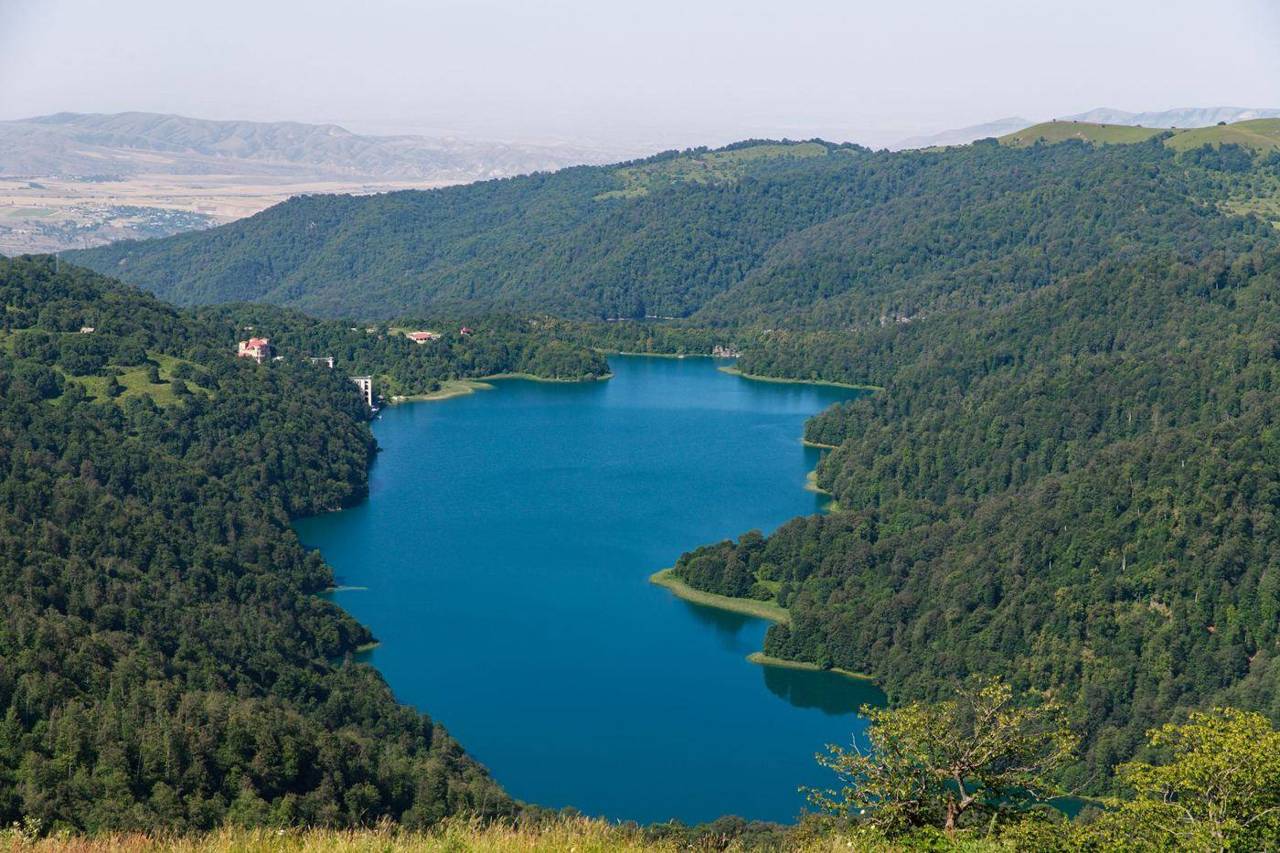
The country's second city with the mausoleum of the poet Nizami and the Bottle House, then Lake Göygöl in its national park and the town of Göygöl founded by German settlers.
 2 daysEasy
Shamakhi and wine
The old capital of Shirvan with its Friday Mosque, the Yeddi Gumbaz mausoleums, the astrophysical observatory and the wineries around Meysari.