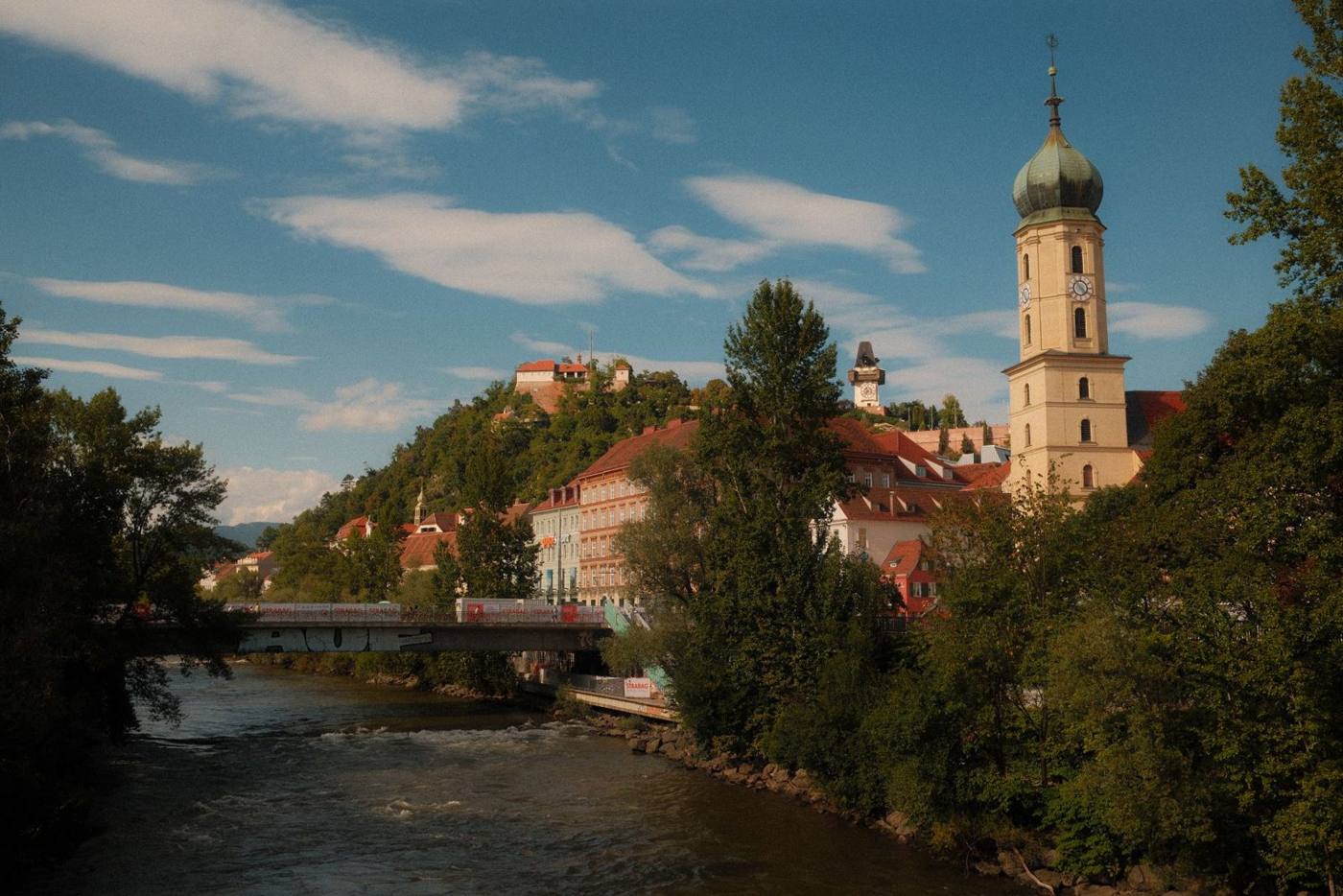
Graz and the Styrian wine road
Graz and its UNESCO-listed centre, then the hills of southern Styria, Austria's Tuscany, with Sauvignon, pumpkin seed oil and taverns.
- Graz
- Schlossberg
- Gamlitz
- Ehrenhausen
- Riegersburg
Day by day
- Day 1
Graz, the old town and the Schlossberg
This trip takes you to Styria, the green region of southern Austria: two days in Graz, the country's second city, with a historic centre on the UNESCO World Heritage list, then the wine hills on the border with Slovenia, known as the Tuscany of Austria, and Riegersburg castle on a volcanic rock.
Before you go: Austria is part of the European Union and the Schengen area and uses the euro. Italian citizens only need an electronic identity card valid for travel abroad or a passport; the paper identity card has not been valid for travel abroad since 3 August 2026. Other nationalities should check their own rules. Until 15 March 2027 Austria is running checks on the border with Slovenia, which you will cross several times on the wine road: always carry your document. The United States rates Austria level 1, the lowest.
You arrive in Graz by plane, train or car. Settle in the centre and start from the Hauptplatz, the main square with the town hall. Then walk along the Herrengasse, the street of palaces, and step into the courtyard of the Landhaus, with Renaissance loggias built by Italian masters. Next door is the Armoury, the Landeszeughaus, with thousands of old suits of armour and weapons. Check prices and times.
In the afternoon go up the Schlossberg, the hill above the city, on foot by the staircase, by funicular or by the lift cut into the rock. At the top is the clock tower, the Uhrturm, symbol of Graz, whose hour hand is longer than its minute hand. The fortress was dismantled after the Napoleonic wars, but the tower was saved.
Sleep in Graz, for two nights.
Practical tip: go up the Schlossberg towards sunset. From the terraces you see the red roofs of the centre turn orange and the Styrian hills on the horizon.
- Day 2
Kunsthaus, the island on the Mur, the market and Eggenberg Palace
Today you see modern Graz and baroque Graz.
Start the morning at the farmers' market on Kaiser-Josef-Platz, behind the opera house, where local producers sell fruit, vegetables, cheese, eggs, flowers and pumpkin seed oil. Try a roll with Verhackert, a spiced spread of smoked lard, typical of Styria.
Then cross the river Mur. On the right bank is the Kunsthaus, the contemporary art museum shaped like a big blue bubble, opened in 2003, when Graz was European Capital of Culture. Locals call it the friendly alien. A little further on, in the middle of the river, is the Murinsel, an artificial island of steel and glass shaped like a shell, linked to both banks by footbridges. Check prices and times.
Walk around the Lend district, near Mariahilferstraße, with small shops, galleries and young bars.
In the afternoon take the tram west to Eggenberg Palace, the largest baroque palace in Styria, also on the UNESCO list, with its state rooms and a park where peacocks stroll. Check prices and times.
In the evening have dinner with Steirisches Backhendl, breaded fried chicken, and a bean salad dressed with pumpkin seed oil.
Sleep in Graz.
Practical tip: the farmers' market is at its best early in the morning and is closed on Sundays. Go early and bring some coins, because many stalls prefer cash.
- Day 3
The South Styrian wine road: Gamlitz and Ehrenhausen
Today you leave the city and head for the wine hills, about an hour south of Graz. You need a car, hired in Graz.
Austrian motorways and expressways require a vignette, digital only from 2027: you buy it on the official ASFINAG website or at sales points. Annual and two month vignettes bought online are only valid after eighteen days; one day and ten day vignettes can be valid at once. Check prices and times.
The South Styrian wine road, the Südsteirische Weinstraße, runs along very steep ridges covered in vineyards, woods and farmhouses. In some stretches the road follows the border exactly and passes back and forth between Austria and Slovenia. In the vineyards you see the Klapotetz, wooden windmills whose clatter keeps birds away from the grapes.
Stop in Gamlitz, the largest wine village in the area. Here the best known wine is Sauvignon Blanc, fresh and aromatic. Then go down to Ehrenhausen, a small village with its church and a baroque mausoleum on a hill above the houses.
In the afternoon sit down in a Buschenschank, the winemakers' tavern where they serve only their own wines and cold dishes, such as cured meats, cheese and dark bread with dripping. They open in certain seasons and on certain days: check first.
Sleep on the wine road, in a farm stay among the vines.
Practical tip: if you want to taste the wine, decide who is driving. In Austria the drink drive limit is low and checks are frequent. Many farm stays arrange a taxi for the evening.
- Day 4
Riegersburg castle and the land of volcanoes
Today you head east, into volcanic Styria, the Steirisches Vulkanland, a land of soft hills born from old extinct volcanoes. From Gamlitz it is about an hour and a half by road.
The main sight is Riegersburg castle, built on top of a rock of volcanic stone that rises steeply from the plain. It is one of the most spectacular castles in Austria and in its history it was never captured. Walk up the path, passing under seven gates, or take the panoramic lift. Inside are the historic rooms and an exhibition on the witch trials of the seventeenth century. Check prices and times.
Nearby there is also a craft chocolate factory open to visitors, known for its unusual flavours: check prices and times.
In the afternoon stop at a village oil mill to see how pumpkin seeds are pressed. Styrian pumpkin seed oil, Kürbiskernöl, has protected geographical indication status: it is thick, dark green and tastes of hazelnut. Here they put it on salad, on scrambled eggs and even on vanilla ice cream.
The area is also known for its air dried hams and for its fruit brandy distilleries.
Sleep near Riegersburg, or go back to the wine road.
Practical tip: buy pumpkin seed oil in a well sealed bottle and keep it in the dark. Stains from this oil on clothes are hard to remove: leave them in the sun, the light fades them.
- Day 5
Back to Graz and departure
Today you leave Styria.
In the morning drive back towards Graz, about an hour. If you have time, stop in Bad Gleichenberg or a village in the Vulkanland for a last walk in the hills, or stop in the old town of Graz for a coffee and a slice of cake in one of the pastry shops in the centre.
Then return the car and leave from Graz airport or station.
In these five days you have seen a little known side of Austria: the historic centre of Graz with the Schlossberg and the clock tower, the Kunsthaus and the island on the Mur, Eggenberg Palace, the ridges of the wine road between Gamlitz and Ehrenhausen, on the border with Slovenia, and Riegersburg castle on its volcanic rock. It is a relaxed, food loving trip, with lower prices than Vienna and Tyrol.
When to go: the best months are May to October. In May and June the hills are bright green. September and October are the finest time, with the grape harvest, new wine, chestnuts and colourful woods. In winter many winemakers' taverns are closed.
Practical tip: before you leave, buy something to take home, such as a bottle of Styrian Sauvignon Blanc, pumpkin seed oil, roasted pumpkin seeds or a jar of Verhackert. Put bottles in your checked baggage, wrapped in clothes.
In Austria tipping is not compulsory, but in restaurants people usually round up the bill by about five or ten per cent.
A little-known, relaxed and foodie Austria, cheaper than Vienna or Tyrol. The wine hills lie on the Slovenian border, which you cross back and forth without noticing. September and October, at harvest time, are the best moments.
Before you go
- Documents and visa
- EU citizens need a valid identity card or passport: Austria is in the EU and the Schengen area. Until 15 March 2027 Austria is running checks on its borders with Slovenia, Hungary, the Czech Republic and Slovakia: always carry your document. Other nationalities should check the Schengen rules.
- Health and vaccines
- No vaccines required. EU citizens should bring their EHIC; for skiing and hiking you need insurance covering mountain rescue and helicopter costs. Emergencies: 112, police 133, ambulance 144, mountain rescue 140.
- Money and payments
- Euro. Cards are accepted almost everywhere, but carry some cash for alpine farms, mountain huts and small taverns. Motorways need a vignette, digital only from 2027, from the official ASFINAG website or sales points.
- Power sockets
- Types C and F, 230 volts.
- Time zone
- Central European Time (UTC+1, summer UTC+2).
- Safety
- A very safe country: the United States has rated Austria level 1, the lowest, since 21 August 2026. The UK warns that terrorists are likely to try to carry out attacks in crowded places, and of pickpockets at stations and on trains. In the mountains check the weather and the avalanche bulletin; off-piste skiing is very dangerous. Official advice: GOV.UK.
Information checked in November 2026 for Italian and EU citizens. Rules change: always check before you travel.
Variations
In 3 days: one day in Graz and two on the South Styrian wine road, without Riegersburg.
In 8 days: add the spas of eastern Styria and two days in Slovenia, in Maribor and the Jeruzalem wine hills.
Frequently asked questions
What document do I need for Austria?
Italian citizens only need an electronic identity card valid for travel abroad or a passport. Until 15 March 2027 there are checks on the border with Slovenia: always carry your document. Other nationalities should check their own rules.
Do I need a car for the wine road?
Yes, it is the easiest way. Graz is best seen on foot and by tram, but the wine hills and Riegersburg are far from the railway. Remember the motorway vignette and the low drink drive limit.
When do the winemakers' taverns open?
Buschenschank taverns open in certain seasons and on certain days of the week, mostly from spring to autumn. September and October are the months with the most taverns open. Check before you go.
Indicative itinerary written by World Atlas. Before booking, check timetables, seasonal openings, documents and safety.
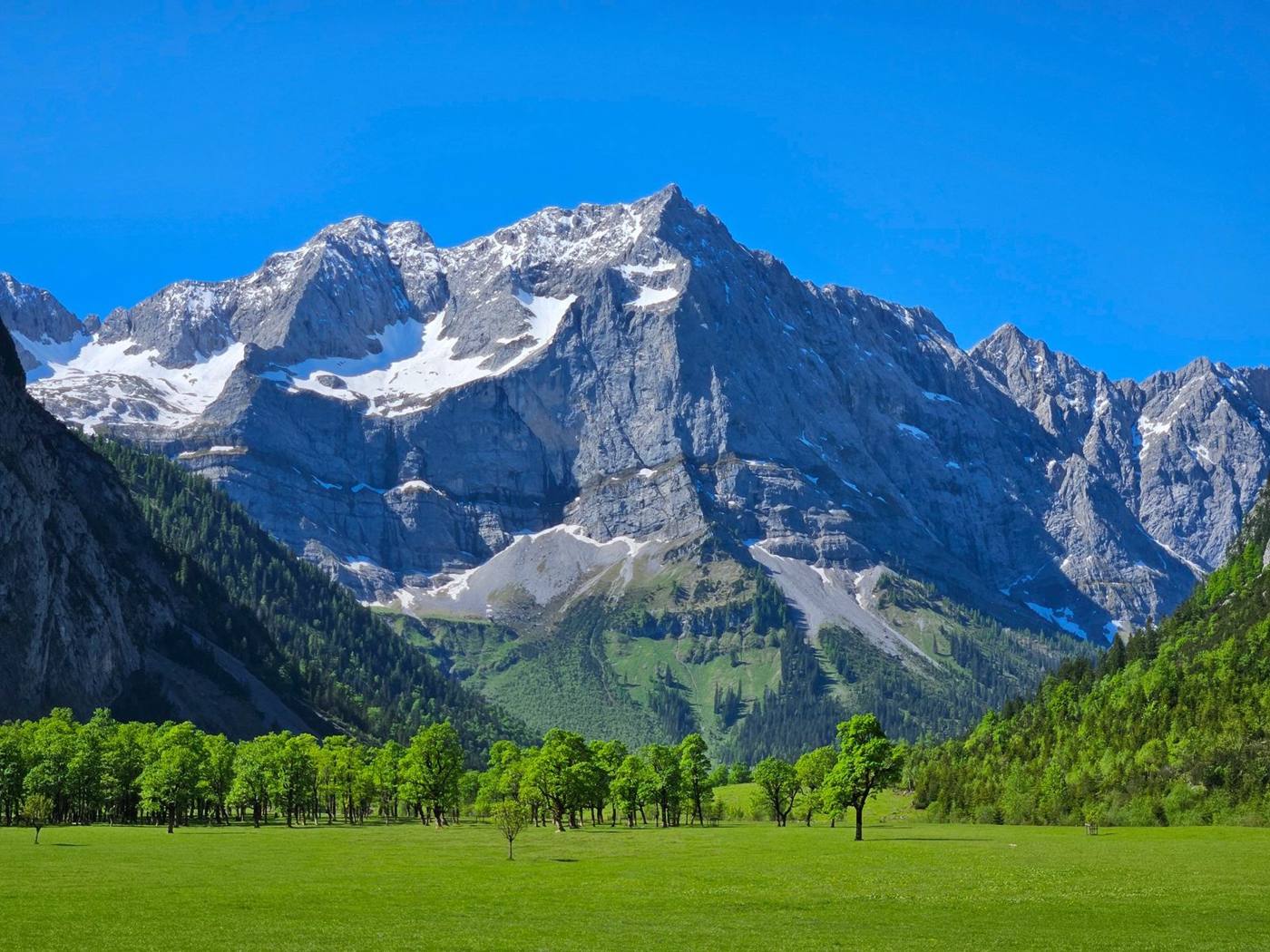 8 daysChallenging
The Eagle Walk in Tyrol
A week on the Eagle Walk between the Wilder Kaiser and the Karwendel, from hut to hut, to the Nordkette above Innsbruck.
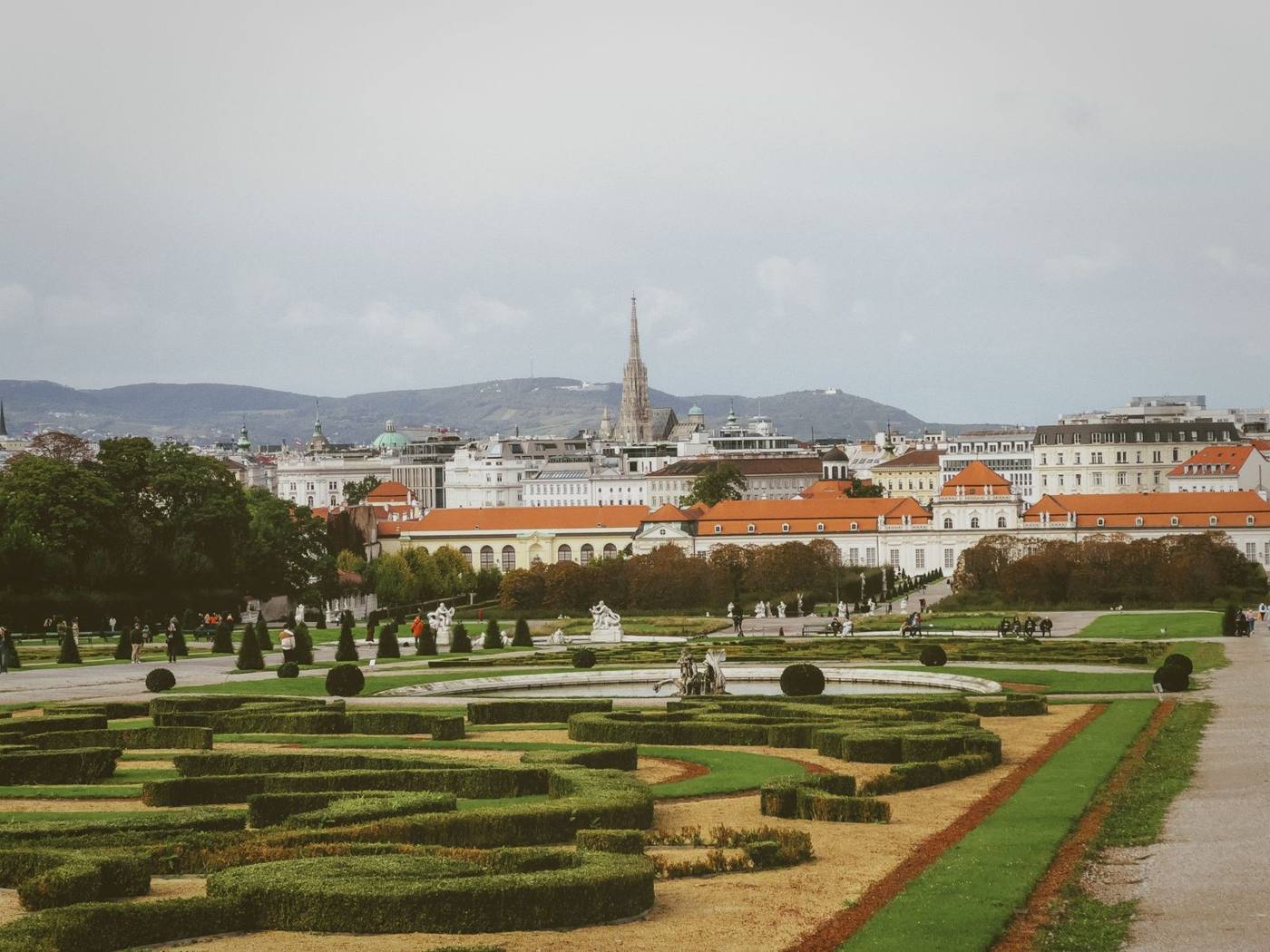 5 daysEasy
Vienna in five days
The Hofburg and Schönbrunn, Klimt at the Belvedere, the Kunsthistorisches Museum, the historic cafés, the Opera and the Heuriger wine taverns of Grinzing.
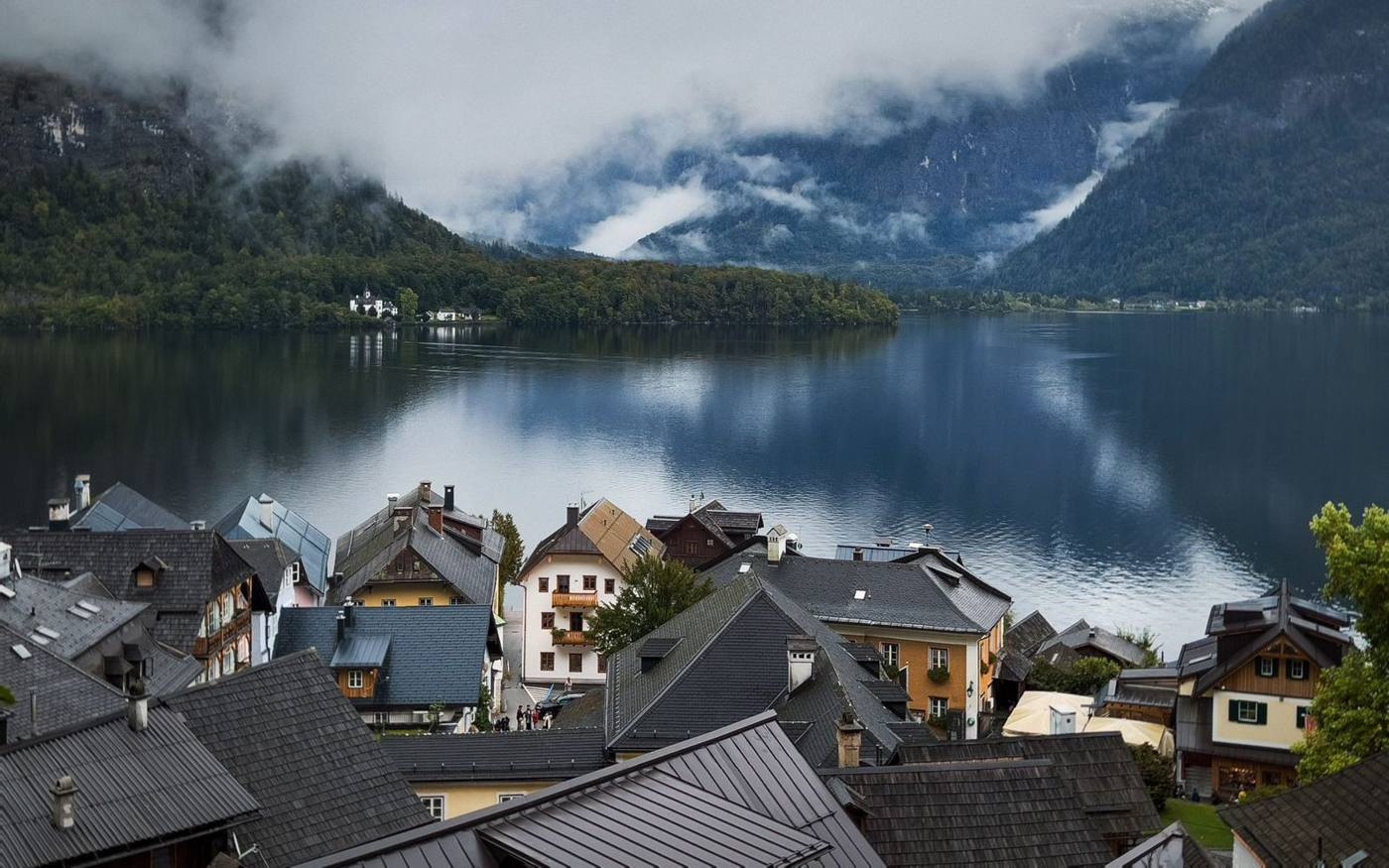 9 daysEasy
Vienna, Salzburg and Hallstatt
The great classic by train: imperial Vienna, Melk Abbey on the Danube, the lakes of the Salzkammergut with Hallstatt and Mozart's Salzburg.