Albania, Ohrid and the Bay of Kotor
The full loop of Albania with two border crossings: the lakeside monasteries of Ohrid in North Macedonia and the Venetian towns of Montenegro.
- Tirana
- Ocrida
- Bitola
- Coriza
- Përmet
- Saranda
- Butrinto
- Berat
- Scutari
- Cattaro
Day by day
- Day 1
Arrival in Tirana
This trip is the full tour of Albania in sixteen days, with two crossings: Lake Ohrid and Bitola in North Macedonia, then the Bay of Kotor and Cetinje in Montenegro. You travel by hire car, between Byzantine churches, Ottoman towns, Venetian walls and the sea.
Before you go: Italian citizens can enter Albania with an electronic identity card or a passport, valid for at least three months after leaving the country, without a visa for tourist stays. Italian paper identity cards are no longer valid for travel abroad from 3 August 2026. North Macedonia accepts the electronic identity card with at least three months' remaining validity; in Montenegro the electronic identity card is valid for stays of up to 30 days. Other nationalities should check their own rules. The United States rates Albania at level 2 because of crime, with no areas to avoid.
You land at Tirana airport and pick up the car. Ask the hire company straight away for written permission to take it into North Macedonia and Montenegro, and check that the green card insurance covers both countries.
In town, drop your bags and walk to Skanderbeg Square, large and pedestrianised, with the Et'hem Bey Mosque and the clock tower. At sunset stroll through the Blloku, the district that was closed to ordinary citizens under the regime and is now full of cafés.
For dinner try tavë kosi, lamb baked with yoghurt and eggs, and stuffed peppers.
Sleep in Tirana.
Practical tip: take out some lek at the airport and always carry cash: outside the cities many places do not accept cards.
- Day 2
From Elbasan to Lake Ohrid
Today you leave the capital heading east and cross the first border.
The new road drops towards Elbasan, an ancient town on the Via Egnatia, the Roman road that linked Durrës to Constantinople. Stop at the fortress, where the houses and lanes inside the walls are still lived in, for a coffee and a look at the walls.
Then the road climbs along the Shkumbin valley to the Qafë Thanë pass, where you cross the border into North Macedonia. Keep your ID, the car documents and the green card ready: the check is usually quick, but in summer there can be a queue.
From the pass you go down to Struga, on the northern shore of the lake, where the Black Drin river leaves the lake towards Albania. Lake Ohrid is one of the oldest lakes in Europe and is a UNESCO World Heritage Site together with the region around it.
In the afternoon follow the western shore south to the village of Radožda, almost on the border. From there a short path and a stairway on the rock lead to the Church of Saint Michael, built inside a cave above the water, with old frescoes. Along the shore there are other small monasteries and churches: stop wherever the view tempts you.
In the evening reach Ohrid and walk along the lakefront. For dinner try the lake trout, grilled or baked.
Sleep in Ohrid, for two nights.
Practical tip: in North Macedonia the currency is the denar: change a small amount straight away, because lek are not used.
- Day 3
Heraclea, Bitola and the churches of Ohrid
Today is a full day, between ancient ruins and Byzantine churches.
In the morning drive to Bitola, about an hour and a half through hills and fields. Just outside the town visit Heraclea Lyncestis, the city founded by Philip II of Macedon, the father of Alexander the Great, and later important in Roman and early Christian times. The best remains are the mosaics of the basilicas, with animals, trees and birds, and the small theatre. Check prices and times.
Then go into Bitola and walk along Širok Sokak, the long pedestrian street with the colourful nineteenth century buildings, from the time when the town hosted the consulates of the European powers. At the end of the street you find the clock tower and the old bazaar, with its Ottoman mosques.
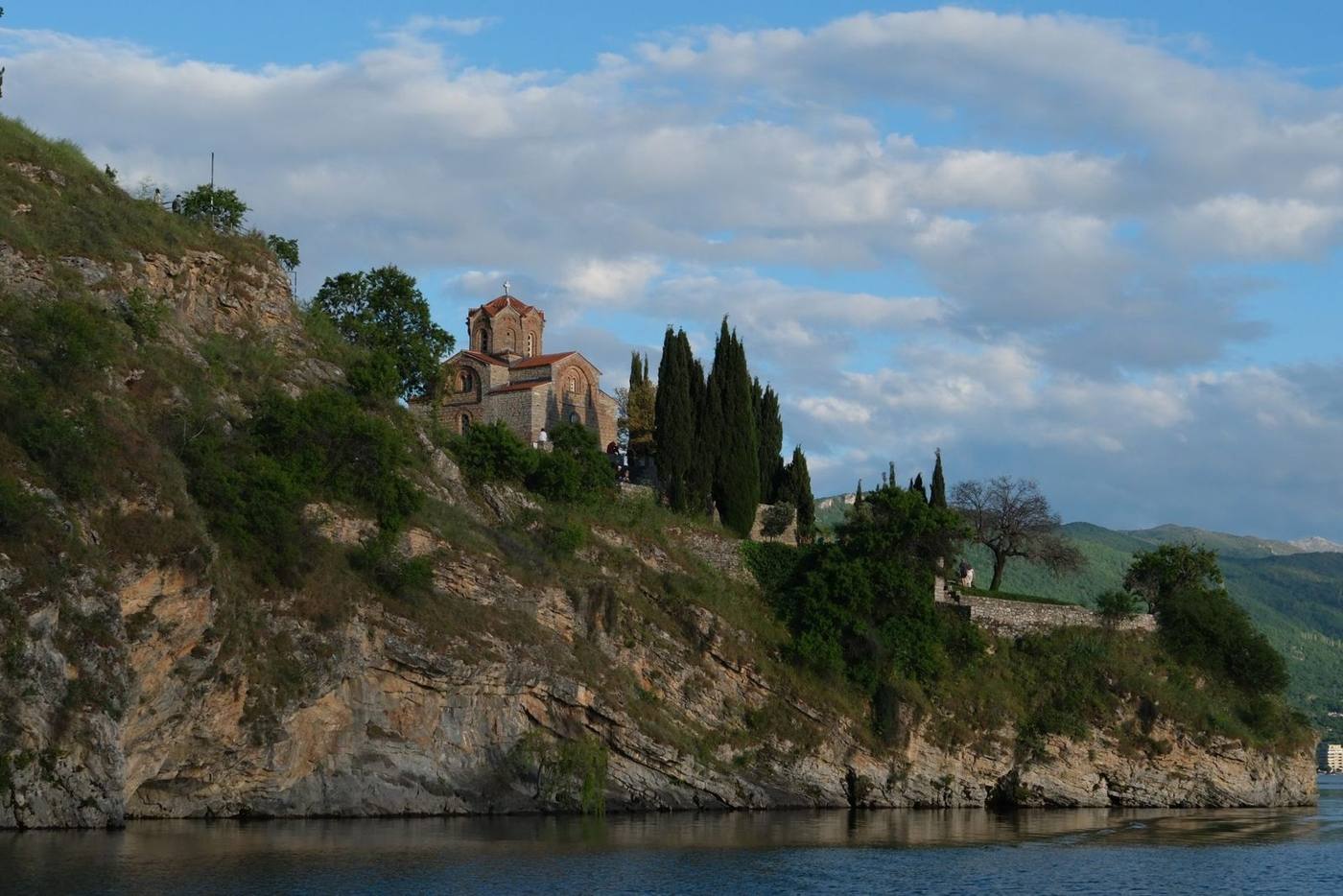
In the afternoon return to Ohrid and visit the old town on foot. Go into the Church of Saint Sophia, with medieval frescoes among the most important in the Balkans. Then follow the path above the lake to the little Church of Saint John at Kaneo, on its rocky headland: it is the most famous view in the country.
Climb to the Plaošnik site, where the Church of Saint Panteleimon has been rebuilt, linked to Saint Clement and the birth of Slavic writing, and to Samuel's Fortress, on the hill. Check prices and times.
Sleep in Ohrid.
Practical tip: reach Saint John at Kaneo towards sunset, when the light colours the lake, and wear shoes with a good grip for the steps.
- Day 4
Sveti Naum, Voskopojë and Korçë
Today you go round the southern tip of the lake and return to Albania.
In the morning follow the eastern shore south for about half an hour to the Monastery of Sveti Naum, founded by Saint Naum, a companion of Saint Clement, at the start of the tenth century. The church stands on a headland, with peacocks in the courtyard. Below the monastery are the springs of the Crn Drim river, which feed the lake: small rowing boats take you through the clear green water.
Shortly afterwards you cross the Tushemisht border and you are in Pogradec, on the Albanian shore of the lake. Stop on the lakefront for a coffee and try koran, the Lake Ohrid trout.
Then drive towards Korçë and climb to Voskopojë, at about 1,150 metres. In the eighteenth century it was one of the largest and richest towns in the Balkans, with printing presses and schools. Today it is a quiet village, but it keeps several churches with walls covered in frescoes, such as Saint Nicholas. To go in, ask the keeper: the churches are often closed, so check times.
In the evening reach Korçë, an elegant town of low houses and avenues. Stroll through the restored old bazaar and past the Orthodox cathedral.
For dinner try lakror, a savoury pie of thin pastry filled with vegetables, and a beer brewed in the town.
Sleep in Korçë.
Practical tip: in Voskopojë the evenings are cool even in summer: keep a jumper in the car.
- Day 5
The Vjosa valley to Përmet
Today is a day of mountain roads, one of the most beautiful of the trip.
From Korçë you head south through Ersekë, then the road passes Leskovik, a small town near Greece, and winds down to the Vjosa valley. The river rises in the Pindus mountains in Greece and flows freely to the Adriatic. In 2023 Albania made it Europe's first wild river national park.
Drive calmly: the road is narrow in many places and you meet sheep and goats. Stop at the wider spots to look at the mountains and gorges.
Near Përmet visit the Church of Saint Mary at Leusë, with an interior covered in colourful frescoes. Here too opening hours vary: check times or ask in the village.
Përmet is a small town of flowers and vineyards, on the river. Climb the town's rock, the large boulder in the centre with a view over the valley, and walk along the Vjosa at sunset.
The town is famous for gliko, fruit cooked in sugar syrup, with walnuts, figs or cherries, and for raki. For dinner also try the local cheese and grilled meat.
Sleep in Përmet.
Practical tip: fill up with fuel in Korçë or Ersekë: there are few petrol stations along the mountain road.
- Day 6
Gjirokastër, the Blue Eye and Sarandë
Today you go from the stone town to the sea.
From Përmet you drive to Tepelenë, where the two valleys meet, then along the Drino valley to Gjirokastër, about an hour and a half. The old town is a UNESCO World Heritage Site: tall houses of grey stone with slab roofs, built on the hillside below a large fortress.
Walk up to the fortress, which has a weapons museum and a clock tower, with a view over the whole valley. Check prices and times.
Then visit the Zekate House, one of the town's great Ottoman houses, from the early nineteenth century, with painted wooden rooms, fireplaces and windows over the valley. Check prices and times. In the bazaar buy honey or something carved in stone.
For lunch try qifqi, rice and egg balls with mint, a typical dish of Gjirokastër.
In the afternoon take the road to Sarandë and stop at the Blue Eye, the spring where water rises from deep underground into a blue and green pool, in the middle of the woods. From the car park you walk for a few minutes. Check prices and times.
In the evening you reach Sarandë and stroll along the seafront.
Sleep in Sarandë, for two nights.
Practical tip: in Gjirokastër the streets are made of smooth, sloping stone: wear shoes with soles that grip.
- Day 7
Butrint, Ksamil and sunset over Sarandë
Today is a day of archaeology and sea, with no long drives.
Early in the morning drive south for about half an hour to Butrint, the most important archaeological site in Albania, a UNESCO World Heritage Site and national park. You walk through woodland on the shore of a lake, past the Greek theatre, the Roman baths, the baptistery with its mosaic floor, the great basilica and the Lion Gate. At the top there is a castle with a small museum. Check prices and times.
Arrive at opening time: in summer it gets hot early and the groups arrive.
For lunch stop in Ksamil, the seaside village with pale sandy beaches, blue water and small islands just off the coast. You can swim to the nearest islands or hire a kayak. Try the mussels from Lake Butrint, farmed nearby.
In the afternoon relax on the beach or go back to Sarandë.
At sunset drive up to Lëkurësi Castle, above the town, from where you see the bay, the hills and the Greek island of Corfu opposite.
In the evening have the catch of the day on the seafront.
Sleep in Sarandë.
Practical tip: in July and August the beaches of Ksamil are very crowded: for a bit of space go early in the morning or choose May, June or September.
- Day 8
Porto Palermo and the Llogara Pass
Today you drive north up the Albanian Riviera, one of the most beautiful coastal roads in the Mediterranean.
From Sarandë the road climbs and falls between olive covered hills, villages and bays. Stop at Borsh, with its long pebble beach and the castle on the hill, and then at Porto Palermo, a deep and quiet bay. On a small peninsula stands the fortress attributed to Ali Pasha of Tepelenë, the Ottoman governor of the early nineteenth century. Inside you walk through the halls and climb onto the roof for the view. Check prices and times.
A little further north you pass Himarë, with its castle above the new town, and the beaches of Jale and Dhërmi. Stop for a swim in the clear water.
In the afternoon the road climbs in bends to the Llogara Pass, at more than a thousand metres, in the national park with its black pines. From the viewpoint you see the whole coast, as far as Sazan Island and the Karaburun peninsula.
Then go down to Vlorë, on the Adriatic.
For dinner try fish from the bay and a salad with sheep's cheese.
Sleep in Vlorë.
Practical tip: on the pass the weather changes quickly and there is often fog or wind: drive slowly, and go up to the viewpoint in the afternoon light.
- Day 9
Narta, Apollonia, Ardenica and Berat
Today you visit a lagoon, a Greek city and a monastery before reaching Berat.
In the morning leave Vlorë heading north to the Narta lagoon, one of the most important wetlands in Albania. With a little luck you see flamingos and herons. On a small island joined by a wooden bridge is the Monastery of Zvërnec, with a small Byzantine church among the pines.
Then drive towards Fier and visit the archaeological park of Apollonia, a city founded by Greek colonists from Corinth and Corcyra and later a Roman city. The young Octavian, the future Augustus, was studying here when he heard of Caesar's death. You see the façade of the bouleuterion, the Monument of the Agonothetes, the odeon, the columns of a portico and a medieval monastery with the museum. Check prices and times.
Not far away is the Monastery of Ardenica, on a hill among olive trees, with a frescoed church. According to tradition, Skanderbeg was married here. Check times.
In the late afternoon drive to Berat, about an hour. The old town, a UNESCO World Heritage Site, is called the town of a thousand windows because of its white houses stacked one above the other.
For dinner try stuffed aubergines and the local red wine.
Sleep in Berat.
Practical tip: at the Narta lagoon bring binoculars, as the flamingos stay far from the road.
- Day 10
Berat and the amphitheatre of Durrës
Today the morning is for Berat, the afternoon for Durrës.
In the morning climb to Berat Castle, a citadel that is still lived in, with stone houses, churches and lanes inside the walls. There visit the Onufri Museum, in the Cathedral of the Dormition, with icons by the sixteenth century painter Onufri, famous for his intense red, and by his pupils. Inside there is also a carved wooden iconostasis. Check prices and times.
From the upper part of the walls look over the Osum river valley and the two districts below: Mangalem, with its mosques, and Gorica, on the other bank.
Walk down and cross the stone bridge to Gorica, the historic Christian district, with white houses on the hill and silent lanes. From here you see the thousand windows façade of Mangalem.
After lunch drive to Durrës, about an hour and a half. Visit the Roman amphitheatre, built in the second century AD and hidden for centuries under houses: inside there is a small chapel with Byzantine mosaics. Check prices and times.
Then walk to the Venetian tower and along the seafront.
For dinner try fish from the Adriatic.
Sleep in Durrës.
Practical tip: in Berat leave the car down below and walk or take a taxi up to the castle: the streets inside the walls are extremely narrow.
- Day 11
Krujë, Lezhë, the Mes Bridge and Shkodër
Today you head to the north of the country, with many short stops.
In the morning drive to Krujë, on the mountain above the plain, about an hour. Here Skanderbeg held out against the Ottomans in the fifteenth century. Walk through the old covered bazaar, a stone street with wooden roofs and shops selling carpets, felt and silver. Then go into the castle and visit the museum dedicated to the national hero and the ethnographic museum, in an Ottoman house. Check prices and times.
Head north to Lezhë, home to the Skanderbeg Memorial, built over the ruins of the church where he was buried in 1468. Above the town stands the fortress.
Before Shkodër turn east to see the Mes Bridge, a long, arched Ottoman stone bridge from the eighteenth century over the Kir river. It is one of the most beautiful in the Balkans.
In the afternoon climb to Rozafa Fortress, on the hill above Shkodër, where three rivers meet and where you look over the great Lake Shkodër. A legend tells of a young woman walled into the foundations. Check prices and times.
In the evening walk along the pedestrian street in the centre, full of bicycles, and try carp from the lake.
Sleep in Shkodër.
Practical tip: Shkodër is a town of bicycles: borrow or hire one to get around the centre in the evening.
- Day 12
Montenegro: Sveti Stefan, Budva and Kotor
Today you cross into Montenegro and follow the coast to the Bay of Kotor.
From Shkodër you drive to the Hani i Hotit or Muriqan border crossing, then go down to the coast. In Montenegro the currency is the euro. In hotels, registration and the tourist tax are handled by the property.
The first stop is Sveti Stefan, the islet of stone houses joined to the mainland by a strip of sand. The island is a private complex, but the best view is from the road above and from the beach.
Then visit Budva, with its old town inside Venetian walls, lanes of white stone, churches and the citadel by the sea.
In the afternoon you reach Kotor, at the far end of the bay, the deep inlet closed in by mountains that looks like a fjord. The old town, a UNESCO World Heritage Site, has stone squares, the Cathedral of Saint Tryphon and Venetian palaces.
Around five o'clock start the climb up the walls: more than a thousand steps, with a chapel halfway, lead to the Fortress of Saint John, above the town. From the top you see the whole bay. Check prices and times.
For dinner try black risotto and mussels from the bay.
Sleep in Kotor.
Practical tip: climb the walls in the late afternoon and bring water and a torch for the way down: in summer at midday the heat on the steps is intense.
- Day 13
Cetinje, Morača Monastery and Ulcinj
Today you climb into the interior of Montenegro and then go back down to the sea.
From Kotor take the serpentine road, with dozens of hairpin bends above the bay, to Cetinje, the old royal capital of Montenegro, on a plateau. Visit Cetinje Monastery, which keeps relics important to Orthodox believers, and walk among the buildings of the old embassies and the King Nikola Museum. Check prices and times. In monasteries cover your shoulders and legs.
Then take the road north, towards Podgorica and the Morača canyon. The road runs inside the gorge, between rock walls and the green river. Morača Monastery, from the thirteenth century, has a church with some of the oldest frescoes in the country and a meadow with a waterfall nearby. It is a long detour: allow at least three extra hours of driving, there and back.
In the late afternoon head down towards the coast, passing near Lake Skadar, to Ulcinj, the last town in Montenegro before Albania. The old town sits on a rock above the sea.
For dinner try fish and a dish of Albanian cooking, which is common here.
Sleep in Ulcinj.
Practical tip: this is the longest day of the trip: leave Kotor early and, if you are tired, skip Morača and spend more time in Cetinje.
- Day 14
The sea at Ulcinj and back to Tirana
Today is a quiet day, to rest before the capital.
In the morning go to the sea. South of Ulcinj lies Velika Plaža, the long beach, with about twelve kilometres of fine sand as far as the Bojana river, which marks the border with Albania. The water is shallow and warm, good for children too. Closer to town there are small rocky coves.
Before leaving, walk through the old town of Ulcinj, with its stone houses, alleys and walls above the sea. It was once a pirates' refuge, and tradition says that Sabbatai Zevi, who had proclaimed himself the messiah in the seventeenth century, lived here in exile.
After lunch cross the Sukobin and Muriqan border, then drive towards Shkodër and Tirana, about two and a half hours in all. In the late afternoon return the car if you no longer need it: tomorrow you get around the city on foot and by taxi.
In the evening go out in the Blloku or have dinner near the New Bazaar, the restored covered market, where you can buy fruit, olives, cheese and honey.
For dinner try fërgesë, peppers, tomatoes and cheese cooked together in a pan.
Sleep in Tirana, for two nights.
Practical tip: at the border between Montenegro and Albania the queue is longer in the middle of the day in summer: cross early or after dinner.
- Day 15
Dajti and the National History Museum
Today is the last full day, all for Tirana.
In the morning take the Dajti cable car, which leaves from the eastern edge of the city and climbs towards the mountain in about a quarter of an hour over woods and hills. At the top, at more than a thousand metres, the air is fresh and on clear days you see the whole Tirana plain as far as the sea. You can walk on the national park trails among beeches and pines. Check prices and times: in strong wind the cable car may stop.
Return to the city for lunch. In the afternoon visit the National History Museum, on Skanderbeg Square, with the large mosaic on its façade. Inside it tells the story of Albania from ancient times to the twentieth century, with a section dedicated to the victims of the communist regime. Check prices and times.
Then go into the Et'hem Bey Mosque, with its frescoes of trees and landscapes, rare in a mosque. Cover your shoulders and legs.
If you still have time visit one of the bunkers turned into museums and walk past the Pyramid, the former mausoleum of the dictator, now renovated, which you can climb.
In the evening have dinner with your favourite Albanian dishes of the trip: byrek, the savoury filo pastry pie, and tavë kosi.
Sleep in Tirana.
Practical tip: go to the cable car early in the morning: at weekends many city residents head up.
- Day 16
Flight home
On the last day you leave Tirana.
If your flight is in the afternoon, take a final walk through the New Bazaar and buy something to take home: mountain honey, olive oil, mountain tea, raki or gliko from Përmet. The airport is about half an hour from the centre, but traffic can make it longer.
In these sixteen days you have seen the western Balkans in a single trip: Tirana and Dajti, the shore of Lake Ohrid with its Byzantine churches and Saint John at Kaneo, the mosaics of Heraclea and the elegant street of Bitola, the monastery of Sveti Naum and the frescoed churches of Voskopojë, the Vjosa road to Përmet, the stone town of Gjirokastër, Butrint and the sea at Ksamil, the Riviera with Porto Palermo and the Llogara Pass, Apollonia and the thousand windows of Berat, Krujë and Rozafa, then the walls of Kotor, Cetinje and the beach at Ulcinj.
The highlight is the stretch between Ohrid, Korçë and Përmet, which few classic tours include. The drawback is the pace: many days are made of driving and short visits. If you already know the Albanian coast, you can skip days 7 and 8.
When to go: the best months are May and June and then September, with the sea already warm, long days and fewer people. In July and August the coast is crowded and the interior is very hot. In winter mountain roads can be blocked by snow.
Practical tip: keep some lek on the last evening for the taxi and tips; the exchange rate at the airport is poor.
For anyone with two weeks who wants to make sense of the western Balkans in one trip: Byzantine churches, Ottoman towns, Venetian walls and the sea. Its strength is the stretch between Ohrid, Korçë and Përmet, which hardly any standard tour covers. The drawback is the pace: many days are long drives with short visits. If you already know the Albanian coast, days 7 and 8 can go.
Before you go
- Documents and visa
- Electronic identity card or passport for EU citizens, valid for at least three months after leaving Albania. Italian paper identity cards are no longer valid for travel abroad from 3 August 2026. No visa is needed for tourist stays of up to 90 days.
- Health and vaccines
- No compulsory vaccinations. Outside Tirana medical facilities are limited: you need insurance covering medical costs and repatriation. Drink sealed bottled water. Emergencies: 127 ambulance, 129 police, 128 fire.
- Money and payments
- Albanian lek. Cash machines and cards work mainly in cities and tourist areas; in villages and small shops you need cash.
- Power sockets
- Types C and F, 230 volts: you need an adapter for British plugs.
- Time zone
- UTC+1, UTC+2 in summer, one hour ahead of the UK.
- Safety
- The United States rates Albania at level 2 because of crime, with no areas to avoid. The UK advises staying away from demonstrations in central Tirana. In winter mountain roads can be blocked by snow. Official advice: GOV.UK.
Information checked in November 2026 for Italian and EU citizens. Rules change: always check before you travel.
Variations
In 10 days: Tirana, Ohrid and Bitola, Korçë, Përmet, Gjirokastër, Butrint and Berat, without Montenegro and without the Riviera.
In 19 days: add two days in Theth, in the Albanian Alps, starting from Shkodër, and an extra night on the Riviera at Himarë.
Frequently asked questions
What documents do I need for Albania, North Macedonia and Montenegro?
Italian citizens enter all three countries with an electronic identity card or a passport, without a visa. In Albania and North Macedonia the document must be valid for at least three months after you leave; in Montenegro the identity card is valid for stays of up to 30 days. Other nationalities should check their own rules.
Can I cross the border in a hire car?
Yes, but you must ask the hire company for written permission and check that the green card insurance covers North Macedonia and Montenegro. Some companies charge a supplement.
Is this a safe trip?
The United States rates Albania at level 2 because of crime, with no areas to avoid, and neither North Macedonia nor Montenegro has areas advised against along this route. The biggest danger is the road: drive calmly and avoid travelling at night in the mountains.
Indicative itinerary written by World Atlas. Before booking, check timetables, seasonal openings, documents and safety.
 20 daysModerate
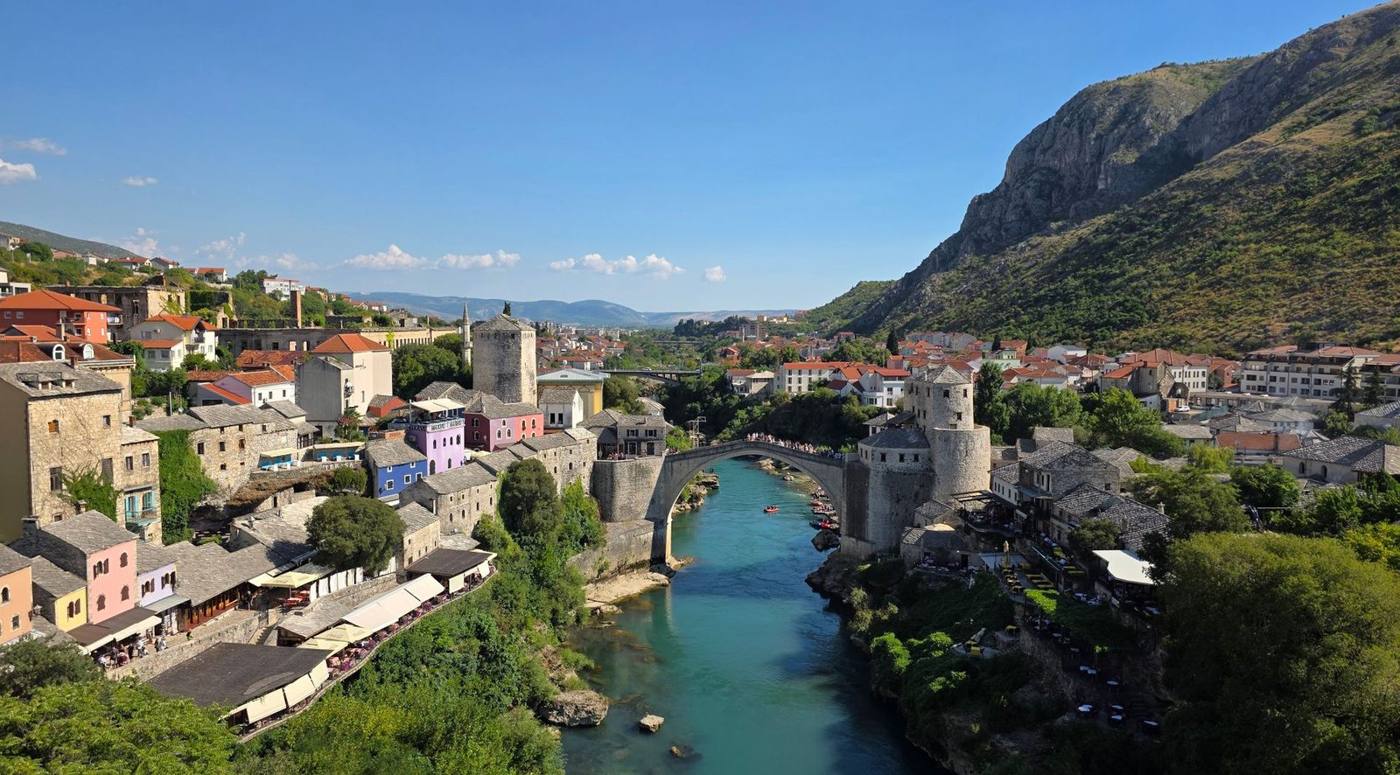
Balkanika: six countries from Tirana to Sarajevo and back
Twenty days by minibus through Albania, North Macedonia, Kosovo, Montenegro, Bosnia and Herzegovina and Dubrovnik, closing the loop at Theth.
 9 daysEasy
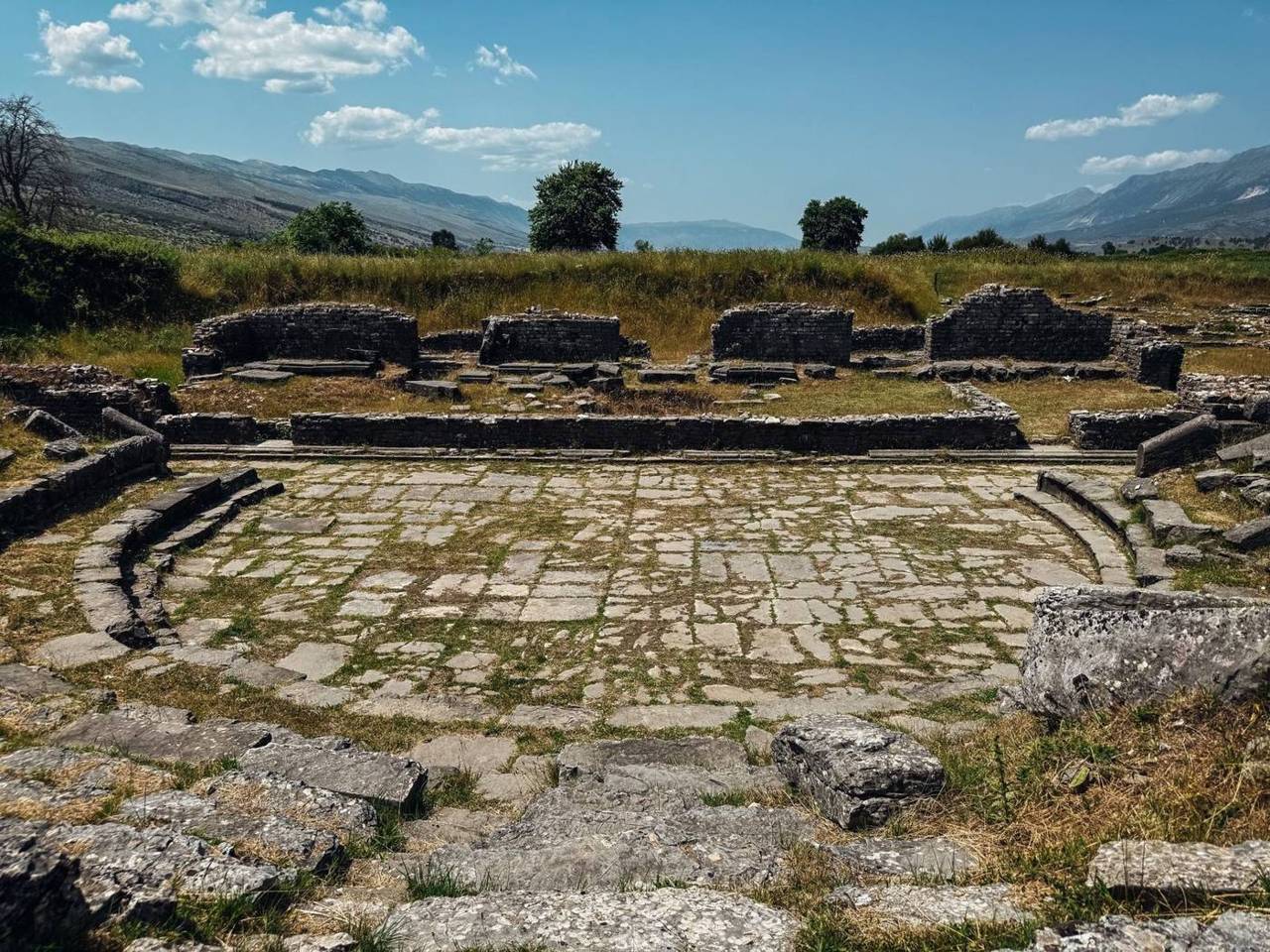
Ancient Albania: from Apollonia to Lake Ohrid
Roman Durrës, Apollonia and Butrint, a boat to Sazan island and a finale on Lake Ohrid, with two days by the sea at Dhërmi.
 13 daysModerate
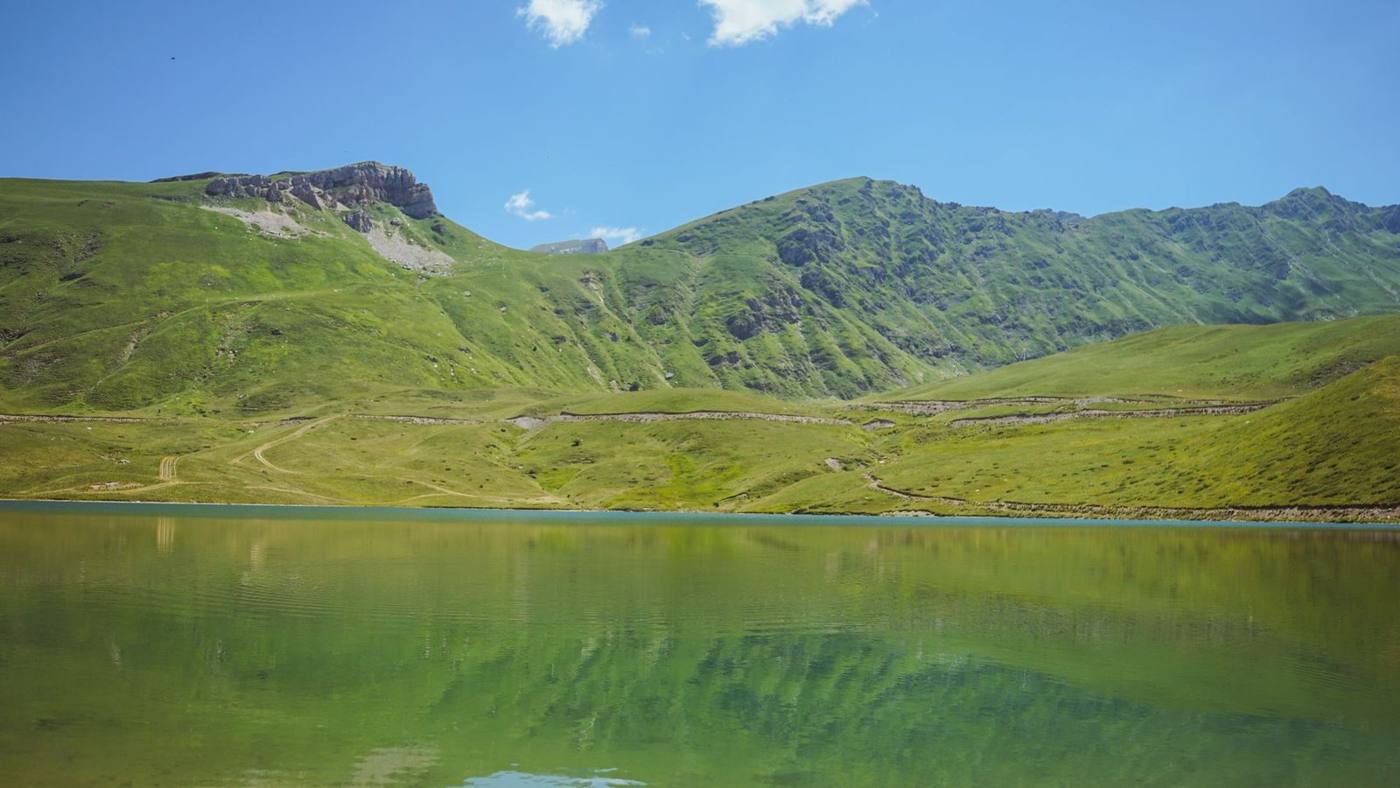
By motorbike through inland Albania: Dibër and the Drin valley
A motorbike raid far from the coast, on mountain roads between Burrel, Peshkopi and the Drin river, coming back through Shkodër.