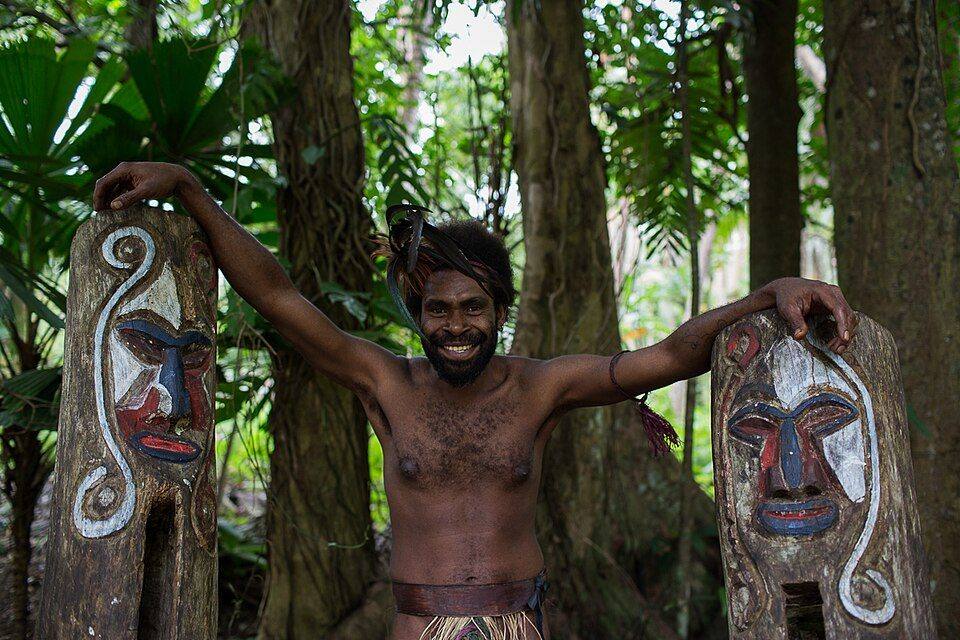
Malekula and the Nambas
The country's second island, one of the least visited: the kastom villages of the Small Nambas and Big Nambas, traditional dances, forest and the Maskelyne islands with their lagoon.
- Norsup
- Lakatoro
- Maskelyne Islands
Day by day
- Day 1
Flight to Norsup and Lakatoro
This four-day trip takes you to Malekula, the second-largest island in Vanuatu and one of the least visited: kastom villages where communities follow the traditions of the Small Nambas and the Big Nambas, dances, forest and the Maskelyne islands with their lagoon. It is a real and uncomfortable trip, with dirt roads, very simple accommodation and little electricity.
Before you go: Italian citizens enter Vanuatu with a passport valid for at least six months and, as European Union citizens, without a visa for short stays of up to 90 days. You may be asked for a return or onward ticket. Other nationalities should check their own rules. Domestic flights use small planes and often change times because of the weather: leave a spare day in Port Vila. From November to April there is a risk of cyclones. Malaria is present on Malekula: ask your doctor about prevention and always use a mosquito net and repellent. Health facilities are minimal.
The flight from Port Vila lands at Norsup, on the east coast. A few minutes away is Lakatoro, the small provincial capital, with a few shops, the market and the offices.
In the afternoon walk around the market, where women sell root crops, bananas, fruit and nuts, and go to the tourist office or the provincial cultural centre, if it is open, to arrange the visits with the communities for the next few days.
Withdraw cash in vatu if you find a working cash machine: it will be the last one for several days.
Sleep in Lakatoro.
Practical tip: bring basic medicines, a torch and water purification tablets: you will find almost nothing in the villages.
- Day 2
The Small Nambas village
Today you visit a kastom village of the Small Nambas, in the interior of the island. The name comes from the namba, the band of leaves that men wear according to tradition: small for the Small Nambas, large for the Big Nambas, who live in the north-west of the island, which is harder to reach.
You get there by pick-up truck on dirt roads, then on foot along a path through the forest. The visit is arranged in advance, through the community, and you pay an entrance fee that stays with the village. Check prices and times.
In the village the elders welcome you. Follow the guide, greet people and always ask before taking photos. People live in houses of bamboo and leaves, grow yam and taro and keep ancient rules, with places reserved for men or for women.
Then the dance begins: men wearing the namba with painted bodies, sometimes with masks and headdresses, dance to the rhythm of slit drums, large hollowed and carved trunks played by striking them with a stick. The deep sound carries a long way through the forest.
After the dance you can taste the village food and listen to the community's stories, with the guide translating from Bislama, the common language of Vanuatu.
In the afternoon go back to Lakatoro.
Sleep in Lakatoro.
Practical tip: dress simply and modestly, and do not laugh at or comment on the traditional dress: it matters to the community.
- Day 3
To the Maskelyne islands
Today you leave Lakatoro and head down to the south-east of Malekula, to the Maskelyne islands, a group of low islets surrounded by a lagoon and coral reefs.
The journey is long and uncomfortable: first by pick-up truck on the island's dirt roads, past forests, coconut plantations and villages, then by boat to the islands. Times depend on the weather and the state of the roads, which can be muddy after rain. Leave early.
Along the way stop in villages to stretch your legs and buy fruit. Greet people with a simple gud moning, good morning in Bislama, and you will always get a smile.
In the Maskelynes the communities have protected the lagoon for years, with areas where fishing is banned. Giant clams live here, large colourful molluscs that families raise and return to the reef.
Settle into your accommodation, usually a simple bungalow run by a family, with rainwater and little electricity. In the afternoon take a walk on the beach and watch the children fishing among the rocks.
In the evening, if there is one, join a gathering at the nakamal, the communal house, where the men drink kava.
Sleep in the Maskelyne islands.
Practical tip: keep your backpack in a dry bag during the boat trip, because the spray soaks everything.
- Day 4
The lagoon by canoe and the way back
Today you explore the Maskelyne lagoon by canoe, as the local families do.
Early in the morning, when the water is calm, get into an outrigger canoe carved from a trunk, together with a guide from the community. Paddle between the islets and the mangroves, over shallow, clear water. Below you see corals, starfish, colourful fish and the giant clams, with their blue and green edges closing slowly when a shadow passes.
Stop at a spot where you can snorkel and look at the reef up close. Do not touch the corals or the clams and do not take away shells.
Then go back and get ready for the return journey: boat and pick-up truck to the nearest airstrip, then the flight to Port Vila. Times change often, so ask your host family for confirmation and leave a margin.
Trip summary: in four days you have flown to Norsup and Lakatoro, visited a Small Nambas village with its dances and slit drums, crossed Malekula to the Maskelyne islands and paddled by canoe in the lagoon among corals and giant clams.
When to go: from May to October, in the cooler, drier season, with less rain and easier roads. From November to April there is a risk of cyclones and the tracks turn muddy.
Practical tip: bring cash in vatu for the whole trip, including entrance fees, boats and accommodation: cards are hardly ever used.
A real, uncomfortable trip: dirt roads, very basic lodgings, little electricity. Village visits are arranged through the communities and there is an entry fee. Bring cash in vatu.
Before you go
- Documents and visa
- Passport valid for at least six months. European Union citizens do not need a visa for short stays of up to 90 days. You may be asked for a return or onward ticket.
- Health and vaccines
- Malaria is present, especially outside Port Vila: ask your doctor about prevention. There is also dengue, hepatitis and typhoid: use repellent. Health facilities are very limited and medicines are scarce: you need insurance that covers medical costs and repatriation. The hyperbaric chambers are in Port Vila. Outside Port Vila and Luganville drink bottled or boiled water. Emergencies: 112 in Port Vila and Luganville.
- Money and payments
- Vatu. Cash machines and cards in Port Vila and Luganville; on the other islands you need cash in vatu, including to enter villages.
- Power sockets
- Type I, 220-240 volts: you need an adapter for European plugs.
- Time zone
- UTC+11 all year.
- Safety
- Crime is generally low, but there have been thefts and attacks, including on isolated beaches and at nightclubs in Port Vila. Seismic and volcanic area: earthquakes, tsunamis and eruptions can close access to an island. The December 2024 earthquake damaged Port Vila. Cyclones from November to April. Domestic flights use small planes and schedules often change. Ask permission before entering a village. Avoid driving at night. Official advice: GOV.UK.
Information checked in November 2026 for Italian and EU citizens. Rules change: always check before you travel.
Variations
Shorter version: three days, with Lakatoro and the Small Nambas village.
Longer version: add two days with a guided trek to the Big Nambas villages, in the north-west.
Frequently asked questions
Can I visit the villages on my own?
No, visits are arranged through the communities and you pay an entrance fee that stays with the village. Ask in Lakatoro before setting off.
Do I need malaria prevention?
Malaria is present on Malekula. Ask your doctor before you leave and always use repellent and a mosquito net.
What is the journey to the Maskelynes like?
Long and uncomfortable, by pick-up truck on dirt roads and then by boat. Leave early and keep everything in a dry bag.
Indicative itinerary written by World Atlas. Before booking, check timetables, seasonal openings, documents and safety.
 2 daysEasy
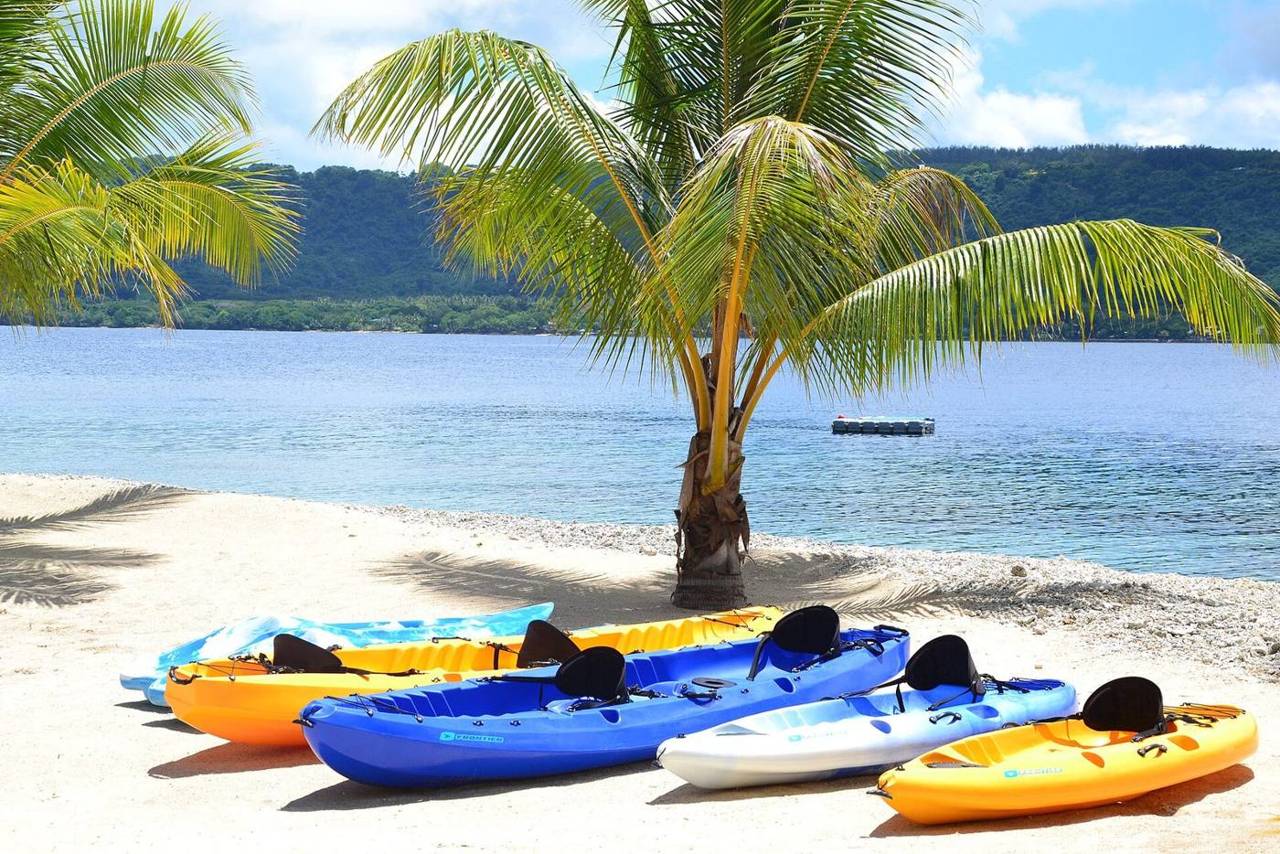
Around Efate
The coast road around the capital's island: the Blue Lagoon, Eton beach, the northern villages, Havannah Harbour and the underwater post office of Hideaway Island.
 5 daysModerate
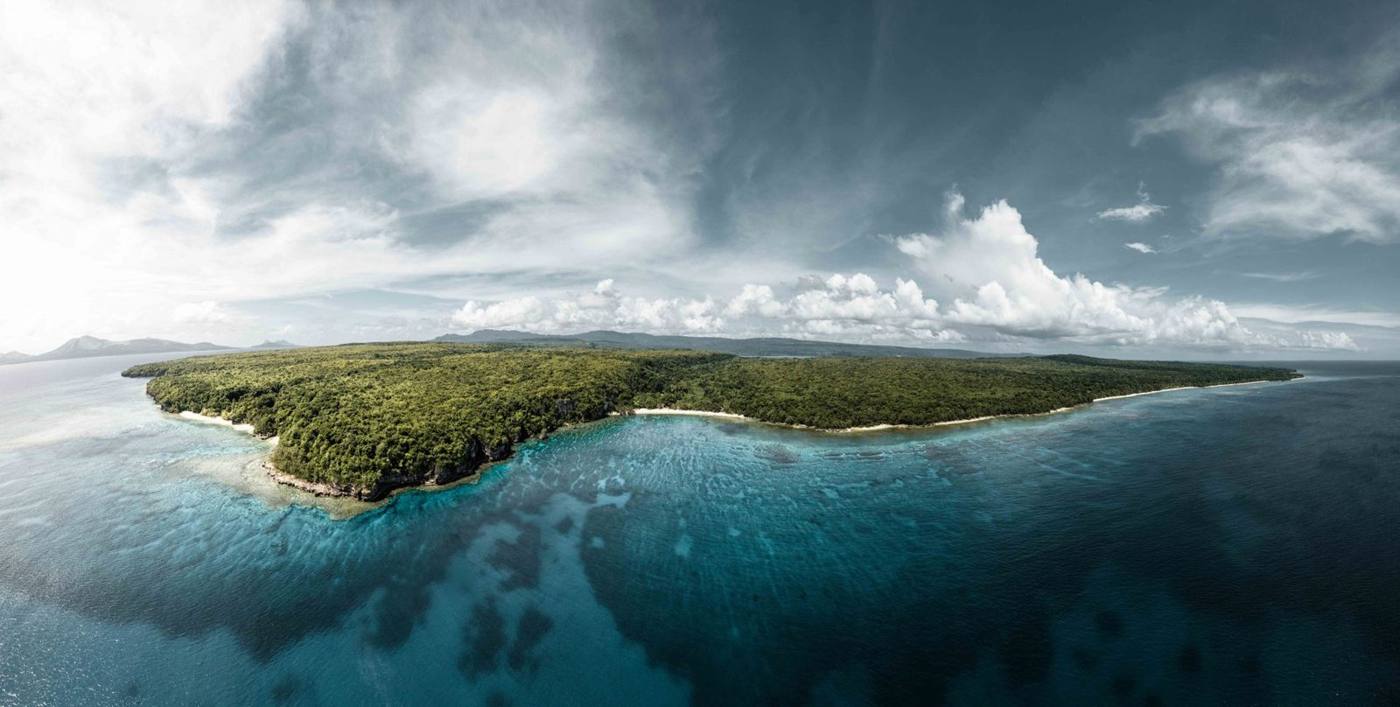
Tanna and Mount Yasur
The crater rim of Yasur, one of the world's most accessible active volcanoes, and the kastom villages living by tradition.
 7 daysEasy
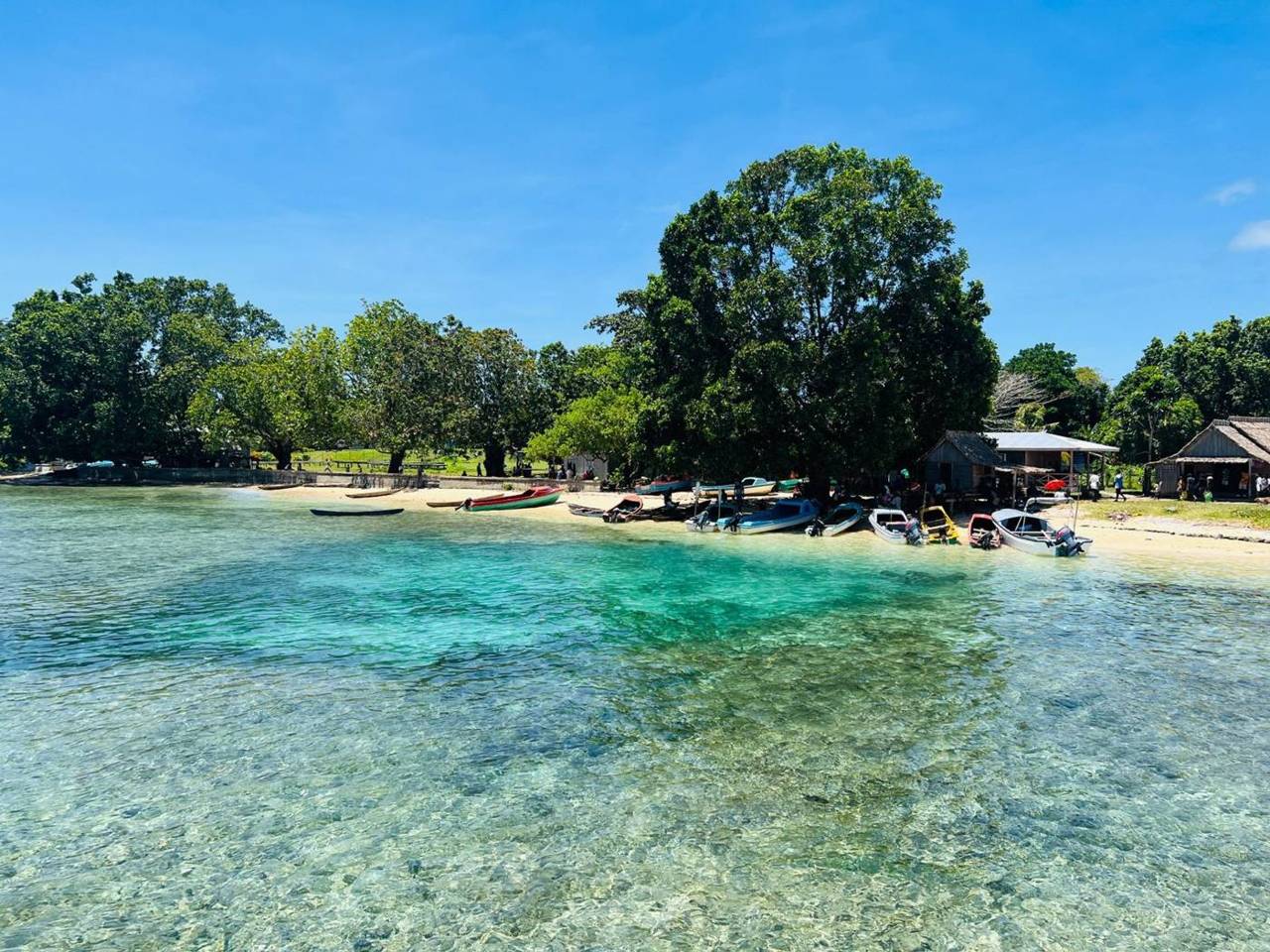
Efate and Espiritu Santo
Port Vila and Mele falls, then Santo with its freshwater blue holes, Champagne Beach and the dive on the SS President Coolidge wreck.