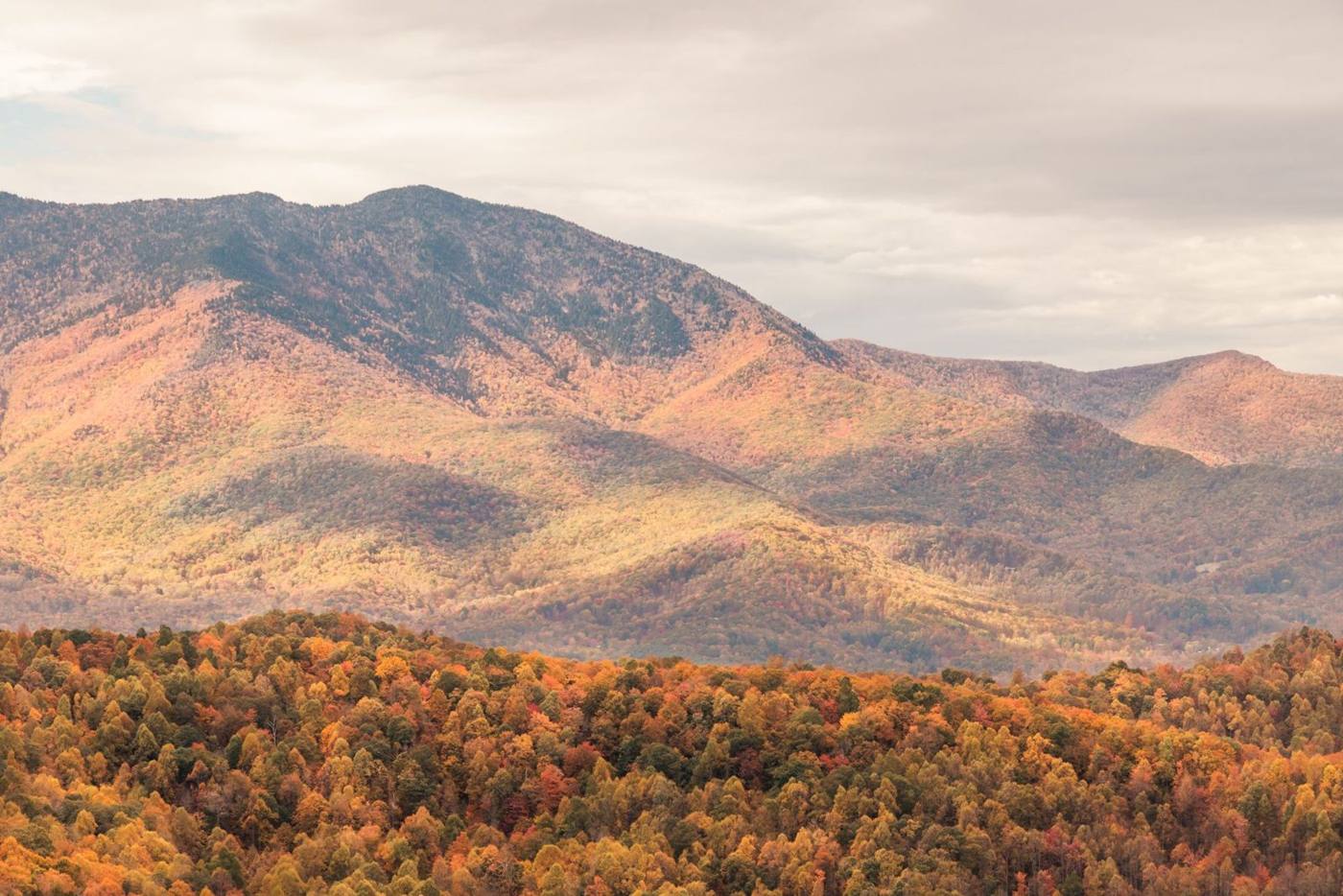
Appalachians: Great Smoky Mountains and the Blue Ridge Parkway
America's oldest mountains: Great Smoky Mountains National Park with its blue mists, black bears and Cades Cove valley, then the Blue Ridge Parkway, one of the country's most beautiful scenic roads, to Asheville and Shenandoah National Park.
- Knoxville
- Gatlinburg
- Cades Cove
- Clingmans Dome
- Cherokee
- Asheville
- Blue Ridge Parkway
- Shenandoah
Day by day
- Day 1
Great Smoky Mountains: Cades Cove at dawn
This trip follows the southern Appalachians, the ancient, forested mountain chain of the eastern United States: Great Smoky Mountains National Park, between Tennessee and North Carolina, the most visited in the country, then the Blue Ridge Parkway, a scenic road with no trucks or traffic lights that runs along the ridges for more than seven hundred kilometres, the city of Asheville and finally Shenandoah National Park in Virginia. It is a journey of woods, waterfalls, viewpoints and mountain culture, with bluegrass music and Cherokee history.
To enter the United States you need a passport and an ESTA, the electronic authorisation, which costs 40.62 dollars. You fly into Knoxville, Tennessee, or Atlanta, further away but with more international flights, and pick up a hire car.
On the first day, leaving before dawn, go to Cades Cove, a green valley inside the park, surrounded by mountains, where settler families lived in the nineteenth century. A loop road of about seventeen kilometres passes meadows, wooden churches, log cabins and preserved mills. At dawn mist rises from the meadows and you see white tailed deer, wild turkeys and sometimes black bears at the edge of the woods.
In the afternoon walk to one of the nearby waterfalls, such as Abrams Falls, on a woodland trail beside a creek.
Spend the night in Townsend or Gatlinburg.
Practical tip: entry to the park is at no cost, but parking requires a tag displayed in your car: check the price. On Wednesdays in season the Cades Cove loop may be closed to cars: check. Do not approach or feed the bears.
- Day 2
Laurel Falls and Clingmans Dome
On your second day in the Great Smoky Mountains head up towards the park's peaks.
In the morning walk to Laurel Falls, one of the park's most famous waterfalls, about twenty six metres high, on a paved trail of about two and a half kilometres climbing gently through oak and pine woods. It is very busy: arrive early.
Then drive the Newfound Gap Road, which crosses the park from north to south over the main ridge. At Newfound Gap is the border between Tennessee and North Carolina, with a memorial where President Franklin Roosevelt dedicated the park in 1940. The Appalachian Trail also passes here, more than three thousand kilometres from Georgia to Maine.
From the gap a road climbs to Clingmans Dome, now also known by its Cherokee name Kuwohi, the park's highest peak at about 2,025 metres. From the car park a steep paved path of about a kilometre leads to a spiral observation tower. From there, on clear days, the view opens over rows of blue mountains fading into the horizon. The Smoky Mountains take their name from this bluish haze, produced by the forest's plants.
In the afternoon go down into the valley and visit Gatlinburg, a tourist town at the park entrance, or rest.
Spend the night in Gatlinburg or Cherokee.
Practical tip: the road to Clingmans Dome is closed in winter. It is much colder at the top than in the valley: bring a jacket.
- Day 3
The Alum Cave trail and the Cherokee museum
Today do one of the park's finest hikes, the Alum Cave trail, starting from the Newfound Gap Road.
The trail first follows a creek through the woods, crosses small log bridges and passes under Arch Rock, a rock arch climbed by steps cut into the stone. Then it rises to a viewpoint over the mountains and on to Alum Cave, not a real cave but a large, tall, colourful overhanging rock face. To here it is about eight kilometres there and back, a moderate hike.
Those who are fit can continue to the summit of Mount LeConte, at about two thousand metres, for a total of about eighteen kilometres there and back and a substantial climb. At the top is a small mountain lodge reachable only on foot and supplied by llamas.
In the afternoon drive south to the town of Cherokee, North Carolina, on the land of the Eastern Band of Cherokee Indians, descendants of the Cherokee who managed to stay in the mountains when, in the 1830s, the United States government deported their people west on the journey known as the Trail of Tears.
Visit the museum of the Cherokee people, which tells their history, the written language invented by Sequoyah and their culture today.
Spend the night in Cherokee or Bryson City.
Practical tip: for Alum Cave start very early, as the car park fills up. Check the trail conditions and weather beforehand.
- Day 4
The Blue Ridge Parkway, Graveyard Fields and Asheville
Today you join the Blue Ridge Parkway, the scenic road that begins right at Cherokee, on the edge of the park, and runs north along the Blue Ridge crests to Virginia. It was built from the 1930s to provide work during the Great Depression. There are no trucks, billboards or traffic lights, and the speed limit is low: it is made for driving slowly and stopping often.
The first stretch, to Asheville, is the highest on the whole road, with tunnels cut through rock, viewpoints over deep valleys and red spruce forests on top.
One of the finest stops is Graveyard Fields, a high valley with meadows, blueberry bushes and a creek with two waterfalls, reached by an easy trail. The name comes from old fallen trunks which, covered in moss, looked like graves. In autumn the valley turns red and orange.
Just before it is the highest point on the Parkway, Richland Balsam, at about 1,845 metres.
In the afternoon you reach Asheville, the main city in the North Carolina mountains. In the evening stroll the centre, with 1920s art deco buildings, art galleries, bookshops and venues with live music, often bluegrass and old time, the traditional mountain music with fiddle and banjo.
Spend the night in Asheville.
Practical tip: after the 2024 hurricane some sections of the Parkway stayed closed for a long time for repairs. Check current closures on the National Park Service website before you go.
- Day 5
Asheville: Biltmore and the arts district
Today stay in Asheville.
In the morning visit Biltmore, the largest private house in the United States, built at the end of the nineteenth century by George Vanderbilt, one of the richest men in the country. It is a huge chateau in French Renaissance style, with about 250 rooms, inspired by the chateaux of the Loire. You visit the halls, the library with tens of thousands of books, the banqueting hall with its soaring ceiling, the bedrooms, the kitchens and the servants' quarters in the basement, with an indoor swimming pool and a gym, very modern for the time.
Around the house are gardens designed by Frederick Law Olmsted, the landscape architect of Central Park in New York, with an Italian garden, a rose garden and a conservatory. The estate also includes a winery.
In the afternoon go to the River Arts District, an old industrial area along the French Broad River, where warehouses and factories have become artists' studios. You walk into the workshops of painters, potters, glassblowers and sculptors working in front of visitors.
Asheville is also known for its craft breweries, among the most numerous in the United States relative to its population.
In the evening return to the centre for dinner, with Southern cooking: fried chicken, biscuits, garden vegetables and fruit pies.
Spend the night in Asheville.
Practical tip: Biltmore tickets are expensive and must be bought online for a set date and time. Check the price and allow at least half a day.
- Day 6
The Parkway north and Mabry Mill
Today take the Blue Ridge Parkway north again, crossing the North Carolina mountains into Virginia. It is a long day of scenic driving, with many stops.
The first is Mount Mitchell, the highest peak in the United States east of the Mississippi, at about 2,037 metres, reached by a short road from the Parkway and a path of a few minutes to an observation platform.
Further north is the Linn Cove Viaduct, a concrete viaduct that curves around Grandfather Mountain, built in the 1980s without cutting into the slope, to protect it. It was the last section of the Parkway to be completed.
Near Blowing Rock there are viewpoints, small lakes and historic estates with carriage trails.
In the afternoon you enter Virginia and reach Mabry Mill, one of the most photographed places on the Parkway: an old wooden water mill, built in the early twentieth century, with a wheel that still turns, on a small pond. Around it are a blacksmith's shop and other buildings showing mountain life of the past.
This area, between Virginia and North Carolina, is the birthplace of much old time and bluegrass music. At weekends some villages host evenings of live music.
Spend the night in Floyd or Roanoke.
Practical tip: there are few petrol stations and restaurants on the Parkway. Fill up and bring food. In autumn, with the leaf colours, the road is very busy, especially at weekends.
- Day 7
Shenandoah National Park and Skyline Drive
On the last day you reach the end of the Blue Ridge Parkway, where Shenandoah National Park begins, in Virginia. Here the scenic road changes name and becomes Skyline Drive, about 170 kilometres long along the mountain crest.
Skyline Drive offers dozens of viewpoints over the Shenandoah Valley on one side, with farms, rivers and hills, and the Virginia Piedmont on the other.
Stop for a short hike. The Dark Hollow Falls trail leads quickly to a waterfall in the woods, while Stony Man, easy and about two and a half kilometres, climbs to a rocky summit with a very wide view over the valley. Deer are often seen along the trails, and sometimes black bears.
Those with more time and fitness can hike Old Rag, one of the most famous hikes in the eastern United States, with a rock scramble where you need your hands, but it takes a full day and requires a day ticket.
In the afternoon descend towards Washington, about two hours from the park's north entrance, for your flight home from Washington Dulles airport.
Practical tip: Shenandoah charges an entrance fee per vehicle: check the price. Old Rag requires a day ticket booked in advance. Skyline Drive has a low speed limit: plan your time to the airport carefully.
Easy and suitable for everyone, gorgeous in October with the autumn colours, which also bring crowds. The Smoky Mountains park has no entrance ticket, but parking requires a daily or weekly tag. Sections of the Blue Ridge Parkway may be closed for works or storm damage: check the closure map on the National Park Service website.
Before you go
- Documents and visa
- Electronic passport and ESTA authorisation for Visa Waiver nationalities, applied for online on the official site at least 72 hours ahead: since 16 October 2026 it costs 40.62 dollars and is valid for two years. Travellers who have visited certain countries, such as Cuba or Iran, need a visa.
- Health and vaccines
- No vaccines required. Healthcare is extremely expensive: insurance with very high medical cover is essential. Emergencies: 911.
- Money and payments
- Dollar. Cards accepted everywhere. Prices are shown before tax, added at the till; restaurant tips of 15 to 20 per cent are expected.
- Power sockets
- Types A and B, 120 volts: you need a flat-pin adapter.
- Time zone
- Six time zones: New York is UTC-5, Los Angeles UTC-8; daylight saving changes on different dates from Europe.
- Safety
- Risks are mainly crime in some urban areas and natural hazards: hurricanes, wildfires, extreme desert heat. Official advice: GOV.UK.
Information checked in November 2026 for Italian and EU citizens. Rules change: always check before you travel.
Variations
In 4 days: just the Great Smoky Mountains and Asheville.
In 10 days: add Nashville and country music, or Washington at the end of the trip.
Frequently asked questions
When is the best time to go?
October, for the autumn colours, or May and June, with the flowers. Summer is hot, humid and crowded.
Do I need an ESTA?
Yes, with a passport. The ESTA costs 40.62 dollars and must be obtained before departure.
Will I see bears?
Often, especially at Cades Cove and in Shenandoah. Always keep a great distance and never leave food in sight.
Indicative itinerary written by World Atlas. Before booking, check timetables, seasonal openings, documents and safety.
 8 daysEasy
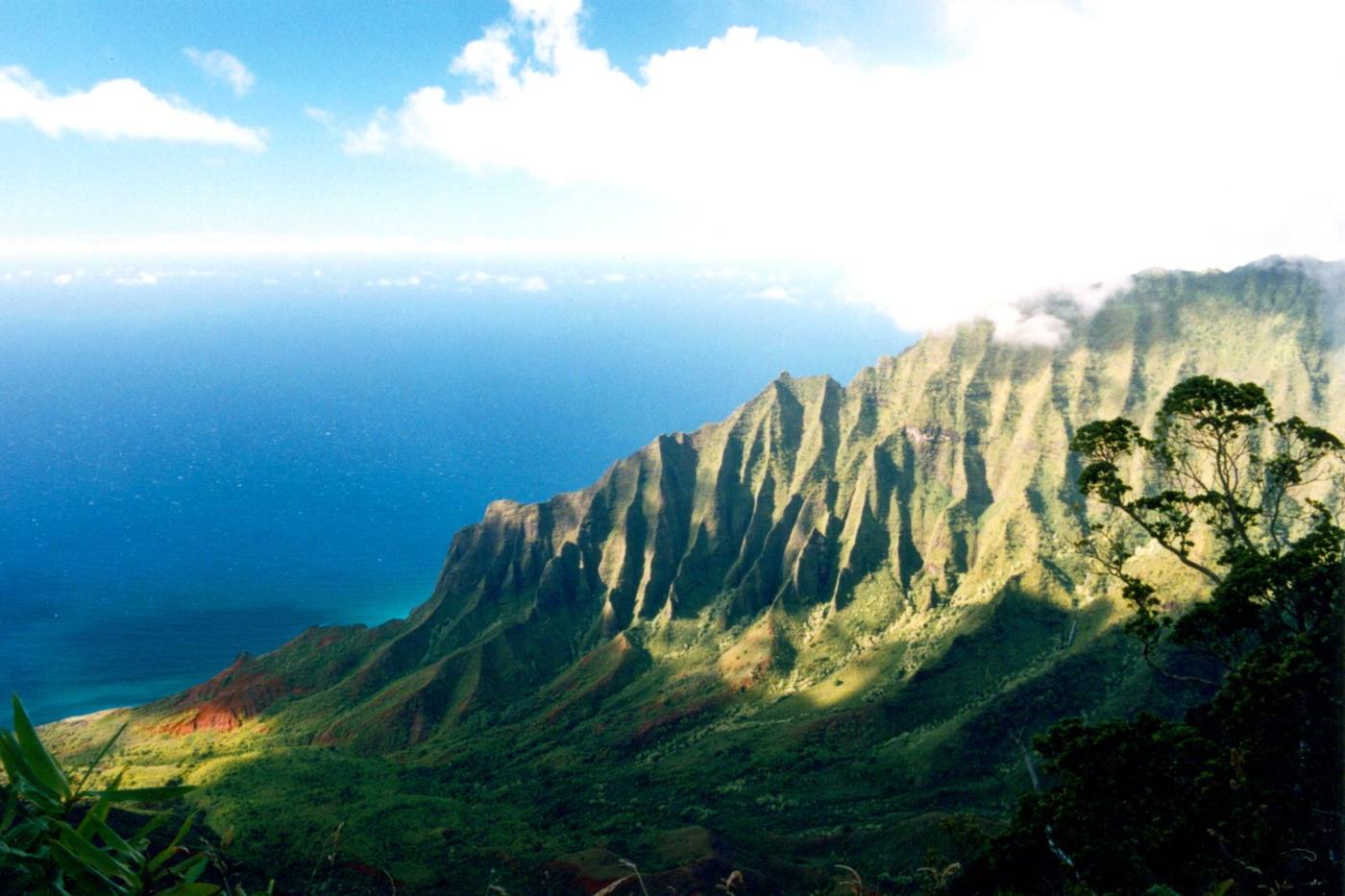
Hawaii: Kauai and Oahu
The other two islands: Oahu with Honolulu, Pearl Harbor and the North Shore waves, then Kauai, the Garden Isle, with Waimea Canyon, the Nā Pali cliffs and the beaches of Hanalei.
 7 daysEasy
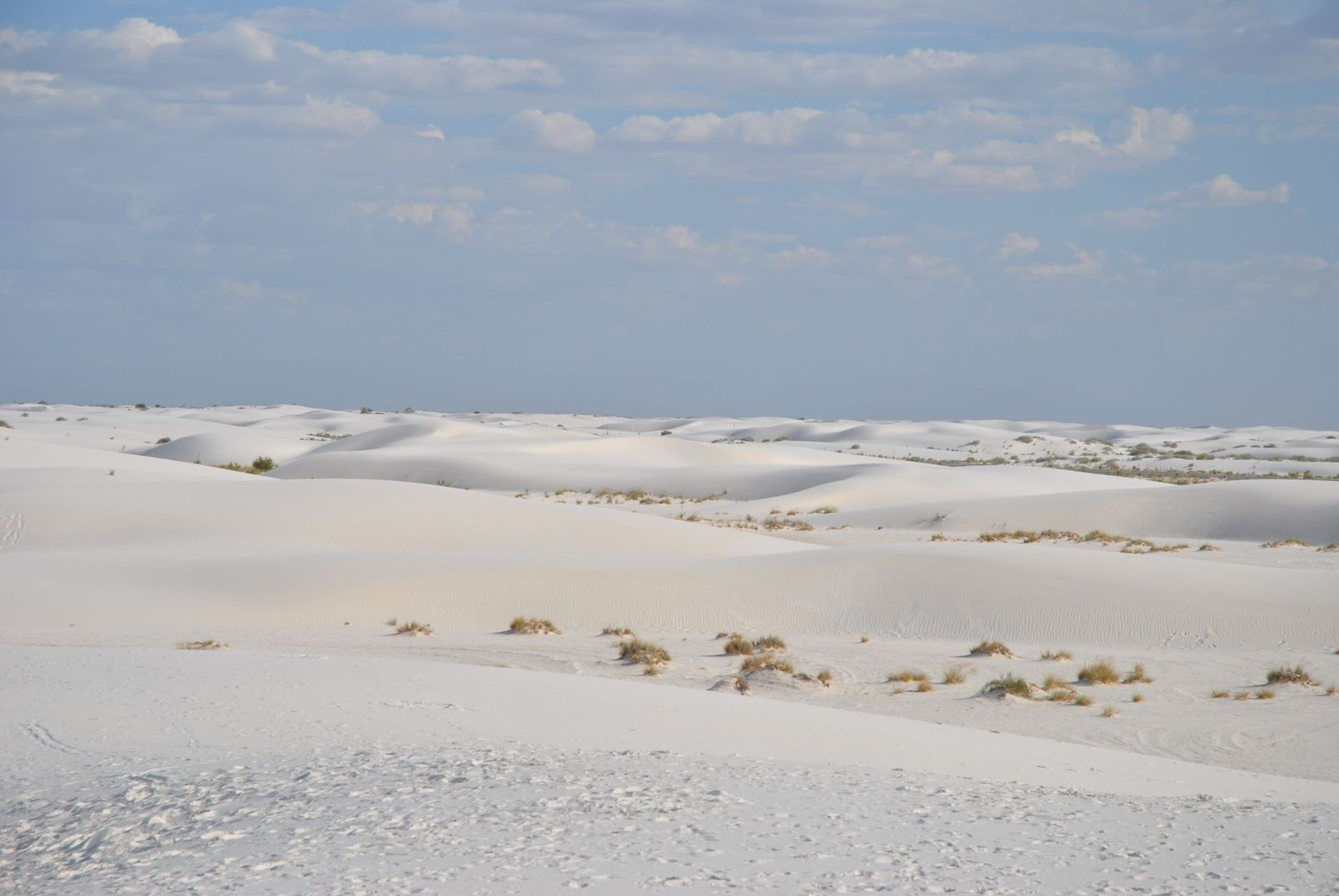
New Mexico: Santa Fe, Taos, White Sands and Carlsbad
The land of adobe: Santa Fe with its art and chile cooking, Taos Pueblo inhabited for a thousand years, the white gypsum dunes of White Sands and the vast underground halls of Carlsbad Caverns, with bats flying out at sunset.
 8 daysModerate
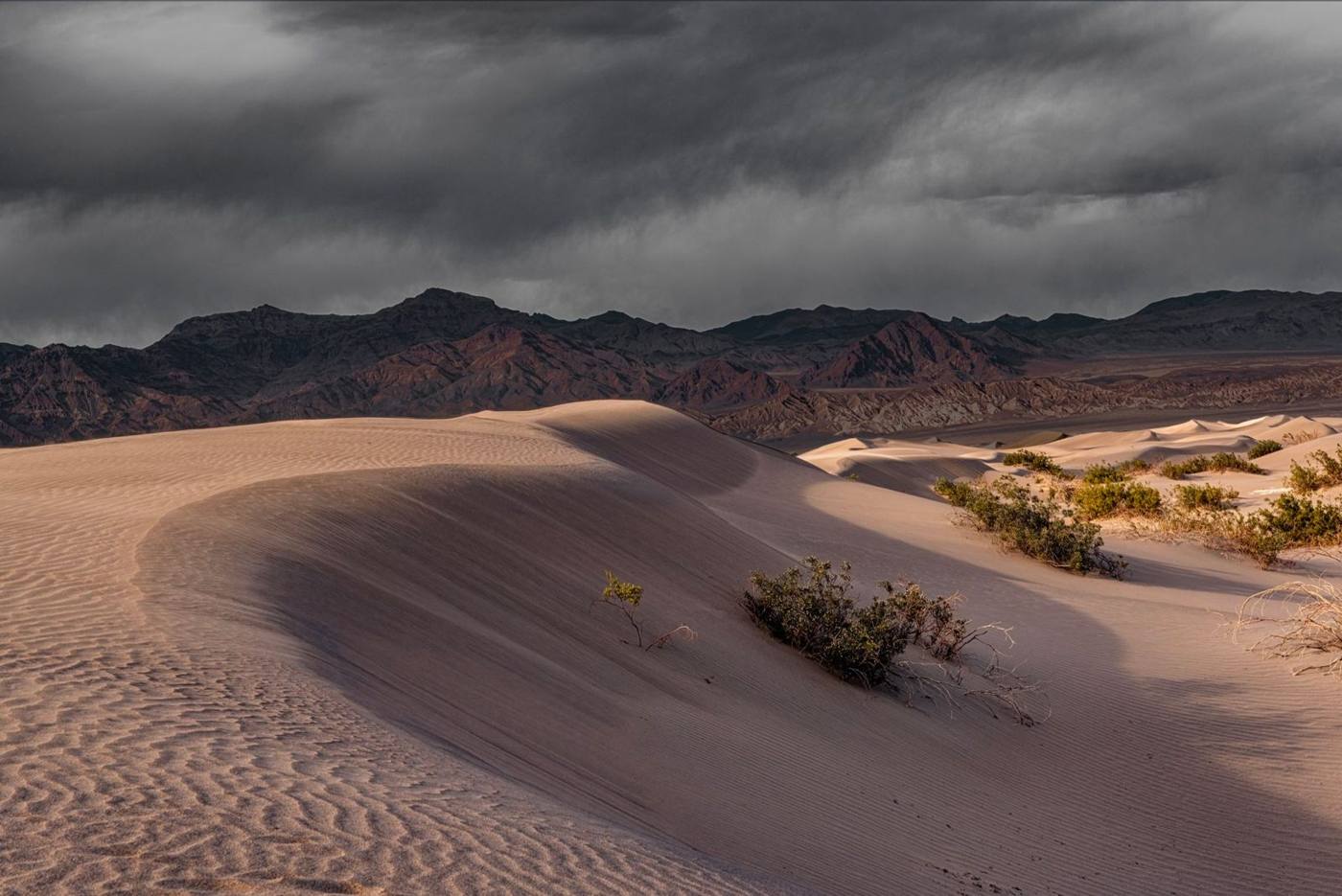
California's deserts and giant sequoias
The other California, away from the coast: the Joshua trees and boulders of Joshua Tree, Palm Springs, Death Valley with its dunes and North America's lowest point, then the giant sequoias and canyons of Sequoia and Kings Canyon.