The Mae Hong Son Loop
A circuit through the mountains on the Myanmar border: Pai, the caves of Soppong, Mae Hong Son and Mae Sariang, the summit of Doi Inthanon and an elephant sanctuary with no riding.
- Chiang Mai
- Pai
- Soppong
- Mae Hong Son
- Ban Rak Thai
- Mae Sariang
- Doi Inthanon
- Chiang Mai
Day by day
- Day 1
Arrival in Chiang Mai
This trip follows the Mae Hong Son loop, one of the most beautiful mountain roads in Thailand, in the north west near the border with Myanmar: Chiang Mai, Pai and its canyon, the Tham Lod cave, Mae Hong Son with its Burmese style temples, the Chinese village of Ban Rak Thai, Mae Sariang on its river and Doi Inthanon, the country's highest peak.
Before you leave: Italian citizens can enter Thailand without a visa for up to thirty days and must fill in the Thailand Digital Arrival Card online in the three days before arrival; other nationalities should check their own rules. The United States government rates Thailand at level 1; some border areas have different advice: check the latest, including for the Myanmar border, where there is a civil war.
You fly into Bangkok and continue on a domestic flight to Chiang Mai, about an hour and a quarter.
In the afternoon walk in Chiang Mai's old city, inside the walls and moat, among wooden and brick temples: Wat Phra Singh, with a fourteenth century wooden temple, and Wat Chedi Luang, with the ruins of a great fifteenth century chedi.
In the evening go to the night market or, if it is Sunday, to the Walking Street market in the old city, and try khao soi, the northern curry noodle soup.
Sleep in Chiang Mai.
Practical tip: the best time is November to February, when it is cool. In March and April there is a lot of smoke from agricultural fires.
- Day 2
A day with elephants, without riding them
Today you spend a day at an elephant sanctuary around Chiang Mai, about an hour and a half from town.
Choose carefully: many elephant camps in Thailand still offer shows, rides and bathing on command, practices that require harsh training and cause the animals to suffer. Look for a sanctuary that offers no riding and no shows, where the elephants, often rescued from logging or tourism, live in groups, move freely in the forest and rivers, and visitors watch them from a distance. Read the programme carefully before booking.
During the day you watch the elephants eat, play in the mud and wash in the river, and hear the stories of individual animals. The staff explain the situation of elephants in Thailand, where thousands are kept in captivity.
In the late afternoon return to Chiang Mai.
In the evening go up to Wat Phra That Doi Suthep, the mountain temple above Chiang Mai, with a golden chedi and a staircase of more than three hundred steps flanked by dragons, to see the city lights.
Sleep in Chiang Mai.
Practical tip: in temples cover your shoulders and knees and take off your shoes before entering the buildings. Women should not touch monks.
- Day 3
The road to Pai
In the morning leave for Pai, north west of Chiang Mai, along Route 1095, famous for its hundreds of bends, climbing and dropping through forested mountains. It takes about three hours. You can drive a car or a scooter, take a minibus or hire a car with a driver. The road is narrow and steep, with a lot of minibus traffic: if you lack experience, do not go by scooter.
Stop along the way at viewpoints, villages and the Pong Duead hot springs in Huai Nam Dang National Park, with small geysers.
In the afternoon you reach Pai, a small town in a green valley with rice fields, hills and a river, famous among travellers for its relaxed atmosphere. The centre is full of cafés, small guesthouses and an evening market with food from all over the world and crafts.
At sunset go to Pai Canyon, a few kilometres from town: narrow ridges of red earth and sandstone rising above wooded ravines, with no railings. Walk carefully, especially as darkness falls. The view of the sun setting behind the mountains is very beautiful.
Sleep in Pai.
Practical tip: if you get car sick, take something before leaving for Pai. The bends continue for hours.
- Day 4
Pai: hot springs and the bamboo bridge
Today you explore the area around Pai by scooter, bicycle or car with driver.
In the morning go to the Pam Bok bamboo bridge, also called Kho Ku So, a long bridge of woven bamboo slats crossing green or golden rice fields for about eight hundred metres to a temple in the forest. It was built by the community so that monks could reach the village for their morning alms round. Walk it at dawn, when there is mist over the fields.
Then visit the Pam Bok waterfall in a narrow gorge, and Wat Phra That Mae Yen on the hill, with a large white Buddha and a stairway overlooking the whole valley.
In the afternoon relax at the Tha Pai hot springs, in a park with natural hot pools among the trees, or at Sai Ngam, cooler, with turquoise water. Check opening hours and prices.
Also visit the Second World War Memorial Bridge, built by the Japanese during the occupation, and the minority villages around, such as the Chinese village of Santichon, with its earthen houses and tea.
In the evening return to the Pai market.
Sleep in Pai.
Practical tip: in Pai many scooter accidents involve inexperienced tourists. Wear a helmet and check that your insurance covers you.
- Day 5
Soppong and the Tham Lod cave
In the morning leave Pai and continue west on Route 1095, about an hour and a half of mountain bends, to Soppong, also called Pang Mapha, a small town in an area of limestone mountains full of caves.
On the way stop at the Kiew Lom viewpoint, overlooking the mountains and the valley mist.
In the afternoon visit the Tham Lod cave, a few kilometres from Soppong, a huge cave crossed by a river. You go in with a local guide carrying a gas lantern and cross the river on a bamboo raft, among giant stalactites and stalagmites. In some chambers there are ancient boat shaped wooden coffins, left by peoples who lived here more than a thousand years ago. Check times and prices; the guides are women from nearby villages.
Stay at the cave exit until sunset. At dusk thousands of swifts return to the cave in a whirlwind over the river, while bats fly out for their night hunting. It is an extraordinary sight.
In the evening sleep in Soppong, in a simple lodging among the mountains.
Sleep in Soppong.
Practical tip: inside the cave the ground is damp and slippery. Wear closed shoes with a good grip.
- Day 6
Mae Hong Son and its lake temples
In the morning drive to Mae Hong Son, about two hours on mountain roads, the province's main town, in a valley surrounded by forested hills near the Myanmar border.
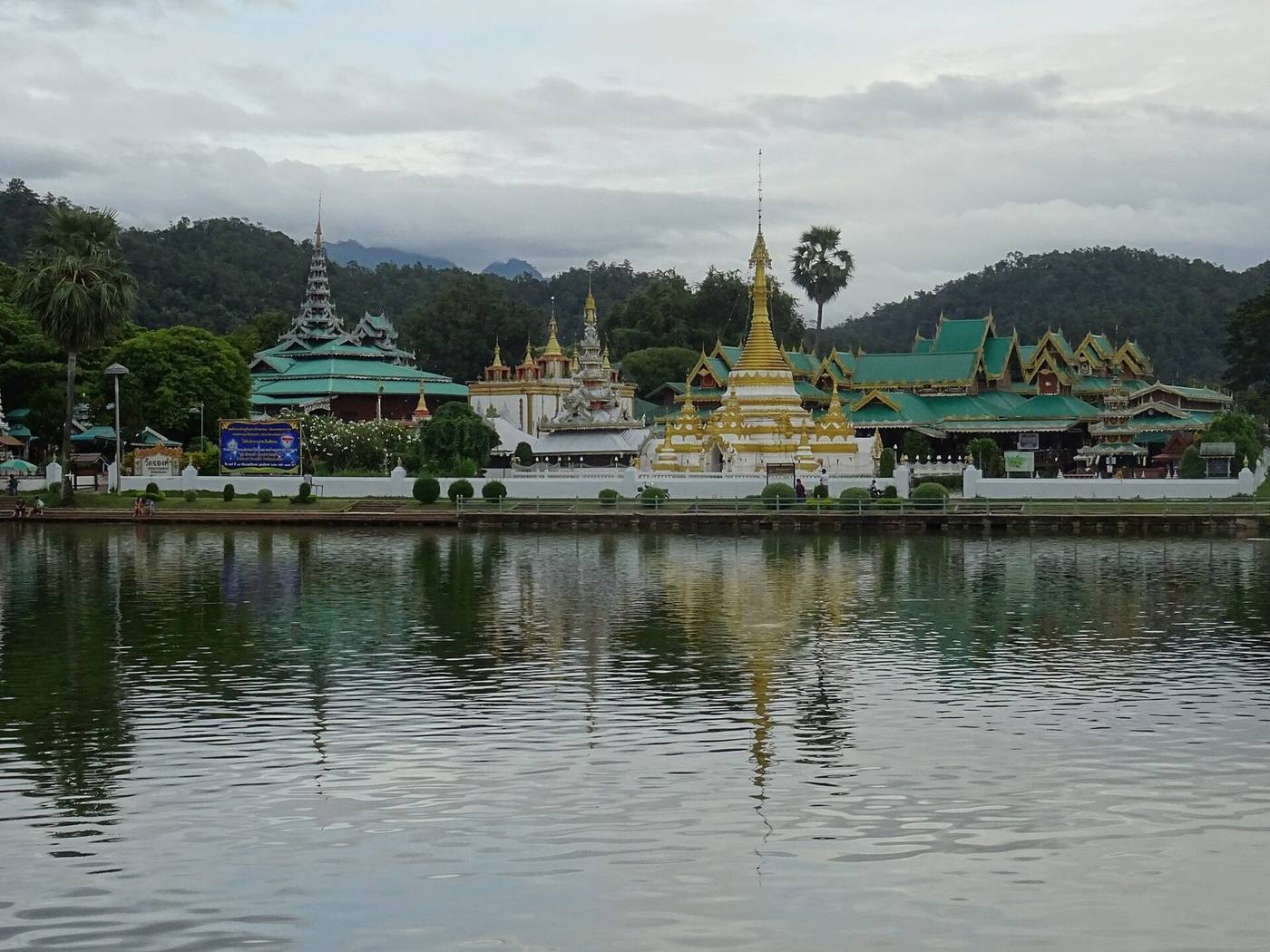
Mae Hong Son has a strong Shan influence, a people living between Thailand and Myanmar, visible in its temples, built in Burmese style, with multi tiered roofs of wood and pierced metal sheet, decorated like lace.
Visit the twin temples of Wat Chong Kham and Wat Chong Klang on the shore of Nong Jong Kham lake in the centre of town. At sunset and in the evening, lit up, they are reflected in the water. Inside are Burmese wooden statues and paintings on glass.
In the afternoon climb to Wat Phra That Doi Kong Mu, on the hill above the town, with two white chedis and a view over the whole valley. At dawn the valley is often filled with mist.
In the evening visit the evening market along the lake, with Shan food such as noodles and salads, and minority crafts.
Sleep in Mae Hong Son.
Practical tip: in Mae Hong Son evenings from December to February are cold. Bring a sweatshirt and jacket. Nights in the valleys are cool too.
- Day 7
Su Tong Pae and Ban Rak Thai
Today you explore the area around Mae Hong Son.
In the morning go to the Su Tong Pae bamboo bridge, about ten kilometres from town, a bamboo bridge about five hundred metres long that crosses the rice fields to a small temple on a hill. This too was built for the monks. At dawn the light on the rice fields is beautiful.
Then drive north, about an hour on a mountain road, to Ban Rak Thai, a village founded by soldiers of the Kuomintang, the Chinese Nationalist army, who fled China after 1949 and settled in these mountains. The village sits around a lake, with Yunnan style earthen houses, tea plantations on the hills and Yunnan cooking, such as braised pork with steamed buns. Taste the oolong tea from the plantations.
The village is very close to the Myanmar border: do not go near the border and follow local advice.
On the way you pass the village of Pang Ung, with a lake surrounded by pines, called the Switzerland of Thailand, beautiful at dawn in the mist.
In the evening return to Mae Hong Son.
Sleep in Mae Hong Son.
Practical tip: some villages near Mae Hong Son show long neck women as an attraction. Many criticise the exploitation: find out more before deciding whether to go.
- Day 8
Down to Mae Sariang
In the morning leave Mae Hong Son and head south on Route 108, about three or four hours, continuing the loop through mountains, valleys and small Karen villages, another minority in the area, with wood and bamboo houses on stilts.
On the way stop at Khun Yuam, a small town with a little museum about the Japanese soldiers of the Second World War who passed through here as they retreated from Burma. In November, on the nearby hills of Doi Mae U Kho, fields of wild Mexican sunflowers bloom yellow, much loved by Thais.
In the afternoon you reach Mae Sariang, a quiet town on the Yuam river, with wooden houses and Burmese style temples, little visited by tourists. Walk along the river and visit Wat Chong Sung and Wat Si Bun Ruang, with their decorated roofs.
At sunset sit on the riverbank, where children swim and fishermen cast their nets.
In the evening have dinner by the river, with northern dishes and river fish.
Sleep in Mae Sariang.
Practical tip: between Mae Hong Son and Mae Sariang there are few fuel stations. Fill up before you leave. In villages fuel is sometimes sold in bottles, but do not count on it.
- Day 9
Doi Inthanon and back to Chiang Mai
Today you close the loop back to Chiang Mai, with a long stop in Doi Inthanon National Park, Thailand's highest mountain, at about two thousand five hundred and sixty metres. The park ticket is paid at the entrance: check the current price.
The park is covered in cloud forest, with mosses, lichens, rhododendrons and orchids, and has a very cool climate. At the summit is a small memorial to the last king of Chiang Mai and a short boardwalk trail through a moss forest.
Just below the summit are two large chedis built for the king and queen, with flower gardens and a mountain view.
Walk the Kew Mae Pan nature trail, a loop of about three kilometres along the ridge, among meadows, rhododendrons and forest, with spectacular views over the valleys. The trail can only be walked with a guide from the local Karen community and is closed in some months of the rainy season: check.
On the way down stop at the Wachirathan waterfall, a powerful fall dropping from a granite wall with plenty of spray.
In the late afternoon you reach Chiang Mai.
Sleep in Chiang Mai.
Practical tip: at the top of Doi Inthanon early in the morning it can be close to zero in winter. Bring warm layers.
- Day 10
Flight to Bangkok and departure
On the last day take the flight from Chiang Mai to Bangkok, about an hour and a quarter, and your connection to Europe. Chiang Mai airport is close to the centre, about a quarter of an hour away. Book the flight early in high season.
If your flight leaves in the afternoon, in the morning you can take a northern Thai cooking class on a farm outside town, with a market tour to buy ingredients, or visit the Wualai crafts quarter with its silversmiths' workshops, or the silver temple, Wat Sri Suphan.
Return the car or scooter, if you rented one, and arrive at the airport early.
Before leaving buy something to take home: textiles from the northern minorities, silver objects, tea from Ban Rak Thai, mountain coffee, or hand painted paper umbrellas from Bo Sang near Chiang Mai.
This trip shows a north of Thailand far from the beaches: forested mountains, winding roads, caves with underground rivers, Burmese temples, Chinese and Karen villages and the country's highest peak.
Practical tip: between the flight from Chiang Mai and your intercontinental flight from Bangkok leave at least three hours. Domestic flights can be delayed. If you have checked luggage, also allow time to check in again at Bangkok.
The best mountain trip in the country, a good ten-day extension for anyone who has already done the classic north. Tham Lod at dusk and the morning on Kew Mae Pan are the two high points. The drawback is the road: endless bends for days, so anyone prone to car sickness should come prepared. Pai has become very touristy; spend an extra night in Soppong instead.
Before you go
- Documents and visa
- Passport valid for at least six months. Since 15 September 2026 many nationalities, including most EU citizens, enter without a visa for tourism for up to 30 days. Before each entry, within the three days beforehand, the no-cost Thailand Digital Arrival Card (TDAC) must be completed online on the official website.
- Health and vaccines
- No vaccines required arriving from Europe; ask your doctor about hepatitis A and typhoid. Dengue is present: use repellent. Do not drink tap water. Health insurance recommended. Emergencies: 191 police, 1669 ambulance, 1155 tourist police.
- Money and payments
- Baht. Cards accepted in cities and hotels; markets and small places need cash. ATMs charge a flat fee for withdrawals with foreign cards.
- Power sockets
- Types A, B, C and O, 220 volts: bring a universal adapter.
- Time zone
- UTC+7, no daylight saving time.
- Safety
- A safe country for travellers. Avoid the southernmost provinces near Malaysia and the border strip with Cambodia. Beware of tuk-tuk and gem scams, and of scooter traffic. Official advice: GOV.UK.
Information checked in November 2026 for Italian and EU citizens. Rules change: always check before you travel.
Variations
In 7 days: Chiang Mai, Pai, Tham Lod and Mae Hong Son, flying back from Mae Hong Son if there are flights.
In 14 days: add Chiang Rai, the Golden Triangle and Nan.
Frequently asked questions
Do I need a visa?
Italian citizens can enter without a visa for up to thirty days and must fill in the Thailand Digital Arrival Card online in the three days before arrival. Other nationalities should check their own rules.
Is it safe to ride a scooter?
The mountain roads are narrow, steep and winding. If you lack experience, choose a car or a driver. Always wear a helmet and check your insurance.
When is the best time to go?
November to February, when it is cool. In March and April there is a lot of smoke from agricultural fires; from June to October it rains and some trails close.
Indicative itinerary written by World Atlas. Before booking, check timetables, seasonal openings, documents and safety.
 12 daysChallenging
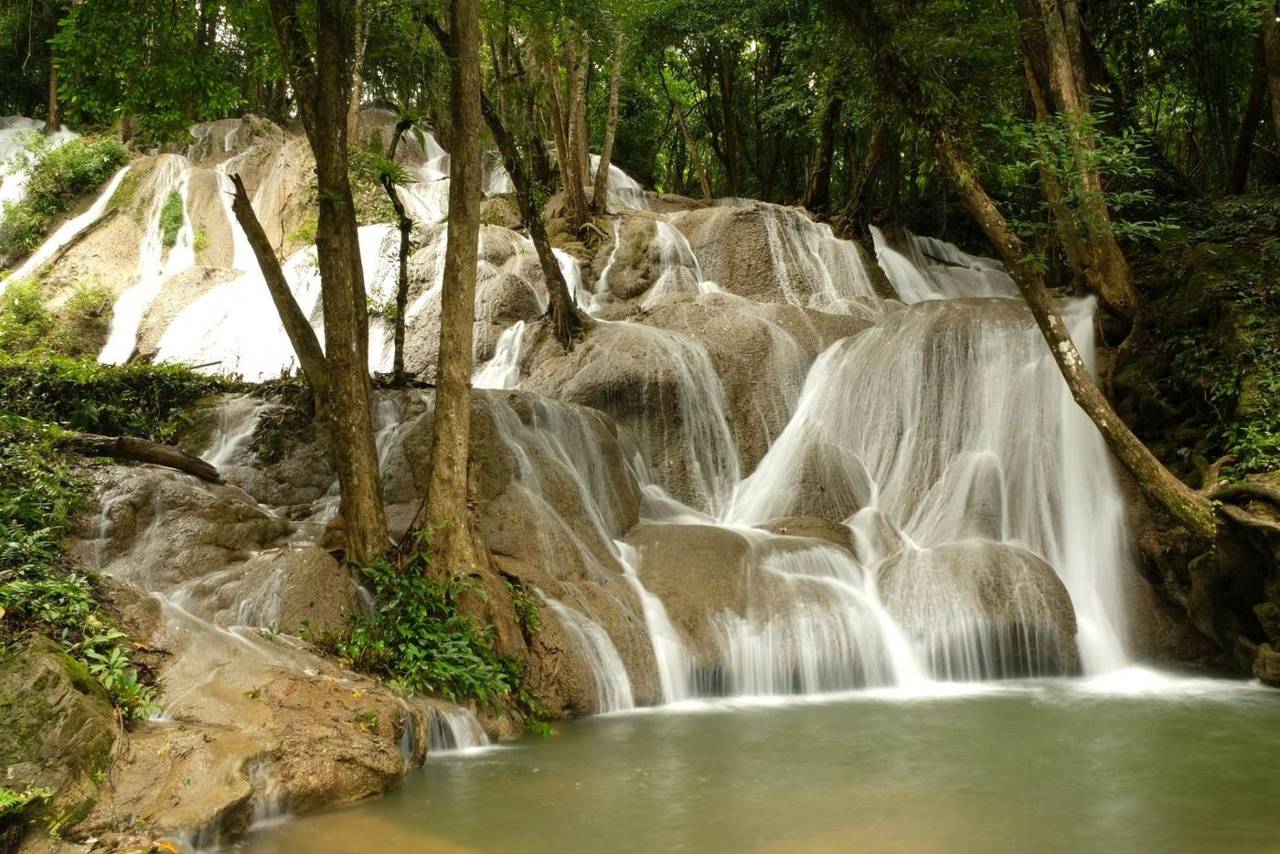
The West: Kanchanaburi, Sangkhlaburi and Thi Lo Su Falls
Along the Myanmar border from the Death Railway to the Mon village of Sangkhlaburi, then Mae Sot and Umphang, with a rafting descent and a trek to the country's largest waterfall.
 10 daysModerate
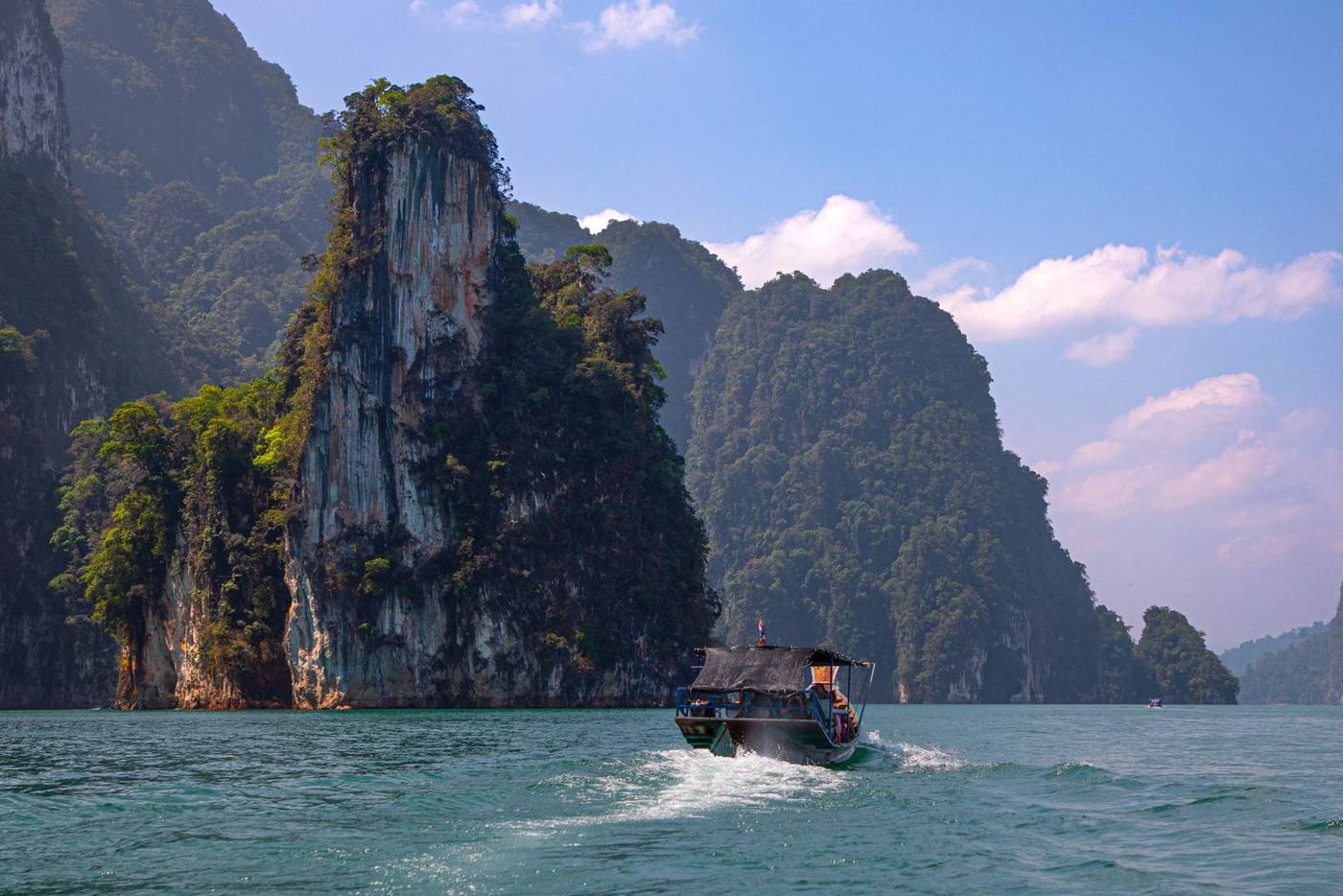
The Southern Forests: Kui Buri, Sam Roi Yot and Khao Sok
A journey of wildlife and rainforest: the wild elephants of Kui Buri, the royal cave of Phraya Nakhon and two nights in floating bungalows on Cheow Lan lake.
 10 daysEasy
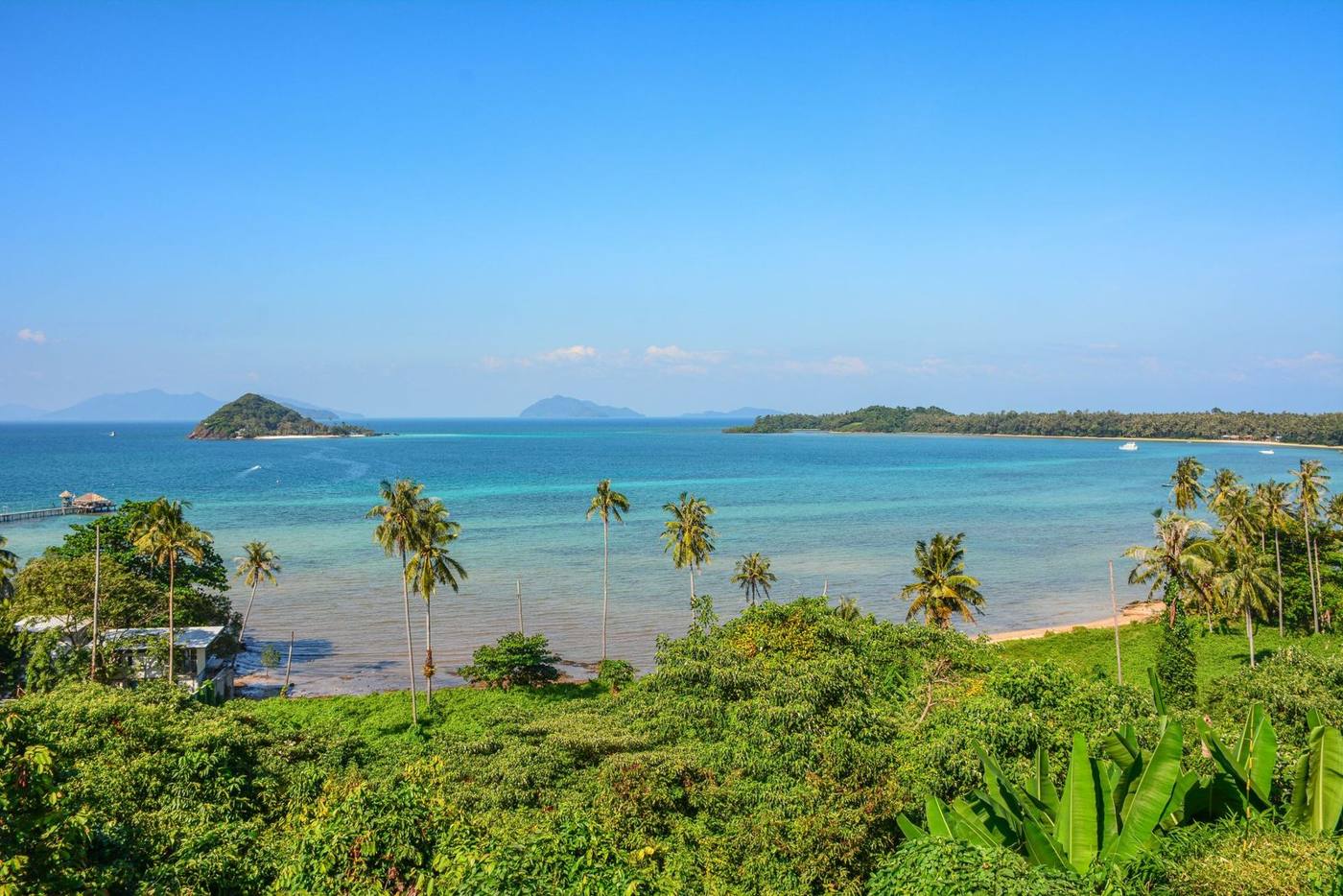
The Trat Islands: Koh Chang, Koh Mak and Koh Kood
The eastern archipelago near Cambodia: forested hills on Koh Chang, calm closed to cars on Koh Mak, the beaches of Koh Kood, with a stop at the Chanthaburi gem market.