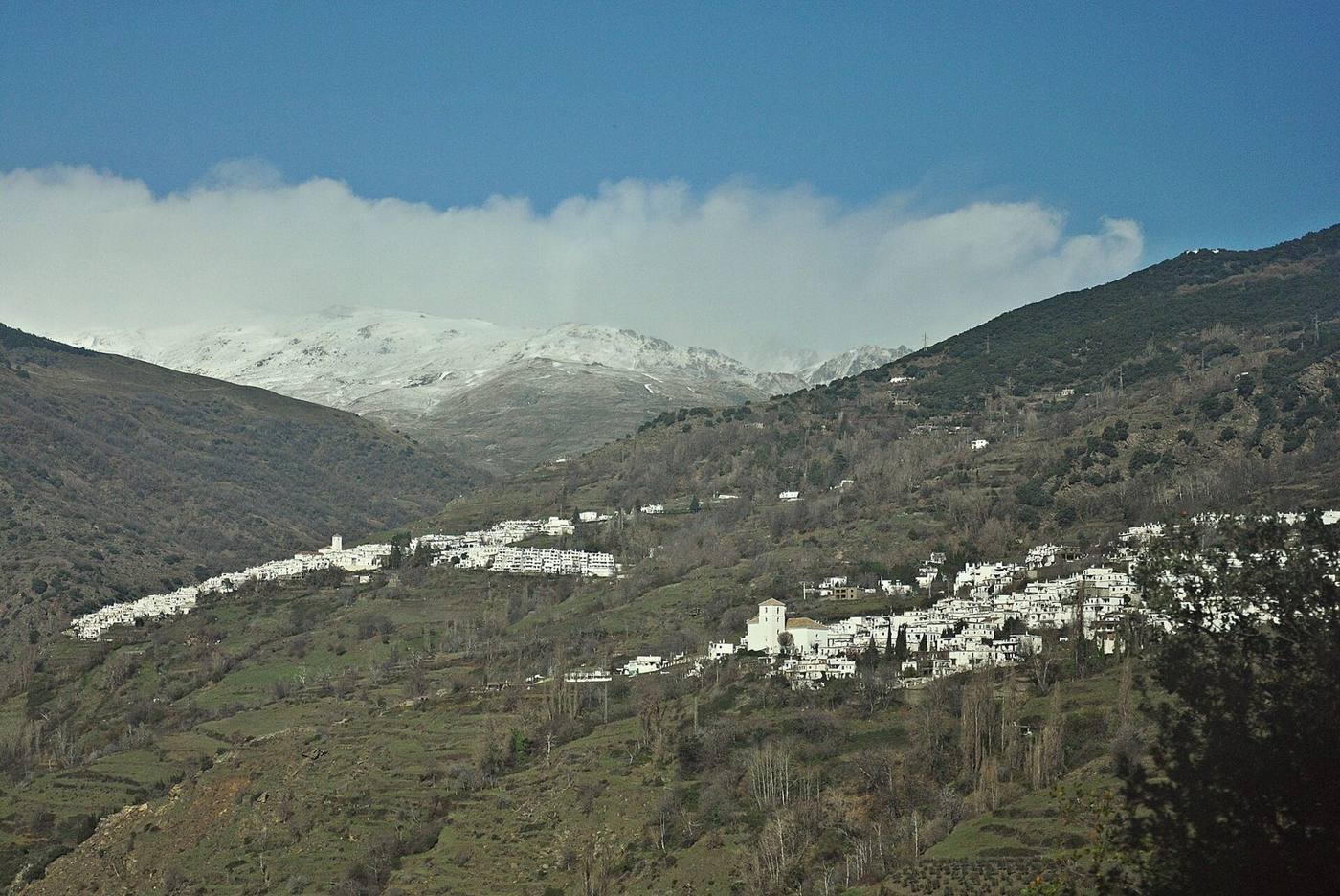
Sierra Nevada and the Alpujarras
Granada and the mountains behind it: the Alhambra and the Albaicín, then the white Berber-style villages of the Alpujarras with their flat roofs, Pampaneira, Bubión and Capileira above the Poqueira gorge, trails among chestnuts and irrigation channels and the hams of Trevélez.
- Granada
- Alhambra
- Albaicín
- Pampaneira
- Capileira
- Trevélez
Day by day
- Day 1
Granada: the Albaicín and the Mirador de San Nicolás at sunset
Granada, in Andalusia in southern Spain, was the last Muslim capital of the Iberian peninsula, until 1492, and preserves the Alhambra, one of the most beautiful monuments in the world. Behind it rises the Sierra Nevada, with the highest peaks in mainland Spain, snow-covered for many months, and on its southern side the Alpujarras, mountain valleys with white villages clinging to the slopes, cultivated terraces and irrigation channels built in Arab times. In six days you see Granada, the Alhambra, the villages of the Alpujarras and the trails of the Sierra Nevada.
You arrive by plane in Granada, or in Málaga, about an hour and a half away, with more flights from Italy.
In the afternoon, walk through the Albaicín, the Arab quarter on the hill opposite the Alhambra, a UNESCO World Heritage Site, with narrow uphill lanes, white houses, carmenes, houses with gardens enclosed by walls, and small squares. Visit Calle Calderería Nueva, with its tea rooms and Moroccan-style shops.
At sunset, climb to the Mirador de San Nicolás, the square in front of the church, from which you see the Alhambra lit by the red sun with the snowy Sierra Nevada behind. It is one of the most famous views in Spain, often accompanied by guitar music.
In the evening, if you like, go to Sacromonte, the quarter of gypsy caves, for a flamenco show in a cave.
In the evening, sleep in Granada.
Practical tip: in many bars in Granada, a no-cost tapa, a small dish, is served with every drink. It is a typical custom of the city.
- Day 2
The Alhambra at your booked Nasrid Palaces time, and the Generalife
Today, visit the Alhambra, the red citadel on the hill above Granada, built mainly in the thirteenth and fourteenth centuries by the sultans of the Nasrid dynasty, a UNESCO World Heritage Site.
The heart of the visit is the Nasrid Palaces, the sultans' residences, with rooms decorated with plasterwork carved like lace, wooden ceilings and stalactite domes, Arabic inscriptions, coloured tiles and courtyards with fountains. In the Court of the Myrtles a long pool reflects the Comares tower; in the Court of the Lions twelve stone lions support a fountain at the centre of a patio with one hundred and twenty-four slender columns.
Then visit the Alcazaba, the oldest military part, with the Vela tower overlooking the whole city, and the Palace of Charles V, a Renaissance palace with a round courtyard built after the Christian conquest.
In the afternoon, walk through the Generalife, the sultans' summer residence, with gardens, cypress hedges, roses and the Patio de la Acequia, with its water channel between fountains.
In the evening, go down into the city and visit the Royal Chapel, where the Catholic Monarchs Ferdinand and Isabella, who conquered Granada in 1492, are buried.
In the evening, sleep in Granada.
Practical tip: the Alhambra ticket costs 21 euros, 22.27 online, and you can enter the Nasrid Palaces only in the half-hour shown on your ticket. Book well in advance: tickets sell out quickly.
- Day 3
The road to the Alpujarras: Pampaneira and Bubión
In the morning, leave Granada by car heading south on the road to the coast, then turn east at Lanjarón, a spa town famous for its mineral water, gateway to the Alpujarras.
The Alpujarras are a region of deep valleys on the southern side of the Sierra Nevada. After the Christian conquest of Granada many Muslims withdrew here, and in 1568 the Moriscos, Muslims forcibly converted, rebelled. After their defeat they were expelled, and the villages were resettled by farmers from northern Spain. But the villages' architecture keeps the Berber style, similar to that of Atlas villages in Morocco: cube-shaped white houses, flat roofs of grey clay, the terraos, round chimneys with caps and covered passages between houses, the tinaos.
Visit Pampaneira, the first village in the Poqueira gorge, with white lanes full of flowers, streams running along the streets, shops selling jarapas, brightly coloured hand-woven rugs, and the church with its Mudéjar tower.
In the afternoon, go up to Bubión, a little higher, a quiet village with views over the valley, and visit the Casa Alpujarreña, a small museum in a traditional house, with objects from peasant life.
In the evening, sleep in Bubión or Capileira.
Practical tip: the road to the Alpujarras is narrow and winding. Drive slowly and park at the car parks at the entrance to the villages, as the inner streets are very narrow.
- Day 4
The Poqueira gorge on foot from Capileira
Today you walk in the Poqueira gorge, one of the most beautiful valleys in the Sierra Nevada, with the three white villages of Pampaneira, Bubión and Capileira one above the other on the slopes, a protected historic site.
In the morning, start from Capileira, the highest of the three, at about 1,440 metres. A marked trail descends into the gorge to the Poqueira river, crosses old stone bridges, passes abandoned watermills and a small power station, and then climbs back up among chestnut trees, vegetable terraces and fruit trees to the village. The loop takes about four hours, with climbs and descents.
Along the trail you see the acequias, irrigation channels built by the Arabs over a thousand years ago, which carry snowmelt from the mountains down to the fields and which farmers still use today according to precise turns.
In the afternoon, after lunch, rest in Capileira and walk around the village, with its white houses, flat roofs and mountain views. Above, on clear days, you see Mulhacén, the highest peak on the Iberian peninsula, at about 3,480 metres. In summer a national park shuttle takes walkers up high, for those who want to climb towards the summit.
In the evening, taste the plato alpujarreño, with potatoes, peppers, eggs, sausage and ham.
In the evening, sleep in Capileira.
Practical tip: in the mountains the weather changes quickly. Carry water, a hat and a jacket, and do not leave the marked trails.
- Day 5
Trevélez and its hams, the acequia trail
In the morning, drive east to Trevélez, about half an hour from Capileira, one of the highest villages in Spain, at about 1,480 metres in its lower part, at the foot of Mulhacén. Trevélez is famous throughout Spain for its ham, jamón de Trevélez, cured in the cold, dry mountain air. Visit one of the village's curing houses, where you see hundreds of hams hanging, and taste the ham with bread and olive oil.
The village has three districts at different levels, lower, middle and upper, linked by steep lanes, with white houses and smoking chimneys.
In the afternoon, walk a stretch of the acequia trail, which follows the irrigation channels along the mountainside above the village, almost level, among meadows, chestnut trees and fields, with views over the Trevélez valley and the peaks of the Sierra Nevada. Along their course the acequias create a strip of green in the middle of the dry slopes.
Alternatively, if you are fit, climb towards the glacial lakes below Mulhacén on a long day's walk.
In the evening, return to Capileira, or sleep in Trevélez or Pórtugos, home to the Fuente Agria, a spring of fizzy iron-rich water, red with iron.
In the evening, sleep in the Alpujarras.
Practical tip: the Alpujarras are beautiful in spring, with cherry trees in blossom, and in autumn, with golden chestnut trees. In summer it is hot at midday: walk early in the morning.
- Day 6
Back to Granada
On your last morning, come down slowly from the Alpujarras. If you have time, stop in Órgiva, the largest town in the area, with its twin-towered church and, on Thursday mornings, a market frequented by the international community that has settled in the valleys, with organic produce and crafts. Alternatively, visit Yegen, a village further east, where the English writer Gerald Brenan lived and described life in the Alpujarras in the 1920s in his book South from Granada.
Then head back to Granada, about an hour and a half away.
In the afternoon, in Granada, if you have a few hours, visit the cathedral, the monastery of San Jerónimo, or walk through the Realejo, the old Jewish quarter, with murals and tapas bars. If the season is right, you can also go up to the Sierra Nevada ski resort, about an hour from Granada, the southernmost ski resort in Europe.
From Granada, take your flight home, or go to Málaga for a flight with more connections.
This trip combines well with Seville and Córdoba to the west, or with the Costa Tropical and Málaga to the south.
Practical tip: Italian citizens only need an identity card valid for travel abroad or a passport. In Andalusia it is very hot in summer: visit the cities in the morning and evening.
For those wanting to add nature to Andalusia. Alhambra tickets are named, with a fixed time for the Nasrid Palaces, and must be bought well ahead only through official channels. Alpujarras roads are narrow and winding. In winter it can snow up high.
Before you go
- Documents and visa
- EU citizens need a valid identity card or passport. Other nationalities should check the Schengen rules.
- Health and vaccines
- No vaccines required. EU citizens should bring their EHIC; in summer the south often goes above 40 °C. Emergencies: 112.
- Money and payments
- Euro. Cards are accepted almost everywhere. Catalonia, the Balearics and some other areas charge a tourist tax per person per night.
- Power sockets
- Types C and F, 230 volts.
- Time zone
- Central European Time (UTC+1, summer UTC+2); the Canary Islands are one hour behind.
- Safety
- A safe country. In Barcelona and Madrid pickpocketing is common on the metro, on the Ramblas and in crowded places. Official advice: GOV.UK.
Information checked in November 2026 for Italian and EU citizens. Rules change: always check before you travel.
Variations
In 4 days: Granada and the Alhambra, then two days in the Alpujarras.
In 10 days: add Seville and Córdoba.
Frequently asked questions
When is the best time to go?
From April to June and from September to November, with mild temperatures for walking. In summer Granada is very hot; in winter the Sierra Nevada is snowy and there is skiing.
How do I book the Alhambra?
Only online or at official outlets, well in advance. The ticket costs 21 euros, 22.27 online, and you enter the Nasrid Palaces only in the half-hour shown.
Do I need a car?
For the Alpujarras it is very useful. There are also buses from Granada to the main villages, but only a few a day.
Indicative itinerary written by World Atlas. Before booking, check timetables, seasonal openings, documents and safety.
 8 daysModerate
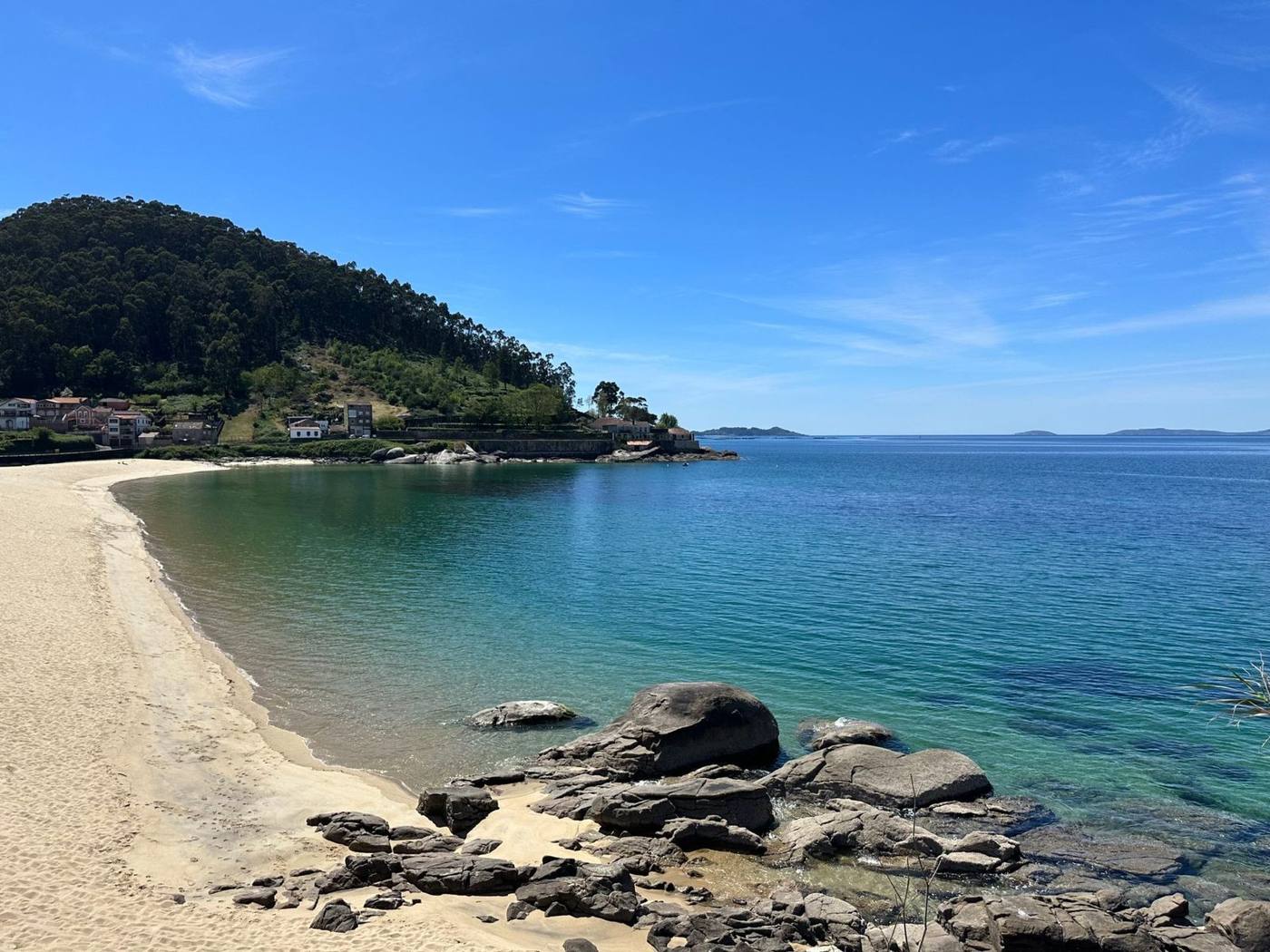
The English Way: Ferrol to Santiago
Six days on foot past estuaries, eucalyptus woods and medieval towns, along the route taken by pilgrims who landed from northern Europe.
 12 daysModerate
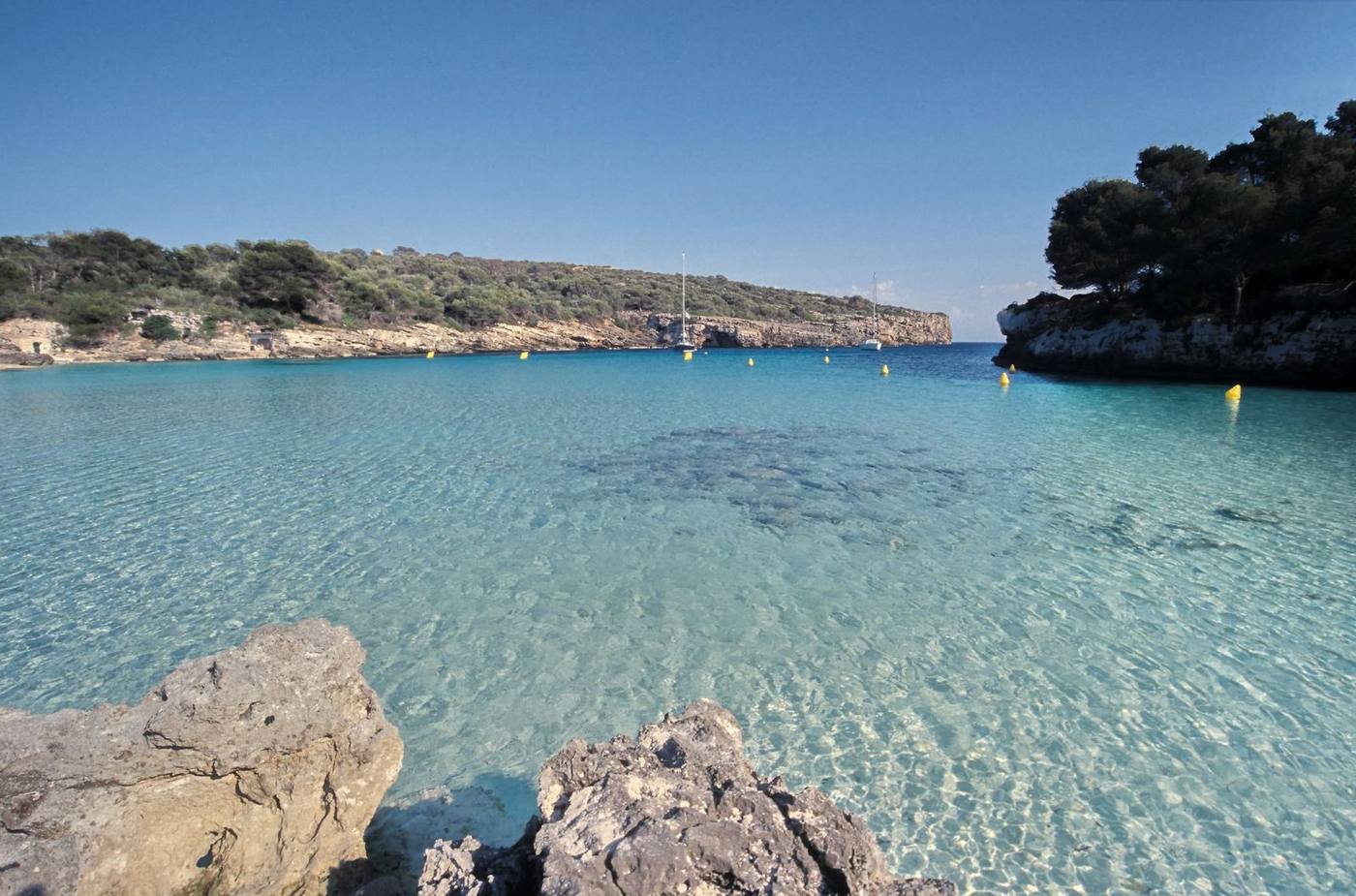
Menorca on Foot: the Camí de Cavalls
A full circuit of the island in ten stages on the old coastal patrol path, with a swim in a different cove almost every day.
 10 daysEasy
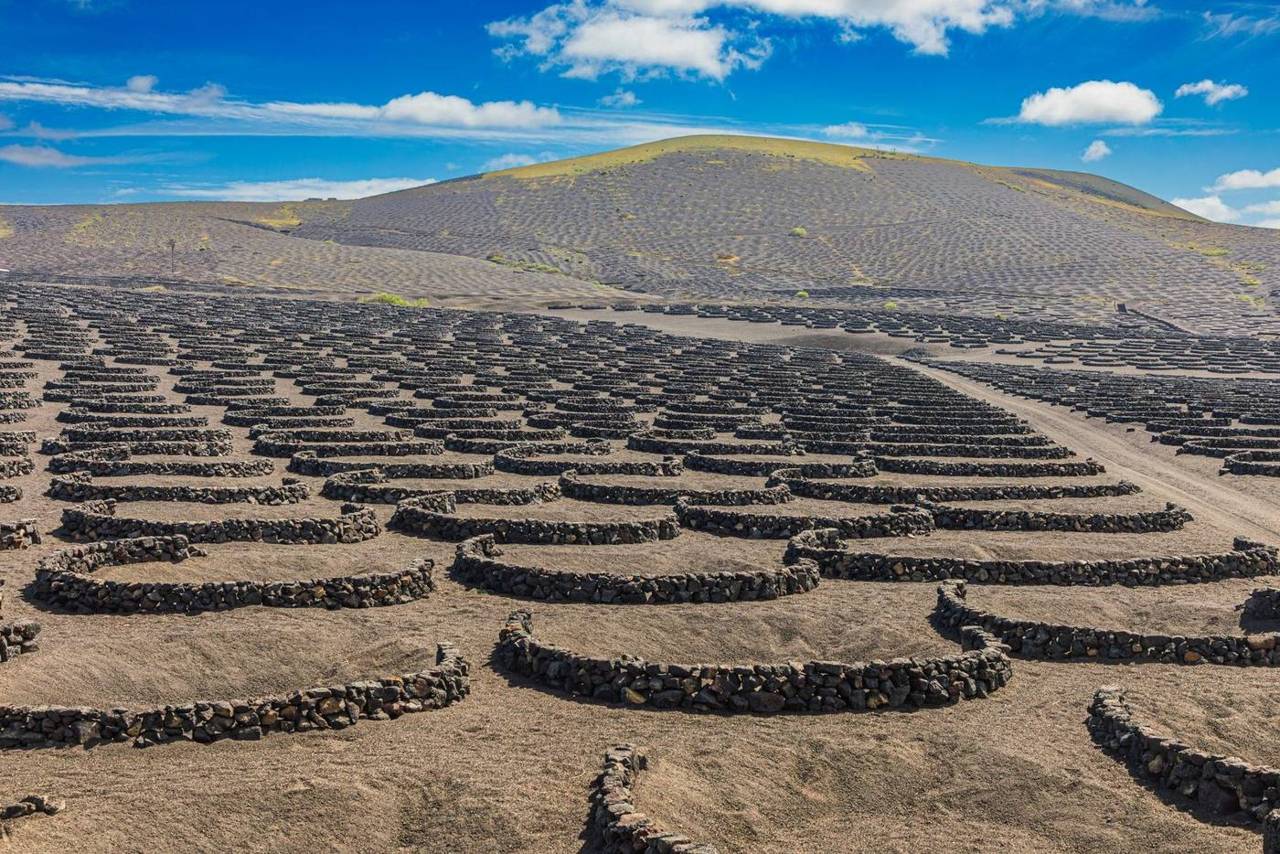
The Eastern Canaries: Lanzarote and Fuerteventura
Young volcanoes, vines dug into ash and César Manrique's buildings on Lanzarote, then dunes and ocean beaches on Fuerteventura.