Cape Town, the Cederberg and the Namaqualand flowers
Desert South Africa: the Cape Peninsula, the red rocks of the Cederberg and, in spring, millions of flowers in Namaqualand.
- Cape Town
- West Coast
- Cederberg
- Namaqualand
- Namaqua National Park
- Cape Town
Day by day
- Day 1
Arrival in Cape Town
This trip shows the South Africa of deserts and flowers: Cape Town and its peninsula, the Langebaan lagoon on the west coast, the red rocks and rock paintings of the Cederberg and, in spring, the carpets of flowers of Namaqualand, as far as the wild coast of Namaqua National Park and the Goegap reserve. You travel by rental car, with a stretch by 4x4 along the coast.
Before you go: Italian citizens enter South Africa without a visa for stays of up to 90 days. The passport must be valid for at least 30 days beyond the date of exit and have at least two blank pages. Other nationalities should check their own rules. The United States rates South Africa at level 2, increased caution, because of crime. This route, entirely in the Western Cape and Northern Cape, does not cross any malaria areas.
You land at Cape Town international airport, about twenty minutes from the centre. Pick up your rental car or take a booked taxi, and leave the car in a guarded car park.
In the afternoon, walk around the Victoria & Alfred Waterfront, the restored old harbour, with its quays, the seals sleeping on the jetties and the view of Table Mountain. From here the boats leave for Robben Island, the island where Nelson Mandela was a prisoner for eighteen years. The visit takes half a day, with guides who tell the story of the political prisoners' lives: check prices and times and book for one of the next few days.
In the evening, try fish from the coast, such as grilled kingklip or snoek.
Sleep in Cape Town.
Practical tip: in South Africa you drive on the left. Do not stop in isolated areas at night, keep your doors locked and valuables out of sight when you stop at traffic lights.
- Day 2
Table Mountain and the Bo-Kaap
Today you discover the centre of Cape Town and the mountain that towers over it.
Early in the morning, if the sky is clear, go up Table Mountain, the flat-topped mountain over a thousand metres high that closes off the city. You can go up by cable car, which rotates as it climbs, or on foot by the Platteklip Gorge path, steep, about two or three hours. The cable car closes in strong wind: check prices and times on the day. At the top you walk among the fynbos, the typical vegetation of the Cape, with views over the city, the ocean and Robben Island.
The mountain is part of Table Mountain National Park and of the Cape Floral Region, a World Heritage Site: it is one of the places in the world with the most plant species per square kilometre.
In the afternoon, go down to the centre and visit the Company's Garden, the garden of the Dutch East India Company, and then the Bo-Kaap, the neighbourhood of colourful houses on the slopes of Signal Hill, home to the Cape Muslim community, descended largely from slaves and exiles brought from Asia. The small Bo-Kaap Museum tells this story. Check prices and times.
Nearby is also the District Six Museum, which tells of the destruction of a mixed neighbourhood under apartheid and the expulsion of its residents.
In the evening, try Cape Malay food, with bobotie and sweet, spicy curries.
Sleep in Cape Town.
Practical tip: do not walk alone on the Table Mountain paths and choose the busiest ones. Carry water, a jacket and a charged phone: the weather changes within minutes.
- Day 3
The Cape Peninsula
Today you drive around the Cape Peninsula, one of the most beautiful coastal roads in the world.
Leave early heading south along the Atlantic coast, through Camps Bay, with its white beach beneath the peaks of the Twelve Apostles. Then take Chapman's Peak Drive, a toll road cut into the rock high above the sea, with many bends and viewpoints. Check that it is open: it closes for rockfalls and bad weather.
By mid-morning you reach the Cape of Good Hope section of Table Mountain National Park. From 1 November 2026 foreign adults pay 592 rand to enter. Walk up to the old Cape Point lighthouse, above the cliffs, and go down to the beach at the Cape of Good Hope, the most south-westerly point of Africa. Ostriches, antelope and baboons live in the park.
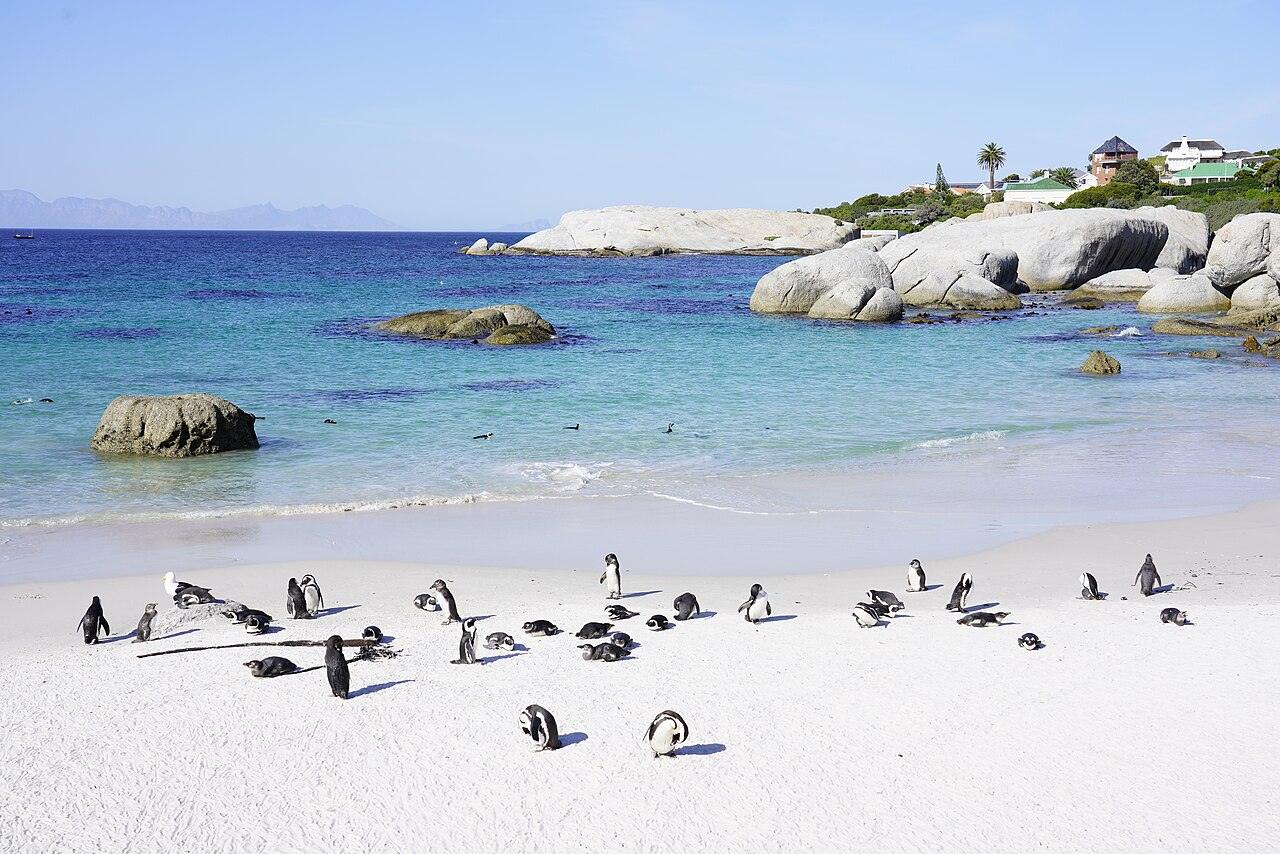
In the early afternoon, go to Boulders Beach, near Simon's Town, home to a colony of African penguins, an endangered species. From 1 November 2026 foreign adults pay 282 rand. The wooden boardwalks pass between the beaches and the granite boulders, a few metres from the penguins.
On the way back, stop at Kalk Bay, a small fishing harbour with antique shops and fresh fish, and if you have time at Kirstenbosch botanical garden, on the slopes of the mountain. Check prices and times.
Sleep in Cape Town.
Practical tip: the baboons of the peninsula are wild and can be aggressive. Do not feed them, lock the car properly and do not leave food in sight.
- Day 4
West Coast National Park and the Langebaan lagoon
Today you leave Cape Town heading north, along the Atlantic coast.
After about an hour and a half you reach West Coast National Park, around the Langebaan lagoon, a long saltwater lagoon, calm and turquoise, separated from the ocean by a peninsula. It is one of the most important wetlands in South Africa for birds: in summer thousands of migratory birds arrive from the northern hemisphere, and all year round you see flamingos, pelicans and herons.
Stop at the bird hides of Geelbek and along the boardwalks over the lagoon, with binoculars. Then drive to the beaches of Tsaarsbank and Kraalbaai, with clear water and white sand.
In August and September the Postberg section opens, only during the flower season. In those weeks the hills are covered with orange, white and yellow daisies and you see zebras, antelope and ostriches among the flowers. At weekends it is very busy: if you can, go on a weekday. Check prices and times.
The flowers open only in sunshine and warmth: on grey days they stay closed. The best hours are the middle of the day.
In the late afternoon, go to Paternoster, a fishing village with white houses and a beach of granite boulders, less than an hour from the park.
In the evening, eat fish and shellfish from the west coast.
Sleep in Langebaan or Paternoster.
Practical tip: look at the flowers with the sun behind you. The daisies turn towards the sun and, if it is in front of you, you only see the backs of the petals.
- Day 5
Into the Cederberg
Today you enter the Cederberg, a range of red sandstone mountains about three hours north of Cape Town.
From Paternoster or Langebaan, take the road inland to the N7, the main road that runs north towards Namibia. You cross the wheat fields of the Swartland and then the Citrusdal valley, full of orange groves, along the Olifants River.
After Citrusdal, leave the main road and take the gravel road that climbs over the pass and drops down to Algeria, the forestry station in the valley of the Rondegat River, at the entrance to the Cederberg Wilderness Area. The reserve is managed by CapeNature and is part of the protected areas of the Cape Floral Region, a World Heritage Site.
The Cederberg takes its name from the Clanwilliam cedar, a rare tree that grows only here and is now endangered. The landscape is made of towers, arches and walls of red and orange rock, sculpted by the wind, with valleys of fynbos and small rivers of dark, clear water.
In the afternoon, take a walk along the river near Algeria, where there are natural pools for swimming in summer.
In the evening, if you are camping, light the braai, the South African barbecue, and look at the sky: far from the cities, in the Cederberg you see the Milky Way with a rare clarity.
Sleep at a campsite or in a cottage in the Cederberg.
Practical tip: in August and September it is cold at night in the Cederberg and sometimes freezes. If you sleep in a tent, bring a warm sleeping bag and an insulating mat.
- Day 6
The Wolfberg Cracks and the rock arch
Today you do the most famous hike in the Cederberg, to the Wolfberg Cracks and the Wolfberg Arch.
Leave early from the Dwarsrivier area, in the central valley, where you buy the permit for the trail. Check beforehand where and how to buy it, because many Cederberg trails require a permit.
The first part is a steep climb on a rocky path, with a fine view over the valley. After a couple of hours you reach the Cracks, deep fissures in the sandstone wall. You can enter the main crack, narrow and tall, walking between its walls. Some passages require a little scrambling with your hands or crawling under boulders: if you do not feel up to it, stay on the easier route.
If you have strong legs, continue across the plateau to the Wolfberg Arch, a large natural arch of red rock in the middle of a landscape of towers and sculpted stones. The full round trip takes almost the whole day.
On the way back, in the afternoon, stop at the river pools to cool off.
In the evening, watch the sunset over the mountains: the rocks turn fiery red. Nearby there is also a small astronomical observatory that sometimes opens in the evening for visitors: check.
Sleep in the Cederberg.
Practical tip: carry at least three litres of water, food, a hat and sun cream. On the mountain there is no shade and no reliable water sources. Start early to avoid the hottest hours.
- Day 7
San paintings and nights under the stars
Today you discover the most ancient Cederberg, that of the San rock paintings.
The San are the hunter-gatherer people who have lived in southern Africa for tens of thousands of years. In the Cederberg they left thousands of paintings on the walls of caves and rock shelters, some painted thousands of years ago: elephants, antelope, dancing human figures and scenes linked to the rituals of the healers.
In the morning, go to the Stadsaal caves, large hollows carved by the wind in the orange rock, like the halls of a castle. Not far away a short path leads to a shelter with paintings of elephants, behind a fence. Here too you need a permit: check.
Then walk among the rocks of Truitjieskraal, a maze of sandstone towers and arches, easy and suitable for everyone, with many paintings hidden under the overhangs.
In the afternoon, if you still have energy, hike towards the Maltese Cross, a cross-shaped pillar of rock standing alone on the plateau.
In the shelters, do not touch the paintings and do not wet them to see them better: they are ruined for ever.
This evening is your last in the Cederberg. After sunset, turn off the lights and look at the sky: you see the Southern Cross, the Magellanic Clouds and, in August, the centre of the Milky Way right overhead.
Sleep in the Cederberg.
Practical tip: many Cederberg roads are gravel and stony. Drive slowly, check your tyres and do not count on a phone signal.
- Day 8
To Namaqualand
Today you head north into Namaqualand, the semi-desert region on the border with Namibia that is covered with flowers in spring.
Go back to the N7 and drive north, about four hours to Kamieskroon, with stops. After Vanrhynsdorp the landscape becomes drier and drier: low hills, stony plains and bushes, few farms and small towns far apart.
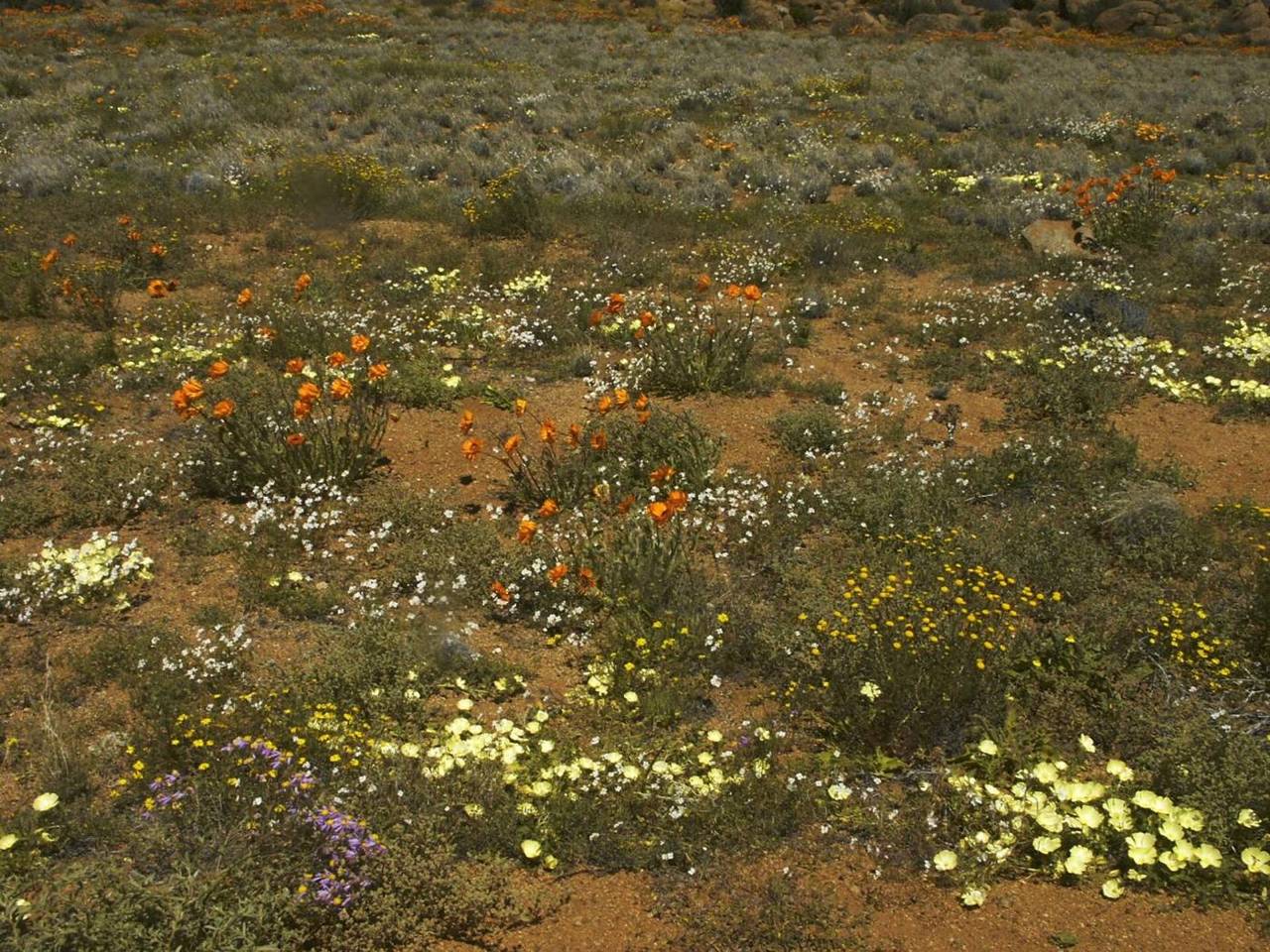
If the winter rains have been good, you see the first fields of orange, yellow and white flowers along the road, especially around Garies. The Namaqualand bloom depends on the rains from May to July: in some years it is spectacular, in others very sparse. No one can predict it months ahead.
Thousands of plant species grow here, many of them only in this region: daisies, vygies, bulbs and succulents. Namaqualand is part of the Succulent Karoo, one of the arid areas richest in plants in the world.
In the afternoon you reach Kamieskroon, a small village among granite hills, a few kilometres from Namaqua National Park. Take a walk among the boulders behind the village and look at the flowers on the hills.
In the evening it is cold: Namaqualand has mild days and cool nights in spring.
Sleep in Kamieskroon.
Practical tip: during the flower season accommodation in Namaqualand is scarce and must be booked many months ahead, sometimes more than a year. Check the flower reports before you leave.
- Day 9
The flowers around Kamieskroon
Today is a day entirely for the flowers.
In the morning do not set off too early: the flowers open only when the sun warms them, usually around ten or eleven o'clock, and close again in the late afternoon. Use the morning for a walk among the granite hills around the village.
By mid-morning, drive along the back roads, often gravel, that lead away from the village through the valleys and farms. In good years the fields become orange carpets of Namaqualand daisies, with patches of white, purple and yellow. Stop often and walk among the flowers without trampling them, keeping to the edges of the fields.
The tourist offices in the area publish every day where the best flowers are. Ask the locals too: they know which valley is in bloom that week.
At lunchtime, have a picnic among the flowers. In the afternoon, look for the smallest succulents among the white quartz pebbles: some are tiny and look like stones.
If you have time, drive up to the passes in the hills to the west, from where you see the plains sloping down towards the ocean.
Return to Kamieskroon before dark. On country roads at night there are animals, potholes and little lighting.
Sleep in Kamieskroon.
Practical tip: do not pick flowers, bulbs or succulents. They are protected and picking them is an offence. Also remember always to close farm gates behind you.
- Day 10
Springbok and the land of copper
Today you go to Springbok, the main town of Namaqualand, about an hour to the north.
Springbok grew up in the nineteenth century with the copper mines, among the first industrial mines in South Africa. In the area there are still the remains of old mines, chimneys and stone stacks.
In the morning, visit the nearby mining towns, such as Okiep and Nababeep, with the remains of the old mines and, in Nababeep, a small mining museum. Check prices and times.
Then go back to Springbok and climb the small granite hill in the centre, called Klipkoppie, with the remains of a fort from the Anglo-Boer War and the view over the town and the mountains.
In the afternoon, explore the roads around Springbok, where in spring the flowers cover the plains between the hills. Also look out for kokerboom, quiver trees, succulents as tall as trees with candelabra branches: the San used their hollow branches to make quivers for their arrows.
Springbok is a good place to shop, fill up and withdraw cash: in the next few days, in the park and on the coast, services are very few.
In the evening, try Karoo lamb, raised among the aromatic herbs of the desert, grilled or in a stew.
Sleep in Springbok.
Practical tip: fill the tank and carry a jerrycan of water. In Namaqua National Park and on the coast there are no petrol stations or cash machines.
- Day 11
Namaqua National Park
Today you enter Namaqua National Park, created to protect the flowers of Namaqualand.
From Springbok, go back south to Kamieskroon and then take the gravel road west, about twenty kilometres, to the Skilpad section, in the upper part of the park. Skilpad receives a little more rain than the surrounding areas and in good years has the densest blooms, with whole hills covered with orange daisies. Check prices and times.
In the flower season there is a circular drive with viewpoints. Also walk one of the park's short trails, three to six kilometres long, among the rocks and flowers. With an ordinary car you can visit the Skilpad area, but most of the park requires a 4x4.
The park is home to small antelope, such as steenbok and duiker, tortoises, lizards and many birds. Large animals are few: here the plants are the stars.
In the afternoon, collect from the Skilpad camp the booklet for tomorrow's coastal 4x4 route, which you need to follow the track.
In the evening, sleep in the park's chalets or go back to Kamieskroon. If you sleep in the park, the silence of the night is total.
Sleep in Namaqua National Park or in Kamieskroon.
Practical tip: on sunny days the park fills up towards midday. Go in as soon as the gates open, walk in the morning and look at the open flowers in the middle of the day.
- Day 12
The wild coast by 4x4
Today you drive the coast of Namaqua National Park, one of the loneliest coastlines in South Africa.
The coastal 4x4 route is almost two hundred kilometres long and takes six to eight hours. You can also drive just one section. It is easy to moderate, with sandy stretches and some steep descents. Follow the caracal signs, the desert lynx, and the points in the booklet.
You descend from the plateau towards the ocean between hills and dunes. On the coast you find deserted beaches, rocks covered with mussels and seaweed, and the morning fog rolling in from the cold Atlantic. This fog brings the moisture that keeps many desert plants alive.
Stop at the mouth of the Spoeg River, a good place for birds, and at the mouth of the Groen, one of the saltiest estuaries on the South African coast, where there are often pelicans and flamingos. There is also a lighthouse there, which cannot be visited.
Further north the road reaches Hondeklip Bay, a small town that was once a copper port and later home to a crayfish factory, with a shipwreck on the beach.
Never drive on the beaches or off the open tracks. Always close farm gates. After heavy rain the route can close or change: check with the park.
Sleep in Hondeklip Bay or at the park's coastal camp.
Practical tip: travel with another vehicle if you can, and leave word of your route. Carry water, food, a spare wheel and a compressor.
- Day 13
The Goegap reserve and its oryx
Today you head back towards Springbok to visit the Goegap Nature Reserve, a few kilometres south-east of the town.
From Hondeklip Bay the gravel road climbs inland through the hills, about two hours. Drive slowly: stones and sand can be slippery.
Goegap is a reserve of plains, granite hills and dome-shaped rocks, typical of Namaqualand. In good years the flowers cover the plains, but the reserve is beautiful even without them. It is famous for its gemsbok, the oryx, large grey antelope with long straight horns and a black and white face, a symbol of the deserts of southern Africa. You also see springbok, the small gazelle that gives the town its name, Hartmann's mountain zebras and klipspringers on the rocks.
At the entrance there is the Hester Malan wildflower garden, with succulents from all over the region and a short trail. Then drive the roads for ordinary cars in the reserve, or the 4x4 route if you have the right vehicle. There are also walking and mountain bike trails. Check prices and times.
In the afternoon, look for kokerboom on the hills and watch the sunset over the granite rocks.
In the evening, return to Springbok, do your shopping and prepare for tomorrow's journey south.
Sleep in Springbok.
Practical tip: in the reserves, drive slowly and stay in the car near animals. Gemsbok are calm but can defend themselves with their horns.
- Day 14
Heading south
Today you leave Namaqualand and head back south to Clanwilliam, about five hours of driving on the N7.
Take the road at a gentle pace, stopping in the small towns along the way. If there are flowers, stop again around Garies and on the plains of the Knersvlakte, an expanse of white quartz pebbles where hundreds of small succulents grow, many of them found only here.
After Vanrhynsdorp the road drops into the valley of the Olifants River, with its vineyards and orchards. It is one of the least known wine areas in the country, with cooperative cellars and small estates. If you like, stop for a tasting, but remember that you are driving.
In the afternoon you reach Clanwilliam, a small town at the gateway to the Cederberg, with an old church, low houses and a large reservoir on the Olifants River.
Clanwilliam is the capital of rooibos, the red tea of South Africa. The plant grows only in the Cederberg mountains and nearby areas, and the name rooibos is protected, like a designation of origin.
Visit the Ramskop wildflower garden, on the hill above the reservoir, with a fine collection of plants from the region. Check prices and times.
In the evening, stroll along the main street and have dinner in town.
Sleep in Clanwilliam.
Practical tip: on the N7 there are many lorries and long straight stretches. Overtake only with good visibility and take a break every two hours.
- Day 15
Rooibos and the Pakhuis Pass
Today you stay in the Clanwilliam area, among the rooibos fields and the last San paintings.
In the morning, join a rooibos tour. You discover how the plant, a small shrub with needle-like leaves, is cut, bruised and left to ferment in the sun, which gives it its red colour and sweet flavour. The harvest takes place in summer, but tours run all year round. Taste rooibos cold too, with honey or in local recipes.
Then drive over the Pakhuis Pass, a spectacular road among red and orange rocks east of Clanwilliam. Along the road is the grave of Louis Leipoldt, a South African poet, doctor and cook, buried among the rocks he loved.
In the afternoon, walk the Sevilla Rock Art Trail, an easy walk of about four kilometres along a river, with around ten rock shelters decorated by the San: human figures, zebras, elephants and antelope. The trail crosses a private farm and you pay for a small permit: check prices and times.
In good years, at the end of August, the Biedouw Valley, beyond the pass, is covered with flowers.
In the evening, return to Clanwilliam.
Sleep in Clanwilliam.
Practical tip: buy your rooibos here, in the town's shops or at local markets. It costs less than in the city and is fresh.
- Day 16
Back to Cape Town
Today you return to Cape Town, about three hours by road to the south.
The N7 crosses the Citrusdal valley and the wheat fields of the Swartland again. If you have time, stop in Riebeek-Kasteel, a small town among vineyards and olive groves, with white houses and a quiet square.
In the early afternoon you reach Cape Town. If you did not go on the first days, visit Kirstenbosch botanical garden, on the slopes of Table Mountain. It is one of the most beautiful botanical gardens in the world and grows mainly plants from southern Africa. In spring the proteas, the national flower, and the fynbos flowers are in bloom. Walk along the elevated walkway among the trees, called the Boomslang, like the snake. Check prices and times.
Alternatively, go to Robben Island if you did not on the first day, or take a last walk up Signal Hill for the sunset over the city and the ocean.
In the evening, for your last dinner, choose a place on the Waterfront or in the neighbourhoods near the centre. Try South African wines, such as pinotage, a grape variety created in South Africa.
Before going to sleep, pack your bags and check your flight time.
Sleep in Cape Town.
Practical tip: in the evening in Cape Town, get around by taxi or ride-hailing apps. Avoid walking alone after dark, especially in the centre and in quiet areas.
- Day 17
Departure from Cape Town
On the last day you leave from Cape Town international airport, about twenty minutes from the centre.
If your flight is in the afternoon, in the morning take a walk along the Sea Point promenade, very popular with runners and walkers, with the view over the ocean and Robben Island. Or visit the weekend market in one of the nearby neighbourhoods, if it is Saturday.
Return the car at the airport, with a full tank.
What to take home: rooibos from Clanwilliam, Cape Malay spices, biltong, the spiced dried meat, South African wine, beadwork, woven baskets and books on the plants of the Cape.
This trip has shown you a South Africa different from the safari one: Cape Town with Table Mountain, the penguins and the Cape of Good Hope, the Langebaan lagoon, the red rocks and San paintings of the Cederberg, nights under the stars, the carpets of flowers of Namaqualand, the deserted coast of Namaqua National Park, the gemsbok of Goegap and the land of rooibos. It is a trip of silence, landscapes and photography, with few large animals.
When to go: the best period is from mid-August to mid-September, during the Namaqualand bloom, which lasts a few weeks and depends on the winter rains. At that time Postberg is open and the weather is mild by day and cool at night. Out of season the trip is still beautiful, but without flowers. From December to February it is very hot in the Cederberg and Namaqualand.
Practical tip: book the trip as soon as you decide to go. Accommodation in the flower season runs out very early, but if you can, choose a cancellable booking, because the bloom changes every year.
A trip to time carefully: the Namaqualand bloom lasts only a few weeks between August and September and depends on the rains. Out of season it's still a fine landscape trip, but loses its main reason. Few big animals: this is for lovers of nature, silence and photography.
Before you go
- Documents and visa
- Passport valid for at least 30 days beyond departure, with at least two completely blank pages; no visa for tourism up to 90 days. A return ticket is required.
- Health and vaccines
- No compulsory vaccines arriving from Europe; a yellow fever certificate is needed only if arriving from a risk country. Kruger and the north-east have seasonal malaria risk: ask your doctor before travelling. Emergencies: 10111 police, 10177 ambulance, 112 from mobiles.
- Money and payments
- South African rand. Cards work almost everywhere; keep some cash for tips and car guards.
- Power sockets
- Type M, plus C and N, 230 volts: you need an adapter for the large three round-pin plugs.
- Time zone
- UTC+2 all year: South Africa does not use daylight saving time.
- Safety
- The United States rates South Africa level 2 for crime. In cities avoid walking alone at night, leave nothing visible in the car and use ride-hailing apps after dark. Official advice: GOV.UK.
Information checked in November 2026 for Italian and EU citizens. Rules change: always check before you travel.
Variations
In 10 days: Cape Town, West Coast National Park, two days in the Cederberg and two in Namaqualand around Kamieskroon.
In 21 days: add Nieuwoudtville and its flowering bulbs, the Richtersveld desert near Namibia or a few days in the Winelands.
Frequently asked questions
What documents do I need?
Italian citizens enter South Africa without a visa for up to 90 days. The passport must be valid for at least 30 days beyond exit and have two blank pages. Other nationalities should check their own rules.
When do the Namaqualand flowers bloom?
Usually between mid-August and mid-September, but it depends on the winter rains. Some years the bloom is spectacular, others sparse. The flowers open only in sunshine, in the middle of the day.
Do I need a 4x4?
For Cape Town, the Cederberg and Goegap an ordinary car is enough, although the Cederberg roads are gravel. For the coast of Namaqua National Park you need a real 4x4.
Indicative itinerary written by World Atlas. Before booking, check timetables, seasonal openings, documents and safety.
 7 daysEasy
Cape Town and the Cape Peninsula
A week of Table Mountain, the penguins of Boulders Beach, the Cape of Good Hope and the Stellenbosch vineyards.
 15 daysModerate
Kruger, the Garden Route and Cape Town
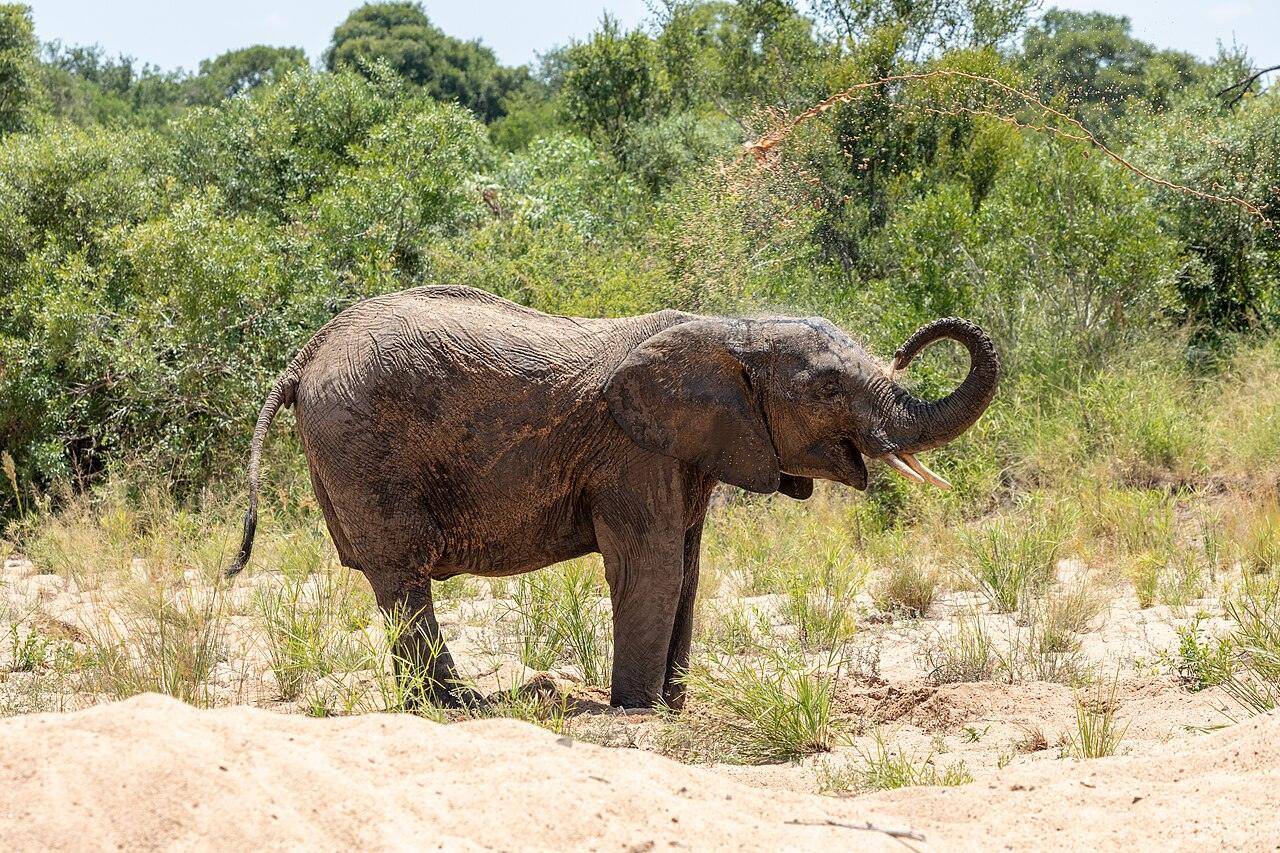
The great classic: a Kruger safari, the scenic Garden Route and a finale in Cape Town.
 13 daysEasy
Kruger, Eswatini and the Zululand parks
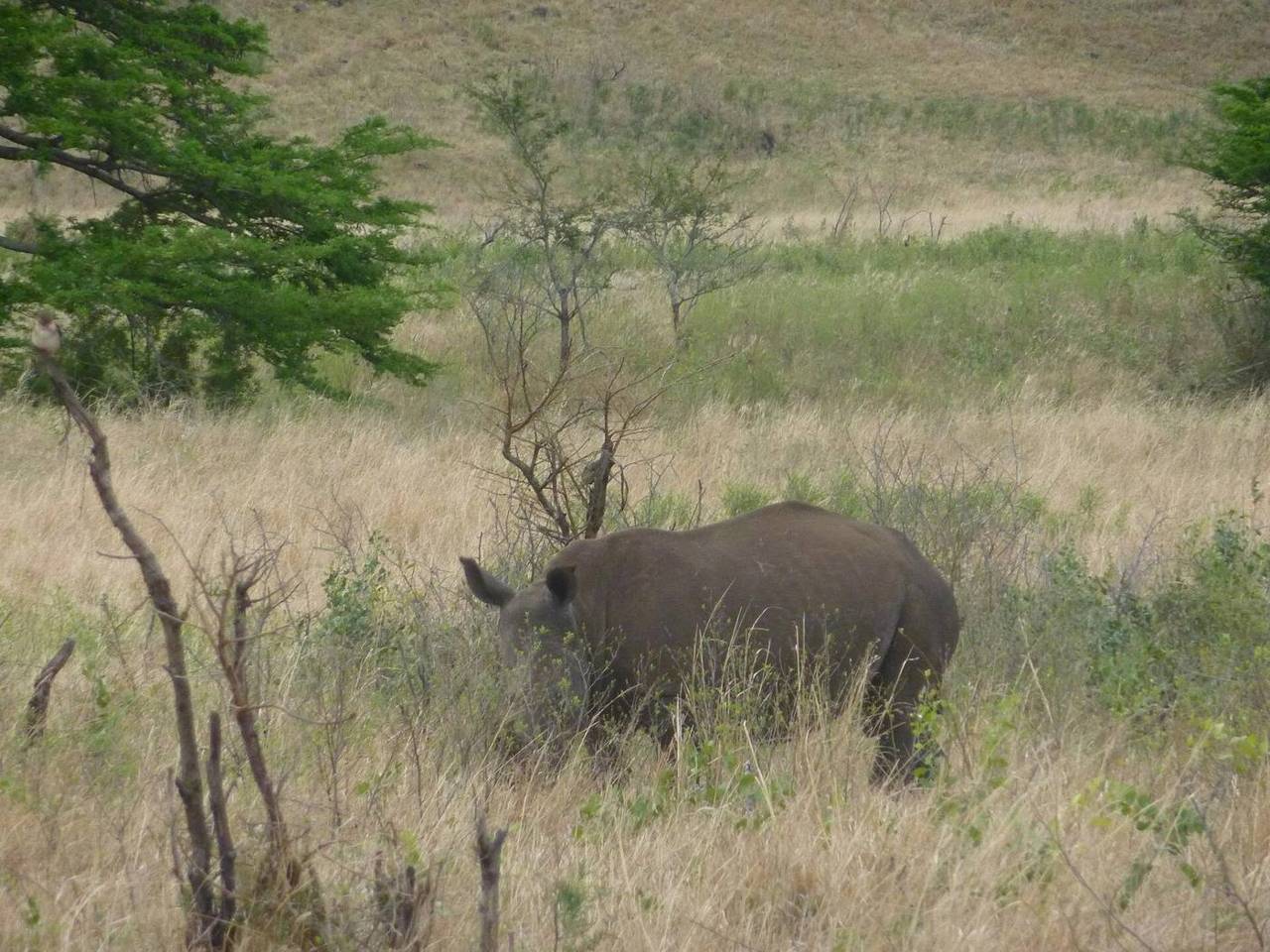
Almost two weeks of pure wildlife: Kruger, the small kingdom of Eswatini, the rhinos of Hluhluwe-iMfolozi and the hippos of the St Lucia estuary.