Cape Town and the Cape Peninsula
A week of Table Mountain, the penguins of Boulders Beach, the Cape of Good Hope and the Stellenbosch vineyards.
- Cape Town
- Boulders Beach
- Cape of Good Hope
- Stellenbosch
- Hermanus
Day by day
- Day 1
Arrival in Cape Town and sunset at the Waterfront
EU citizens do not need a visa for tourist stays in South Africa of up to 90 days. Your passport must be valid for at least thirty days beyond your departure date and have at least two completely blank pages for stamps: without them you may be refused boarding. You also need a return ticket.
Cape Town International Airport is about twenty minutes from the centre. For this itinerary a rental car makes sense: South Africa drives on the left, main roads are good and the Cape Peninsula is far better explored independently. Convenient areas to stay are the centre, the Waterfront, Green Point or seaside districts such as Sea Point and Camps Bay.
In the late afternoon go to the Victoria & Alfred Waterfront, the old Victorian harbour turned into a pedestrian area with shops, food markets, museums and views of Table Mountain. Here is Zeitz MOCAA, the museum of contemporary African art, built inside an old grain silo, and you often see Cape fur seals resting on the jetties. At sunset the mountain turns pink and orange.
Have dinner with fish from the coast or a braai, the South African barbecue. Practical tip: in Cape Town never leave anything visible in the car, avoid walking alone at night in quiet areas and use ride-hailing apps for night-time travel.
- Day 2
Table Mountain and the Bo-Kaap quarter
In the morning go up Table Mountain, the flat-topped mountain about 1,085 metres high that dominates the city, one of the New Seven Wonders of Nature. The cableway, whose cabins rotate on the way up, reaches the top in a few minutes; tickets are sold online and it is best to go early, because strong wind or clouds, known as the tablecloth, can close it suddenly. Check the official website that morning. The cableway closes for a few weeks each winter for maintenance.
Fit walkers can hike up the Platteklip Gorge trail: about two or three hours of steep ascent on stone steps, in good weather, with plenty of water and never alone. At the top easy paths lead to viewpoints over the bay, the peninsula, Lion's Head and Robben Island. You see fynbos, the Cape's unique vegetation, and dassies, small mammals sunning themselves on the rocks.
In the afternoon go down to Bo-Kaap, the quarter of brightly painted houses on the slopes of Signal Hill, home to the Cape Muslim community, descended from slaves and prisoners brought from Asia by Dutch settlers. The small museum tells its story; the quarter's kitchens serve Cape Malay cooking, with sweet curries and bobotie.
At sunset drive up Signal Hill for views over the city and the ocean. Practical tip: Bo-Kaap's houses are private homes; photograph respectfully and do not enter courtyards.
- Day 3
Chapman's Peak, the Boulders penguins and the Cape of Good Hope
Today is the Cape Peninsula loop, one of the world's finest coastal drives. Head south along the Atlantic coast past Camps Bay and Llandudno to Hout Bay, a fishing harbour. From here begins Chapman's Peak Drive, a toll road cut into the cliff, with nine kilometres of bends high above the ocean and many viewpoints. It can close for strong wind or rockfall.
Then descend into the Cape of Good Hope section of Table Mountain National Park at the tip of the peninsula: cliffs, wild beaches, baboons, ostriches and antelope. A funicular or a path leads to the old Cape Point lighthouse, with views over both sides of the peninsula. From 1 November 2026 entry for foreign adults costs 592 rand per day, according to the official national parks tariff. Never feed the baboons and keep doors closed: they are skilled food thieves.
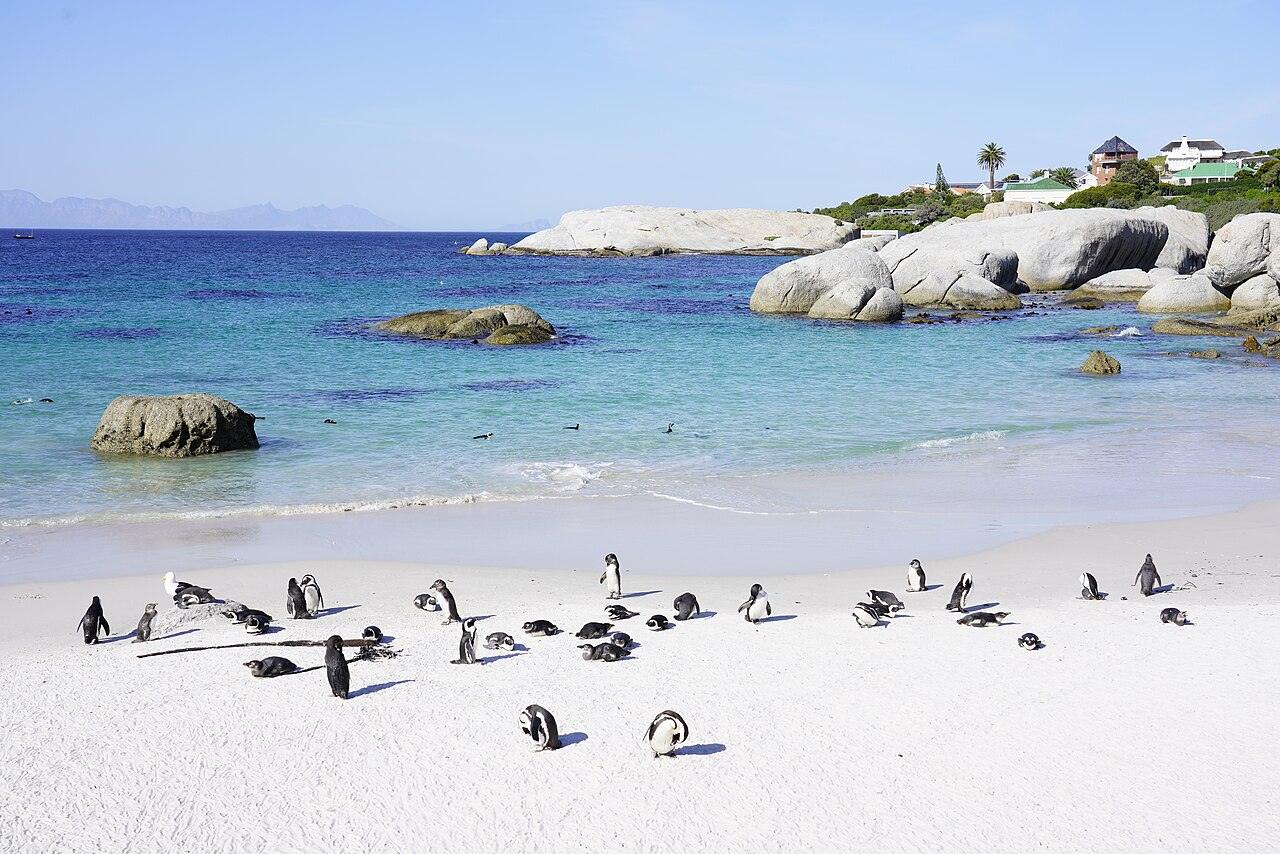
In the afternoon drive back up the False Bay coast to Boulders Beach near Simon's Town, home to a colony of African penguins, an endangered species. Wooden boardwalks let you see them up close on the rocks and sand. From 1 November 2026 entry costs 282 rand for foreign adults. Simon's Town, a naval base with Victorian houses, is a good place for dinner.
Return to the city by the inland road. Practical tip: the water on the Atlantic coast is cold, around 15-19 °C; False Bay is a little warmer.
- Day 4
Robben Island and the beaches of Camps Bay
In the morning take the ferry from the Waterfront to Robben Island, about eleven kilometres offshore, where prisoners were held for centuries, and political prisoners during apartheid. Nelson Mandela spent eighteen of his twenty-seven years in prison here. The island is a UNESCO World Heritage site, and the visit, about three and a half hours including the crossing, is only on the official tour.
On the island a bus visits the main sites, such as the limestone quarry where prisoners laboured in the sun. The tour of the maximum-security prison is often led by a former political prisoner, who describes daily life in the cell block, up to Mandela's small cell. It is one of the most moving visits in South Africa. Tickets sell out, especially in summer: book on the official website days ahead. Crossings are cancelled in rough seas.
In the afternoon relax on the Atlantic coast beaches. Camps Bay has a long white beach backed by the Twelve Apostles mountains; the small coves of Clifton are sheltered from the wind. The water is cold, but the late-afternoon light is splendid.
At sunset many climb Lion's Head, a mountain shaped like a lion's head: about an hour and a half of ascent with chains and ladders on the last stretch, done with a torch for the way down. Practical tip: on the Atlantic coast the sun is strong even when the wind is cool; use high-factor sunscreen.
- Day 5
Stellenbosch and Franschhoek, the wine country
Today is a day in the Winelands, the Cape's wine region, less than an hour from the city. Vines have been grown here since the late seventeenth century, when Dutch settlers arrived, followed by French Huguenots fleeing France. The landscape is one of neat vineyards at the foot of rugged mountains, with white Cape Dutch farmhouses and their rounded gables.
Stellenbosch is a university town of oaks, historic houses and art galleries, the country's second oldest. Walk along Dorp Street with its eighteenth-century houses and visit the village museum. Around it dozens of wine estates are open for tastings, many with gardens and restaurants among the vines.
In the afternoon continue over the Helshoogte Pass to Franschhoek, the French corner, a valley enclosed by mountains where the Huguenots settled. The Huguenot monument and small museum tell their story. The town is considered one of South Africa's food capitals. To tour the cellars without driving there is a tourist tram linking several estates.
Practical tip: South Africa's drink-driving limit is low and checks are frequent; if you go tasting, book a driver or an organised tour, or choose someone who will not drink. Return to the city in the evening, ideally before dark on the mountain roads.
- Day 6
Hermanus and whales from the shore
In the morning drive east along the coast to Hermanus, about an hour and a half. The finest route is Clarence Drive, the coastal road between Gordon's Bay and Kleinmond, with mountains plunging into False Bay. At Betty's Bay, on the way, is the Stony Point penguin colony, less crowded than Boulders.
Hermanus is considered one of the best places in the world to watch whales from land. From June to November, peaking in September and October, southern right whales enter Walker Bay to calve and nurse their young, sometimes a few dozen metres from the rocks. The cliff path, about ten kilometres long, follows the coast with benches and viewing points. In season there are also boat trips with licensed operators, who must keep a minimum distance from the animals.
In the afternoon, if you wish, continue to Gansbaai, famous for shark cage diving, or visit the Fernkloof Nature Reserve, with trails through flowering fynbos. Hermanus also has a small whale museum in the old harbour.
In the evening return to Cape Town or stay in Hermanus to enjoy sunset over the bay. Practical tip: the coast is beautiful even out of season, but if you are travelling for the whales, choose September or October and bring binoculars.
- Day 7
A last morning in the city and departure
The last day depends on your flight time. In the morning visit Kirstenbosch Botanical Garden at the foot of Table Mountain, one of the most beautiful in the world, devoted to South Africa's indigenous plants: proteas, fynbos and ancient trees. A canopy walkway called the Boomslang, the tree snake, gives views over the treetops and the mountain. In summer open-air concerts are held on the lawns on Sunday afternoons.
Alternatively, go down to the historic centre: the Castle of Good Hope, the country's oldest colonial building, from the seventeenth century; the District Six Museum, which tells how a multi-ethnic neighbourhood was cleared and razed during apartheid; and the Company's Garden, with the national museum and art gallery. Greenmarket Square market sells crafts from all over Africa.
Return the car at the airport, about twenty minutes from the centre. Things to take home: Winelands wines, well packed; rooibos, South Africa's red tea; beadwork and African textiles.
Practical tip: South Africa can have scheduled power cuts, called load shedding; they have fallen sharply in recent years, but keep your phone charged. Reach the airport at least three hours before international flights, because security checks and check-in can take time, especially in the summer season.
One of the most beautiful cities in the world, with nature, wine and penguins half an hour from the centre. From June to November whales can be seen from the shore at Hermanus. In town take care in the evening and move around by car or ride app.
Before you go
- Documents and visa
- Passport valid for at least 30 days beyond departure, with at least two completely blank pages; no visa for tourism up to 90 days. A return ticket is required.
- Health and vaccines
- No compulsory vaccines arriving from Europe; a yellow fever certificate is needed only if arriving from a risk country. Kruger and the north-east have seasonal malaria risk: ask your doctor before travelling. Emergencies: 10111 police, 10177 ambulance, 112 from mobiles.
- Money and payments
- South African rand. Cards work almost everywhere; keep some cash for tips and car guards.
- Power sockets
- Type M, plus C and N, 230 volts: you need an adapter for the large three round-pin plugs.
- Time zone
- UTC+2 all year: South Africa does not use daylight saving time.
- Safety
- The United States rates South Africa level 2 for crime. In cities avoid walking alone at night, leave nothing visible in the car and use ride-hailing apps after dark. Official advice: GOV.UK.
Information checked in November 2026 for Italian and EU citizens. Rules change: always check before you travel.
Variations
In 5 days: Cape Town with Table Mountain, the Cape Peninsula and Boulders, Robben Island and a day in the Winelands, skipping Hermanus.
In 12 days: after Hermanus continue east along the Garden Route to Knysna and Tsitsikamma, ending with a safari in Addo Elephant Park.
Frequently asked questions
Do I need a visa for South Africa?
No, for tourist stays of up to 90 days. Your passport must be valid for at least thirty days beyond your departure and have at least two completely blank pages; a return ticket is also required.
How much do the Cape of Good Hope and Boulders cost?
From 1 November 2026, according to the official national parks tariff, foreign adults pay 592 rand per day for the Cape of Good Hope section and 282 rand for Boulders.
When is the best time to go?
October to April for warmth and the sea; June to November for whales at Hermanus. Winter, June to August, is cool and rainy in Cape Town, with glorious days between fronts.
Indicative itinerary written by World Atlas. Before booking, check timetables, seasonal openings, documents and safety.
 15 daysModerate
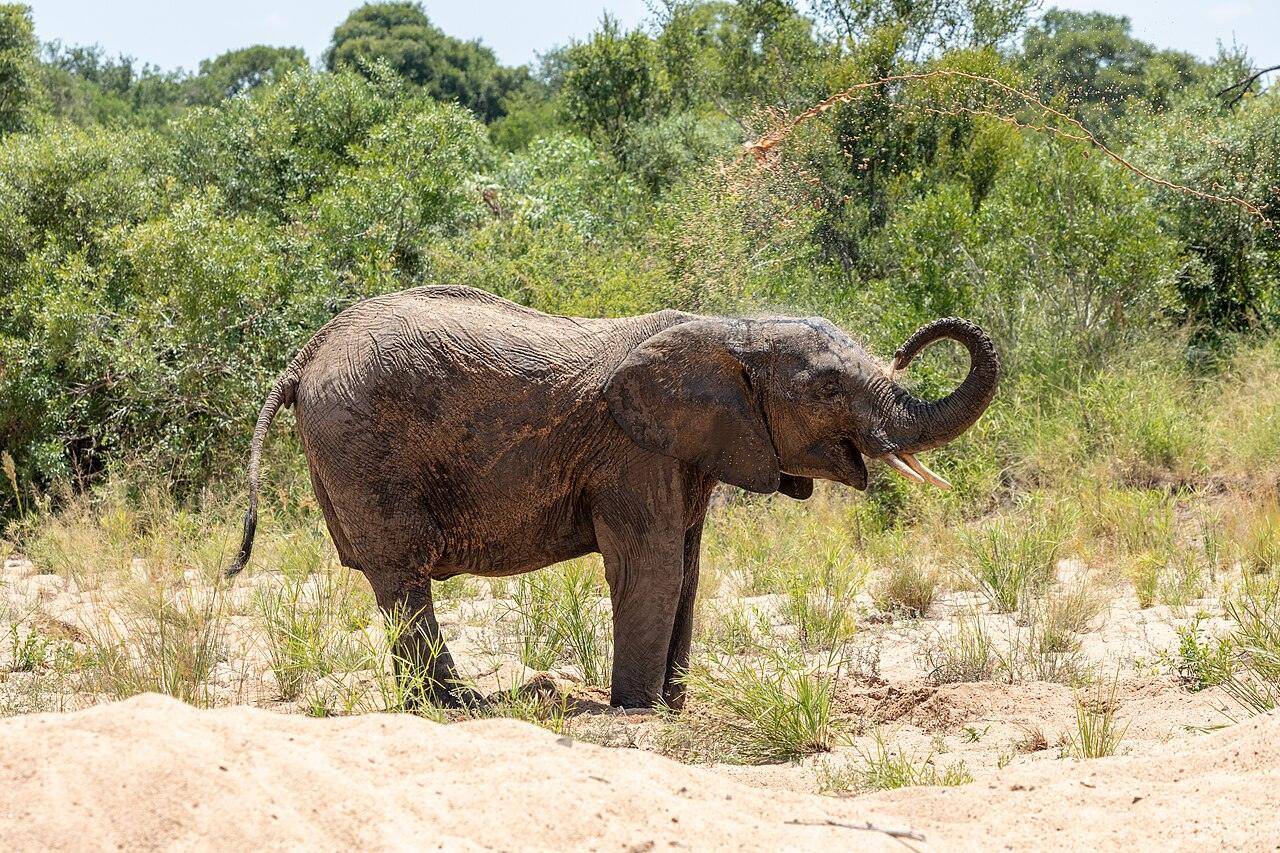
Kruger, the Garden Route and Cape Town
The great classic: a Kruger safari, the scenic Garden Route and a finale in Cape Town.
 13 daysEasy
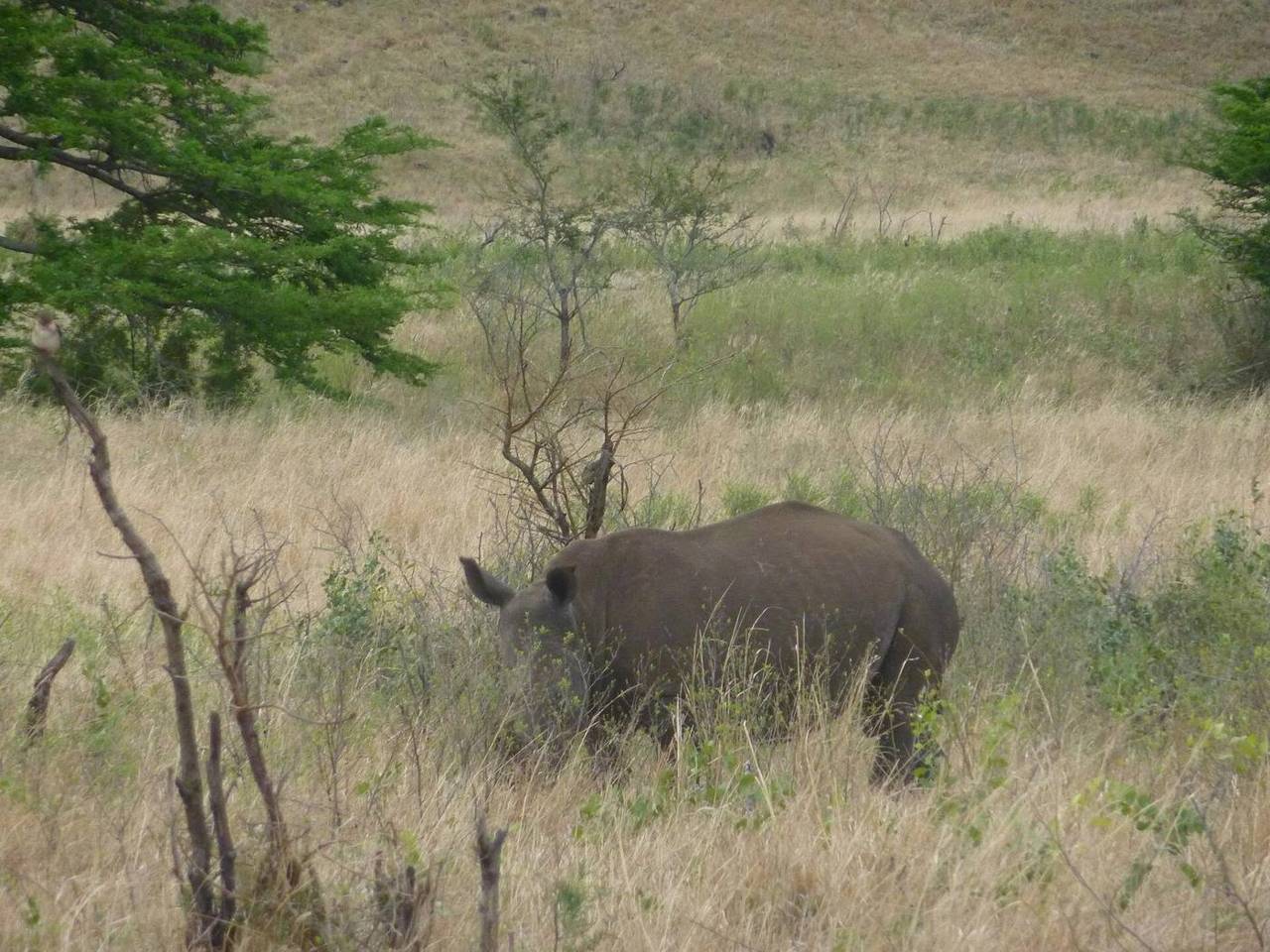
Kruger, Eswatini and the Zululand parks
Almost two weeks of pure wildlife: Kruger, the small kingdom of Eswatini, the rhinos of Hluhluwe-iMfolozi and the hippos of the St Lucia estuary.
 10 daysEasy
The Garden Route from Port Elizabeth to Cape Town
Africa's most famous coastal road: the elephants of Addo, the waves of Jeffreys Bay, the Tsitsikamma forest, the whales of De Hoop and the Cape winelands.