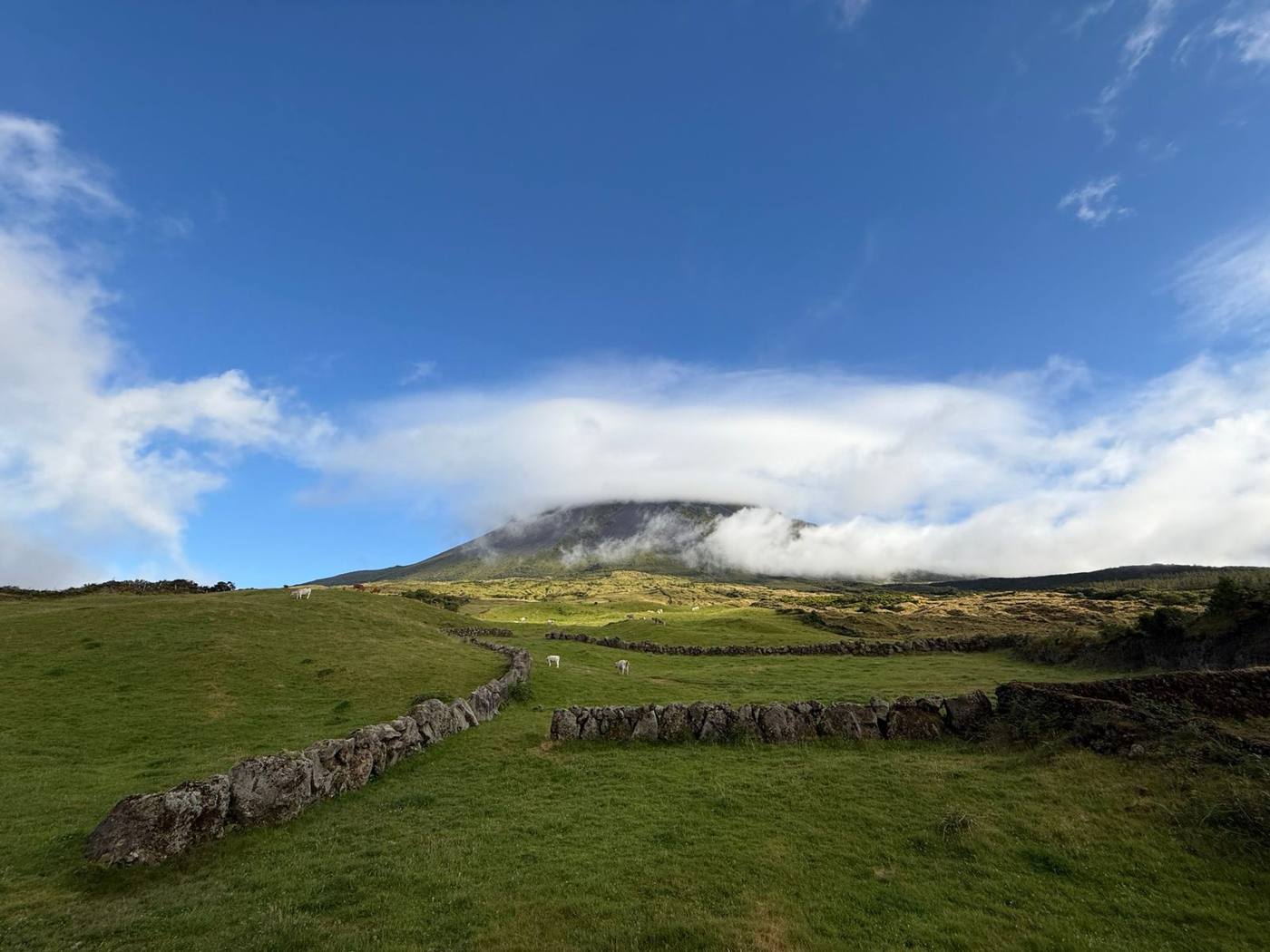
The Central Azores: Faial, Pico, São Jorge and Terceira
Four islands linked by ferry, from the young Capelinhos volcano to Portugal's highest peak, on to the fajãs of São Jorge and the Renaissance town of Angra.
- Lisbon
- Horta
- Capelinhos
- Madalena
- Lajes do Pico
- Velas
- Fajã da Caldeira de Santo Cristo
- Angra do Heroísmo
- Algar do Carvão
- Biscoitos
Day by day
- Day 1
Flight to Lisbon and a night in the city
This trip crosses the central group of the Azores, the Portuguese archipelago in the middle of the Atlantic Ocean, about one thousand five hundred kilometres from mainland Portugal: Faial, with its sailors' harbour and the archipelago's youngest volcano; Pico, with the highest mountain in Portugal and vineyards among lava walls; São Jorge, with its fajãs, coastal plains at the foot of the cliffs; and Terceira, with the historic town of Angra do Heroísmo.
Before you leave: Portugal is part of the Schengen area and the European Union. Italian citizens need a valid electronic identity card for travel abroad or a passport; the paper identity card has no longer been valid for travel abroad since 3 August 2026. Other nationalities should check their own rules.
On the first day you arrive in Lisbon and spend the night there, ready for the next morning's flight to the Azores.
In the afternoon walk around Alfama, Lisbon's oldest neighbourhood, with steep alleys, houses with colourful tiled façades and viewpoints over the Tagus river, such as Santa Luzia. Then go down to the Baixa, the district rebuilt after the 1755 earthquake, to the great Commerce Square on the river.
In the evening have grilled fish or salt cod and, if you like, listen to fado, Lisbon's traditional song, in one of the venues in Alfama.
Sleep in Lisbon.
Practical tip: the best time for the Azores is May to September. The weather can change several times in a day: always carry a waterproof jacket.
- Day 2
Flight to Horta and the sailors' harbour
In the morning take the flight from Lisbon to Horta, on Faial island, about two and a half hours over the ocean. From the plane, on clear days, you see the cone of Pico rising out of the clouds.
Horta is a small seaside town with white houses and Baroque churches, and a harbour famous among sailors all over the world: it is the main stopover for those crossing the Atlantic by sailing boat between Europe and the Caribbean or America.
In the afternoon walk along the breakwater and the quays of the marina, covered with hundreds of colourful paintings left by the crews of the boats, with the boat's name, the date and a picture. According to sailors' tradition, anyone who does not leave a painting will have bad luck on the crossing.
Pass the island's most famous sailors' bar, run by the same family for generations on the harbour, where sailors exchange mail and news, and which has a small museum of scrimshaw, the art of carving sperm whale teeth.
At sunset climb to the viewpoint on Monte da Guia or Monte Queimado for the view over the harbour and, across the channel, the great mountain of Pico.
In the evening have fresh fish or octopus stewed in wine.
Sleep in Horta.
Practical tip: rent a car for a day to get around Faial. Buses are few and do not go everywhere.
- Day 3
Faial: Capelinhos and the Caldeira
Today you explore Faial by car.
In the morning drive to the western tip of the island, to Capelinhos, where in 1957 and 1958 a volcano was born from the sea, in an eruption lasting more than a year that added new land to the island, buried the lighthouse in ash and forced many families to emigrate to America. Today the landscape is a desert of grey and brown ash, with the old lighthouse half buried. A modern visitor centre has been built underground, telling the story of the eruption and the geology of the Azores, and you can climb the lighthouse tower. Check opening hours and prices.
In the afternoon go up to the centre of the island, to the Caldeira, a great crater about two kilometres wide and about four hundred metres deep, its walls covered in green vegetation, ferns, junipers and hydrangeas. From the viewpoint on the rim, when the fog lifts, you see the crater floor. A path circles the whole rim, about two and a half hours, with views over the island and the ocean.
Fog on the Caldeira is frequent: if it is covered, come back later.
In summer, along the island's roads, thousands of blue hydrangeas bloom and form hedges between the fields.
Sleep in Horta.
Practical tip: on the rim of the Caldeira stay on the path. In fog and wind it is easy to lose your bearings.
- Day 4
Ferry to Pico and the lava vineyards
In the morning take the ferry from Horta to Madalena, on Pico island, about half an hour across the channel between the two islands, with the mountain of Pico ahead. Check the times: in rough seas sailings may be reduced.
In Madalena pick up a rental car and visit the Landscape of the Pico Island Vineyard Culture, a World Heritage Site. On the west and north coasts of the island, farmers built for centuries a network of low walls of black lava stone, called currais, forming thousands of tiny rectangular enclosures to protect the vines from wind and sea spray. The vines grow directly in cracks in the lava. Pico wine, verdelho, was once exported as far as the court of the Russian tsars.
Visit the vineyard interpretation centre at Lajido or Criação Velha and walk among the walls to the sea. Check opening hours and prices.
In the afternoon drive along the coast to the villages of Porto Cachorro, with black stone houses and lava formations shaped by the sea, and Santo Amaro, with a small traditional boatyard.
Sleep in or near Madalena.
Practical tip: on Pico the road around the island is long and slow. Plan your timing carefully.
- Day 5
Lajes do Pico, whalers and sperm whales
Today drive to the south coast, to Lajes do Pico, a village that was the centre of Azorean whaling for more than a century.
In the morning visit the Whalers' Museum, in an old boathouse, with the wooden boats used for the hunt, harpoons, lances and objects carved by the whalers on sperm whale teeth. The hunt, carried out by oar and sail with traditional methods, lasted until 1987. Today the same lookouts on the cliffs, called vigias, are used to spot whales and guide the watching boats. Check opening hours and prices.
In the afternoon go out to sea to see cetaceans with a naturalist guide. The waters around Pico and Faial are among the best in the world for seeing sperm whales, which live here all year. You also often see common dolphins, bottlenose dolphins, Risso's dolphins and, in spring, blue and fin whales passing through. Sightings are never guaranteed; choose operators that respect the distance rules.
In the evening try Pico cheese and local wine.
Sleep in Lajes or Madalena.
Practical tip: if you get seasick, take something before boarding. The open sea is often rough, even on sunny days. Sit at the back of the boat, where it moves less.
- Day 6
Climbing Mount Pico
Today, for those who are fit, is the day to climb Mount Pico, the highest peak in Portugal at about two thousand three hundred and fifty one metres, a perfectly cone shaped volcano.
You start from the Casa da Montanha, at about one thousand two hundred metres, where registration is compulsory: everyone receives a GPS tracker and pays a fee. You can climb alone or with a licensed guide, recommended for those who do not know the mountain. Check rules, times, prices and the number of places, which is limited.
The path climbs steeply over lava, stones and earth, marked by numbered posts, for about three or four hours to the crater rim. From the crater you climb on to Piquinho, a small lava cone at the top, with a section where you use your hands. From the summit, on clear days, you see Faial, São Jorge and the sea all around. The return takes about three more hours. In all it is seven or eight hours.
The weather changes fast: in fog, strong wind or rain the climb may be forbidden or dangerous.
Those who do not climb explore the east coast of the island, with natural rock pools and the Ribeira Grande waterfalls.
Sleep in or near Madalena.
Practical tip: bring hiking boots, warm layers, a windproof jacket, gloves and at least two litres of water. It is cold on top even in summer.
- Day 7
Ferry to São Jorge and Ponta dos Rosais
In the morning take the ferry from Pico to São Jorge, a long narrow island, a high green ridge of mountains falling to the sea in very steep cliffs. Check ferry times, which change with the season.
You arrive in Velas, the main village, with a small harbour, white churches and a stone arch over the sea.
In the afternoon drive to the western tip of the island, Ponta dos Rosais, a headland with a lighthouse abandoned after earthquakes, high above the ocean, with views of the cliffs and, on clear days, of Pico and Faial. The lighthouse is unsafe: do not enter the buildings.
On the way stop at the viewpoints on the ridge, where you see both coasts of the island, and look at the fields divided by hydrangea hedges, with cows grazing.
At sunset return to Velas or drive towards Calheta on the south coast.
In the evening try São Jorge cheese, a matured raw cow's milk cheese with a sharp flavour, protected by a designation of origin and made on the island for centuries.
Sleep in Velas or Calheta.
Practical tip: on São Jorge the roads are narrow and steep. Drive carefully, especially in fog, and watch out for cows on the road.
- Day 8
The fajãs and the Santo Cristo lagoon
Today you discover the fajãs, the coastal plains typical of São Jorge, formed by cliff landslides or lava flows, where small villages grew up, often reachable only on foot.
In the morning drive to Serra do Topo on the ridge and take the path down to the north coast, through pastures, woods and waterfalls, to Fajã dos Cubres, with a lagoon and a little church, and then along the coast to Fajã da Caldeira de Santo Cristo, with a brackish lagoon where clams are farmed, unique in the archipelago, and a wave famous among surfers. This fajã can be reached only on foot or by trail motorbike. The path is about ten kilometres, mostly downhill: arrange a taxi back from Fajã dos Cubres.
In the afternoon continue east to Topo, at the eastern tip of the island, with a lighthouse and a view of Topo islet, and visit a cooperative that makes São Jorge cheese, to see the wheels in the cellars. Check visiting times.
In the evening have clams from the lagoon, if you can find them, and fish.
Sleep in Calheta or Velas.
Practical tip: the fajãs path is slippery after rain. Wear hiking boots and use poles.
- Day 9
Ferry to Terceira and Angra do Heroísmo
In the morning take the ferry or flight from São Jorge to Terceira, the largest island in the central group. Check times: ferries between these islands are seasonal and not daily.
You arrive in Angra do Heroísmo, Terceira's historic town and a World Heritage Site, for centuries a key port of call for ships returning from the Americas and India. The centre has paved streets, two storey houses with colourful façades, iron balconies and Baroque churches. It was badly damaged by the 1980 earthquake and faithfully rebuilt.
In the afternoon walk around the centre and visit the cathedral, the Duque da Terceira garden, with tropical plants and a stairway climbing to the obelisk viewpoint, and the Angra museum in a former convent. Check opening hours and prices.
At sunset climb Monte Brasil, an extinct volcano on the peninsula next to the town, with a sixteenth century fortress still used by the army, woodland paths and the Pico das Cruzinhas viewpoint over Angra and its harbour.
In the evening try alcatra, a meat stew slow cooked in wine in a clay pot, Terceira's signature dish.
Sleep in Angra do Heroísmo.
Practical tip: in summer Terceira holds festivals with bulls running loose in the streets. Keep away from the bulls.
- Day 10
Algar do Carvão, Furnas do Enxofre and Biscoitos
Today you explore the volcanic interior of Terceira.
In the morning visit Algar do Carvão, a volcanic chimney, the conduit through which the lava came out, which you descend on foot by a stairway into a large cavern with silica stalactites and a small clear lake at the bottom. It is one of the few places in the world where you can enter an extinct volcano. Opening is seasonal and at limited times: check.
Nearby, walk the path at Furnas do Enxofre, an area of fumaroles where hot steam and gases rise from the ground among colourful mosses and sulphur deposits. Stay on the boardwalks.
In the afternoon drive to the north coast, to Biscoitos, famous for its natural pools among black lava rocks, where you swim in the ocean sheltered from the waves, and for its wine. Visit the small Biscoitos wine museum. Check opening hours.
If you wish you can fly to Graciosa island, with its crater and sulphur cave, but it is not included in this programme.
In the evening return to Angra for your last dinner.
Sleep in Angra do Heroísmo.
Practical tip: enter the natural pools only when the sea is calm. In high waves they can be dangerous, so ask locals first.
- Day 11
Flight home
On the last day take the flight from Terceira to Lisbon, about two and a quarter hours, and your connection home. Terceira airport is at Lajes, about half an hour from Angra, next to an air base.
If your flight leaves in the afternoon, in the morning you can visit Praia da Vitória, a small town with a long sandy beach and a harbour, or go up to the Serra do Cume viewpoint, from which you see the Terceira countryside divided into hundreds of green fields bounded by stone walls, like a great mosaic.
Before leaving buy something to take home: São Jorge cheese, Pico wine, fruit liqueurs from the islands, tea grown in the Azores, painted ceramics and crafts made of fibre and straw.
This trip shows the central Azores: lush volcanic islands in the middle of the ocean, a harbour for sailors from all over the world, the highest mountain in Portugal, vineyards among lava walls, coastal villages reachable only on foot, sperm whales and dolphins, and a historic town on the World Heritage list.
Practical tip: flights between the islands can be cancelled because of wind or fog. Leave a day's margin before your intercontinental flight, ideally spending the last night in Lisbon.
A good follow-up for anyone who has seen São Miguel: these islands are smaller, more rural and each unlike the next. The highlight is the Faial, Pico, São Jorge triangle with the volcano always on the skyline. The drawback is logistics: ferries depend on the sea and the São Jorge to Terceira crossing runs less out of season, so the order of islands may change. Book the Pico climb early.
Before you go
- Documents and visa
- EU citizens need a valid identity card or passport. Other nationalities should check the Schengen rules.
- Health and vaccines
- No vaccines required. EU citizens should bring their EHIC. Emergencies: 112.
- Money and payments
- Euro. Cards are accepted almost everywhere. Lisbon, Porto and several municipalities, including in the Algarve, charge a tourist tax per person per night.
- Power sockets
- Types C and F, 230 volts.
- Time zone
- Western European Time (UTC+0, summer UTC+1); the Azores are one hour behind the mainland.
- Safety
- A very safe country. In Lisbon watch for pickpockets on tram 28 and in the busiest areas; in summer, wildfire risk inland. Official advice: GOV.UK.
Information checked in November 2026 for Italian and EU citizens. Rules change: always check before you travel.
Variations
In 7 days: Faial and Pico, with Horta, Capelinhos, the vineyards, the whales and the climb of Pico.
In 14 days: add São Miguel, with the Sete Cidades lagoons and the hot springs of Furnas, or Flores and Corvo.
Frequently asked questions
Which document do I need?
Portugal is part of the Schengen area and the European Union: Italian citizens need a valid electronic identity card for travel abroad or a passport. Other nationalities should check their own rules.
How do you get between the islands?
By ferry, which runs frequently between Faial and Pico, and by domestic flights. Ferries between the other islands are seasonal: check times and days.
Can you climb Pico alone?
Yes, but registration at the Casa da Montanha is compulsory and places are limited. In fog or strong wind the climb may be forbidden. A licensed guide is recommended.
Indicative itinerary written by World Atlas. Before booking, check timetables, seasonal openings, documents and safety.
 9 daysEasy
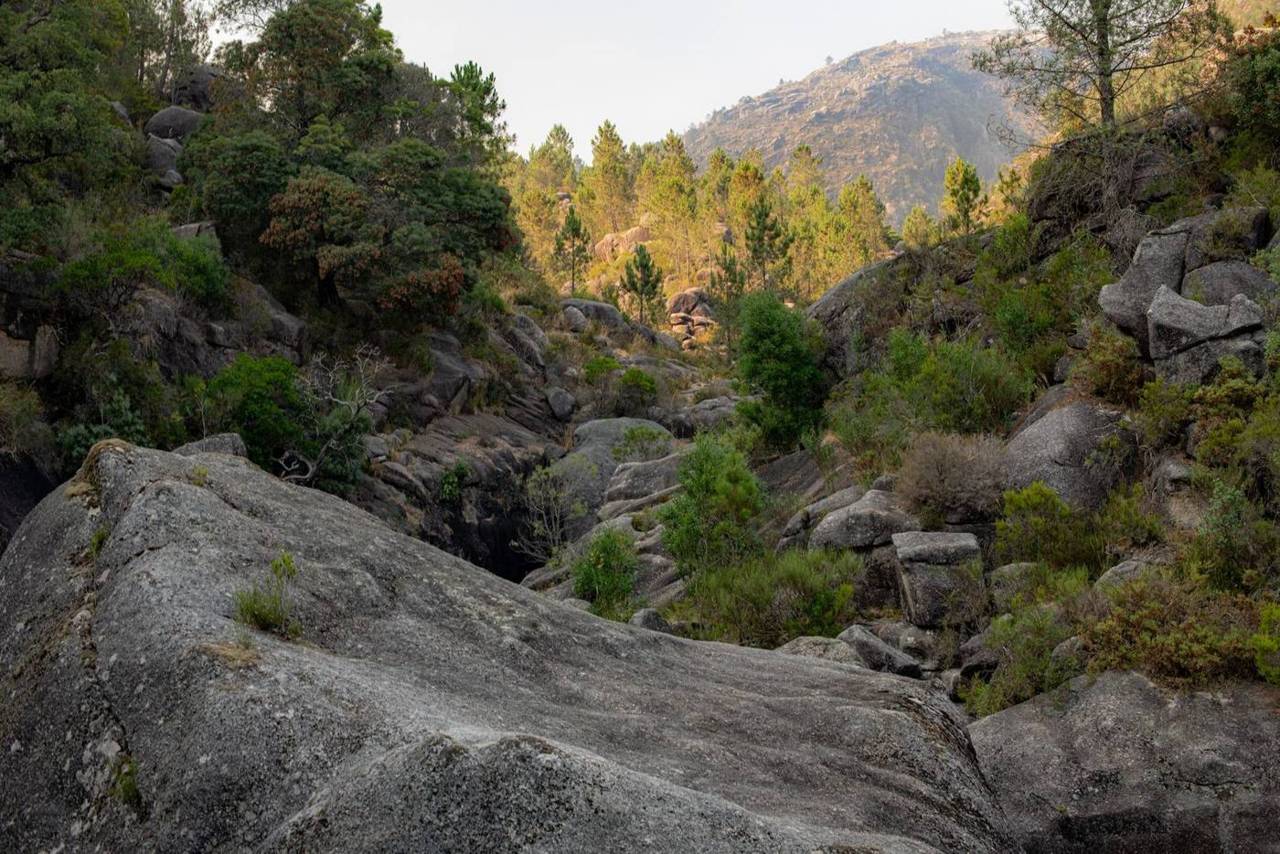
Minho, Peneda-Gerês and Galicia
A loop by car from Porto: the towns where Portugal began, the Bom Jesus sanctuary, Santiago, the Sil canyons and the country's only national park.
 16 daysChallenging
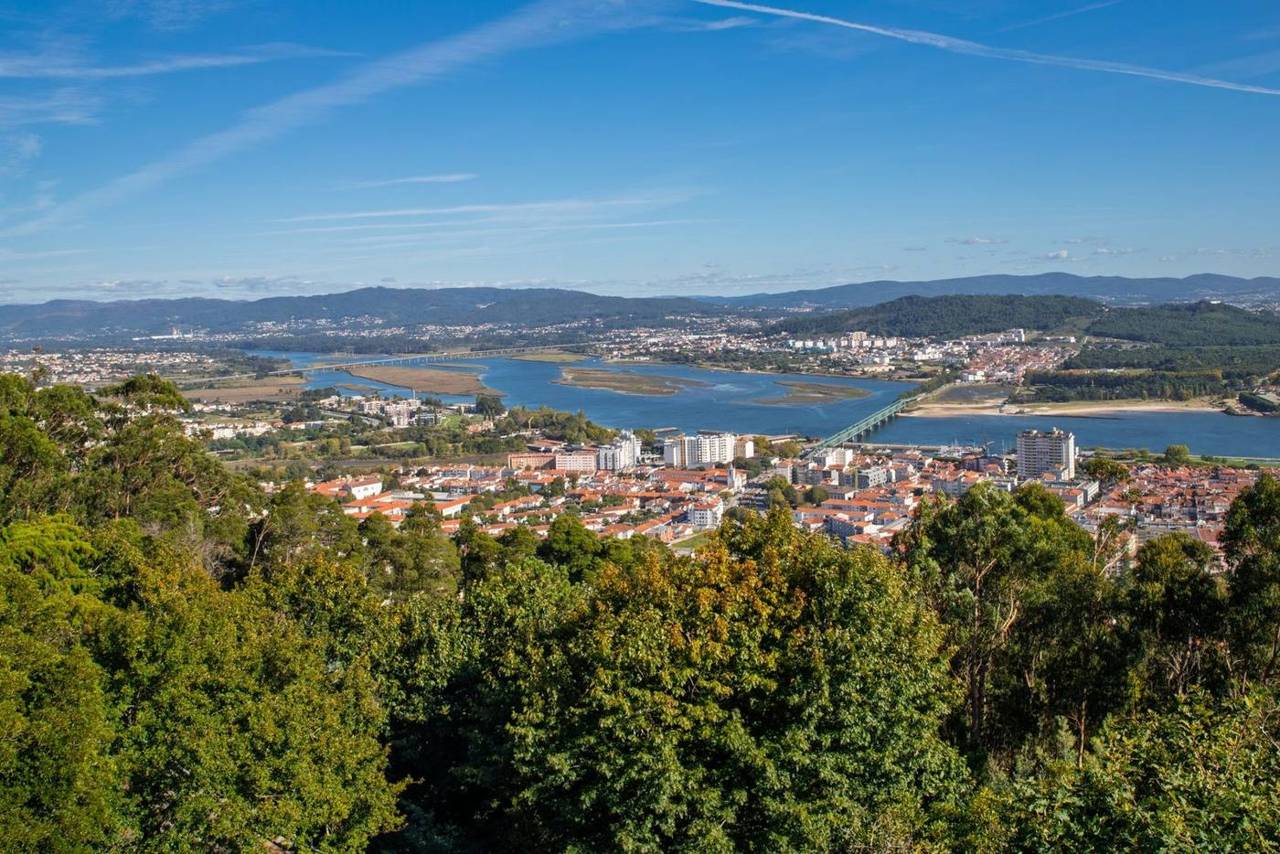
The Portuguese Coastal Way, Porto to Santiago
About 280 kilometres on foot in thirteen stages, along the Atlantic to the border and then inland through Galicia, ending in the Obradoiro square.
 15 daysEasy
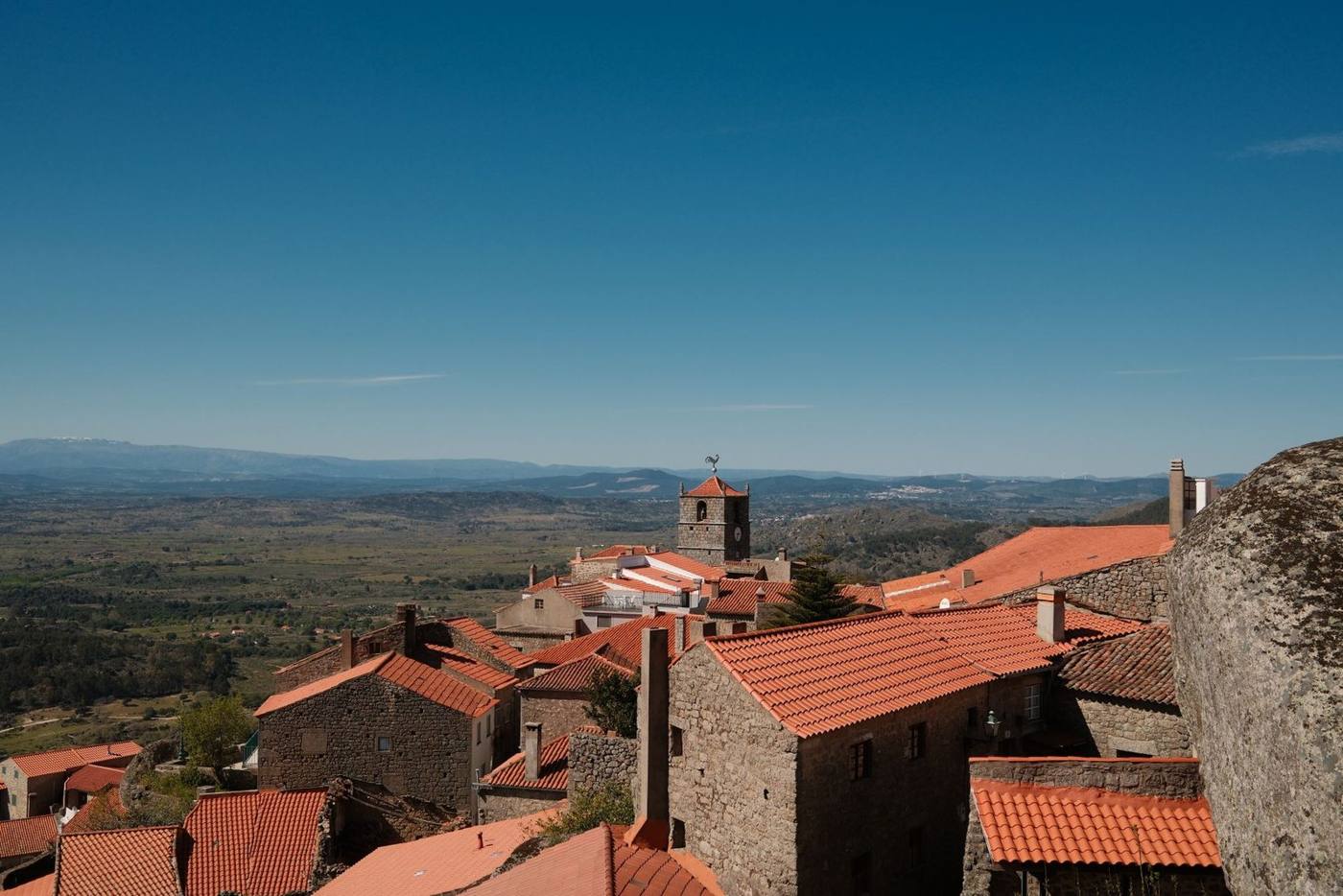
The Grand Tour of Portugal, Minho to the Algarve
Fifteen days to see the whole country: the central coast, Porto and the Douro, the granite villages of the interior, Évora and the Algarve, finishing in Lisbon.