Minho, Peneda-Gerês and Galicia
A loop by car from Porto: the towns where Portugal began, the Bom Jesus sanctuary, Santiago, the Sil canyons and the country's only national park.
- Porto
- Guimarães
- Braga
- Valença
- Pontevedra
- Santiago de Compostela
- Ribeira Sacra
- Ourense
- Peneda-Gerês
Day by day
- Day 1
Arrival in Porto and a first evening by the river
This road trip combines northern Portugal and Spanish Galicia, two green, rainy lands that share granite, wine, the Atlantic and a similar language: Porto and the Douro, Guimarães and Braga, Santiago de Compostela, the Sil canyon with its terraced vineyards and Peneda-Gerês National Park with its stone villages.
Before you leave: Portugal and Spain are part of the Schengen area and European Union citizens only need an identity card. If you hire a car in Portugal, tell the agency you will cross into Spain: there is often a surcharge. Many Portuguese motorways have electronic tolls only: ask the rental company how to pay them.
You fly into Porto and collect the car. For the first two days leave it in a car park: in central Porto you walk and use the metro and trams.
In the evening go down to the Ribeira, the district on the Douro river, a UNESCO site, with narrow coloured houses, steep lanes and terraces over the river. Look at the Dom Luís I bridge lit up and, on the other side of the river, the signs of the port wine cellars in Vila Nova de Gaia.
Have a typical Porto dish for dinner, such as the francesinha, a sandwich with meat, melted cheese and sauce, or salt cod, cooked here in dozens of ways.
Sleep in Porto.
Practical tip: the best time is May to June and September to October. It rains often in the north, even in spring: bring an umbrella.
- Day 2
Porto: the Ribeira, the bridge and the Gaia cellars
In the morning walk around central Porto. Visit São Bento station, whose hall is covered in azulejos, blue and white tiles telling the history of Portugal. Climb to the cathedral, a fortress church on the hill, and look out over the rooftops. Then go into the church of São Francisco, almost entirely covered in gilded wood, and pass the Torre dos Clérigos, the baroque bell tower that symbolises the city.
Around midday walk across the upper deck of the Dom Luís I bridge, beside the metro tracks. The iron bridge opened in 1886. The view from the top over the Ribeira and the river is one of the finest in Portugal.
In the afternoon, in Vila Nova de Gaia, visit one of the cellars where port wine ages in barrels. The wine is made in the Douro valley, further upstream, and for centuries it came here on rabelo boats, which you still see moored on the river. The visit explains the difference between ruby, tawny and vintage wines and ends with a tasting. Check opening hours and bookings.
At sunset take a short cruise on the Douro, passing under the city's bridges to the river mouth.
In the evening return to the Ribeira for dinner.
Sleep in Porto.
Practical tip: Porto is built on steep hills. Wear comfortable shoes and use the Guindais funicular to climb back up from the river.
- Day 3
Guimarães, cradle of the kingdom, and Braga
In the morning take the car to Guimarães, about an hour north east of Porto. The Portuguese call it the cradle of the nation, because Afonso Henriques, the first king of Portugal, was born here in the twelfth century. A wall in the old town carries the words: Portugal was born here.
Climb the castle hill, with its tenth century tower and walls, and visit the Palace of the Dukes of Braganza, built in the fifteenth century, with very tall brick chimneys, wooden ceilings shaped like ship hulls and rooms with tapestries and antique furniture. Then go down into the historic centre, a UNESCO site, with the arcaded squares of Largo da Oliveira and Praça de Santiago, granite houses with wooden balconies and small cafés.
In the afternoon go to Braga, half an hour away. Braga is Portugal's religious city, with dozens of churches, and has the country's oldest cathedral. Then drive out of town to the sanctuary of Bom Jesus do Monte, a UNESCO site, on the hill: a great zigzag baroque staircase in white and grey, with fountains, statues and chapels, climbing to the church at the top. You can walk up, about six hundred steps, or take the nineteenth century funicular, which works with a water counterweight.
Sleep in Braga.
Practical tip: at Bom Jesus go up by funicular and walk down. You see the fountains and statues better.
- Day 4
Valença, Pontevedra and arrival in Santiago
Today you leave Portugal for Galicia. Drive north to Valença, about an hour from Braga, on the Minho river, which marks the border with Spain. Valença is a fortified town with two rings of star shaped walls, bastions and gates, built in the seventeenth and eighteenth centuries for defence against Spain. Walk on the walls: across the river you see Tui, the Spanish town with its fortress cathedral. Today the two countries are linked by an old iron bridge, and pilgrims on the Portuguese Way cross it on foot.
Cross the bridge and continue to Pontevedra, about an hour away. Pontevedra has one of the finest historic centres in Galicia, all in granite, and for more than twenty years it has been almost entirely pedestrian: you walk among squares, arcades, churches and cruceiros, the stone crosses typical of Galicia. Visit the scallop shaped church of the Peregrina, dedicated to Our Lady of the pilgrims.
In the afternoon continue to Santiago de Compostela, another hour's drive. Leave the car in a car park outside the centre.
In the evening walk in the old town, a UNESCO site, and look at the illuminated cathedral from the great square.
Sleep in Santiago.
Practical tip: Spain is one hour ahead of Portugal. Remember to change your watch when you cross the border.
- Day 5
Santiago de Compostela
Today you stay in Santiago, the end of the Way of Saint James, the pilgrimage that for more than a thousand years has brought people from all over Europe to the tomb of the apostle James.
In the morning go to the Praza do Obradoiro, in front of the baroque façade of the cathedral. This is where pilgrims arrive, often tired, happy or in tears, with their rucksacks and staffs. Stop and watch them: it is one of the most moving moments of the trip.
Then go into the cathedral. Behind the baroque façade is the Portico of Glory, the Romanesque entrance carved by Master Mateo at the end of the twelfth century, with two hundred figures of saints, prophets and musicians. Restored a few years ago, it has regained its original colours. Visits to the Portico are limited in number: book ahead. In the cathedral you visit the crypt with the apostle's tomb and embrace the statue of Saint James behind the altar. The botafumeiro, the great censer that swings above the congregation, is used only at certain masses: check the calendar.
For lunch go to the Abastos market, the granite covered market, with stalls of fish, seafood, cheese and vegetables. Some stalls cook what you buy.
In the afternoon walk in the old town, among stone streets, arcades, convents and the Alameda park, from where you see the cathedral.
In the evening try Galician style octopus and Santiago almond cake.
Sleep in Santiago.
Practical tip: it often rains in Santiago. Bring a rain jacket.
- Day 6
The Ribeira Sacra and the Sil canyon
Today you drive south east to the Ribeira Sacra, about two hours from Santiago. It is a region of deep valleys along the Sil and Miño rivers, where dozens of monasteries were founded in the Middle Ages, so many that it was called the sacred bank.
The most spectacular landscape is the Sil canyon, with walls hundreds of metres high and terraced vineyards so steep that the grapes are picked by hand and carried up with small cable lifts or on people's backs. This is known as heroic viticulture. The red wines of this area, made mainly from the mencía grape, are among the best in Galicia. Many wineries offer visits and tastings: check first.
Stop at the canyon viewpoints, such as the Balcóns de Madrid, looking down to the river far below. Then visit the monastery of Santo Estevo de Ribas de Sil, on the edge of the gorge, with three cloisters. You can also take a catamaran trip on the river, between rock walls and vineyards: check times and season.
In the late afternoon go to Ourense, about half an hour away. Ourense is a city of hot springs: in the centre is the As Burgas fountain, with water flowing out at over sixty degrees, and along the Miño river there are open air thermal pools, some no-cost and some charged. Check times and rules.
In the evening take a hot bath under the sky and have dinner in the centre.
Sleep in Ourense.
Practical tip: the roads of the Ribeira Sacra are narrow and winding. Drive slowly and stop only in designated places.
- Day 7
Peneda-Gerês National Park
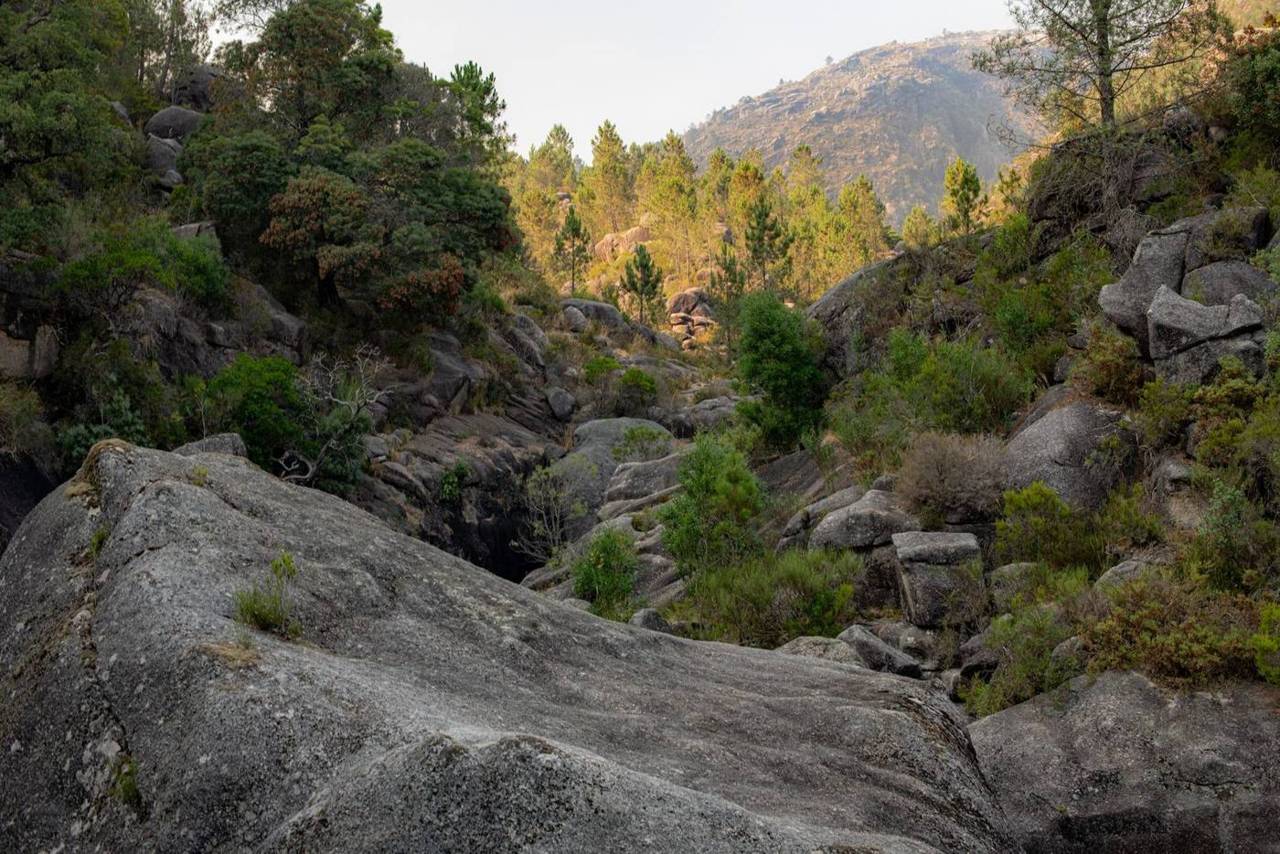
Today you return to Portugal and enter Peneda-Gerês National Park, Portugal's only national park, about an hour and a half from Ourense. The park protects granite mountains, oak forests, clear rivers and villages where life has changed little over the centuries.
In the morning go to Lindoso, a village on the border, with a small castle and dozens of espigueiros, granite granaries raised on pillars, used to store maize safe from mice and damp. Many have a cross on the roof. Then go to Soajo, another stone village with espigueiros on a large rock.
The park is home to garranos, small wild mountain horses, as well as long horned local cattle and, in the most remote woods, wolves. Garranos are often seen on pastures and along the roads: drive slowly.
In the afternoon walk to one of the park's waterfalls, such as the Arado falls in the Gerês area, where water tumbles between granite rocks into natural pools. Some trails and areas of the park have access rules or are closed at certain times to protect nature or because of fire risk: check before setting off.
In the evening stay in one of the park's villages or in Gerês, a small spa town.
Sleep in Peneda-Gerês park.
Practical tip: there is sometimes no phone signal in the park. Download maps before you go.
- Day 8
Ponte de Lima and the drive down to Porto
Today you leave the park and head down to Porto, with a stop along the way.
In the morning, if you have time, take a last walk in the park, or drive up to Pitões das Júnias, a mountain village in the eastern part, with the ruins of a Romanesque monastery in a valley and a waterfall nearby.
Then go to Ponte de Lima, about an hour and a half away. It is considered the oldest town in Portugal and has a long medieval stone bridge over the Lima river, partly of Roman origin, which pilgrims on the Way of Saint James still cross today. The town has a quiet centre with noble houses, squares and a long avenue of plane trees along the river. Every other Monday there is a large open air market, one of the oldest in the country: check the calendar.
For lunch try sarrabulho, a pork dish typical of the area, with vinho verde, the light, slightly sparkling wine of the Minho.
In the afternoon continue to Porto, about an hour. If you prefer a stop by the sea, go via Viana do Castelo, with the basilica of Santa Luzia on the hill and a view over the Atlantic.
In the evening, in Porto, have your last dinner. Try grilled sardines or octopus.
Sleep in Porto.
Practical tip: return the car the evening before or early in the morning, so you do not have to look for parking in the centre.
- Day 9
Return flight from Porto
On the last day, if your flight leaves in the afternoon, you still have a few hours in Porto.
You could visit the city's most famous bookshop, in a neo Gothic building with a red wooden staircase, but there are long queues and a ticket: if it does not interest you much, skip it. A good alternative is the Bolhão market, the large covered market recently restored, with stalls of fish, fruit, flowers, cured meats and cheese, perfect for buying food to take home.
Or take historic tram number 1, which follows the river from the centre to Foz, the district at the mouth of the Douro, where the river meets the ocean. Walk along the seafront to the lighthouse, among waves and rocks.
Before leaving buy a bottle of port or vinho verde, a box of tinned sardines in colourful packaging, or a few painted azulejos.
Porto airport is about half an hour from the centre by metro or taxi. Arrive early.
This trip shows a side of Portugal and Spain different from the southern beaches: granite cities, sanctuaries, monasteries, vineyards on rocks, mountains with wild horses and villages where time seems to stand still, all in a green and welcoming region.
Practical tip: liquids in hand luggage are limited at the airport. Pack wine in your suitcase, well protected.
Suits a group that likes driving, eating well and switching between towns and green countryside at an easy pace. The strong point is the continuity between Minho and Galicia, the same granite and the same rain, two cuisines. The limit is that Lisbon is left out and the north is damp even in spring: bring a waterproof. With extra days the group can add Lisbon.
Before you go
- Documents and visa
- EU citizens need a valid identity card or passport. Other nationalities should check the Schengen rules.
- Health and vaccines
- No vaccines required. EU citizens should bring their EHIC. Emergencies: 112.
- Money and payments
- Euro. Cards are accepted almost everywhere. Lisbon, Porto and several municipalities, including in the Algarve, charge a tourist tax per person per night.
- Power sockets
- Types C and F, 230 volts.
- Time zone
- Western European Time (UTC+0, summer UTC+1); the Azores are one hour behind the mainland.
- Safety
- A very safe country. In Lisbon watch for pickpockets on tram 28 and in the busiest areas; in summer, wildfire risk inland. Official advice: GOV.UK.
Information checked in November 2026 for Italian and EU citizens. Rules change: always check before you travel.
Variations
In 6 days: Porto, Guimarães, Braga and Peneda-Gerês, without Galicia.
In 12 days: add the Douro valley with its quintas and the Rías Baixas in Galicia.
Frequently asked questions
What documents do I need?
Portugal and Spain are part of the Schengen area: European Union citizens only need a valid identity card.
Can I drive into Spain with a car hired in Portugal?
Usually yes, but you must tell the agency and often pay a surcharge. Also ask how to pay the electronic tolls on Portuguese motorways.
When is the best time to go?
May to June and September to October. In summer there are more people and a risk of fires in the parks; in winter it rains a lot.
Indicative itinerary written by World Atlas. Before booking, check timetables, seasonal openings, documents and safety.
 16 daysChallenging
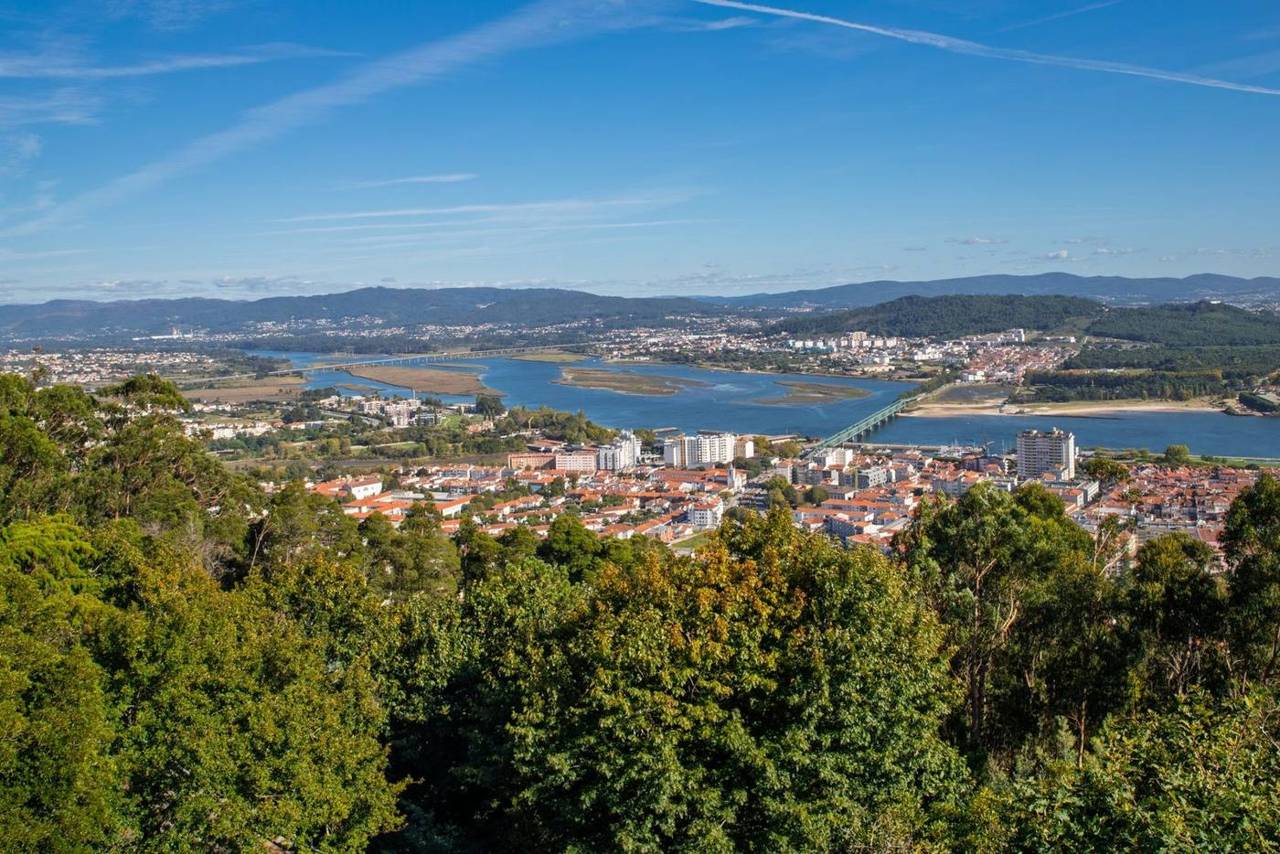
The Portuguese Coastal Way, Porto to Santiago
About 280 kilometres on foot in thirteen stages, along the Atlantic to the border and then inland through Galicia, ending in the Obradoiro square.
 15 daysEasy
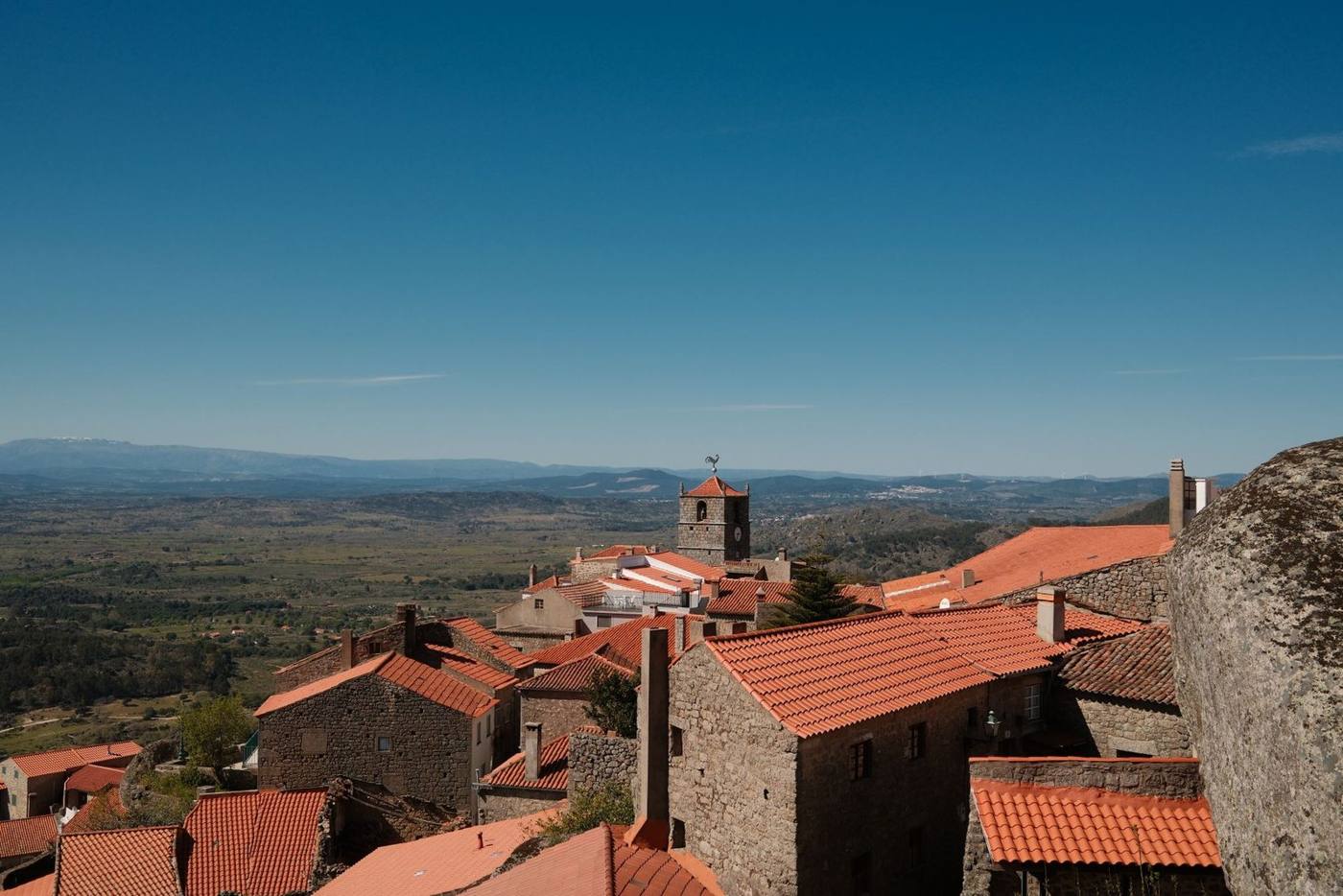
The Grand Tour of Portugal, Minho to the Algarve
Fifteen days to see the whole country: the central coast, Porto and the Douro, the granite villages of the interior, Évora and the Algarve, finishing in Lisbon.
 8 daysEasy
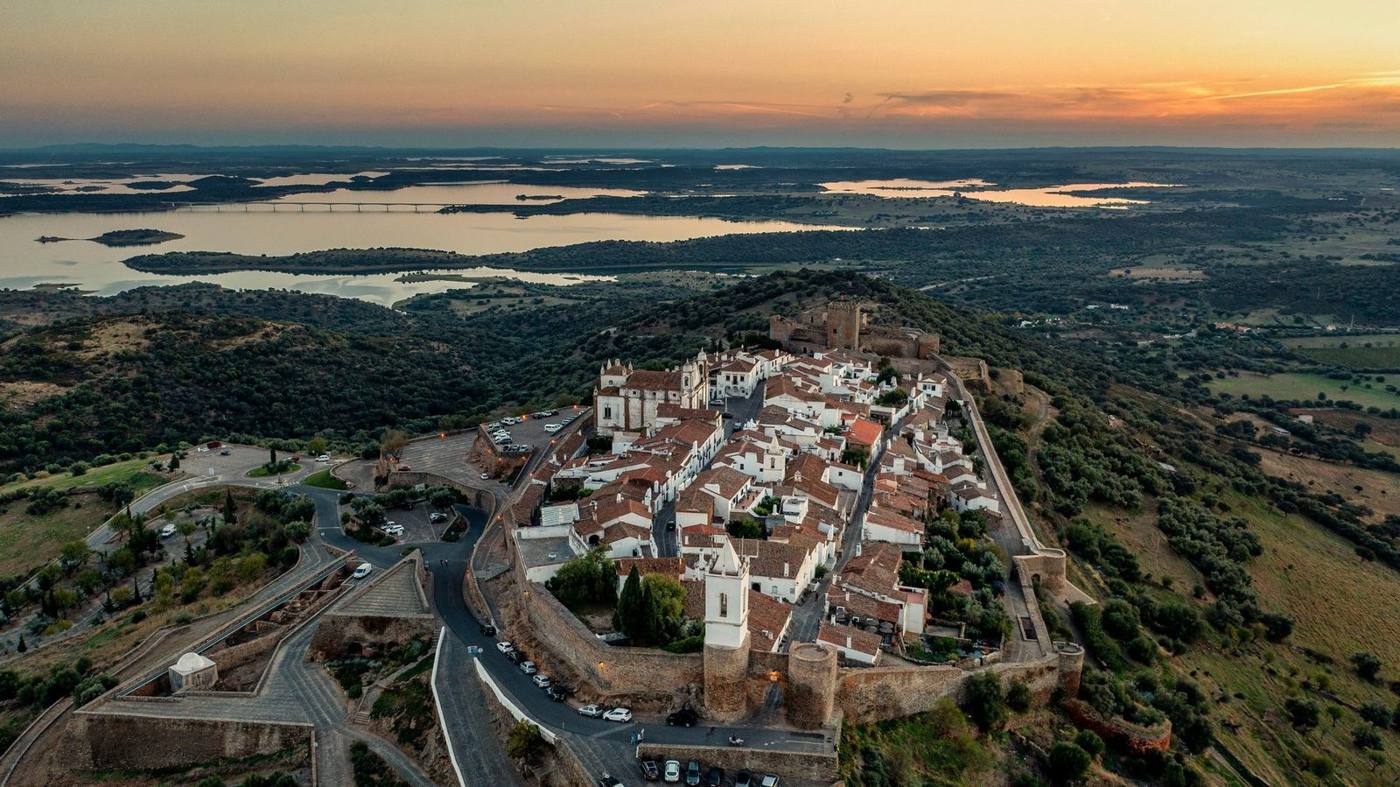
Alentejo: Évora, Monsaraz and Mértola
A slow week in Portugal's plains, among white towns, Neolithic stone circles, wineries and a reservoir under one of Europe's darkest night skies.