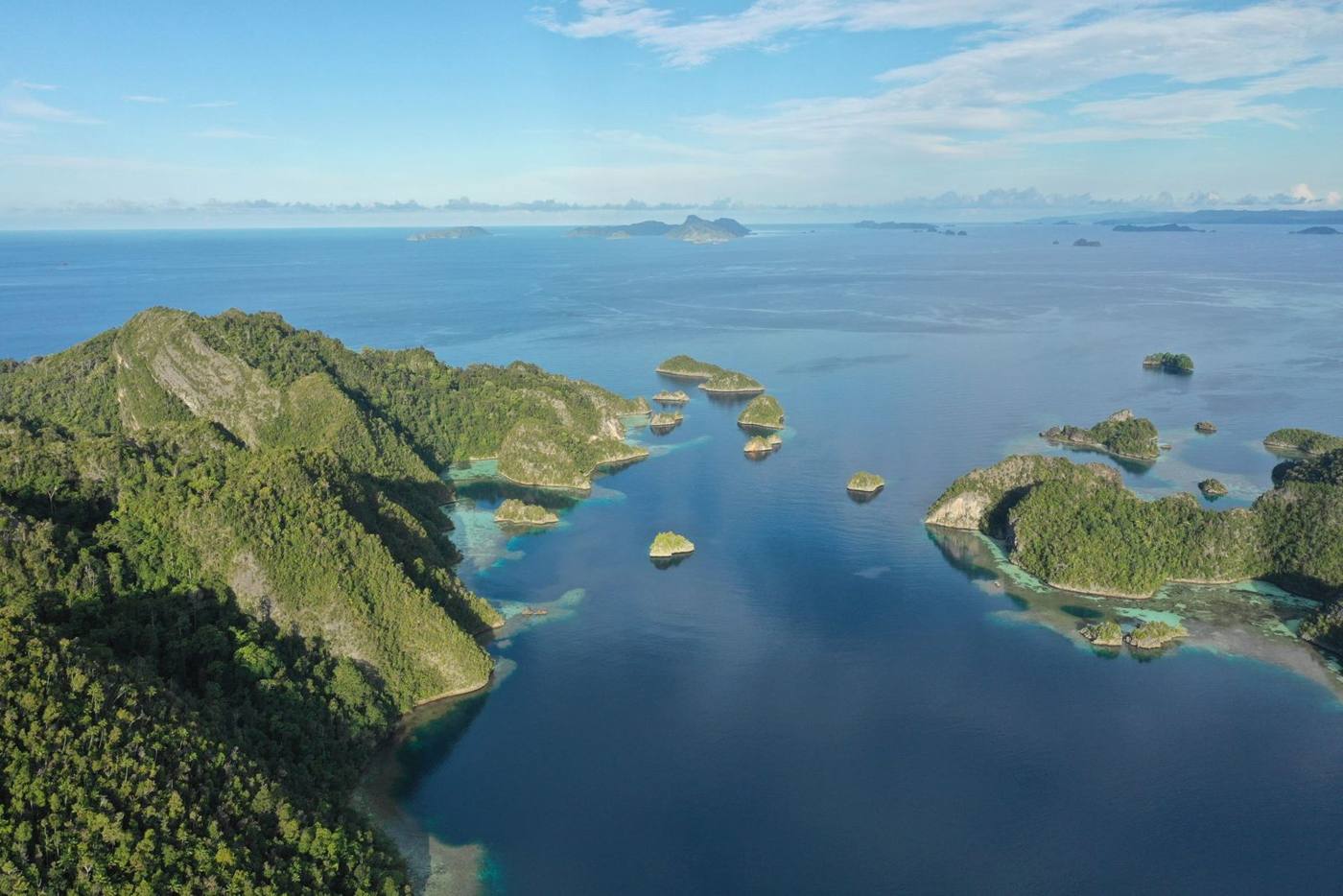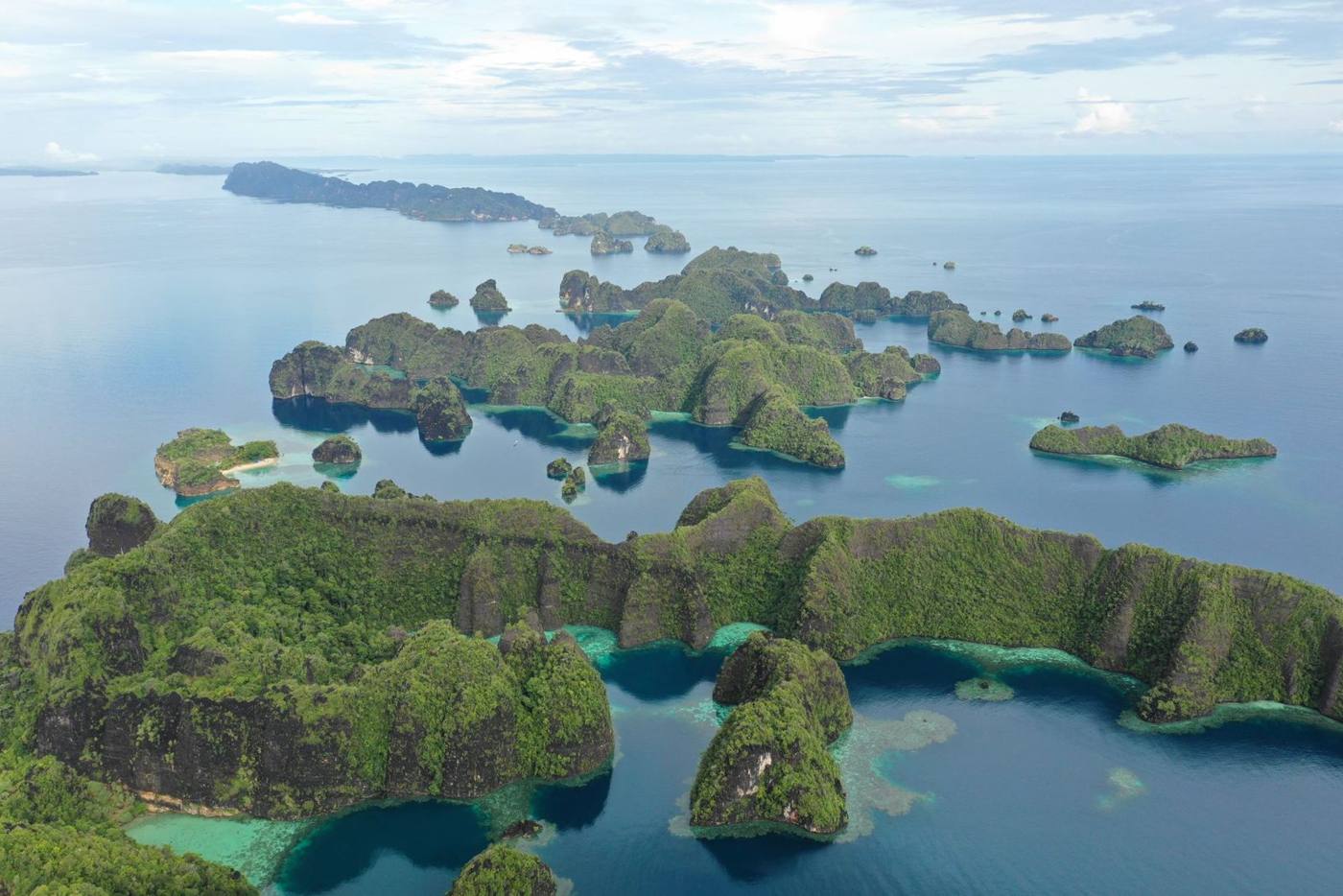
The Rock Islands
The UNESCO mushroom islands, Jellyfish Lake with its stingless jellyfish, the Milky Way and the Blue Corner dives with sharks.
- Koror
- Rock Islands
- Jellyfish Lake
- Milky Way
- Blue Corner
- German Channel
Day by day
- Day 1
Arrival in Koror
This trip takes you into the sea of Palau, one of the best places in the world for diving: the Rock Islands, mushroom-shaped limestone islands protected by UNESCO, the currents of Blue Corner with its sharks, the mantas of German Channel, kayaking in the Milky Way and, if open, Jellyfish Lake. You get around by boat from Koror, with licensed dive centres and guides.
Before you go: Italian citizens enter Palau with a passport, valid for at least six months on arrival and with two blank pages, without a visa for tourism of up to 30 days; you receive the permit on arrival by showing your return ticket. Before leaving, complete the entry form online. On arrival you sign the Palau Pledge, a promise to respect nature, stamped in your passport. The Pristine Paradise Environmental Fee is included in your international air ticket. Other nationalities should check their own rules. The Italian foreign ministry warns that some dive sites are dangerous for inexperienced divers, because of the strong currents.
You land at the airport, on the island of Babeldaob, and in half an hour reach Koror, the main town, where you find almost all the places to stay and the dive centres.
In the afternoon rest after the long journey and call in at the dive centre to check your certifications, try your equipment and plan the programme for the coming days.
In the evening walk along the waterfront and look at the first Rock Islands rising from the water in front of the town.
Sleep in Koror, for six nights.
Practical tip: bring only reef-safe mineral sunscreens, because in Palau creams considered toxic to corals are banned.
- Day 2
Blue Corner, sharks in the current
Today you make your first dives at Blue Corner, the most famous site in Palau.
The boat leaves Koror in the morning and crosses the lagoon among the Rock Islands, with the water changing from green to turquoise. Before leaving the lagoon you pay for or show the Koror State permit, needed for activities at sea in the Rock Islands area. The dive centre usually arranges it: check prices and times.
Blue Corner is a point of the reef that juts into the ocean, with vertical walls dropping into the blue. Here the current brings food and attracts huge numbers of fish. You hook onto the rock with a reef hook, a short line with a hook, and stay still to watch. In front of you pass grey reef sharks and whitetip sharks, barracuda, jacks, Napoleon wrasse and turtles.
The currents can be strong and change quickly: always follow the guide, use the hook only on bare rock and never on coral, and check your air and depth often.
The second dive is often at the Blue Holes, near Blue Corner. They are four openings on top of the reef that lead into a large cavern full of blue light, with an exit on the outer wall.
For lunch the boat stops on a beach in the Rock Islands, in the shade of the palms.
Practical tip: these dives are for divers with experience of currents: if you do not feel confident, ask the centre to start with calmer sites.
- Day 3
German Channel and the mantas
Today you go to German Channel, the channel where you meet the manta rays.
The channel was dug through the reef in the early twentieth century, during the German administration, to let ships through. Today it links the lagoon with the ocean and the tide flows through it strongly, bringing plankton and clean water.
On the sandy bottom there are some cleaning stations, spots where small fish remove parasites from large animals. The mantas come here, circle slowly above the rocks and stay almost still while the fish clean them. You kneel on the sand at a distance, without touching anything, and watch. With a little luck you also see sharks, eagle rays and large schools of fish.
Do not chase the mantas and do not swim above them, because the bubbles disturb them. The mantas are not always there: the guide chooses the right moment according to the tide.
In the afternoon make a second dive on a nearby coral wall, rich in gorgonian fans, soft corals and butterflyfish, or snorkel over the reef, where the water is shallow and warm.
On the way back the boat passes among the Rock Islands in the late afternoon light. Look at the base of the islands: the sea has eaten into the limestone, which is why they are shaped like mushrooms.
Practical tip: bring a light jacket or a thicker wetsuit for the boat, because after many hours in the water and with the wind you feel cold even in the tropics.
- Day 4
The last day of diving
Today you make the last dives of the trip, choosing with the centre the sites you prefer.
You can return to Blue Corner, which changes every time with the current and the light, or discover other sites on the outer reef, with vertical walls, caves and channels. Many centres also offer a Second World War wreck in the lagoon, a Japanese ship or aircraft covered in coral, at an easy depth.
On every dive remember the rules of Palau: do not touch the corals, do not collect shells and do not feed the fish. The Palau Pledge you signed on arrival asks exactly this.
In the afternoon, if you like, take a last snorkelling trip near one of the Rock Islands, where the corals come almost to the surface and you see clownfish, giant clams and parrotfish.
In the evening rinse your gear in fresh water and let it dry. Tomorrow and the day after you stay at the surface, kayaking and snorkelling, and so you also respect the time needed before flying.
At dinner try local dishes, such as grilled fish, taro and mangrove crab, or Japanese and Filipino food, very common in Koror.
Practical tip: ask the centre to stamp your logbook for every dive with the name of the site: in Palau every site is different and it will help you remember them.
- Day 5
Kayaking among the Rock Islands and the Milky Way
Today you explore the Rock Islands by kayak, the best way to see them up close.
The Rock Islands Southern Lagoon is a UNESCO World Heritage Site. Here hundreds of limestone islands, covered in forest, rise from turquoise water. Many are uninhabited and around them are hidden bays, rock arches, caves and small white beaches.
With a local guide and the Koror State permit, a boat takes you among the islands and then you continue by kayak. Paddle slowly along the rock walls: you will notice that the base of the islands is carved out by the sea, with roots and vines hanging down to the water. In the shallow stretches look below you, among corals and colourful fish.
Around midday you reach the Milky Way, an enclosed lagoon among the islands, with water of a milky blue. The colour comes from the white limestone mud that settles on the bottom. The guide brings some up to the surface and many visitors spread it on their skin, then swim to wash it off.
In the afternoon stop on a beach for lunch and snorkelling, then head back to Koror before sunset.
In the evening rest: kayaking, sun and sea are more tiring than they seem.
Practical tip: put your phone and documents in a dry bag tied to the kayak, and bring plenty of water, because on the lagoon the sun is strong even with clouds.
- Day 6
Jellyfish Lake, if open
Today, if it is open, you visit Jellyfish Lake.
The lake is on the island of Eil Malk, among the Rock Islands. It is an enclosed saltwater lake, linked to the sea only through cracks in the rock. Millions of golden jellyfish can live here which, isolated for thousands of years, have almost entirely lost the ability to sting. Every day they follow the sun across the lake.
The number of jellyfish changes a great deal with the climate. In years of drought it fell so much that the lake was closed, then reopened when the jellyfish returned. Before leaving ask Koror State or your centre whether the lake is open. To enter you need a specific permit, different from the Rock Islands one: ask only official sources and check prices and times.
The boat drops you at a small jetty and a steep path crosses the hill in a few minutes. Then you swim slowly in the lake with mask and snorkel. Scuba tanks are banned, because at depth the water has no oxygen and is rich in toxic gases. Move your fins gently and do not lift the jellyfish out of the water.
If the lake is closed, take another snorkelling trip among the Rock Islands, for example over a soft coral garden or the giant clams.
In the evening, in Koror, visit the Belau National Museum, if it is open, to learn about the country's history.
Practical tip: enter the lake without sunscreen or wash it off first, so as not to harm such a fragile environment.
- Day 7
Departure
Today you leave Palau. You finished diving three days ago, so you can fly without problems.
If your flight leaves late, use the morning for a last walk in Koror. You can stroll along the waterfront, climb a hill for a view over the lagoon and the Rock Islands, or cross the bridge to Babeldaob to see the forest and a traditional bai.
In town you also find small handmade objects, such as the carved wooden storyboards that tell the legends of Palau with figures and symbols. They make a good souvenir of the trip.
Then go to the airport, half an hour from Koror. Arrive early, because flights are few and often full.
In these seven days you have seen the sea of Palau: the mushroom-shaped Rock Islands, the current of Blue Corner with its sharks, the cavern of the Blue Holes, the mantas of German Channel, the milky lagoon of the Milky Way by kayak and, if open, Jellyfish Lake with its golden jellyfish.
When to go: the best months are from November to April, the driest season, with often calm seas and good visibility. From May to October there is more rain and there may be tropical storms, but you can dive all year round, in warm water.
Practical tip: if you want to return to Palau, remember that the Rock Islands permit lasts a limited time: always ask Koror State for the latest rules.
One of the world's best dive destinations, with big pelagics and currents. On arrival you pay the Pristine Paradise Environmental Fee and need a Rock Islands permit. Jellyfish Lake closes when the jellyfish population drops.
Before you go
- Documents and visa
- Passport valid for at least six months on arrival, with two consecutive blank pages. For tourism up to 30 days you do not need a visa before travelling: you receive the permit on arrival, showing a return or onward ticket. Before leaving you complete the Palau entry form online, within the time indicated by the official website. On arrival you sign the Palau Pledge, a promise to respect nature, stamped in your passport. The Pristine Paradise Environmental Fee is included in the price of your international air ticket.
- Health and vaccines
- Healthcare is reasonable, with the national hospital in Koror, but treatment is very expensive: you need insurance with high medical cover and air evacuation. There is dengue: use repellent and mosquito nets. Be careful with raw food, unbottled water and ice. No vaccinations are compulsory.
- Money and payments
- US dollar. The main cards are accepted in Koror, but cash machines and card payments are rare outside the towns: bring cash as well.
- Power sockets
- Type A and type B, 120 volts, as in the United States: you need an adapter and should check that your devices work at 120 volts.
- Time zone
- UTC+9 all year.
- Safety
- No areas are advised against and crime is low, mostly petty theft. On Peleliu and Angaur unexploded ordnance from the Second World War remains: stay on the paths and do not touch metal objects. Some dive sites have strong currents and are for experienced divers only. Reef-toxic sunscreens are banned. From April to November there is more rain and there may be tropical storms. Official advice: GOV.UK.
Information checked in November 2026 for Italian and EU citizens. Rules change: always check before you travel.
Variations
In 5 days: arrival, two days of diving at Blue Corner and German Channel and one day kayaking among the Rock Islands.
In 10 days: add three days on land, with Babeldaob, the monoliths of Badrulchau and the battlefield of Peleliu.
Frequently asked questions
Do I need a permit for the Rock Islands?
Yes. For activities at sea in the Rock Islands lagoon you need a Koror State permit, and a specific one for Jellyfish Lake. Licensed centres usually arrange them: check prices and times.
Is Jellyfish Lake always open?
No. The lake closes when the number of jellyfish falls too low. Before leaving ask Koror State or your centre whether it is open.
Is diving in Palau difficult?
Many famous sites, such as Blue Corner, have strong currents and suit experienced divers. There are calmer sites too: ask the centre which ones suit your level.
Indicative itinerary written by World Atlas. Before booking, check timetables, seasonal openings, documents and safety.