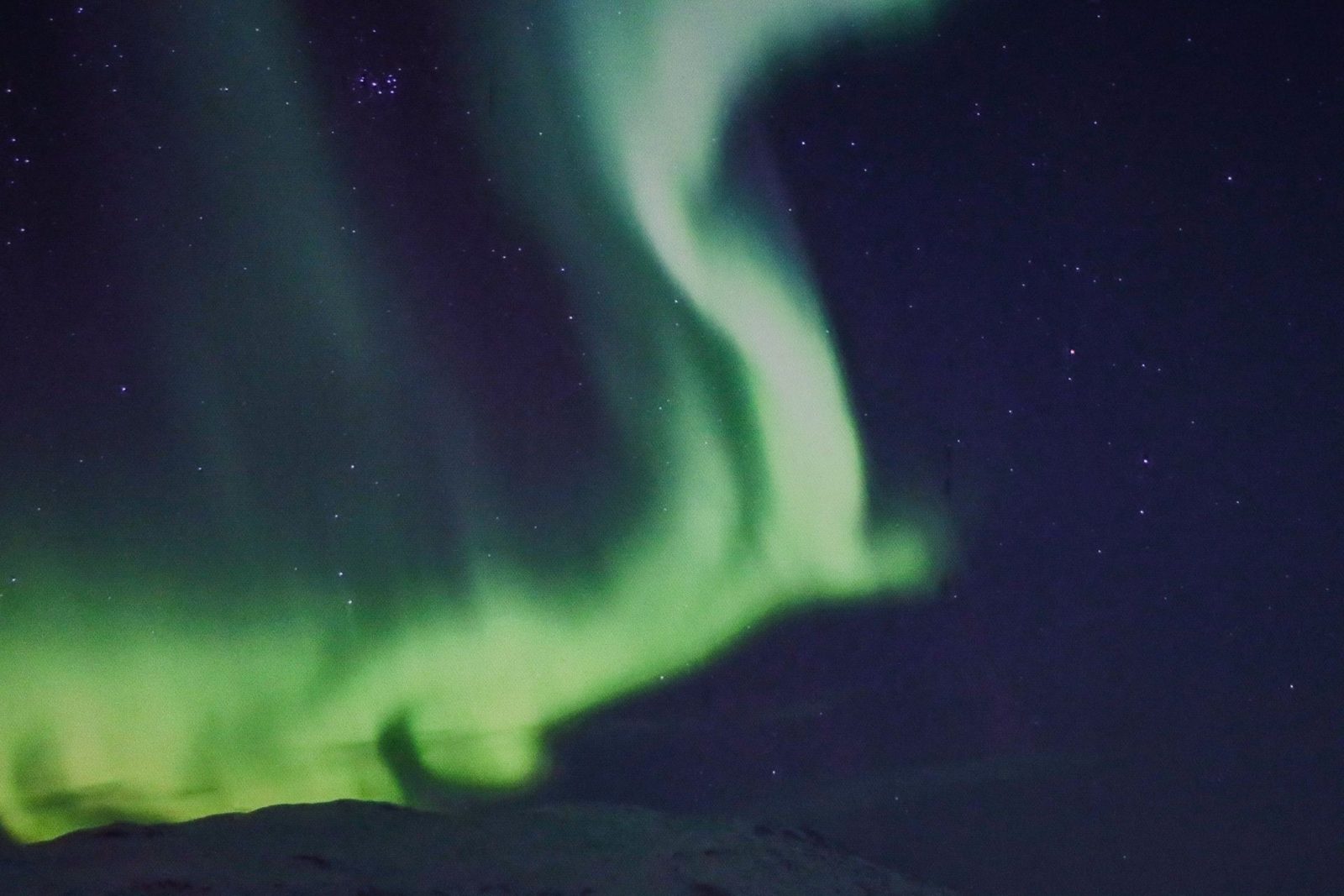
Tromsø and the northern lights
The Arctic capital in winter: aurora chasing by minibus, husky and reindeer sledding, and orcas in the fjords from November to January.
- Tromsø
- Kvaløya
- Lyngen
- Skjervøy
- Tromsø
Day by day
- Day 1
Arrival in Tromsø, the Arctic Cathedral and the cable car
Tromsø is the largest town in northern Norway, about 350 kilometres north of the Arctic Circle, on an island between fjords and snowy mountains. It lies in the middle of the belt where the northern lights are most frequent, which makes it one of the world's most famous places to see them in winter. But a winter trip here also offers dog sledding, whales in the fjords, Sami culture and the blue light of the polar night. In five days you have a complete trip, with good chances of seeing the aurora.
You fly from Oslo in about two hours, or on direct flights from some European cities in winter. The airport is close to the centre.
In the afternoon, cross the bridge over the strait and visit the Arctic Cathedral, a 1965 church with a white triangular shape that recalls an iceberg or Sami tents. Inside, a large stained-glass window fills the whole east wall.
Then take the Fjellheisen cable car, near the cathedral, which climbs in a few minutes to about 420 metres on Mount Storsteinen. From the terrace you see the whole town, the islands, the fjords and the snowy mountains. At sunset, or in the blue light of the winter afternoon, the view is spectacular. If the sky is clear, the aurora can sometimes already be seen from here in the evening.
In the evening, stroll through the centre, with its colourful wooden houses, and try Arctic fish: fresh cod, stockfish and salmon.
Practical tip: in winter the streets and pavements are icy. Wear shoes with good soles or slip-on ice grips.
- Day 2
Husky sledding and the aurora hunt
In the morning, go to one of the sled dog camps outside town, about half an hour to an hour's drive, in the snowy valleys of Kvaløya island or the mainland. After the instructions, board a sled pulled by a team of Alaskan huskies, tireless dogs that bark with joy at the start. You can drive the sled yourself, in pairs, or sit while a guide drives.
You glide through the silence of the snow, among birch woods, frozen lakes and mountains, in the pink and blue light of the polar day. After the ride you visit the kennels, cuddle the puppies and have a hot drink by the fire.
In the afternoon, rest in town: the evening will be long.
In the evening, set off on an aurora hunt with a guide. Based on the weather forecast and solar activity, the guide drives the group by car or minibus away from the town lights, sometimes for hundreds of kilometres, even to the Finnish border, where the sky is clearer. When the aurora appears, the sky fills with green veils, sometimes pink and purple, that move and dance. You stay outdoors, often around a fire, with hot drinks. Many guides help you photograph it.
You return in the middle of the night.
Practical tip: for the aurora you need a clear sky and some luck. With three or four nights the chances are good, but there is never a guarantee of seeing it.
- Day 3
Orcas and humpback whales in the fjords
From November to January, orcas and humpback whales come into the fjords north of Tromsø, following the shoals of herring that come to winter in the coastal waters. It is one of the most impressive natural sights in northern Europe.
Early in the morning, set off on a boat trip, usually towards the Skjervøy area and the Kvænangen fjord, north-east of town. Some boats leave directly from Tromsø, others from Skjervøy, reached by bus. The day is long, seven or eight hours.
The boat sails among islands and snowy mountains, in the blue and pink light of the polar day, looking for the animals. When the orcas come close, you see their black dorsal fins up to two metres high and their leaps; the humpbacks raise their tails before diving and blow spouts of water visible from afar. Sometimes the animals pass right beside the boat.
Boats follow rules so as not to disturb the animals: they keep their distance and switch off their engines when close.
In the late afternoon, return to Tromsø. If the sky is clear, in the evening you can go on a second aurora trip, or look for it yourself at a dark spot near town, such as Telegrafbukta beach or Lake Prestvannet on the island.
Practical tip: it is very cold on the boat. Bring warm layers, a hat, gloves and heavy shoes. Boats often provide thermal suits.
- Day 4
A Sami camp with reindeer and a second aurora night
In the morning, visit a Sami camp outside town. The Sami are the indigenous people of northern Scandinavia, traditionally reindeer herders, with their own language and culture. For some families reindeer herding is still their main work.
At the camp you meet the herders and their reindeer, feed them lichen and, at some camps, take a short ride on a reindeer-drawn sled, much slower and calmer than with dogs. Then you enter the lavvu, the traditional Sami tent, where around the fire you hear stories about nomadic life, the seasonal migrations of the reindeer between the coast and the plateau, and traditions. Hosts often sing the joik, the traditional Sami song that describes a person or a place.
You eat bidos, a reindeer meat stew with potatoes and carrots, cooked over the fire.
In the afternoon, return to Tromsø and visit Polaria, a centre devoted to the Arctic environment, with a small aquarium with bearded seals, or the Polar Museum, which tells the story of the Arctic expeditions that left from Tromsø, Arctic hunting and Roald Amundsen.
In the evening, go on a second aurora hunt, with another guide or in another direction. Some trips are by boat in the fjords, or at camps with heated tents.
Practical tip: do not photograph Sami herders or their homes without asking permission. Respect the reindeer and do not approach the herds on your own.
- Day 5
Kvaløya and departure
On your last morning, before your flight, take a trip around Kvaløya, the large mountainous island west of Tromsø, linked by a bridge. It is one of the finest landscapes in the area, with fjords, pointed mountains dropping into the sea, white sand beaches covered in snow and small fishing villages.
With a hire car or an organised trip, follow the coast road to Sommarøy, a fishing village on the islets at the western end, with red houses by the sea and white beaches. Along the road, stop at the viewpoints over the fjords, such as Ersfjordbotn, with mountains reflected in the dark water.
In December and early January, during the polar night, the sun does not rise above the horizon. But in the middle hours of the day the sky glows with a blue and pink light, lovely for photographs, lasting a few hours. From mid-January the sun returns, and the days lengthen quickly.
In the early afternoon, return to Tromsø and take the flight to Oslo.
Tromsø combines well with other parts of the north: the Lofoten Islands, the Lyngen Alps, Alta and Finnmark, or Svalbard, reachable by air.
Practical tip: driving here in winter requires experience with snow and ice. If you are not used to it, choose organised trips. For Norway, in the Schengen area, Italian citizens can enter with an identity card valid for travel or a passport.
A short, well-organised winter trip with plenty of activities. The aurora needs clear skies and luck: with three or four nights the chances are good, not guaranteed. In December the sun does not rise, but there are a few hours of blue light. Excursions are expensive, so book them ahead.
Before you go
- Documents and visa
- EU citizens need only a valid identity card or passport: Norway is not in the European Union but is in the Schengen area.
- Health and vaccines
- No vaccines required. The European Health Insurance Card is valid in Norway; insurance covering mountain rescue is useful. Emergencies: 112 police, 113 ambulance, 110 fire.
- Money and payments
- Norwegian krone. Cards are accepted almost everywhere, even for small sums and on public transport; cash is hardly needed. Prices are among the highest in Europe.
- Power sockets
- Types C and F, 230 volts.
- Time zone
- UTC+1 in winter, UTC+2 in summer.
- Safety
- One of the safest countries in the world. Risks are natural: bad weather in the mountains, rockfalls, roads closed in winter. Official advice: GOV.UK.
Information checked in November 2026 for Italian and EU citizens. Rules change: always check before you travel.
Variations
In 3 days: the cable car, the huskies and one night of aurora hunting.
In 8 days: after Tromsø, continue to the Lofoten Islands, with the fishing villages in winter.
Frequently asked questions
When can you see the aurora?
Usually from late September to late March, when the nights are dark. You need a clear sky and solar activity: with three or four nights the chances are good, but never guaranteed.
When are the whales there?
Orcas and humpbacks usually arrive from November to January, following the herring. The areas and periods vary from year to year.
Is it very cold?
On the coast, winter temperatures are often between zero and minus ten degrees, milder than expected thanks to the Gulf Stream. Inland and on boats it is colder: dress in layers.
Indicative itinerary written by World Atlas. Before booking, check timetables, seasonal openings, documents and safety.
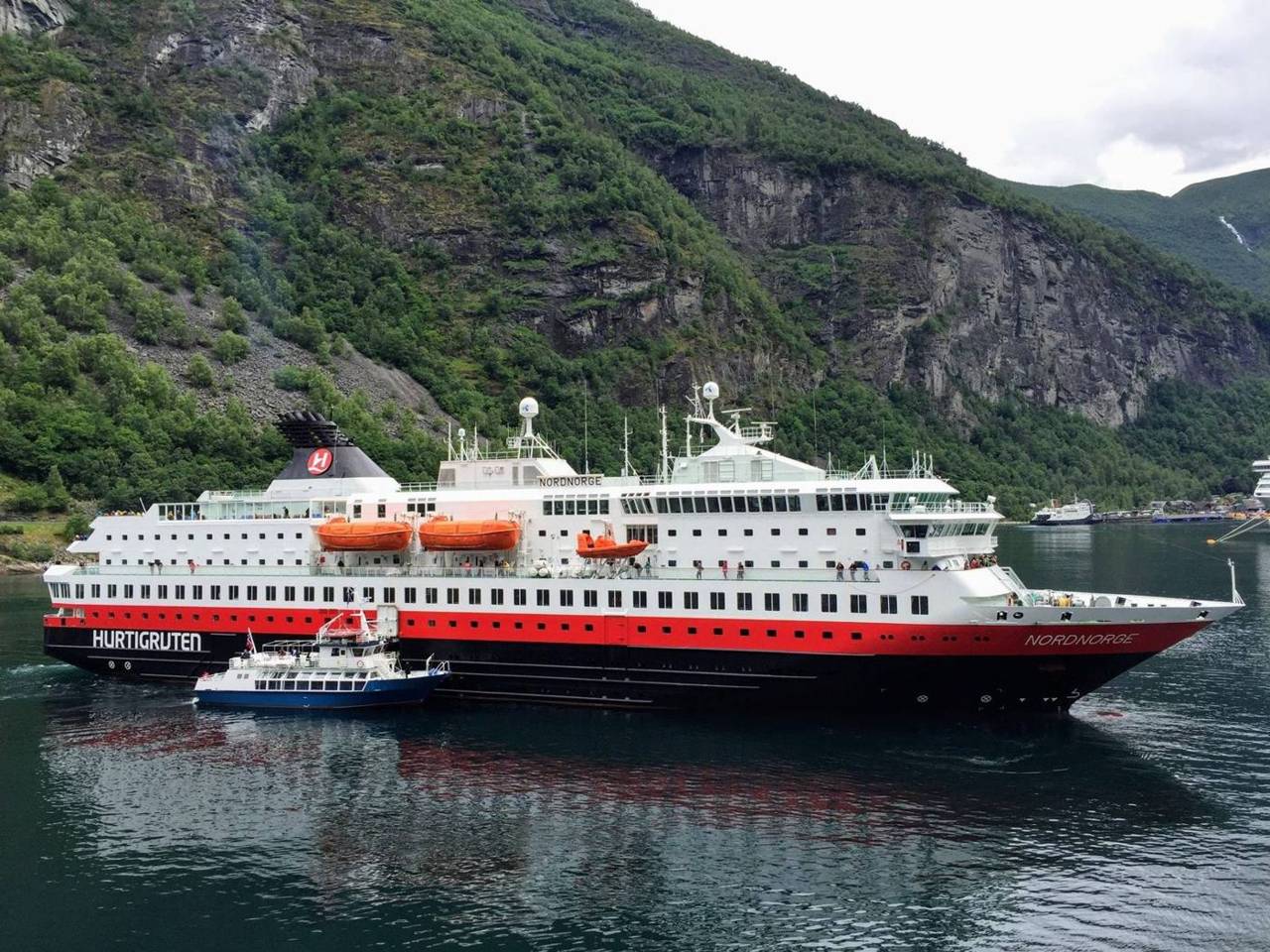 12 daysEasy
The Hurtigruten from Bergen to Kirkenes
Six days on the coastal ship along the whole coast, with 34 ports, the Trollfjord, Lofoten and North Cape, then three days in Kirkenes and Tromsø.
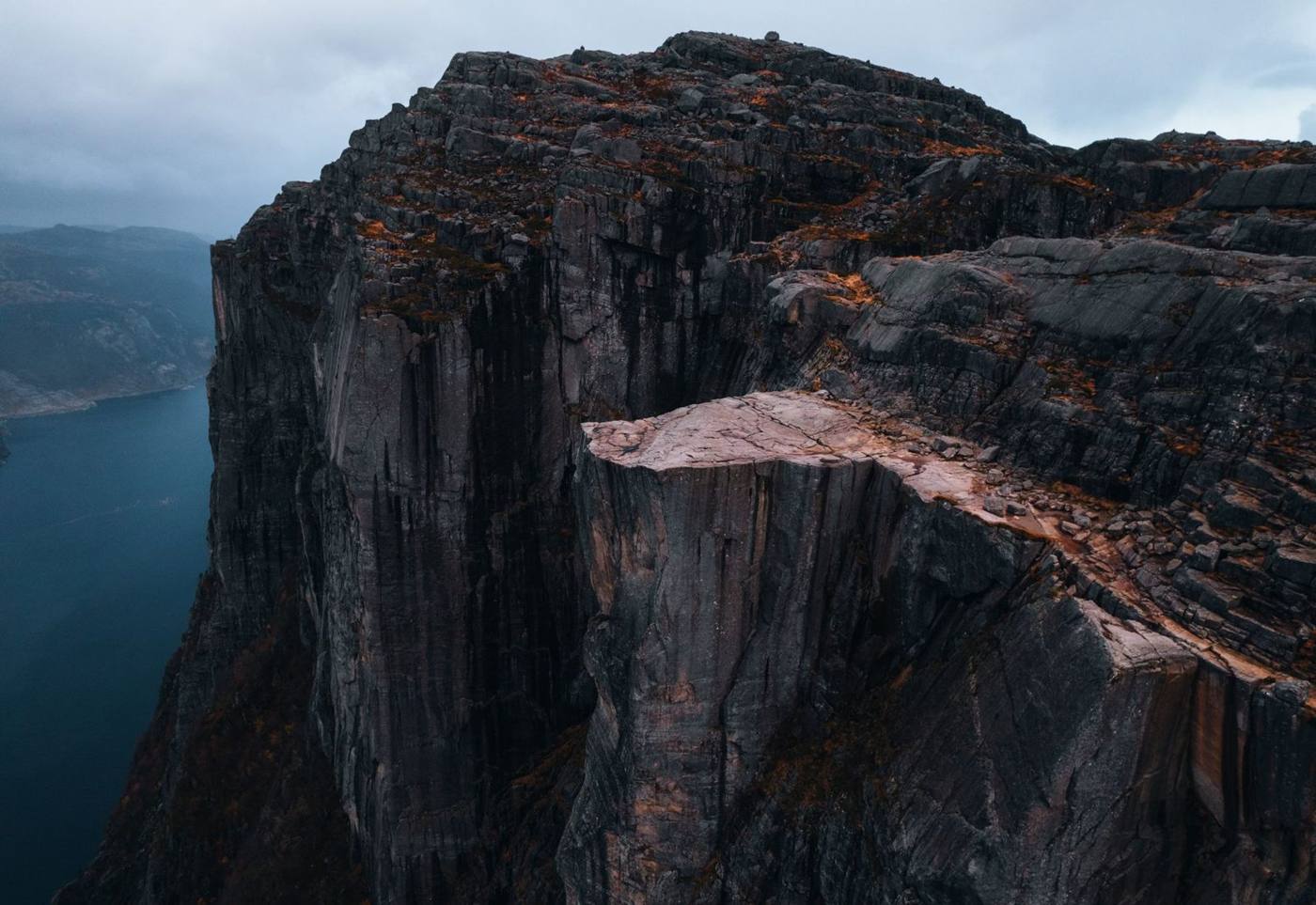 7 daysChallenging
Trolltunga, Preikestolen and Kjerag
Norway's three most famous hikes: the troll's tongue above Lake Ringedalsvatnet, the pulpit above the Lysefjord and the wedged boulder of Kjerag.
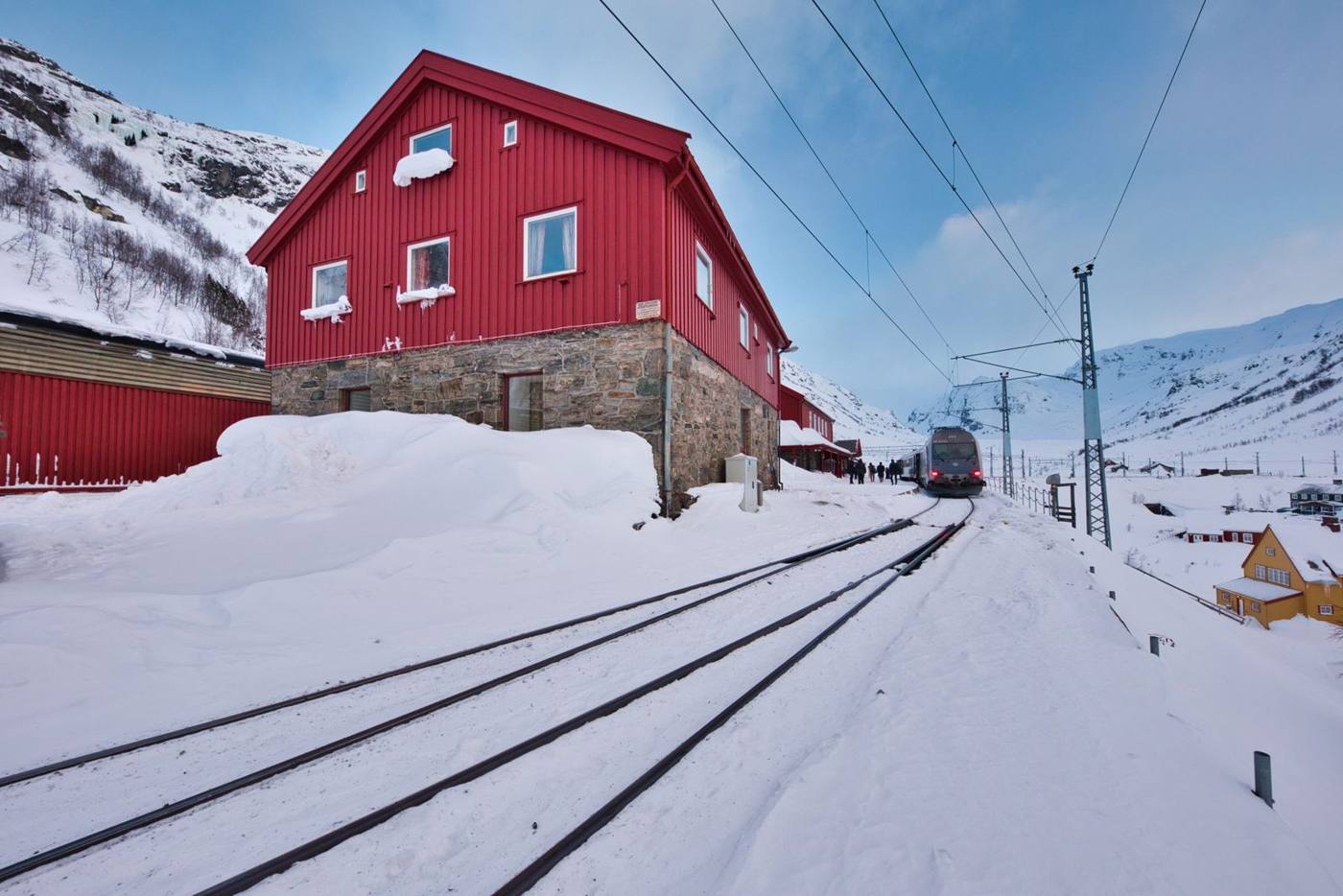 5 daysEasy
Oslo and Norway in a Nutshell
Two days in Oslo between the Opera, the Munch museum and the Viking ships, then the train, boat and bus route through the fjords to Bergen.