Napier and Hawke's Bay
The Art Deco city rebuilt after the 1931 earthquake, with pastel facades and guided walks, the Hawke's Bay wineries by bike between Havelock North and the Gimblett Gravels, Te Mata Peak at sunset and the gannet colony at Cape Kidnappers.
- Napier
- Havelock North
- Te Mata
- Cape Kidnappers
Day by day
- Day 1
Napier, the Art Deco city, on foot
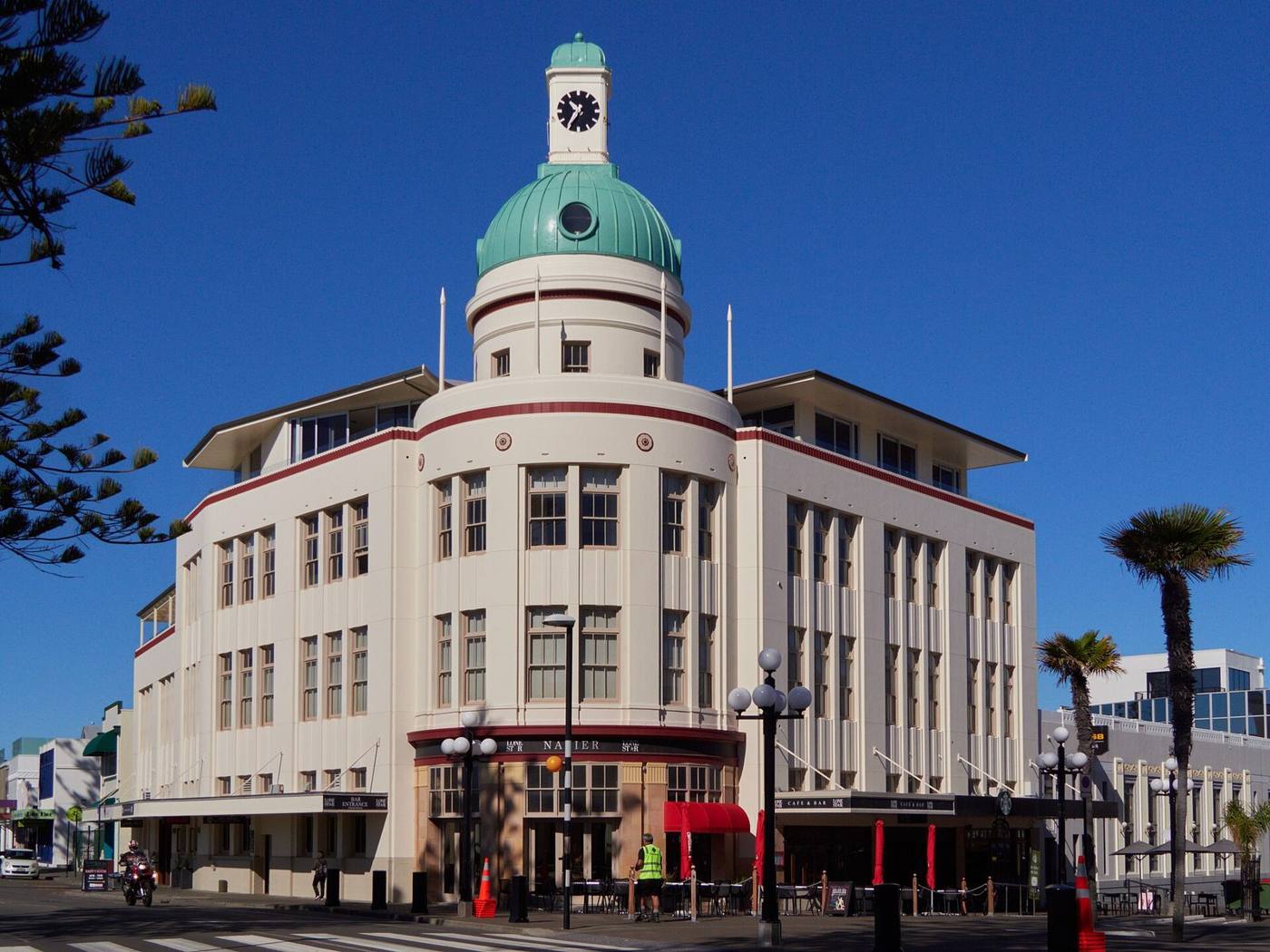
Napier lies on the east coast of the North Island, facing Hawke Bay. You get there by plane from Auckland or Wellington in about an hour, or by car: about two hours from Taupō and four from Wellington. The city's history explains everything you will see: on 3 February 1931 an earthquake of magnitude 7.8 destroyed Napier and nearby Hastings, killing more than 250 people. The ground rose by several metres and a lagoon became dry land. The city was rebuilt within a few years, all at once, in the style of the time: Art Deco, with geometric facades, elegant lines, sunburst motifs, pastel colours and even decorations inspired by Māori art.
In the morning start at the Art Deco visitor centre, where guided walking tours begin, or follow one of the route maps on your own. Look at the buildings on Emerson Street and Tennyson Street, the old theatres, banks and shops, with their original lettering and stained glass. Many interiors are still those of the 1930s.
In the afternoon walk along Marine Parade, the seafront with gardens, fountains and a dark gravel beach where the sea is often rough and swimming is not advised. Visit the MTG Hawke's Bay museum, which tells the story of the earthquake and of the region's Māori people. Then climb Bluff Hill for the view over the port and the bay.
In the evening try local fish and the region's wines. Practical tip: in February, on the weekend of the Art Deco festival, the city fills with vintage cars and people in 1930s costume; book well in advance.
- Day 2
Hawke's Bay wineries by bike and Te Mata Peak at sunset
Hawke's Bay is New Zealand's oldest wine region and one of its sunniest: it grows mainly reds such as merlot, cabernet and syrah, along with chardonnay. The area is flat and crossed by more than two hundred kilometres of cycle trails, many on stopbanks along the rivers and through the vineyards: the best way to explore it is by bike.
In the morning hire a bike, regular or electric, in Napier or Hastings; many rental companies will also drop you at the start and collect you at the end. Choose one area, for example the vineyards around Hastings and Havelock North or the Esk Valley, and stop at two or three wineries for a tasting. Between wineries you ride past orchards of apples, pears and kiwifruit: the region is also the country's fruit bowl, and in summer and autumn there are fruit stalls along the road.
For lunch stop at a winery with a kitchen or have a picnic with local produce. In the afternoon ride back at an easy pace.
Towards sunset drive up Te Mata Peak, south of Havelock North, at 399 metres. According to Māori legend the mountain is the body of a sleeping giant. From the top you see the whole plain, the hills, the sea and, on clear days, the Ruapehu volcano on the horizon. There are also short trails through groves of redwoods.
Practical tip: even if each tasting is small, they add up; on a bike do not drink more than you can handle, and for the drive up Te Mata Peak at sunset let someone who has not been drinking take the wheel.
- Day 3
Cape Kidnappers and the gannet colony, then departure
The last day is for Cape Kidnappers, the point at the southern end of the bay, home to the largest mainland colony of Australasian gannets in the world: thousands of large white seabirds with cream-coloured heads and black-rimmed eyes, nesting on the rocks at the top of the cliffs. The cape's name recalls an episode in 1769, when James Cook's ship arrived here and a boy from the crew was taken by a group of Māori who had come to trade.
The gannets are usually present from September to late April or May; the best time to see chicks is between November and February. In the past you could walk along the beach at low tide from Clifton: about five hours there and back. After the landslides caused by Cyclone Gabrielle in 2023, however, the beach walk was closed for a long time because of the risk of rockfalls. Before you go, check on the Department of Conservation website whether it is open. Otherwise you can join guided 4x4 tours across private farmland, which reach the colony from above.
You watch the colony up close, with no fences: the birds are not afraid, but they must not be touched or disturbed.
After lunch return to Napier and set off for the airport or your next stop: Taupō and Tongariro to the west, or Wellington to the south. Practical tip: to enter New Zealand you need an NZeTA and the 100 New Zealand dollar international visitor levy, both paid online before you travel.
The gannet colony can be visited from September to April; on foot only at low tide, otherwise on a tour. In February Napier hosts an Art Deco festival with period costume. EU citizens do not need a visa, but before travelling they must request the NZeTA electronic travel authority and pay the NZ$100 International Visitor Levy (IVL), in the same application.
Before you go
- Documents and visa
- Valid passport and an NZeTA, requested online before leaving, with the IVL levy of 100 New Zealand dollars. The NZeTA costs 17 dollars through the official app and 23 through the website.
- Health and vaccines
- No vaccines required. Biosecurity checks on arrival are very strict: declare food, plants and hiking boots. Emergencies: 111.
- Money and payments
- New Zealand dollar. Cards are accepted almost everywhere, even in small towns.
- Power sockets
- Type I, 230 volts: you need an adapter for the angled flat-pin Australian-style plugs.
- Time zone
- UTC+12, UTC+13 with daylight saving time from late September to early April.
- Safety
- A very safe country. The main risks are natural: changeable mountain weather, strong sea currents, earthquakes and active volcanoes. Driving is on the left. Official advice: GOV.UK.
Information checked in November 2026 for Italian and EU citizens. Rules change: always check before you travel.
Variations
In 2 days: Art Deco Napier and Te Mata Peak on day one, wineries or Cape Kidnappers on day two.
In 5 days: add Taupō, its lake and Huka Falls, and the Tongariro crossing if the weather allows.
Frequently asked questions
When is the best time to go?
From November to April, with warm dry weather, gannets at Cape Kidnappers and the grape harvest in March and April. The Art Deco festival is in February.
Can you swim in Napier?
On the Marine Parade beach the currents are strong and swimming is not advised. For a swim go to beaches further north, such as Westshore, or to the pools on the seafront.
Do I need a car?
It is very useful: public transport between Napier, Hastings, the wineries and Te Mata Peak is limited. For the wineries you can use a bike.
Indicative itinerary written by World Atlas. Before booking, check timetables, seasonal openings, documents and safety.
 12 daysEasy
The North Island
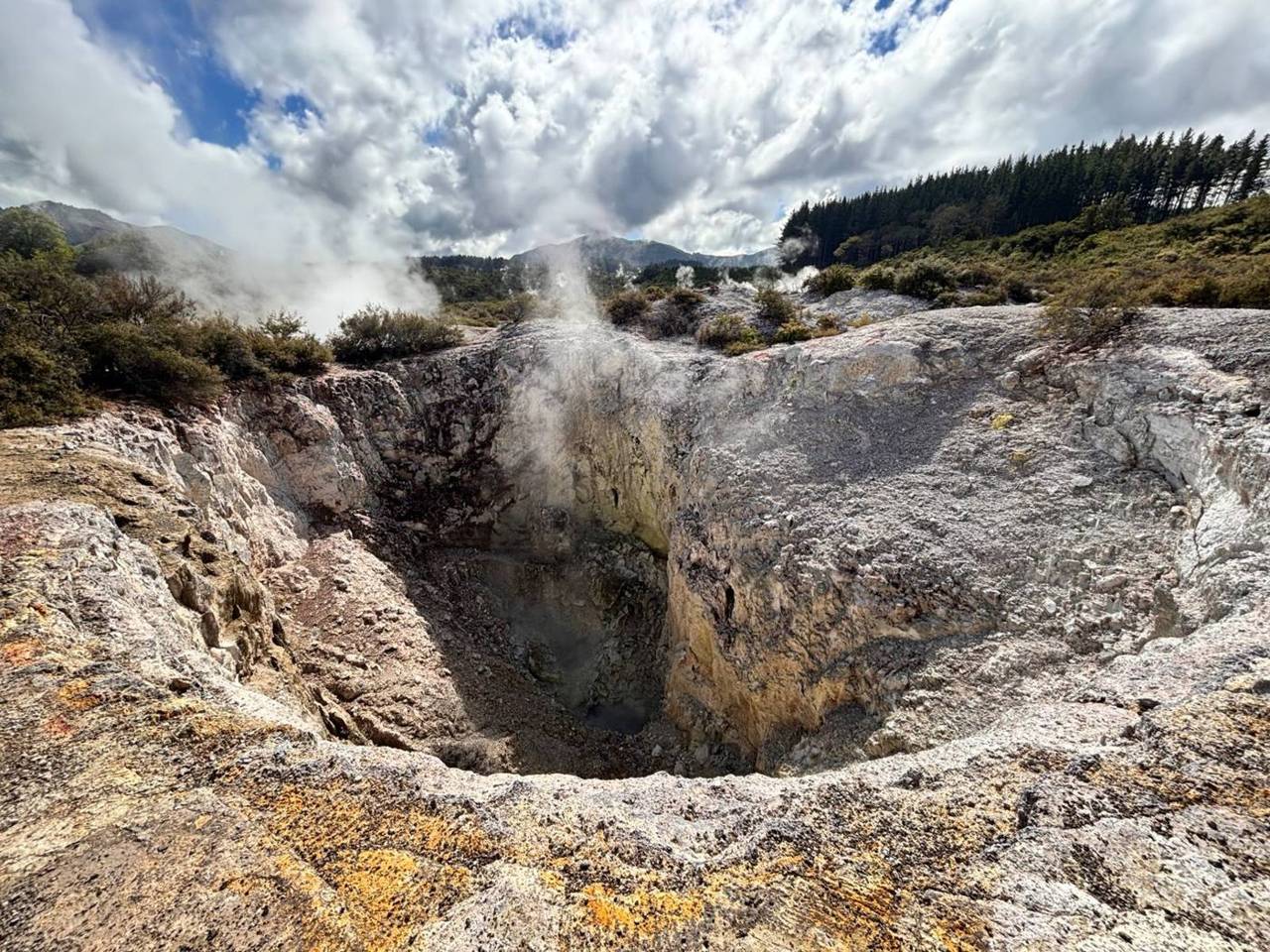
From Auckland to the Coromandel Peninsula, the hot springs and Māori culture of Rotorua, the Tongariro volcanoes and the capital Wellington.
 14 daysEasy
The South Island
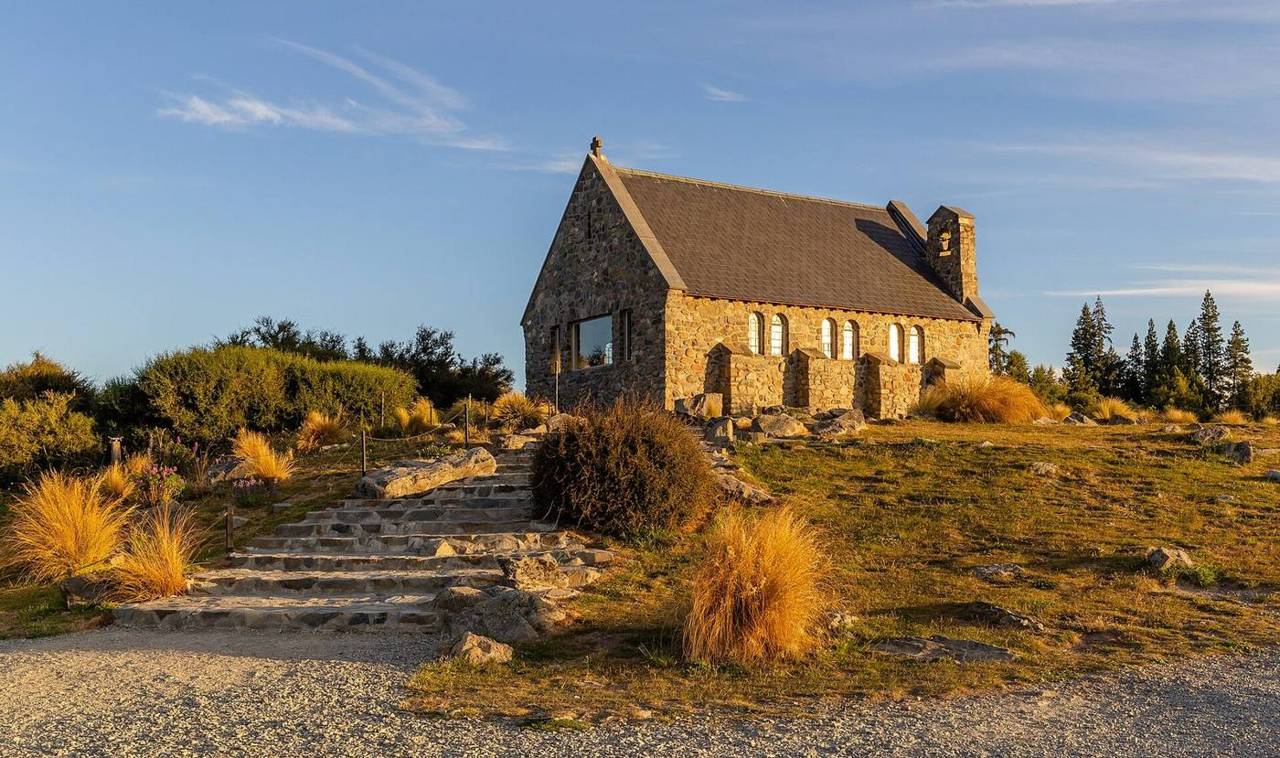
From Christchurch to Lake Tekapo and Mount Cook, Wanaka and Queenstown, Milford Sound and the glaciers of the West Coast.
 5 daysModerate
Tongariro and the volcanoes
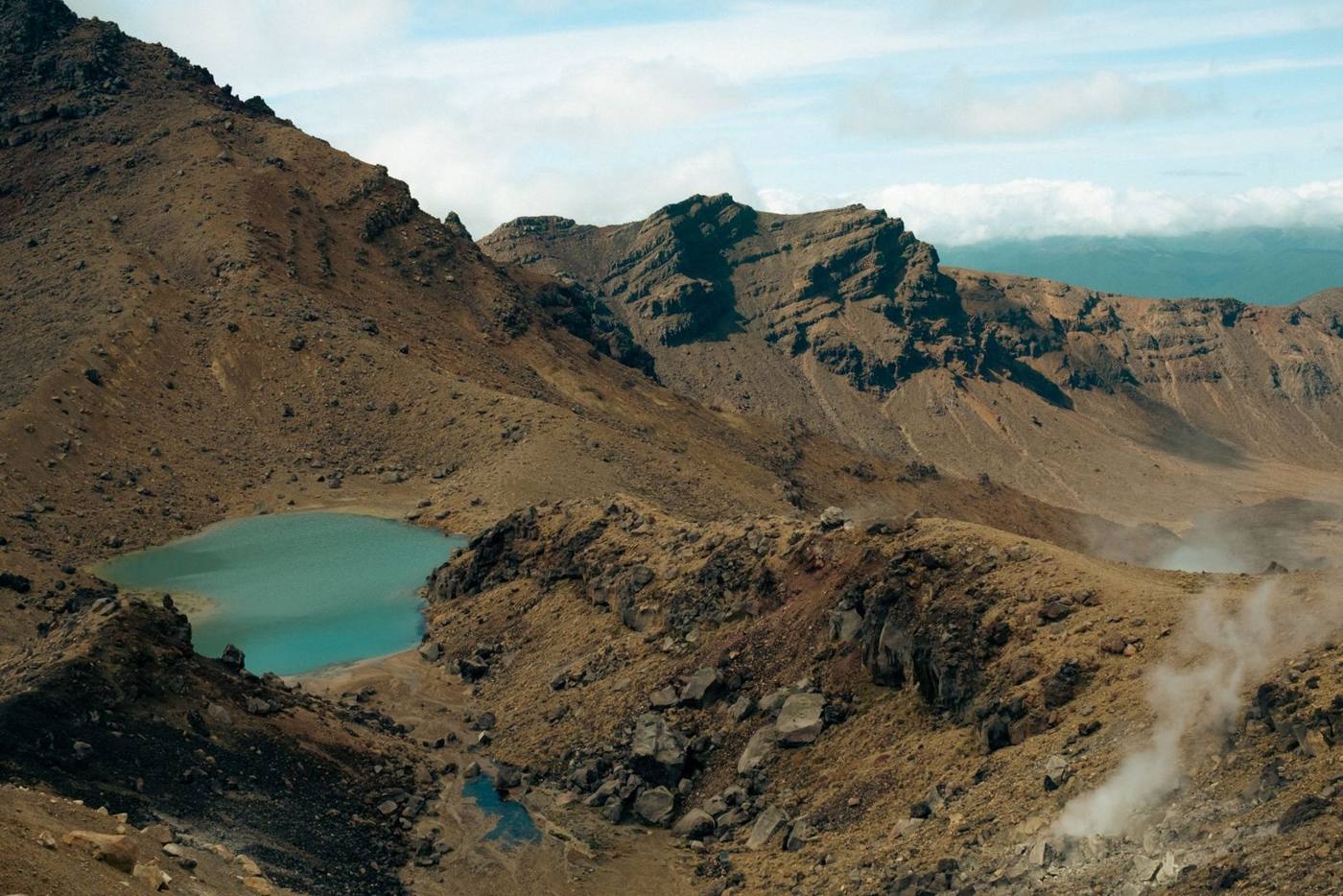
The Tongariro Alpine Crossing among craters and emerald lakes, a guided climb of Ngauruhoe and Huka Falls on Lake Taupō.