Classic Holland
Amsterdam, Haarlem, Leiden, The Hague with the Girl with a Pearl Earring, Delft and Rotterdam: art cities linked by trains every few minutes.
- Amsterdam
- Haarlem
- Leiden
- Den Haag
- Delft
- Rotterdam
Day by day
- Day 1
Amsterdam: the canals, the Begijnhof and the Anne Frank House
This eight-day trip takes you through the art cities of historic Holland, all linked by trains every few minutes: Amsterdam, Haarlem, Leiden, The Hague, Delft and Rotterdam. You do not need a car.
Before you go: the Netherlands is part of the European Union and the Schengen area and uses the euro. Italian citizens only need an electronic identity card valid for travel abroad or a passport; the paper identity card has not been valid for travel abroad since 3 August 2026. Other nationalities should check their own rules. Everyone aged 14 and over must be able to show ID to the police. Watch out for pickpockets at Central Station and on trains. In Amsterdam the tourist tax is a percentage of the price of your night, 12.5% in 2026 and 16% from 2027, and private flats can be rented to tourists for no more than 30 nights a year and to four people.
In the morning walk from the station to Dam Square, with the Royal Palace, built as the town hall in the seventeenth century. Then go into the Begijnhof, a silent courtyard hidden behind a door, with the houses of the Beguines, women who lived in a religious community, and one of the two wooden houses left in the city.
In the afternoon follow the Herengracht, Keizersgracht and Prinsengracht canals, a UNESCO World Heritage Site, to the Anne Frank House, where the girl hid from 1942 to 1944. Entry is only with a timed online ticket; from 2027 a full ticket costs 17 euros, booking fee included.
Sleep in Amsterdam, for three nights.
Practical tip: Anne Frank House tickets are released every Tuesday at 10am for six weeks later; book them as soon as your dates are fixed.
- Day 2
Amsterdam: Rijksmuseum and Van Gogh Museum
Today is devoted to great Dutch painting and to Van Gogh.
In the morning go into the Rijksmuseum, on the Museumplein. The heart of the museum is the Gallery of Honour, which leads to Rembrandt's Night Watch, the great painting of the city militia. Around it you find the Milkmaid and other works by Vermeer, portraits by Frans Hals, Golden Age landscapes, model ships and doll's houses. Booking an entry time is compulsory for everyone; a full ticket costs 25 euros, and 26.50 euros from 2027, while under 18s do not pay. It opens every day from 9am to 5pm.
In the afternoon visit the Van Gogh Museum, on the other side of the square: follow the painter's life from the dark pictures of Holland to the colours of Provence, with the Sunflowers and The Bedroom. Tickets have a set time and are bought online: check prices and times.
Towards evening rest in the Vondelpark, a short walk from the museums, among ponds, bridges and lawns.
In the evening try a traditional Dutch dish, stamppot, mashed potatoes and vegetables with smoked sausage.
Sleep in Amsterdam.
Practical tip: do not do the two museums back to back without a break; have something to eat on the Museumplein and come back fresh for the second.
- Day 3
Amsterdam: the Jewish quarter, Rembrandt and the canals by boat
Today you see the Jewish history of the city, Rembrandt's house and Amsterdam from the water.
In the morning visit the Jewish quarter, east of the centre. The Portuguese Synagogue, from 1675, is still lit by candles and has a floor covered in sand. The Jewish Museum tells the life of the community before and after the Holocaust, and the National Holocaust Names Memorial remembers the Dutch victims by name. Check prices and times.
Then go into the Rembrandt House, where the painter lived and worked for about twenty years: you see his studio, the kitchen, his collection of rare objects and his etchings. Check prices and times. On Waterlooplein square, a few steps away, there is a flea market with clothes, records and second-hand objects, open Monday to Saturday.
In the afternoon take a boat trip on the canals, about an hour long, and look at the stepped gables, the bridges and the houseboats. Then walk through the Jordaan, with its narrow streets and courtyards.
At sunset take one of the municipal ferries behind the station, which need no ticket, to see the river IJ and the north bank.
Sleep in Amsterdam.
Practical tip: on foot, remember that the red cycle paths are not pavements: always look both ways before crossing.
- Day 4
Haarlem: the Frans Hals Museum and the Grote Markt
Today you leave Amsterdam for Haarlem, a quarter of an hour away by train.
In the morning walk into the Grote Markt, one of the most beautiful squares in the Netherlands, with the town hall, the old meat hall with its stepped gable and the Church of Saint Bavo. Inside the church is a great eighteenth century organ, played by the young Mozart in 1766. Check prices and times.
Then visit the Frans Hals Museum, in an old almshouse for the elderly with a courtyard. Here you see the painter's great group portraits of regents and militia officers, painted with quick, lively brushstrokes. Check prices and times.
In the afternoon visit the Teylers Museum, the oldest in the Netherlands, with its eighteenth century oval room, fossils, scientific machines and drawings by great masters. Check prices and times.
Then stroll among the hofjes, hidden courtyards with little houses and gardens, and along the river Spaarne to the De Adriaan windmill.
In the evening go back to the Grote Markt, when the church is lit up and the terraces are full, and have dinner with a seasonal dish.
Sleep in Haarlem.
Practical tip: Haarlem is cheaper and quieter than Amsterdam; to save money, you can sleep here on the first days too and go to Amsterdam by train.
- Day 5
Leiden, Rembrandt's university town
Today you are in Leiden, about a quarter of an hour by train from Haarlem.
Leiden is the birthplace of Rembrandt, born here in 1606, and home to the oldest university in the Netherlands, founded in 1575. In the morning walk along the canals of the centre, with their bridges, professors' houses and poems painted on the walls in many languages. Climb the Burcht, a small round fortress on an artificial mound, to see the city's roofs.
Then visit the university's botanical garden, one of the oldest in Europe. Here the botanist Carolus Clusius grew the first tulips in the Netherlands at the end of the sixteenth century, and a reconstructed garden recalls his work. Check prices and times.
In the afternoon go into the National Museum of Antiquities, with Egyptian mummies, Greek and Roman statues and a real Egyptian temple in the entrance hall, a gift from Egypt. Check prices and times.
Towards evening look for Saint Peter's Church, where the Pilgrim Fathers are remembered; they lived in Leiden for about eleven years before leaving for America.
In the evening have dinner along the canals of the centre, lively with students, and walk over the lit bridges to the De Valk windmill.
Sleep in Leiden.
Practical tip: trains from Leiden to The Hague leave every few minutes and take about a quarter of an hour; there is no need to book.
- Day 6
The Hague: the Mauritshuis and Scheveningen beach
Today you discover The Hague, seat of the government and the king, and its sea.
In the morning go into the Mauritshuis, a small seventeenth century palace on the pond next to the government buildings. It holds some absolute masterpieces: Vermeer's Girl with a Pearl Earring and View of Delft, Rembrandt's Anatomy Lesson of Dr Nicolaes Tulp and Carel Fabritius's Goldfinch. The rooms are small and you see the paintings up close. Check prices and times and book a time slot if you can.
Then walk around the Binnenhof, the medieval parliament complex, under restoration for several years, and along the Lange Voorhout, the tree-lined avenue with elegant mansions.
In the early afternoon pass by the Peace Palace, seat of the International Court of Justice, which you admire from the gate and the visitor centre.
Then take the tram to Scheveningen, the city's beach, about a quarter of an hour away. Walk along the promenade and the pier, and look at the North Sea from the dunes.
In the evening eat herring or fried fish at Scheveningen harbour.
Sleep in The Hague or in Delft.
Practical tip: at Scheveningen the wind is often strong and the water cold even in summer; swim only in supervised areas.
- Day 7
Delft and its blue pottery, then Rotterdam
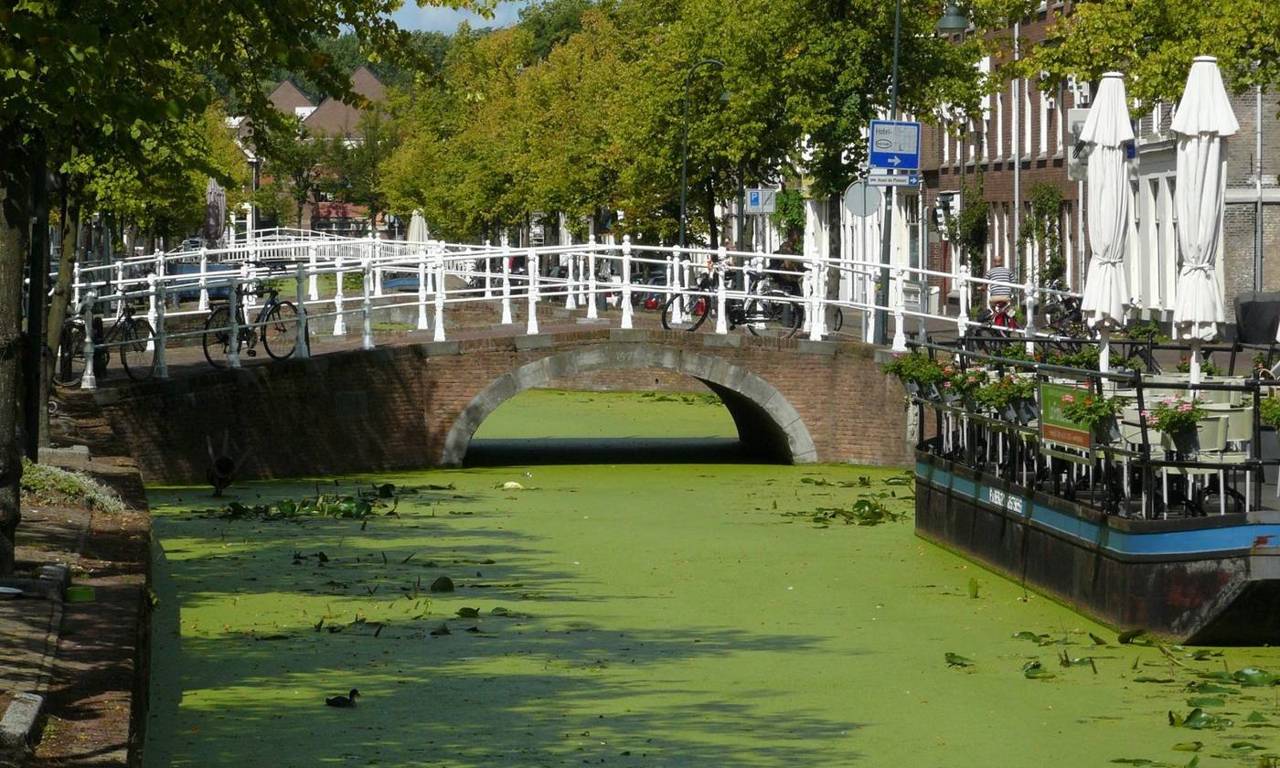
Today you visit Delft, the town of Vermeer and blue pottery, and in the evening reach Rotterdam. Delft is small, with quiet canals and tree-lined bridges, and you can see all of it on foot in a few hours.
In the morning walk into the market square, with the town hall on one side and the New Church on the other. In the church is the monumental tomb of William of Orange, the father of the nation, and many members of the royal family are buried here. You can climb the tower to see the roofs and, on clear days, Rotterdam and The Hague. Check prices and times.
Then walk along the canals to the Old Church, with its leaning tower, where Vermeer, born in Delft in 1632, is buried. Opposite stands the Prinsenhof, the former convent where William of Orange was killed in 1584: the bullet holes can still be seen in the wall. Check prices and times.
In the afternoon visit one of the historic Delft blue pottery works, where painters decorate plates, vases and tiles by hand. Check prices and times.
In the late afternoon take the train to Rotterdam, about a quarter of an hour, and walk along the river Maas.
Sleep in Rotterdam.
Practical tip: buy Delft pottery from the official workshops and check the mark under the piece; many blue souvenirs are mass-printed elsewhere.
- Day 8
Rotterdam and departure
On the last day you see the most modern city in the Netherlands.
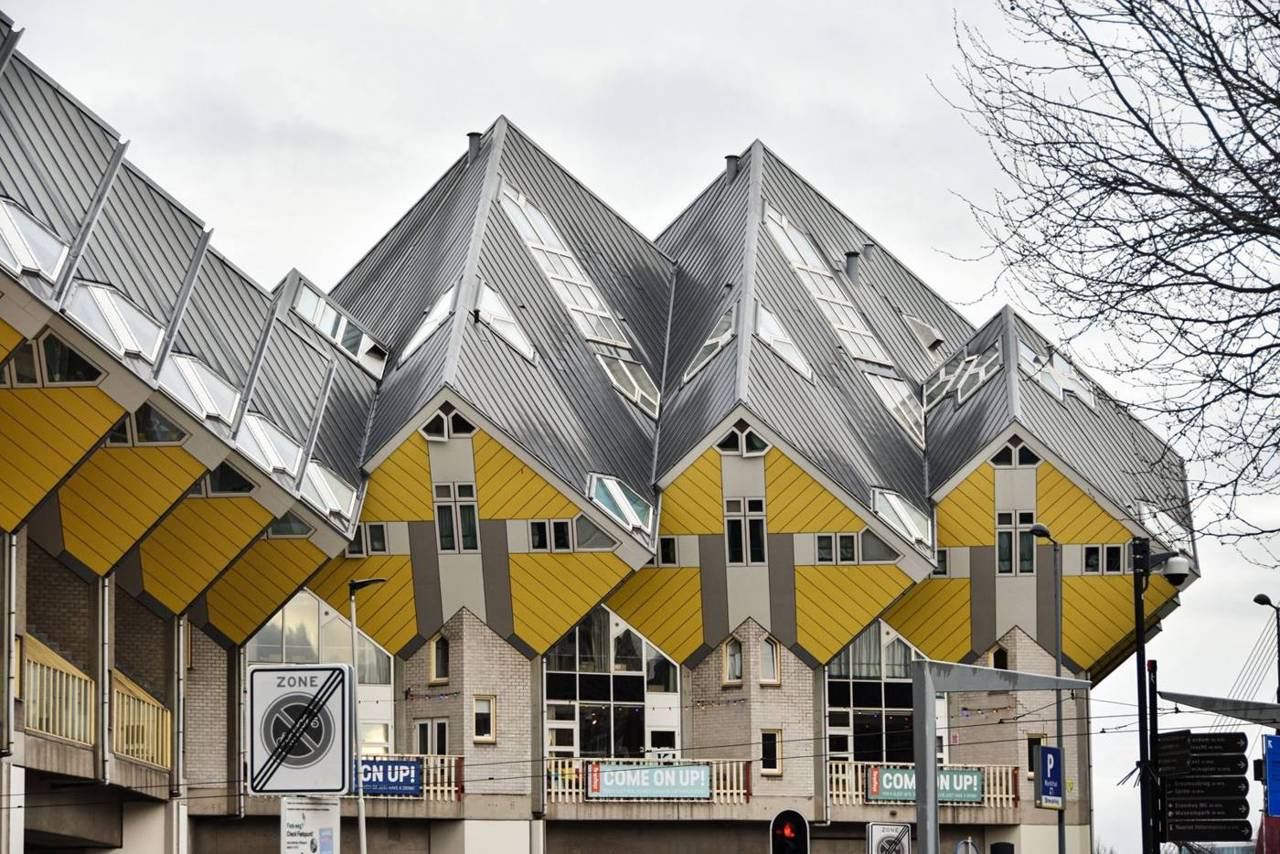
In the morning go into the Markthal, the arch-shaped covered market with its ceiling painted with fruit and flowers, and look at Piet Blom's cube houses, yellow cubes tilted above the street. Then walk to the Erasmus Bridge, the white bridge known as the Swan, and cross it towards the skyscrapers of Kop van Zuid.
At midday visit the Depot Boijmans Van Beuningen, the bowl-shaped, mirror-clad art depot open to the public, with its rooftop garden. Check prices and times. Then leave from Rotterdam Central Station, with trains to Schiphol and the rest of Europe.
In short: in eight days you have seen Amsterdam with its canals, great museums and Jewish quarter, Haarlem with Frans Hals, Leiden with its university and botanical garden, the Mauritshuis and the sea at The Hague, Delft with Vermeer and its pottery, and the architecture of Rotterdam. All by train, with journeys of just a few minutes.
When to go: from April to September, with long days and open terraces. In April and early May you can add the tulip fields between Haarlem and Leiden. Winter is grey and rainy, but the museums are less crowded.
Practical tip: sleeping in Haarlem or Leiden costs less than in Amsterdam and is quieter, and the train takes you to the centre in 15 to 30 minutes.
The ideal trip to discover the Netherlands without a car. Staying outside Amsterdam, in Haarlem or Leiden, is cheaper and quieter, and the train reaches the centre in 15-30 minutes. The Mauritshuis is small but holds some absolute masterpieces by Vermeer and Rembrandt.
Before you go
- Documents and visa
- EU citizens need a valid identity card or passport: the Netherlands is in the EU and the Schengen area. Everyone aged 14 and over must be able to show ID to the police, so always carry your document. Other nationalities should check the Schengen rules.
- Health and vaccines
- No vaccines required and healthcare is efficient. EU citizens should bring their EHIC; take insurance covering medical costs and repatriation. Emergencies: 112.
- Money and payments
- Euro. Cards are accepted almost everywhere, and some places and museums do not take cash.
- Power sockets
- Types C and F, 230 volts.
- Time zone
- Central European Time (UTC+1, summer UTC+2).
- Safety
- A safe country, but pickpocketing is common in Amsterdam, especially around Central Station, on trains and trams to Schiphol and in crowded places; bicycle theft is very common too. The terrorist threat is considered substantial and security checks are tighter at airports, stations and museums. Hard drugs are illegal and smoking cannabis in public places is not allowed. Watch out for cycle lanes when crossing the road. Official advice: GOV.UK.
Information checked in November 2026 for Italian and EU citizens. Rules change: always check before you travel.
Variations
In 6 days: two days in Amsterdam, then Haarlem, Leiden, The Hague with Delft, and Rotterdam.
In 10 days: add the windmills of Kinderdijk and Utrecht.
Frequently asked questions
Do you need a car for this trip?
No. The cities are linked by frequent trains, 15 to 30 minutes apart, and the centres are easy to explore on foot, by tram or by bike.
Do you need to book the museums?
Yes. The Rijksmuseum asks everyone to book a time slot, the Anne Frank House sells tickets only online and the Van Gogh Museum has timed tickets. Check prices and times for the Mauritshuis too.
What document do I need for the Netherlands?
Italian citizens only need an electronic identity card valid for travel abroad or a passport. Other nationalities should check their own rules.
Indicative itinerary written by World Atlas. Before booking, check timetables, seasonal openings, documents and safety.
 4 daysEasy
The tulips and Keukenhof
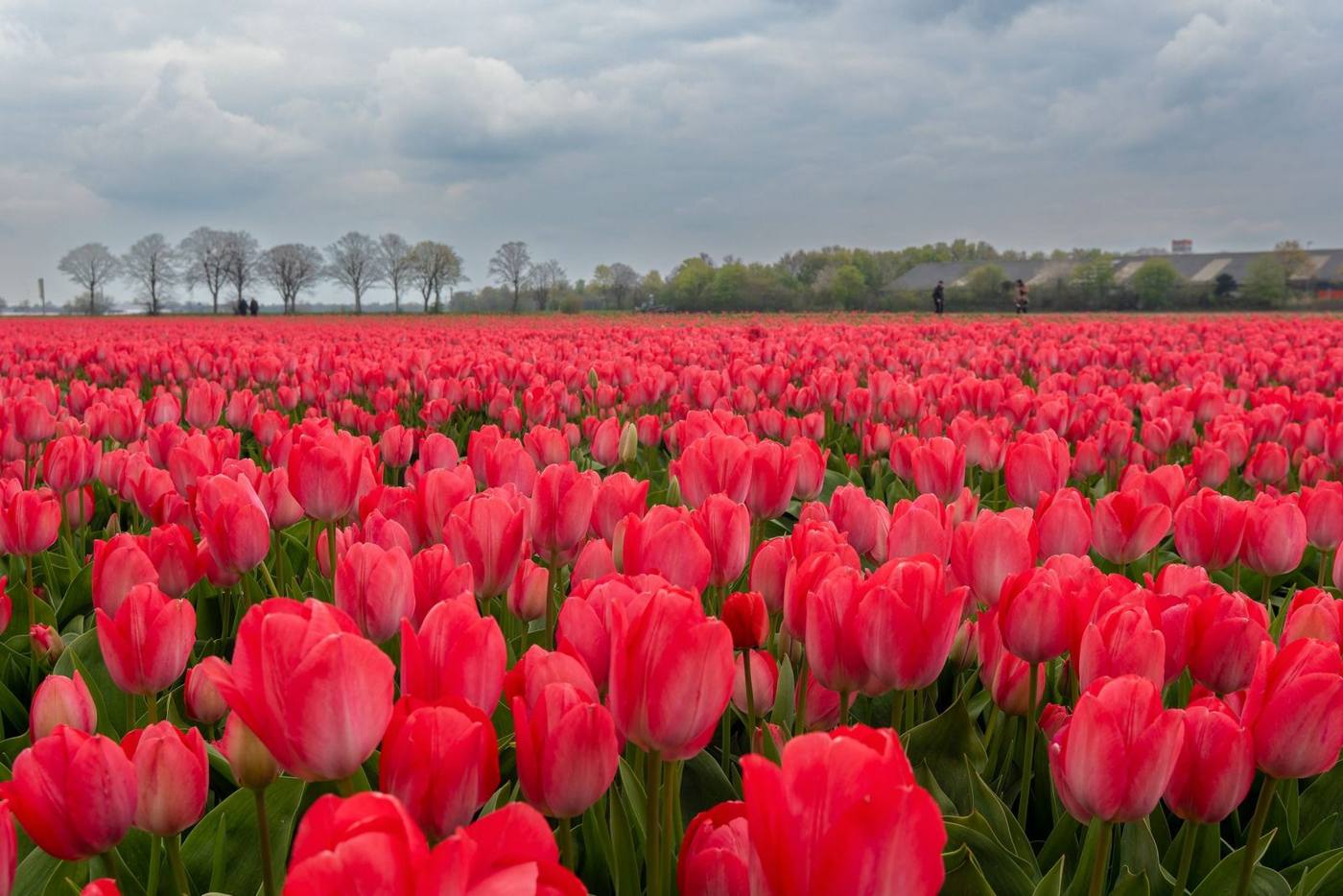
Dutch spring: Keukenhof park, the bulb fields by bike between Lisse and Noordwijk, the flower auction and Haarlem.
 3 daysEasy
Rotterdam and its architecture
The city rebuilt after 1940: the Cube Houses, the Markthal, the Boijmans art depot, the Erasmus Bridge, the port and Kinderdijk.
 3 daysEasy
Windmills, dikes and villages
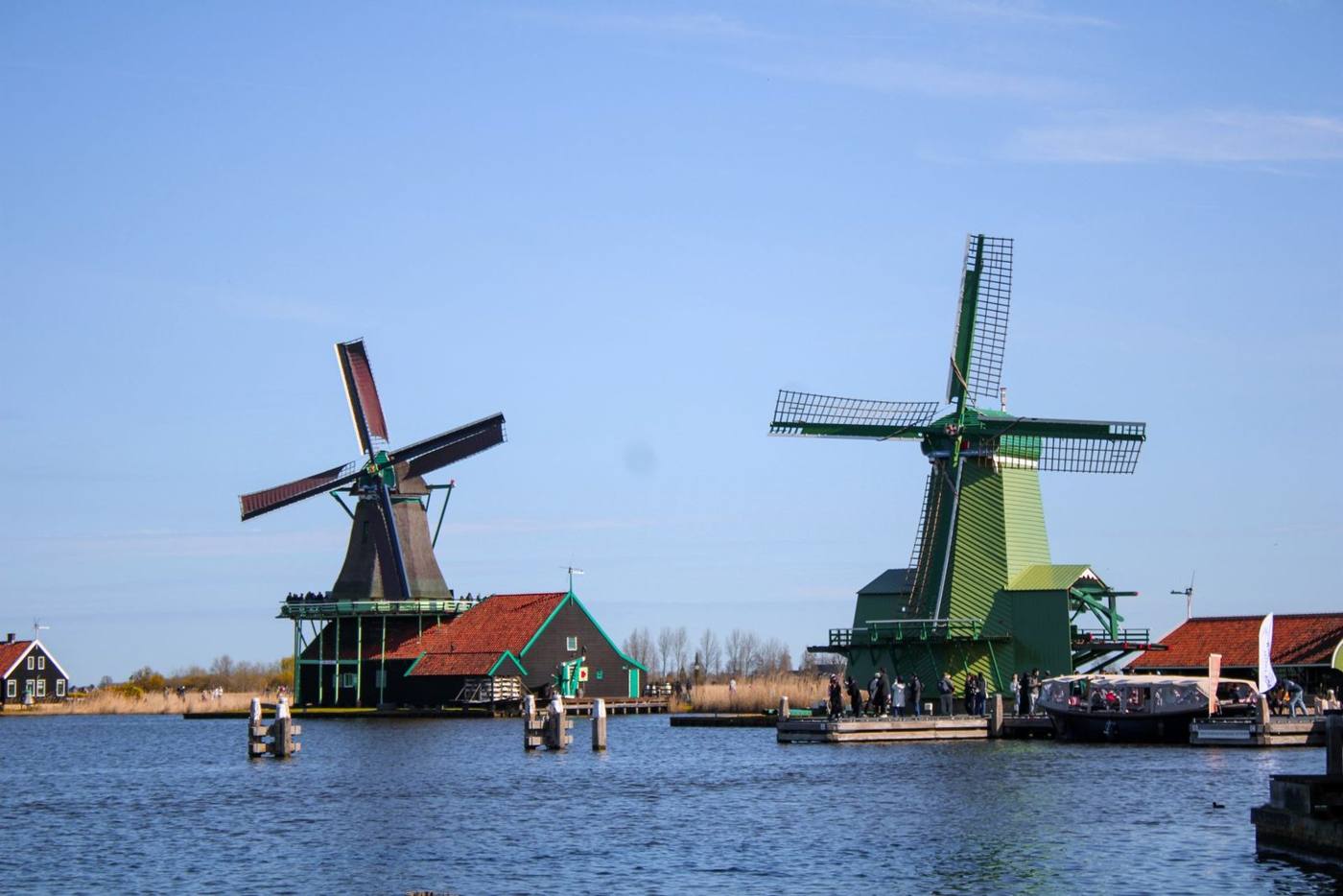
The Holland of windmills and cheese: Zaanse Schans, the fishing villages of Volendam and Marken, the Alkmaar cheese market and Edam.