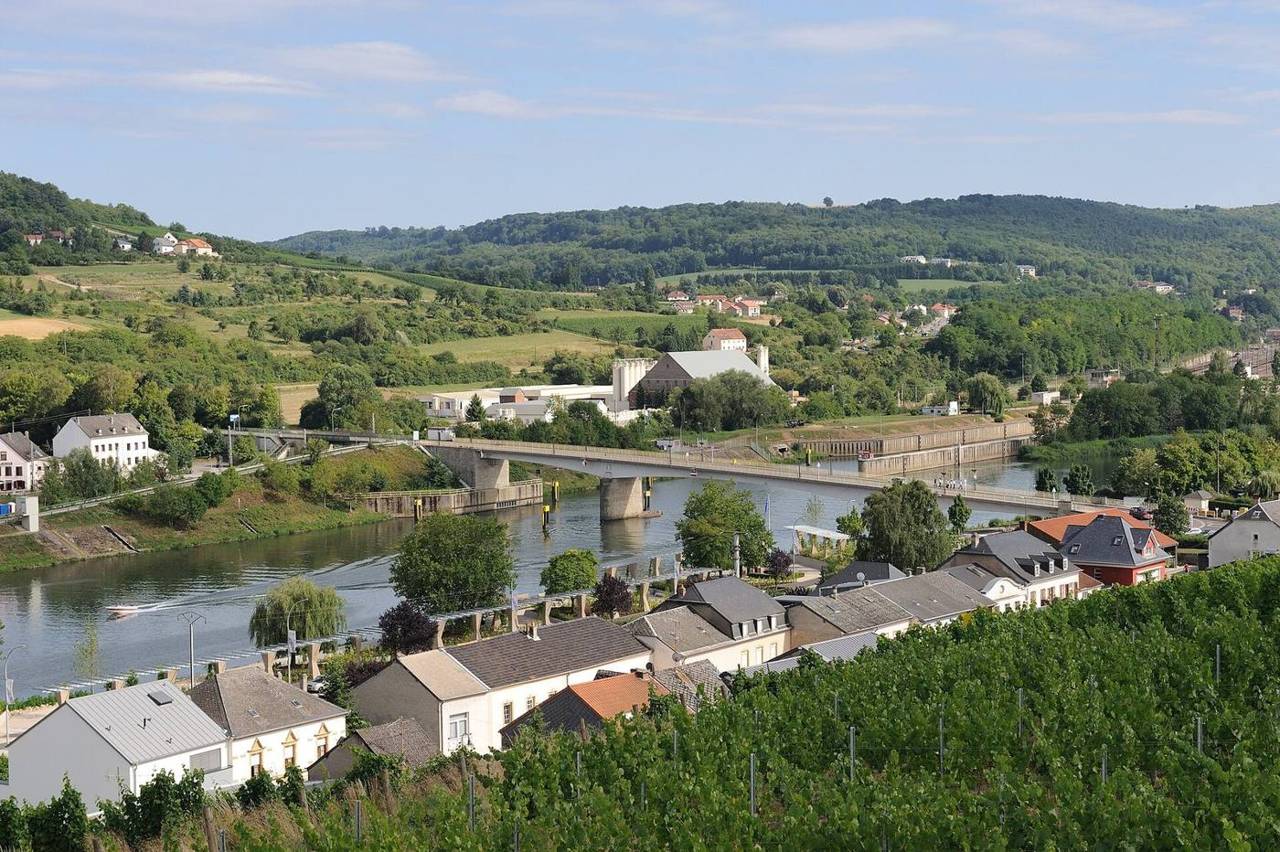
The three borders by bike
A bike loop along the Moselle through Luxembourg, France and Germany, starting from Schengen, with vineyards, villages and the Saar.
- Schengen
- Perl
- Sierck-les-Bains
- Remich
- Saarburg
Day by day
- Day 1
Schengen, the German bank and the Roman villa of Nennig
This cycling loop crosses three countries in three days, along the Moselle and the Saar, in the place where Europe without border checks was born. You ride between Luxembourg, Germany and France, almost always on flat cycle paths along the rivers, among vineyards, winegrowers' villages and small historic towns.
Before you go: Italian citizens enter Luxembourg, Germany and France with an electronic identity card or a passport: all three are in the European Union and the Schengen area. Italian paper identity cards are no longer valid for travel abroad from 3 August 2026. Other nationalities should check their own rules. Germany has extended temporary controls at its land borders until March 2027: always carry your document, even on a bike. In Luxembourg, since 1 March 2020 buses, trams and second class trains need no ticket, but German and French trains must be paid for.
Start in Schengen, the Luxembourg village where the three countries meet. Here, on 14 June 1985, the Schengen Agreement was signed. Look at the steles of the monument on the riverside and visit the European Museum. Check prices and times.
Then cross the bridge over the Moselle: you are in Perl, in Germany. Ride north on the cycle path along the German bank, among the vines, to Nennig, about ten kilometres away. Here stands the Roman villa with a large third-century mosaic floor, showing gladiators and amphitheatre animals, protected by a building. Check prices and times.
Sleep in Perl or Nennig.
Practical tip: hire your bike in Luxembourg and ask for a sturdy lock and a puncture kit; there are few repair shops along the river.
- Day 2
Sierck-les-Bains in France and back to Remich
On the second day, head back south along the German bank, pass Perl again and, shortly after, enter France. The cycle path follows the river through meadows and woods to Sierck-les-Bains, a small Lorraine town squeezed between the Moselle and the hill. The first French village you meet is Apach, right on the border with Perl.
Above the houses stands the castle of the Dukes of Lorraine, a large stone fortress with walls, towers and bastions, built in the Middle Ages to control the river. Leave your bike below and walk up. From the walls you see the Moselle valley, the vineyards of Germany and Luxembourg and, on clear days, the point where the three borders meet. Check prices and times.
Have lunch in Sierck, then head north. Cross the border again at Schengen and continue along the Luxembourg bank, among the vines, to Remich, the pearl of the Moselle. In all, today you ride about thirty kilometres, almost all flat.
In the evening, walk along the long esplanade of Remich, by the river, and have dinner with a glass of crémant, the sparkling wine of the Luxembourg Moselle.
Sleep in Remich.
Practical tip: in France many small towns close their shops at lunchtime and on Sundays; carry water and something to eat if you ride at the weekend.
- Day 3
Saarburg and the waterfall in the town centre
The last day is the longest. From Remich, cross the bridge over the Moselle and return to the German bank. Ride north among the vines to Konz, where the Saar flows into the Moselle. Here leave the Moselle and follow the cycle path up the Saar, in a narrower valley, with hills covered in woods and steep vineyards.
You reach Saarburg after about 50 kilometres. The old town has colourful houses, narrow streets and, right in the centre, a waterfall almost twenty metres high, where the Leukbach stream drops between the houses before flowing into the Saar. Above the town are the castle ruins, from where you see the roofs and the valley.
In the afternoon, take the train to Trier and from there the train to Luxembourg City. For the German part you need a ticket for yourself and one for the bike: buy them before boarding.
In these three days you have cycled through three countries: Schengen and its museum, the Roman villa of Nennig, the castle of Sierck-les-Bains, the Remich riverside and Saarburg with its waterfall.
When to go: from May to September, with long days and dry cycle paths. In September comes the grape harvest, but the wine roads are busier.
Practical tip: if your legs are tired, shorten the last stage: on the German bank of the Moselle and along the Saar there are stations every few kilometres.
Three countries in three days without ever showing a document, where clear of border Europe was born. The cycle paths are almost all flat along the rivers. Luxembourg trains are at no cost; German and French ones are not. You eat and drink well in all three countries.
Before you go
- Documents and visa
- EU citizens need a valid identity card or passport: Luxembourg is in the EU and the Schengen area. Always carry your document. Other nationalities should check the Schengen rules.
- Health and vaccines
- No vaccines required. EU citizens should bring their EHIC. Emergencies: 112; police 113.
- Money and payments
- Euro. Cards are accepted almost everywhere, even for small amounts. The country is expensive, above all for accommodation and eating out.
- Power sockets
- Types C and F, 230 volts: you need an adapter for British plugs.
- Time zone
- Central European Time (UTC+1, summer UTC+2), one hour ahead of the UK.
- Safety
- A very safe country: the United States has rated it level 1 since 8 April 2026. Watch out for pickpockets at the main railway station, on buses and at tourist sites. In the north and east, unexploded ordnance from both world wars remains in woods and fields: stay on marked paths and do not touch metal objects. Since 1 March 2020 buses, trams and second class trains need no ticket anywhere in the country; first class and journeys beyond the border must be paid for. Official advice: GOV.UK.
Information checked in November 2026 for Italian and EU citizens. Rules change: always check before you travel.
Variations
In 2 days: Schengen, Nennig and Sierck-les-Bains, returning to Remich.
In 5 days: continue from Saarburg to Trier, the Roman city, and return along the Moselle to Grevenmacher.
Frequently asked questions
Do you need a document to cross the borders?
Yes, always carry your electronic identity card or passport. Germany is carrying out temporary checks at its land borders until March 2027.
Are trains ticketless across the border too?
No. In Luxembourg buses, trams and second class trains need no ticket, but German and French trains must be paid for, including the bike space.
Are the cycle paths difficult?
No, they are almost all flat along the rivers and well signed. Distances range from 10 to 50 kilometres a day, suitable for regular cyclists.
Indicative itinerary written by World Atlas. Before booking, check timetables, seasonal openings, documents and safety.
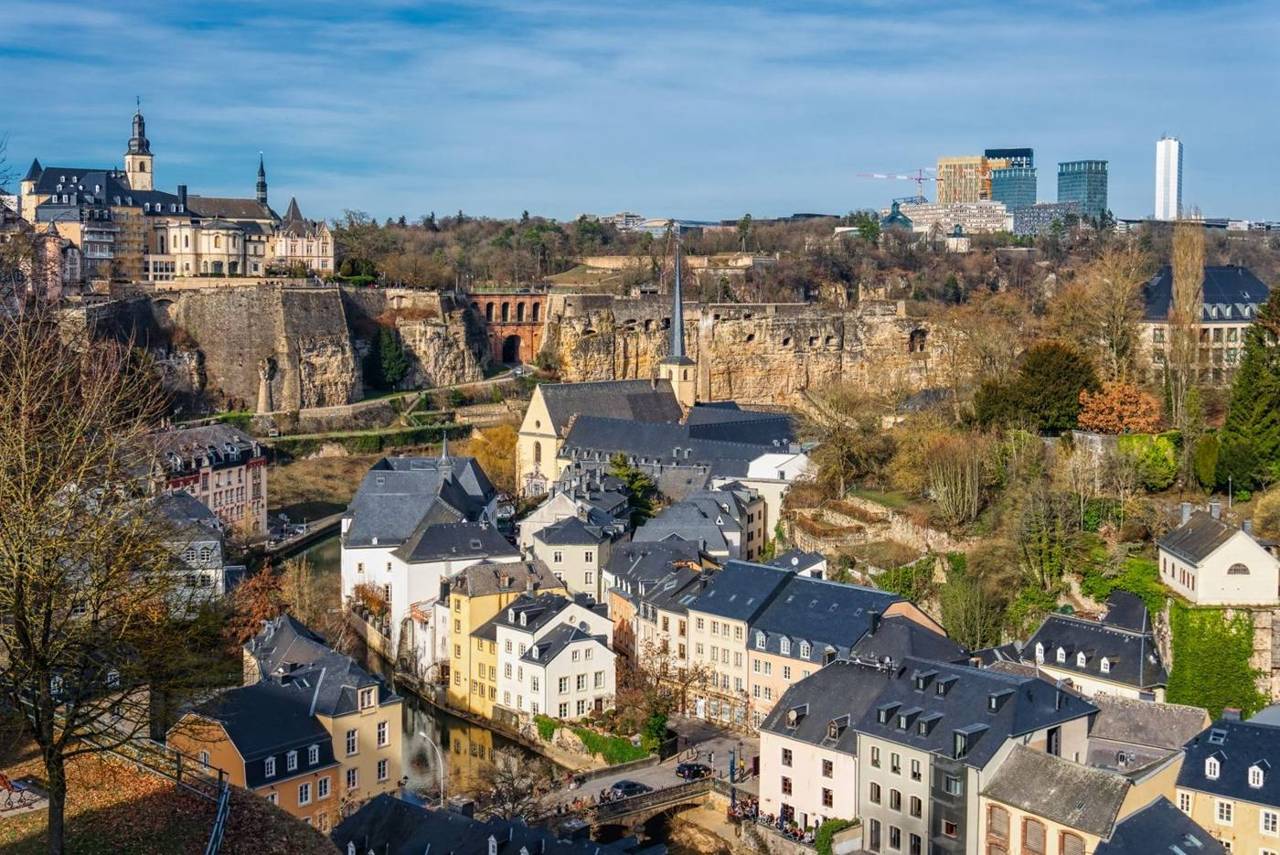 2 daysEasy
Luxembourg City
The UNESCO-listed old town on its rocky spur, the Bock casemates, the Chemin de la Corniche, the Grund in the valley below and the European Kirchberg.
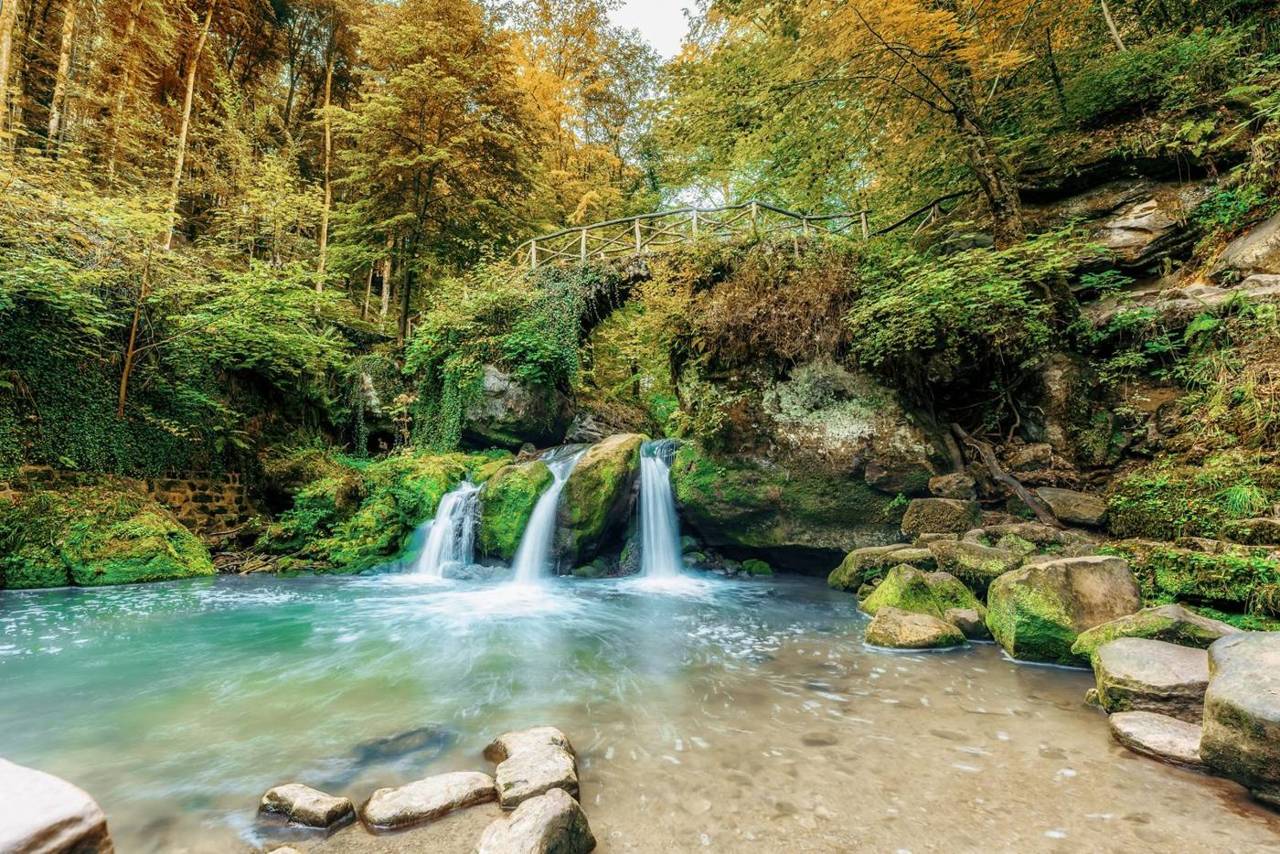 4 daysModerate
The Mullerthal Trail
Luxembourg's Little Switzerland: sandstone gorges, forests and the Schiessentümpel waterfall on an award-winning trail between Echternach, Berdorf and Consdorf.
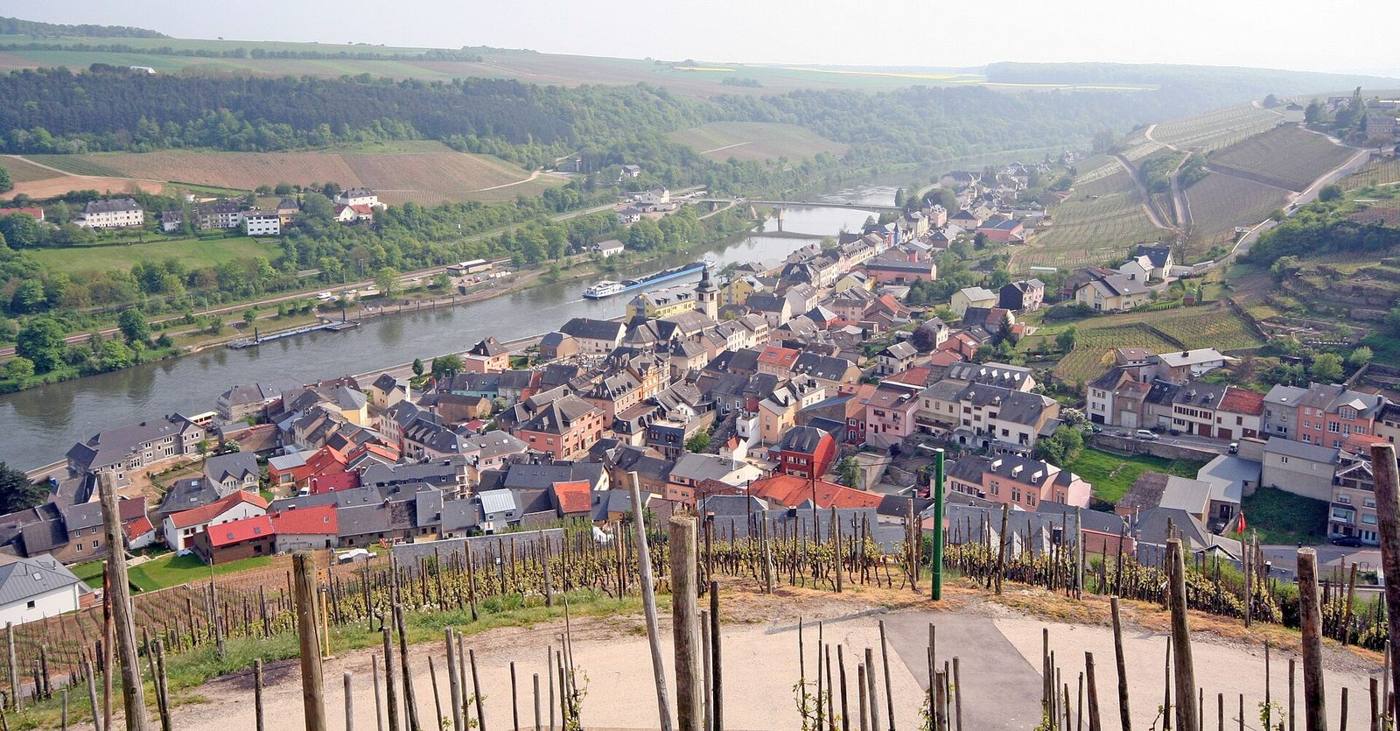 3 daysEasy
The wine Moselle
Luxembourg's Moselle valley from Schengen to Grevenmacher: crémant and Riesling, the Palmberg vineyard trail and a river cruise.