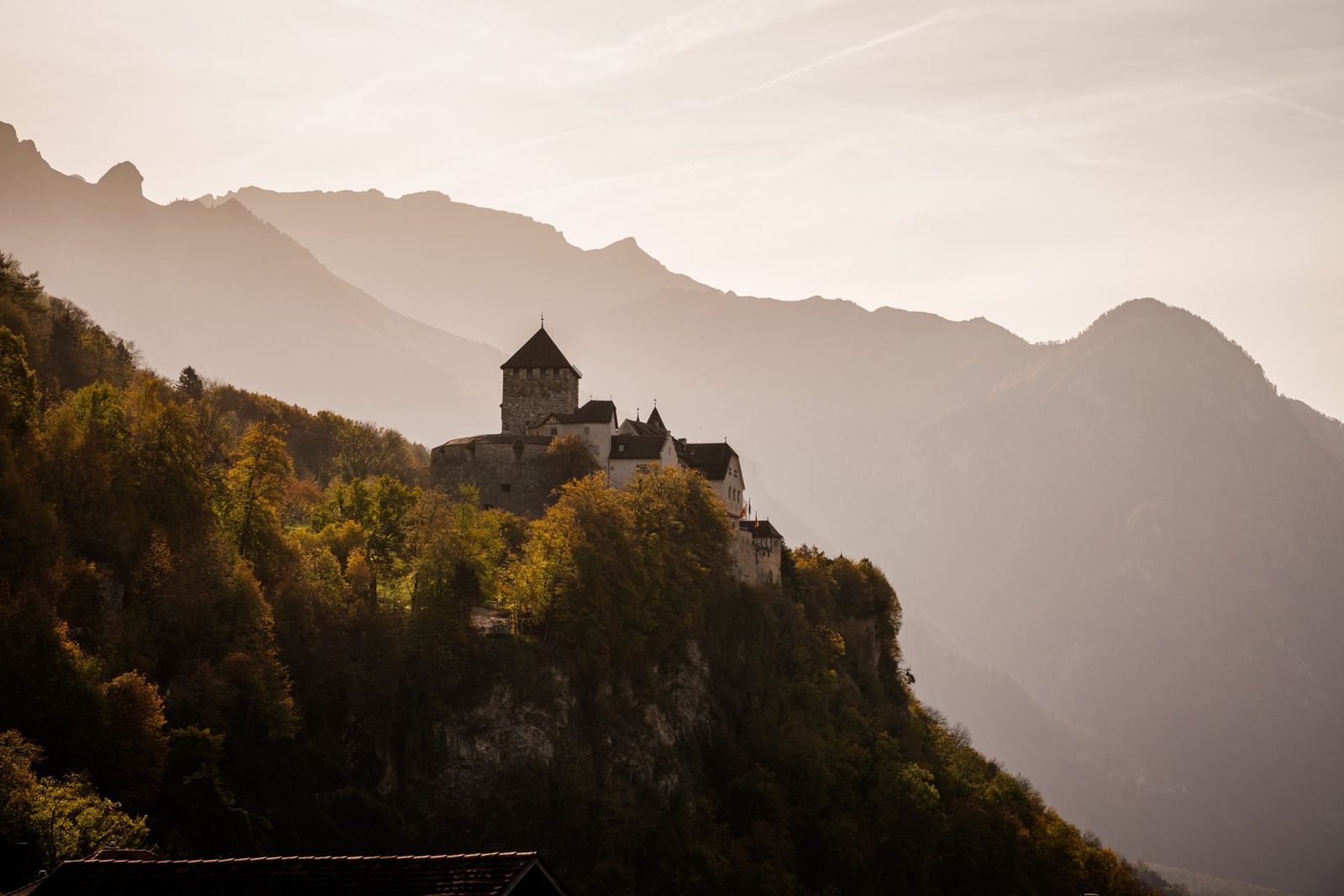
Vaduz and the castle
The principality's capital, the Kunstmuseum, the national museum, the Prince's winery and Gutenberg castle in Balzers.
- Vaduz
- Vaduz Castle
- Hofkellerei
- Balzers
- Gutenberg Castle
Day by day
- Day 1
Vaduz, the museums and the Prince's castle
This trip is a two-day stop in Liechtenstein, between Switzerland and Austria: the capital Vaduz with its museums, the Prince's castle seen from outside, the vineyards below the hill and Gutenberg Castle in Balzers.
Before you go: Italian citizens only need an electronic identity card valid for travel abroad or a passport, with no visa. Liechtenstein is not part of the European Union, but it is in the Schengen area and the border with Switzerland is open. Other nationalities should check their own rules. The country is very safe.
In the morning you arrive by bus from Sargans or Buchs, in Switzerland: the country has no airport and few trains. Start with the Kunstmuseum, the museum of modern and contemporary art, in a dark cube-shaped building in the Städtle, the pedestrian street in the centre. Then visit the national museum, with the history, art and nature of the principality. Check prices and times.
At midday look from outside at the government building and the neo-Gothic cathedral of St Florin.
In the afternoon walk up to Vaduz Castle, above the town, in about half an hour on a woodland path. Since 1938 it has been the home of the Prince's family and cannot be visited: you only see it from outside, with the view over the Rhine valley. On 15 August, the national day, the ceremony takes place on the meadow near the castle and the Prince's family usually opens the garden to those attending.
At sunset walk down to the Herawingert, the Prince's vineyard below the castle, and taste a glass of the country's Pinot Noir in a wine cellar in the centre.
Sleep in Vaduz.
Practical tip: buy bus tickets with the local transport app or at the stop, and keep some Swiss francs: euros are often accepted, but change comes in francs.
- Day 2
Balzers and Gutenberg Castle
Today you go down to the south of the country, to Balzers, and visit the only castle in the principality you can see up close.
In the morning take the bus from Vaduz to Balzers, the southernmost municipality, in about twenty minutes. Gutenberg Castle stands on a rocky hill in the middle of the village, with its towers and walls above the houses. Its origins go back to the 12th century: it was lived in until the 18th century, then fell into ruin and was rebuilt between 1905 and 1912. On the hill there are traces of life as early as the Neolithic.
At midday walk up to the outer courtyard, open all year, with the view over the Rhine valley and the Swiss mountains. The castle rose garden is open on Sundays from May to October; the interior can only be visited on certain occasions, on guided tours. Check prices and times.
In the afternoon walk around the village and along the Rhine embankment, a few minutes from the centre, then take the bus to Sargans and set off again.
In these two days you have seen the political and cultural heart of Liechtenstein: the museums of Vaduz, the Prince's castle on the hill, the Herawingert vineyards and Gutenberg Castle above Balzers. It is a short and easy trip, ideal as a stop between Switzerland and Austria or as the start of a mountain outing to Malbun.
When to go: from May to October, with long days, the museums open and, on Sundays, the Gutenberg rose garden; in mid-August there is the national day, with crowds in Vaduz. In winter the museums stay open, but the days are short and cold.
Practical tip: if you arrive on 15 August, book your bed well in advance, because Vaduz fills up for the national day.
A short stop, ideal between Switzerland and Austria. Vaduz castle is the prince's residence and cannot be visited. With no airport or frequent trains, you arrive by bus from Sargans or Buchs in Switzerland.
Before you go
- Documents and visa
- Liechtenstein is not in the EU but is in the European Economic Area and the Schengen area; Switzerland handles border and customs matters and the border between the two is open. British visitors can stay up to 90 days in any 180 days without a visa, and the EU Entry/Exit System applies.
- Health and vaccines
- No vaccines required. Take travel insurance that covers mountain rescue. Emergencies: 112, police 117, ambulance 144, fire 118, air rescue 1414.
- Money and payments
- Swiss franc. Cards are accepted almost everywhere; euros are often taken in shops, but change comes in francs.
- Power sockets
- Swiss type J, 230 volts: you need an adapter for British plugs.
- Time zone
- Central European Time (UTC+1, summer UTC+2).
- Safety
- A very safe country with very little crime. In the mountains check the weather and the state of the paths before you set off. Official advice: GOV.UK.
Information checked in November 2026 for Italian and EU citizens. Rules change: always check before you travel.
Variations
Shorter: a single day in Vaduz, with the museums and the walk up to the castle.
Longer: add a day in the mountains at Malbun and in the Steg valley.
Frequently asked questions
Can you visit Vaduz Castle?
No, it has been the home of the Prince's family since 1938 and is not open to the public. You see it from outside, walking up from the centre.
How do you get to Liechtenstein?
There is no airport: you arrive by train in Sargans or Buchs, in Switzerland, and then take a short bus ride to Vaduz.
Can you visit Gutenberg Castle?
The outer courtyard is open all year and the rose garden on Sundays from May to October. The interior can only be visited on certain occasions: check prices and times.
Indicative itinerary written by World Atlas. Before booking, check timetables, seasonal openings, documents and safety.
 3 daysModerate
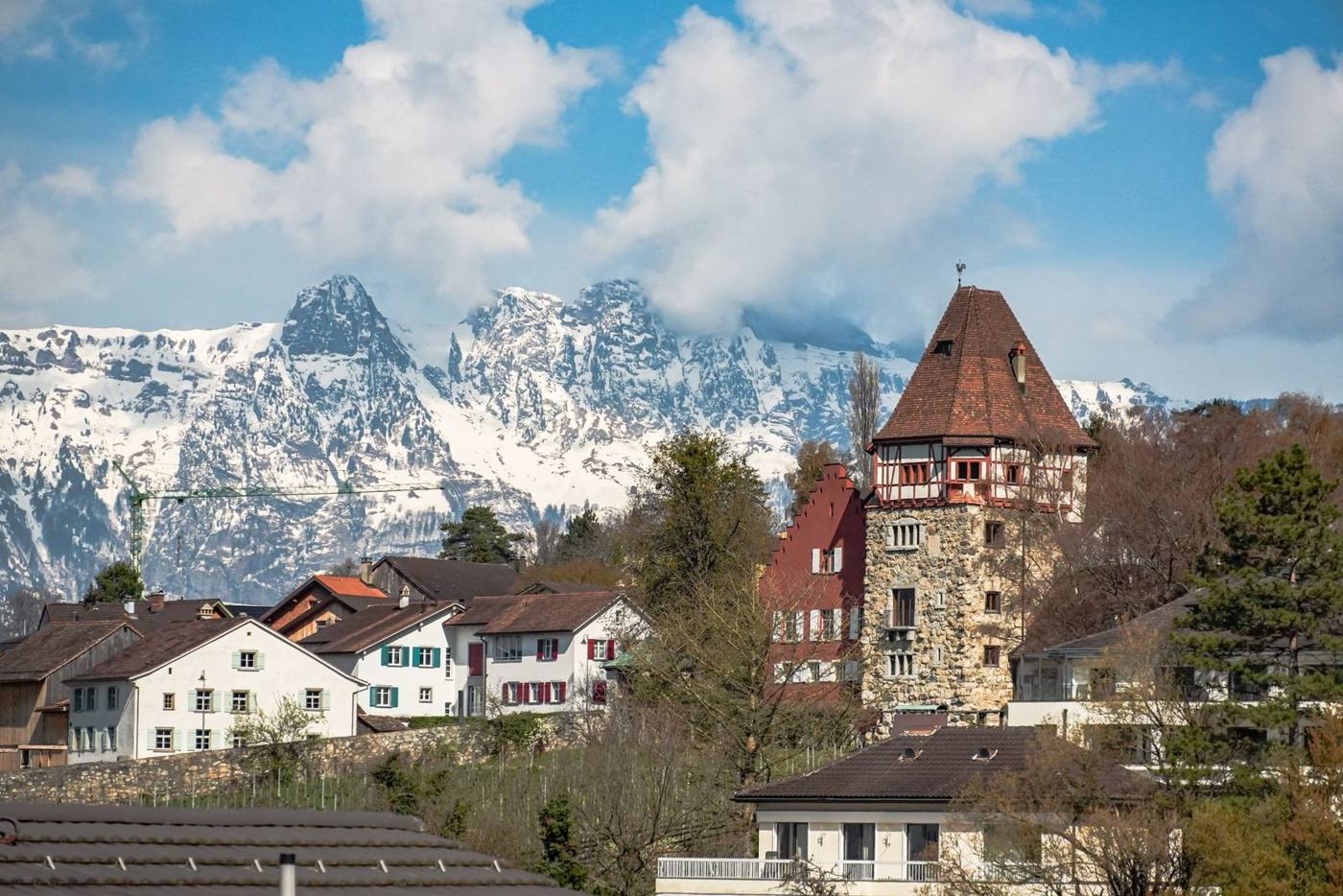
The principality trail
The Liechtenstein Trail through all eleven municipalities, with the Fürstensteig ridge above Malbun and the mountain village of Triesenberg.
 2 daysEasy
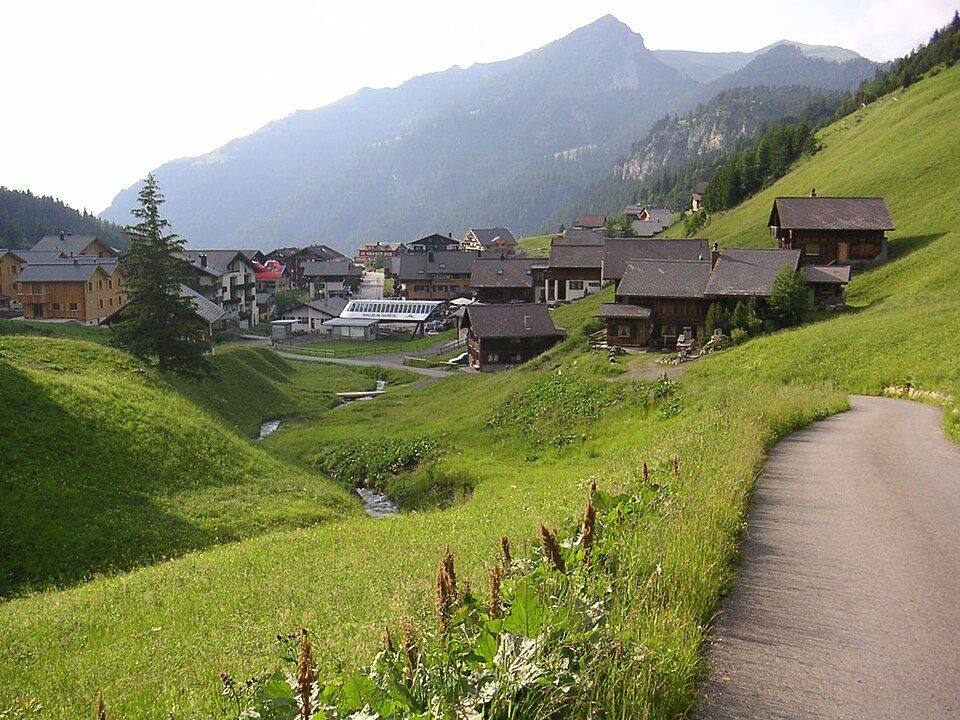
Malbun and the Steg valley
The principality's mountain village, half an hour from Vaduz: in summer trails through the pastures and the Peace Chapel, in winter the country's only small ski resort, with snowshoeing and cross-country skiing in the Steg valley.
 1 daysEasy
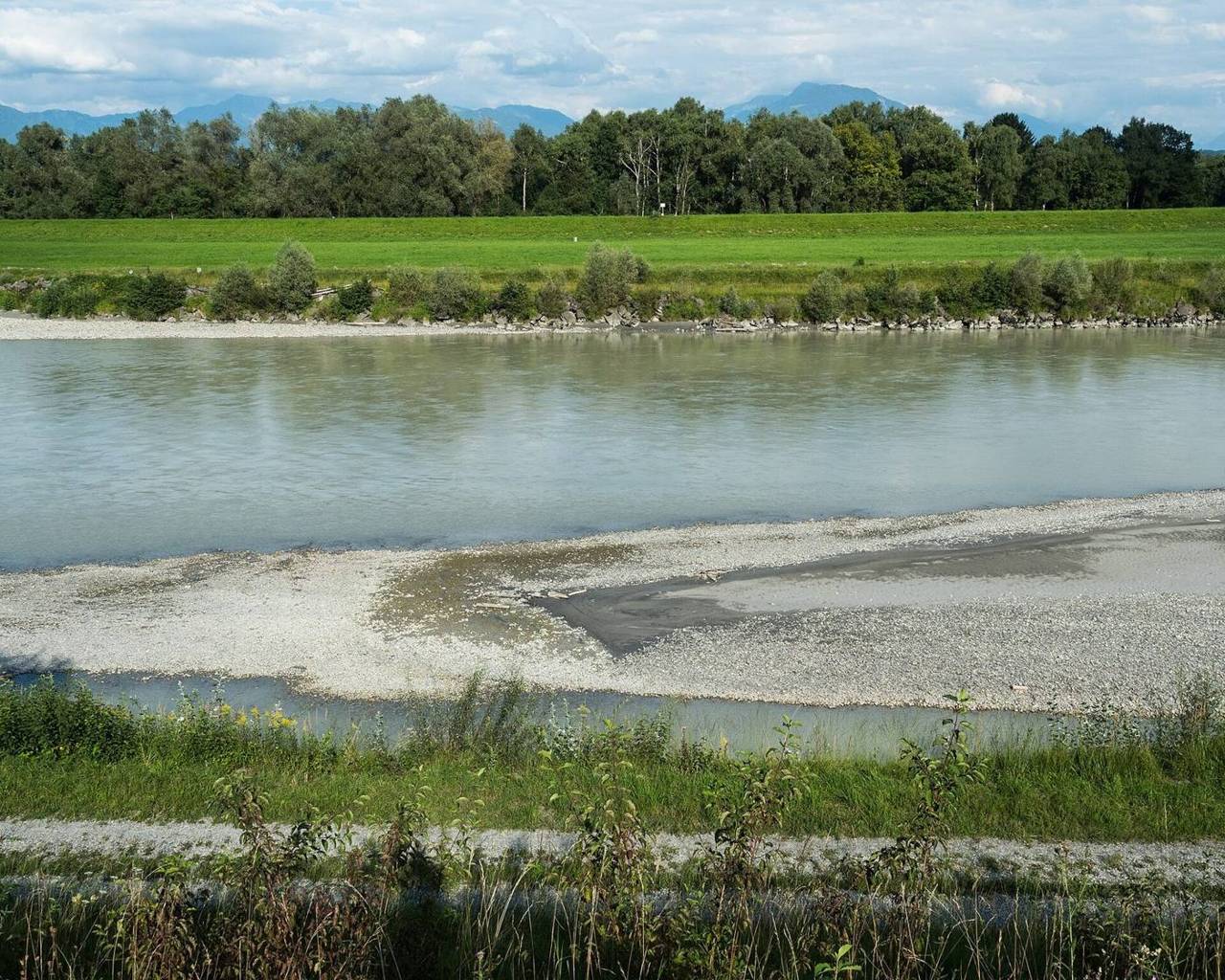
The Rhine by bike
A day on the Rhine embankment along the Swiss border, from Balzers to Ruggell, among vineyards, the wooden bridge at Vaduz and the Ruggeller Riet nature reserve.