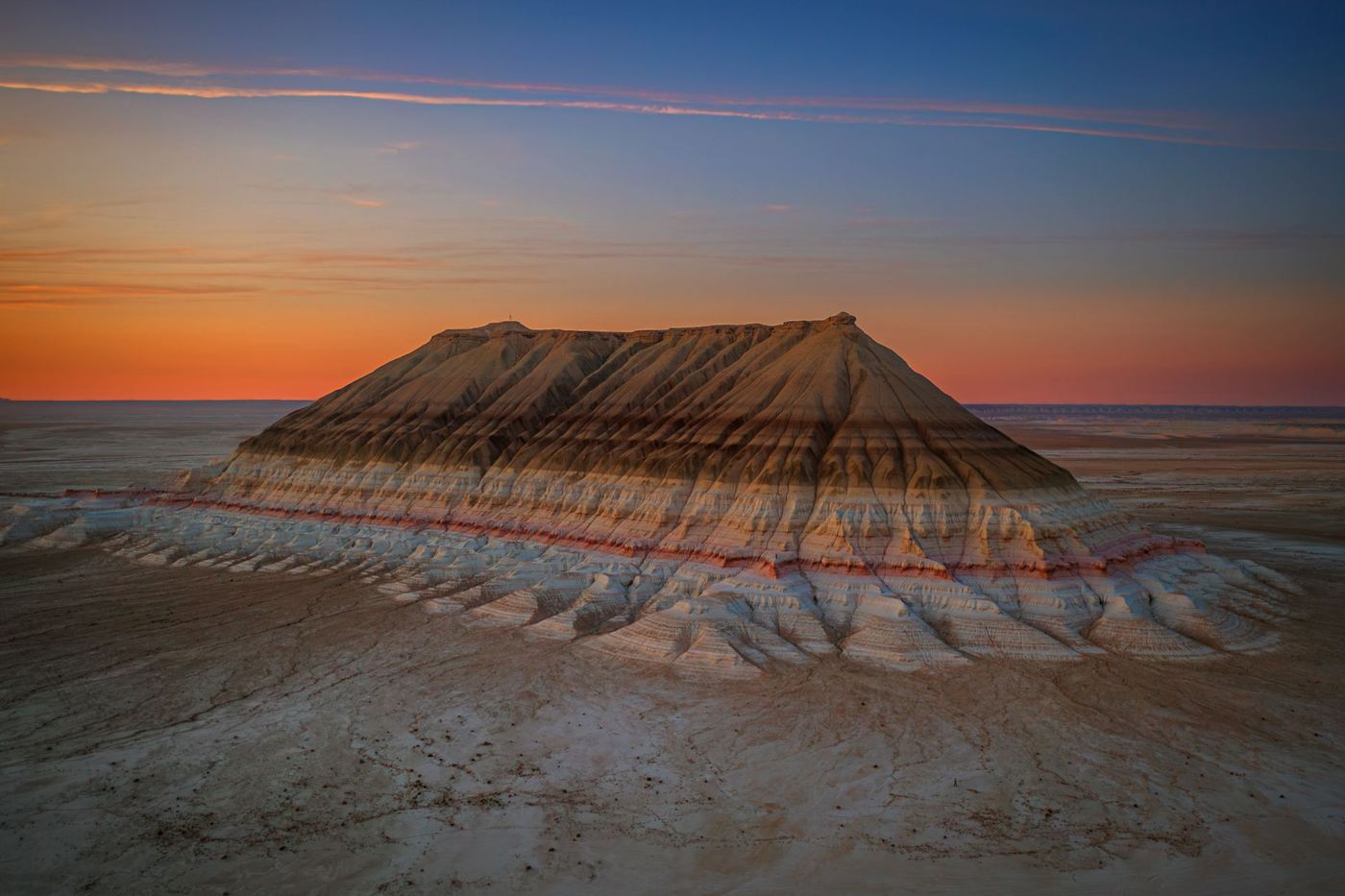
Mangystau
The desert of western Kazakhstan: the white cliffs of Bozzhyra, the underground mosques of Beket-Ata and Shakpak-Ata, the Torysh valley of stone spheres and the city of Aktau on the Caspian.
- Aktau
- Torysh
- Shakpak-Ata
- Beket-Ata
- Bozzhyra
Day by day
- Day 1
Aktau and the Caspian Sea
This trip takes you to Mangystau, the desert of western Kazakhstan between the Caspian Sea and the Ustyurt plateau: the valley of stone balls at Torysh, the underground mosques of Shakpak-Ata and Beket-Ata, the white cliffs of Bozzhyra and a night in a tent in the desert. It is one of the most spectacular and least visited deserts in the world. You only go by four-wheel drive, with an experienced driver or a local guide, and with plenty of water.
Before you go: Italian citizens enter Kazakhstan without a visa for up to 30 days per visit, with a passport valid for at least six months from arrival; the electronic identity card is not enough. For stays of up to 30 days, Italians do not need to register with immigration. From 1 July 2027 you will need the QazETA electronic travel authorisation, applied for online at least 72 hours ahead. Other nationalities should check their own rules. The UK reports violent thefts at night in Aktau: do not walk alone in the evening and use app taxis. In the desert there is no phone signal for long stretches.
You fly into Aktau, the city built in Soviet times on the shores of the Caspian Sea. Its districts have numbers instead of names.
In the afternoon walk along the seafront, above the pale rocks that drop into the water. The Caspian is the largest enclosed body of water in the world, with slightly salty water. Look at the monument to the Ukrainian poet Taras Shevchenko, exiled to this region in the nineteenth century.
At sunset watch the sun go down over the sea.
Sleep in Aktau.
Practical tip: meet your guide today to check the four-wheel drive, the spare wheel, the water containers, the satellite phone and the plan for the next few days.
- Day 2
The Torysh balls and the Shakpak-Ata mosque
Today you enter the desert and see the first extraordinary places of Mangystau.
In the morning set off by four-wheel drive to the north-east, to the Torysh valley, near the village of Shetpe. Here the steppe is dotted with hundreds of large stone balls, some taller than a person, like giant cannonballs left behind by someone. They are concretions, formed over millions of years inside the sediments of an ancient sea and then exposed by erosion. Walk among the balls and look at the ones split in half, with their inner layers.
Not far away, if your guide suggests it, stop to see the great rock of Sherkala, standing alone on the steppe, shaped like a yurt or a lion lying down.
In the afternoon cross the peninsula westwards to Shakpak-Ata, an underground mosque carved directly into the rock of a gorge, about 127 kilometres from Aktau. The interior has a cross-shaped plan, four columns and a dome with an opening in the centre. Around it lies an ancient necropolis, with carved gravestones and tombs shaped like small houses. It is a sacred place: go in with your shoulders and legs covered and speak quietly.
In the evening sleep in a guesthouse in a village in the area or return to Aktau, depending on your guide's plan.
Practical tip: in the desert the sun is strong even in spring. Bring a wide-brimmed hat, sunglasses and a light scarf against the dust and wind.
- Day 3
Beket-Ata, a place of pilgrimage
Today you reach the most sacred place in Mangystau, visited by pilgrims from all over Kazakhstan.
Set off early in the morning heading east. On the way, if your guide suggests it, stop at the edge of the Karagiye depression, which drops to about 132 metres below sea level, one of the deepest in the world.
Then the road leaves the tarmac and becomes a desert track, to the foot of the Ustyurt plateau. Here, in a pale rock cliff above a canyon, lies the underground mosque of Beket-Ata. Beket-Ata was a Sufi, teacher and healer, born in 1750 and deeply venerated by Kazakhs. Walk down the long staircase in the cliff to the rooms carved into the rock: one with his tomb, one for women, one with his staff and a prayer hall. On the way you pass a sacred spring.
Follow the pilgrims' customs: cover your shoulders and legs, women cover their hair, do not take photos inside the mosque and, by tradition, leave each room walking backwards. Bring something to share, such as bread, sweets or tea, for the pilgrims' communal meal.
In the afternoon rest in the shade and look at the canyon from above.
In the evening sleep in a tent in the desert with your guide, under a sky full of stars.
Practical tip: the track to Beket-Ata is long and rough in places. Fill up with fuel and water in the last village, and only set off in a four-wheel drive in good condition.
- Day 4
The white cliffs of Bozzhyra and a night in a tent
Today you see the most famous landscape in Mangystau.
In the morning the four-wheel drive climbs to the edge of the Ustyurt plateau and follows the tracks to the Bozzhyra valley. In front of you opens a huge basin of white and pink cliffs, with towers, pinnacles and isolated hills, and two pointed peaks rising close together, like two fangs. Millions of years ago this was the floor of an ancient sea, the Tethys, and even today you can find fossil shells and sharks' teeth among the rocks.
Walk along the edge of the cliff to the viewpoints, but keep away from the edge: the rock is crumbly and can break off. Then go down with your guide to the floor of the valley, among the white hills, where the silence is total.
In the afternoon rest in the shade of the tent or the vehicle: in summer it is very hot here and there is no water.
At sunset the cliffs turn pink, orange and then purple. It is the best time for photographs.
In the evening sleep in a tent on the plateau, with dinner cooked over the fire by your guide. At night the temperature drops quickly: keep a warm jacket and a head torch to hand.
Practical tip: some areas of the desert are nature reserves or sacred land. Always stay on existing tracks, leave no litter and take away everything you bring, including food scraps.
- Day 5
Sunrise on the Ustyurt and back to Aktau
Today you see sunrise over the desert and return to the Caspian.
Get up before the sun to see the light reach the cliffs of Bozzhyra: the white turns first blue, then pink and gold. Have breakfast with hot tea and break camp, leaving the place clean.
Then begin the long drive back to Aktau, with many hours of track and road. Along the way look at the camels grazing freely, the isolated necropolises on the steppe and the small villages far apart.
In the late afternoon you reach Aktau. If you have time, swim in the Caspian at one of the beaches near the city, in summer, or walk along the seafront at sunset.
In these five days you have seen Mangystau: the Caspian at Aktau, the stone balls of Torysh, the underground mosque of Shakpak-Ata, the pilgrimage site of Beket-Ata, the white cliffs of Bozzhyra and a night in a tent in the desert.
When to go: the best months are April to June and September and October, with mild weather and beautiful light. July and August are extremely hot, and in winter the steppe wind is icy and the tracks can be difficult.
Before you leave, buy something to take home: smoked fish from the Caspian, Kazakh chocolate or a small felt object.
Practical tip: there are direct flights between Aktau and other Kazakh cities, as well as international flights. Check the timetables, because some flights only run on certain days of the week.
One of the world's most spectacular and least visited deserts. Only possible with a 4x4, experienced driver and water supplies. No phone signal for long stretches.
Before you go
- Documents and visa
- Passport valid for at least six months from the date of entry; you can enter without a visa for up to 30 days per visit, with a maximum of 90 days in any 180 days. Your hotel or host must register your arrival within three working days. From 1 July 2027 you will need the QazETA electronic travel authorisation, applied for online through the official app or portal at least 72 hours before arrival.
- Health and vaccines
- No compulsory vaccinations for travellers from Europe. In the mountains and forests, especially around Almaty and in the east, ticks can carry encephalitis: ask your doctor about the vaccine. Take insurance covering medical costs and repatriation. Emergencies: 112; police 102, ambulance 103, fire 101.
- Money and payments
- Kazakh tenge. Cards work well in cities; in rural areas and deserts carry cash. Cash above the equivalent of 10,000 dollars must be declared.
- Power sockets
- Types C and F, 220 volts: you need an adapter for British plugs.
- Time zone
- Since 2024 the whole country has a single time zone, UTC+5 all year: five hours ahead of the UK in winter, four in summer.
- Safety
- The situation is generally stable and the risk of violent crime against visitors is low, but there are pickpockets and scams in cities. The UK does not advise against any region, but Baikonur, the village of Gvardeyskiy and the districts of Karmakchi and Kazalinsk are closed without a permit. Do not photograph government or military buildings or border areas. Roads are the main risk; in remote areas there is often no phone signal: do not travel alone. Official advice: GOV.UK.
Information checked in November 2026 for Italian and EU citizens. Rules change: always check before you travel.
Variations
In 3 days: Aktau and a two-day trip to Bozzhyra with a night in a tent, without Beket-Ata.
In 7 days: add the Sherkala valley, the Caspian coast towards Fort-Shevchenko and a second night on the Ustyurt plateau.
Frequently asked questions
Can you visit Mangystau without a guide?
It is not advisable. The tracks are long and unmarked and there is no phone signal for many hours. Go with a four-wheel drive, an experienced driver or a local guide, with spare water and fuel.
What should I wear at Beket-Ata?
It is a place of pilgrimage: cover your shoulders and legs, and women cover their hair. Photography is not allowed inside the mosque and, by tradition, you leave the rooms walking backwards.
How much water should I bring into the desert?
Allow at least four or five litres per person per day, more in summer, plus water for cooking. In the desert there are no shops and no safe springs.
Indicative itinerary written by World Atlas. Before booking, check timetables, seasonal openings, documents and safety.
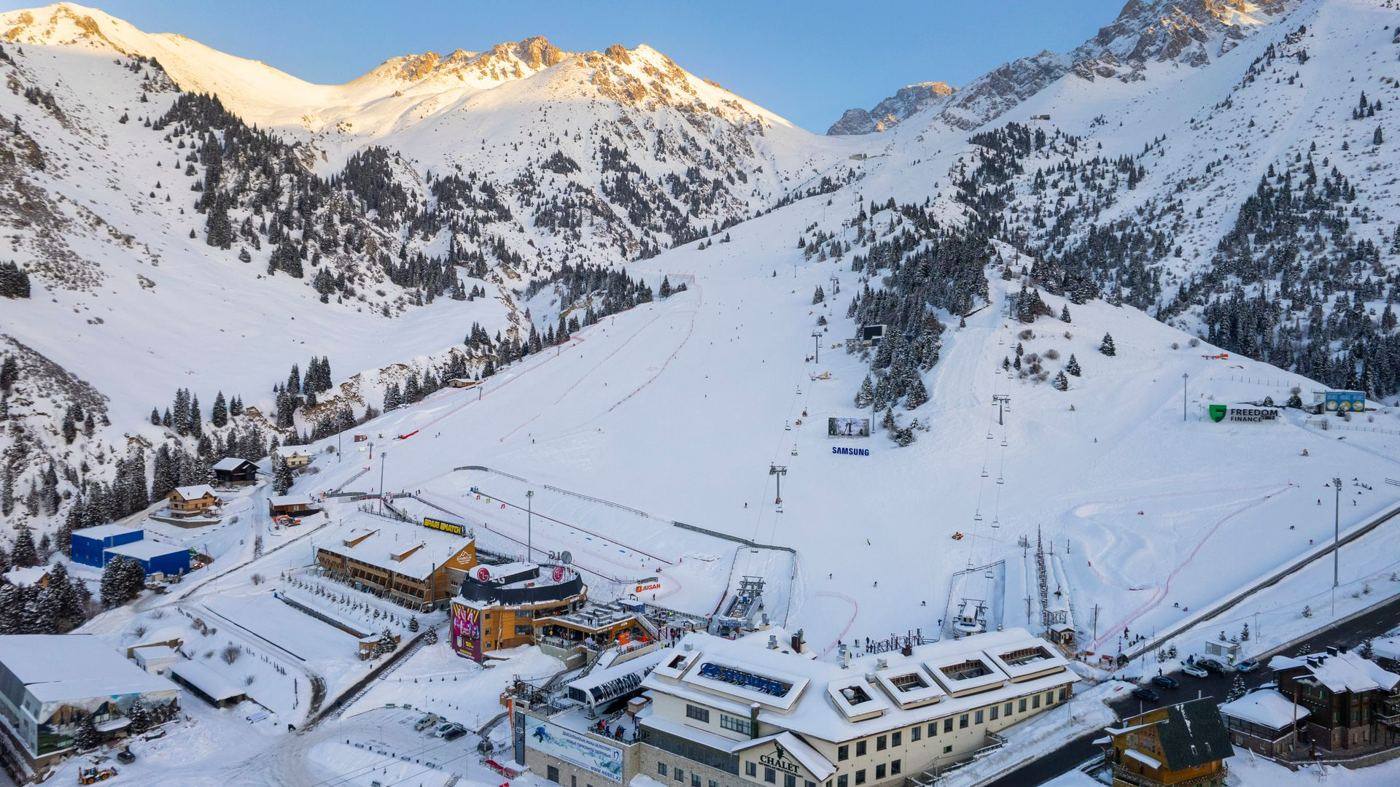 4 daysEasy
Almaty and Shymbulak
Almaty with Zenkov's wooden cathedral, the Green Bazaar and Kok-Tobe, then the Medeu skating rink and the Shymbulak resort half an hour from the centre.
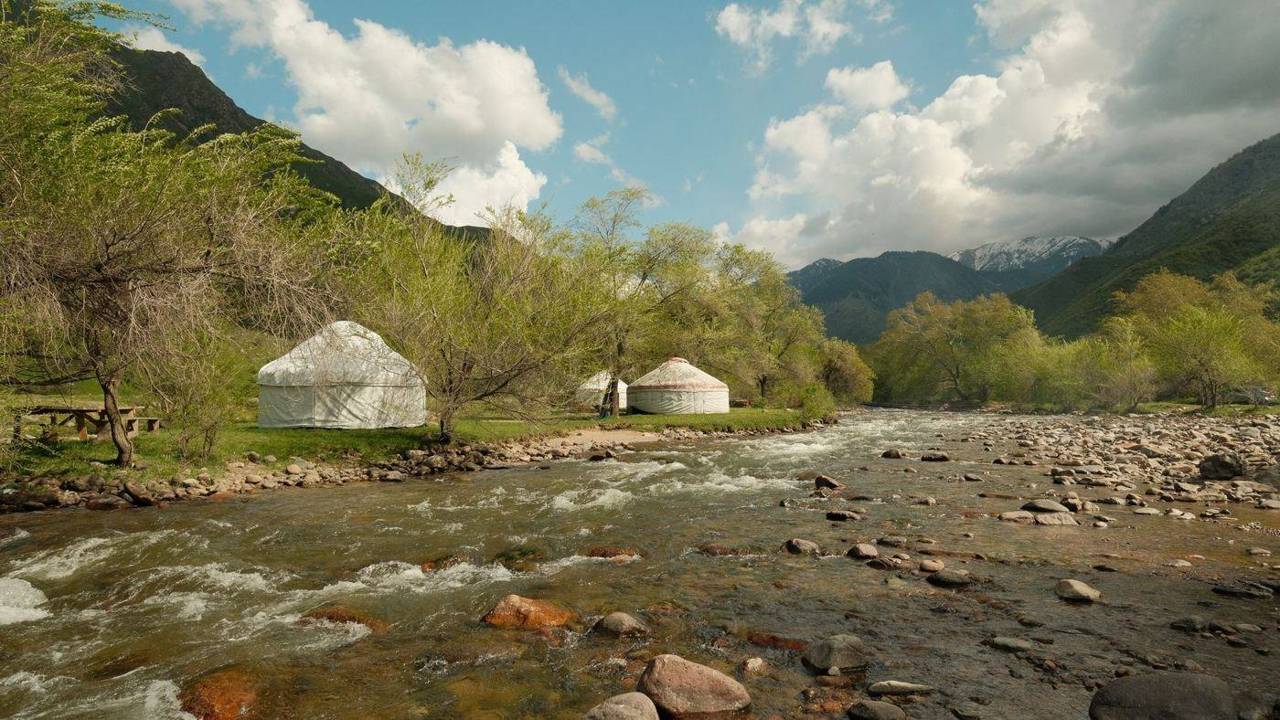 3 daysEasy
Assy and Turgen
The Assy plateau at 2,500 metres with herders and their yurts, the observatory, petroglyphs and the Turgen gorge waterfalls, two hours from Almaty.
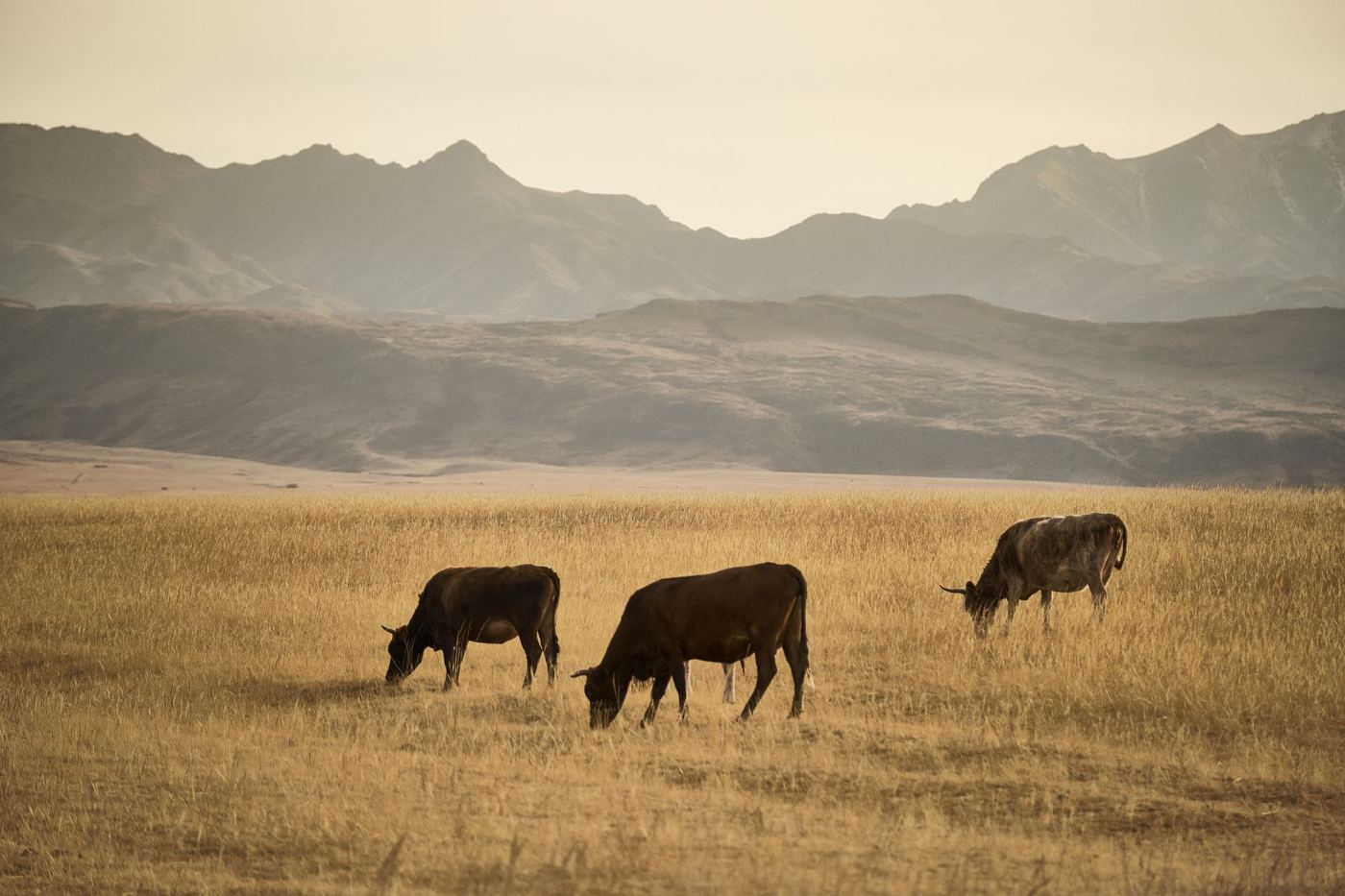 6 daysModerate
The Kazakh Altai
Katon-Karagay National Park in eastern Kazakhstan, Lake Rakhmanov, the hot springs and the view of Mount Belukha, on the border with Russia and China.