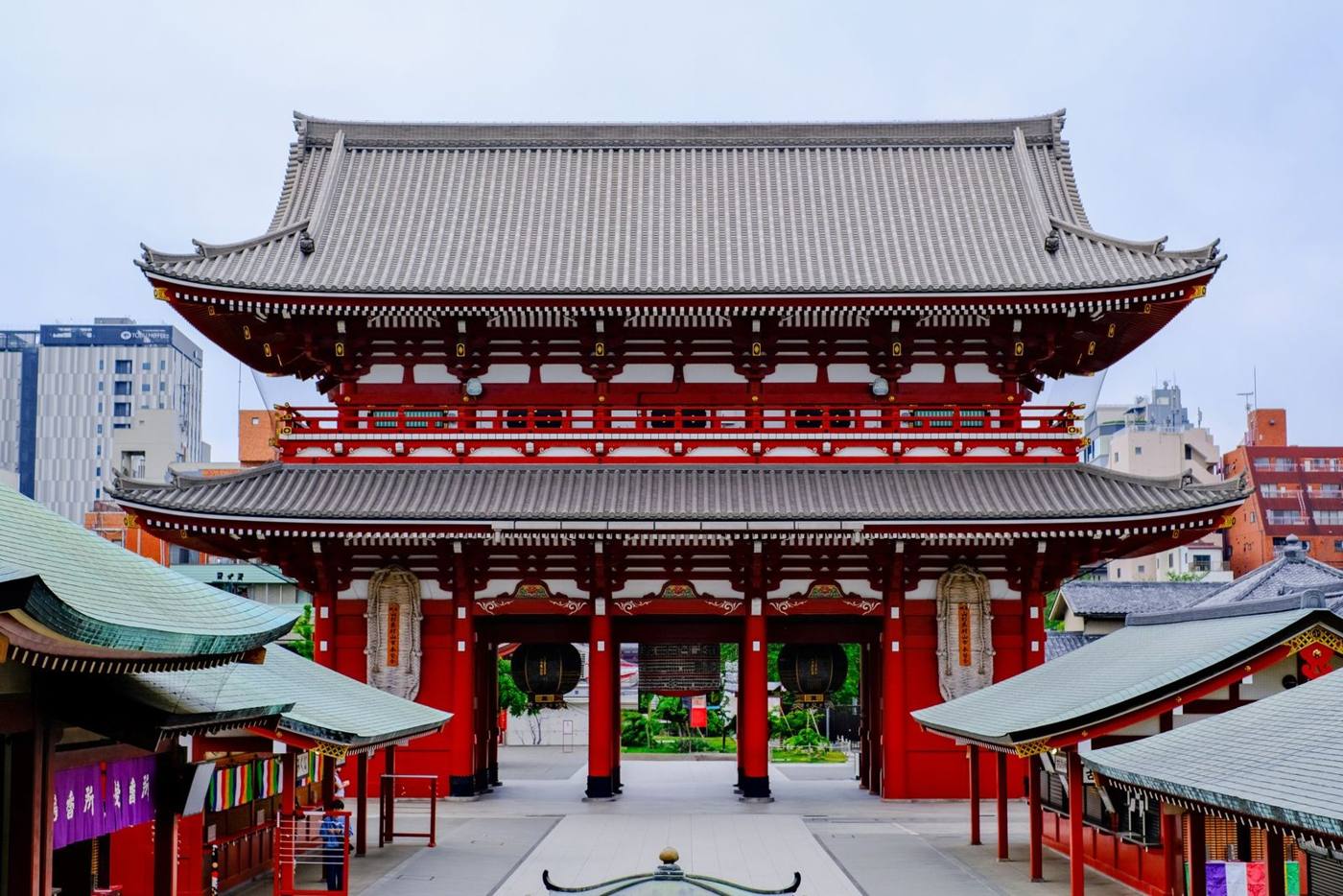
Tokyo in depth: neighbourhoods, markets and Kawagoe
Five days just for the capital, neighbourhood by neighbourhood: Sensō-ji temple in Asakusa, old Tokyo in Yanaka, the Ueno museums, Meiji Shrine and Harajuku, Shibuya and Shinjuku at night, Tsukiji outer market and a day trip to the historic town of Kawagoe.
- Asakusa
- Yanaka
- Ueno
- Tsukiji
- Ginza
- Harajuku
- Shibuya
- Shinjuku
- Kawagoe
Day by day
- Day 1
Asakusa and Sensō-ji at dawn, the Sumida river and the Skytree
For five nights stay in Asakusa, Ueno or near a Yamanote line station: the rechargeable Suica or Pasmo card, also on your phone, takes you everywhere by metro and train. This itinerary is done entirely by public transport and on foot.
Start early, around seven, at Sensō-ji, Tokyo's oldest temple, founded according to tradition in the 7th century. At that hour the shops of Nakamise street are still shut, their shutters painted with scenes of old Edo, and the courtyard holds mostly locals praying. In front of the main hall stands a large incense burner: people waft the smoke over themselves for good health. The temple halls open early and the courtyard is always accessible.
In mid-morning go down to the Sumida river and board a boat downstream towards Hamarikyū and the bay, or cross the bridge and walk along the bank. In the afternoon explore the streets behind the temple: knife, chopstick and kitchenware shops along Kappabashi, the restaurant suppliers' street, which also sells the plastic food replicas displayed in restaurant windows.
At sunset go up Tokyo Skytree, the tallest tower in Japan, or stay by the river to watch it light up. For dinner try tempura or monjayaki, a batter cooked on a griddle, a speciality of Tokyo's working-class districts. Practical tip: at Sensō-ji you can draw an omikuji, a fortune slip; if it is unlucky, tie it to the special rack and leave it at the temple.
- Day 2
Yanaka and its temples, Ueno park and museum, Ameyoko market
Today is the less touristy Tokyo. In the morning go to Yanaka, one of the few districts that survived the wartime bombing: narrow lanes, two-storey wooden houses, dozens of small temples and a large tree-lined cemetery where cherry trees bloom in spring. Walk along Yanaka Ginza, the neighbourhood shopping street, with meat croquettes and sweets, and look for the cats, the district's symbol.
Then walk down to Ueno Park, the city's largest historic park. Here is the Tokyo National Museum, the oldest and richest in the country, with samurai armour, swords, kimono, ceramics and painted screens: the main gallery alone takes two hours. The museum is closed on Mondays and some other days, so check first. The park also has Shinobazu pond, covered in lotuses in summer, the gilded Tōshō-gū shrine and the zoo.
In the afternoon leave the park for Ameyoko, the street market under the railway tracks between Ueno and Okachimachi, born after the war as a black market. Today it sells dried fish, fruit, spices, sportswear and street food, and stays noisy and lively until evening.
In the evening eat in one of the little bars under the tracks, where you dine on skewers and beer as trains rumble by. Practical tip: in Yanaka and residential districts speak quietly and do not photograph private homes up close.
- Day 3
Breakfast at Tsukiji market, Hamarikyū gardens and Ginza
The great wholesale fish market moved to Toyosu in 2018, but Tsukiji's outer market, with hundreds of stalls and small restaurants, stayed put and is the best place for a Japanese breakfast. Arrive between seven and nine: very fresh sushi and sashimi, sweet tamagoyaki omelette on a skewer, sea urchin, oysters, green tea. Many stalls close in the early afternoon and some on Sundays and Wednesdays.
If you want to see the tuna auction, you must go to the new Toyosu market, where from walkways above the hall you watch the auction at dawn; for a closer view there is a limited observation area by reservation.
In mid-morning walk to Hamarikyū gardens, the shoguns' former hunting estate on the bay, with a saltwater pond that follows the tides, a teahouse on an islet where you drink matcha with a sweet, and views of the skyscrapers all around. Boats to Asakusa on the Sumida river also leave from here.
In the afternoon stroll through Ginza, the district of department stores and boutiques. At weekends the main street closes to traffic and becomes pedestrian. Go down to the department store basements, the depachika, where sweets and food are packaged like jewels. Practical tip: at Tsukiji you eat standing at the stall, not walking, and return the little plates to the vendor.
- Day 4
Meiji Shrine, Harajuku, Omotesando, Shibuya; evening in Shinjuku
In the morning enter Meiji Shrine from the Harajuku side. It is dedicated to Emperor Meiji and the empress, in a forest planted a century ago with trees donated from all over Japan. Entry is at no cost; the inner garden, with its pond and Kiyomasa's well, has a separate ticket and is beautiful in June with the irises in bloom.
On the way out cross Takeshita-dori, the narrow street of youth fashion and colourful sweets, then walk down Omotesando, the tree-lined avenue with shops designed by leading Japanese architects. The side streets of Ura-Harajuku hold small clothing shops and cafés.
In the afternoon you reach Shibuya. The famous crossing is best seen from above, from the terraces of the new station skyscrapers; the highest, open-air one is booked online. Outside the station stands the statue of Hachikō, the dog who waited years for his dead master, the city's favourite meeting point.
In the evening go to Shinjuku. Omoide Yokocho, Memory Lane, has tiny yakitori stalls under red lanterns; Golden Gai is a maze of lanes with more than two hundred bars the size of a living room, where some accept only regulars and others charge a small cover. Practical tip: in Kabukicho ignore street touts, who lead to bars with outrageous bills.
- Day 5
Kawagoe, little Edo, and departure
On the last day leave the city for Kawagoe, about half an hour by train from Ikebukuro on the Tobu Tojo line, or from Shinjuku on the Seibu line. Kawagoe is called little Edo because it keeps a street of kurazukuri, 19th-century merchant warehouses and houses with thick clay walls and black roofs, built that way to resist fire.
From the station take a bus to the warehouse street, Ichibangai, and walk along it. Just behind is Toki no Kane, the wooden bell tower that has rung several times a day for almost four centuries. Then enter Kashiya Yokocho, the candy alley, with shops of traditional sweets, and try sweet potato in every form, Kawagoe's speciality: roasted, as ice cream, as crisps.
For the rest of the morning visit Kita-in temple, with five hundred stone statues of the Buddha's disciples, each with a different expression, and halls brought from an old castle. If your flight is in the afternoon, return to Tokyo around noon.
Haneda airport is about thirty minutes from the centre, Narita about an hour by Narita Express or Skyliner. Sending your bags to the airport with the hotel delivery service the day before leaves your hands no-cost. Practical tip: at weekends Kawagoe's main street is crowded; on weekdays it is much calmer.
Ideal as a first trip to Japan or as an add-on to a longer tour. With a prepaid transport card (Suica or Pasmo) you can go anywhere without tickets; expect to walk a lot. Many small restaurants take cash only. Tsukiji outer market is the place to eat; the tuna auctions moved to Toyosu.
Before you go
- Documents and visa
- Passport valid for the whole stay; many nationalities, including EU citizens, enter without a visa for up to 90 days for tourism. An electronic travel authorisation (JESTA) has been announced but is not yet in force: check before you go.
- Health and vaccines
- No vaccines required. Healthcare is excellent but expensive: travel insurance with high medical cover is essential. Some common medicines, such as certain codeine painkillers, are banned or restricted. Emergencies: 119 ambulance, 110 police.
- Money and payments
- Yen. Cards are increasingly accepted, but temples, small restaurants and rural areas need cash: convenience-store ATMs accept foreign cards. Tipping is not customary.
- Power sockets
- Type A, 100 volts: you need a flat-pin adapter; phone and laptop chargers work, European hairdryers often do not.
- Time zone
- UTC+9, no daylight saving time.
- Safety
- One of the safest countries in the world. The risks are natural: earthquakes, typhoons from July to October, extreme summer heat. Download an English-language alert app. Official advice: GOV.UK.
Information checked in November 2026 for Italian and EU citizens. Rules change: always check before you travel.
Variations
In 3 days: Asakusa, the Sumida river and Ueno on the first day, Tsukiji, Hamarikyū and Ginza on the second, Meiji Shrine, Shibuya and Shinjuku on the third. You give up Yanaka and Kawagoe.
In 7 days: add a day in Kamakura, with the Great Buddha and the temples in the woods, and a day in Nikko, with Tōshō-gū shrine, or a night in Hakone with hot springs and views of Fuji.
Frequently asked questions
Do I need the Japan Rail Pass for this itinerary?
No. For five days in Tokyo and a trip to Kawagoe, the Suica or Pasmo card and single tickets are enough; the pass, which costs 53,000 yen for 7 days from 1 October 2026, only pays off with long shinkansen journeys. For unlimited metro rides there are 24, 48 or 72-hour Tokyo Metro passes.
Where should I stay in Tokyo?
Near a Yamanote line or metro station. Asakusa and Ueno are quieter and a little cheaper, handy for Narita airport; Shinjuku and Shibuya are livelier at night; Tokyo Station and Ginza are central for shinkansen travel. Rooms are small: check the square metres before booking.
When is the best time to go?
Late March to early April for cherry blossom, with crowds and high prices, May, and October to late November for mild weather and maples. July and August are very hot and humid; June is the rainy month. Winter is dry and sunny, with Fuji visible more often.
Indicative itinerary written by World Atlas. Before booking, check timetables, seasonal openings, documents and safety.
 6 daysModerate
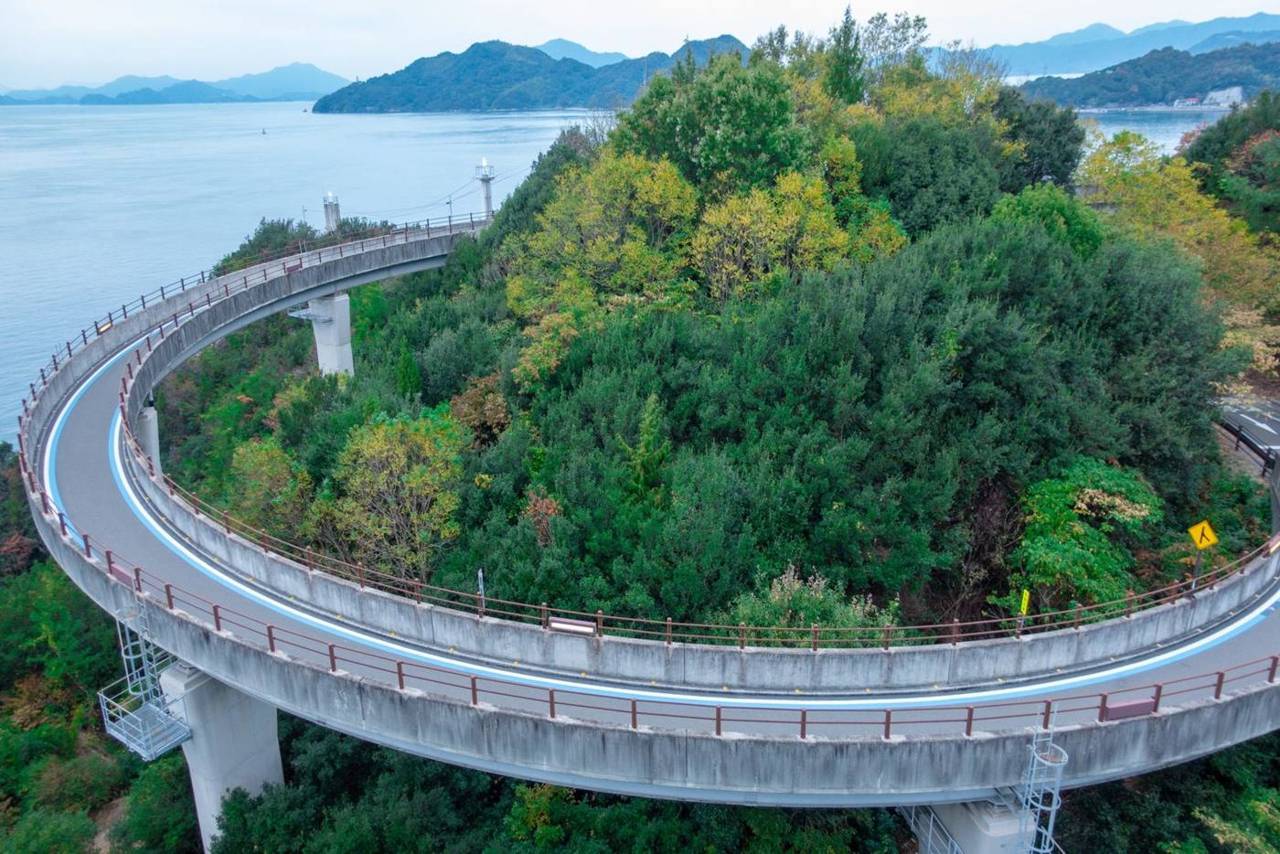
Seto Inland Sea: Naoshima and the Shimanami Kaido
The contemporary art islands of Naoshima and Teshima, the canal quarter of Kurashiki, Onomichi with its hillside temples and the Shimanami Kaido cycle route crossing six islands on great bridges to Imabari.
 9 daysEasy
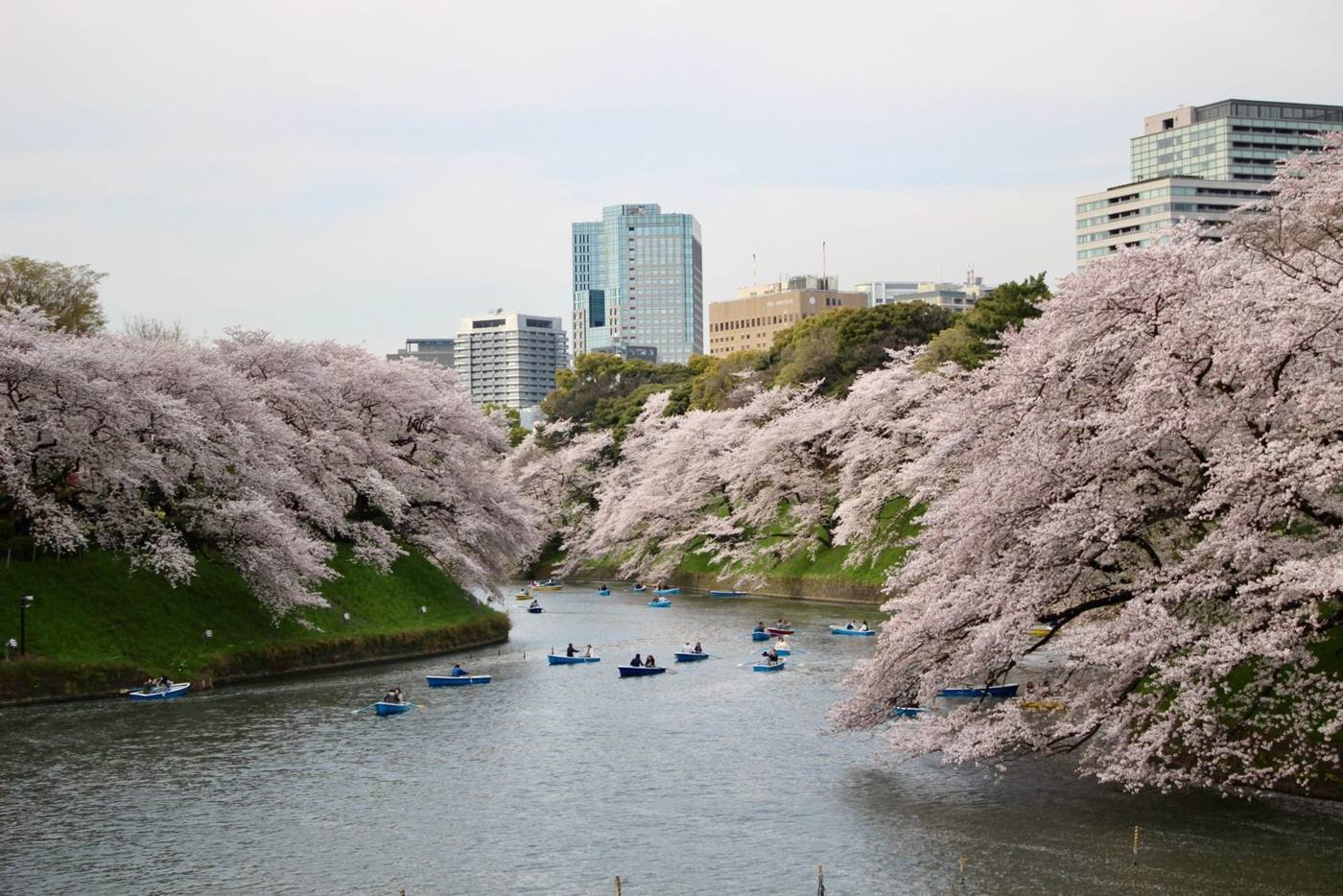
Cherry blossoms: Tokyo, Kawaguchiko, Kyoto and Yoshino
A trip built around the sakura bloom, followed from east to west: the Imperial Palace moats and Ueno Park in Tokyo, Mount Fuji framed by blossoms at Lake Kawaguchi, the Philosopher's Path and Maruyama in Kyoto, and the thirty thousand cherry trees of Mount Yoshino.
 5 daysChallenging
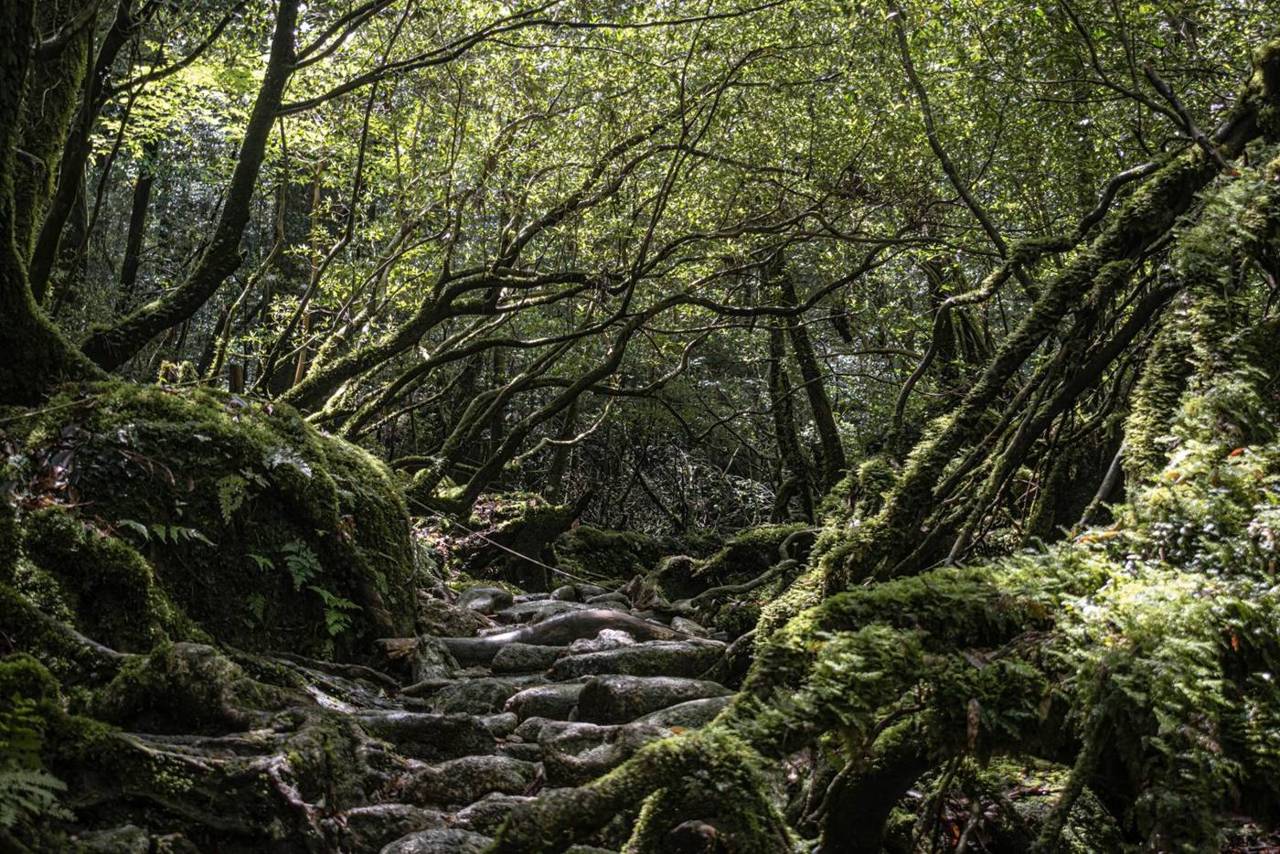
Yakushima, the forest of ancient cedars
A subtropical island covered in ancient forests, a UNESCO World Heritage site: the Shiratani Unsuikyō gorge with the moss that inspired Miyazaki, the trek to the Jōmon Sugi cedar, the Ōko falls and Nagata beach where turtles nest.