Treasure Beach and YS Falls
The south coast of fishing villages, Pelican Bar on stilts in the sea, the boat through the Black River mangroves and YS Falls.
- Treasure Beach
- Pelican Bar
- Black River
- YS Falls
Day by day
- Day 1
Treasure Beach
This three-day trip takes you to Jamaica's south coast, in the parish of St Elizabeth: the fishing villages of Treasure Beach, a shack on stilts built on a sandbar out at sea, the mangroves of the Black River and YS Falls.
Before you go: Italian citizens enter Jamaica with a passport valid for at least six months from the date of entry, and without a visa for stays of up to 90 days; before your flight, complete the C5 immigration and customs form online on the official website. Other nationalities should check their own rules. The United States advises reconsidering travel to Jamaica because of crime and bars its staff from some areas, including, in St Elizabeth, the Vineyard district between Salt Spring and Burnt Savanna: avoid it. Use only licensed transfers and taxis with the blue JTB sticker and do not walk around after dark. This coast was the hardest hit by Hurricane Melissa in October 2025: many places reopened in 2026, but others are still being rebuilt, so check first.
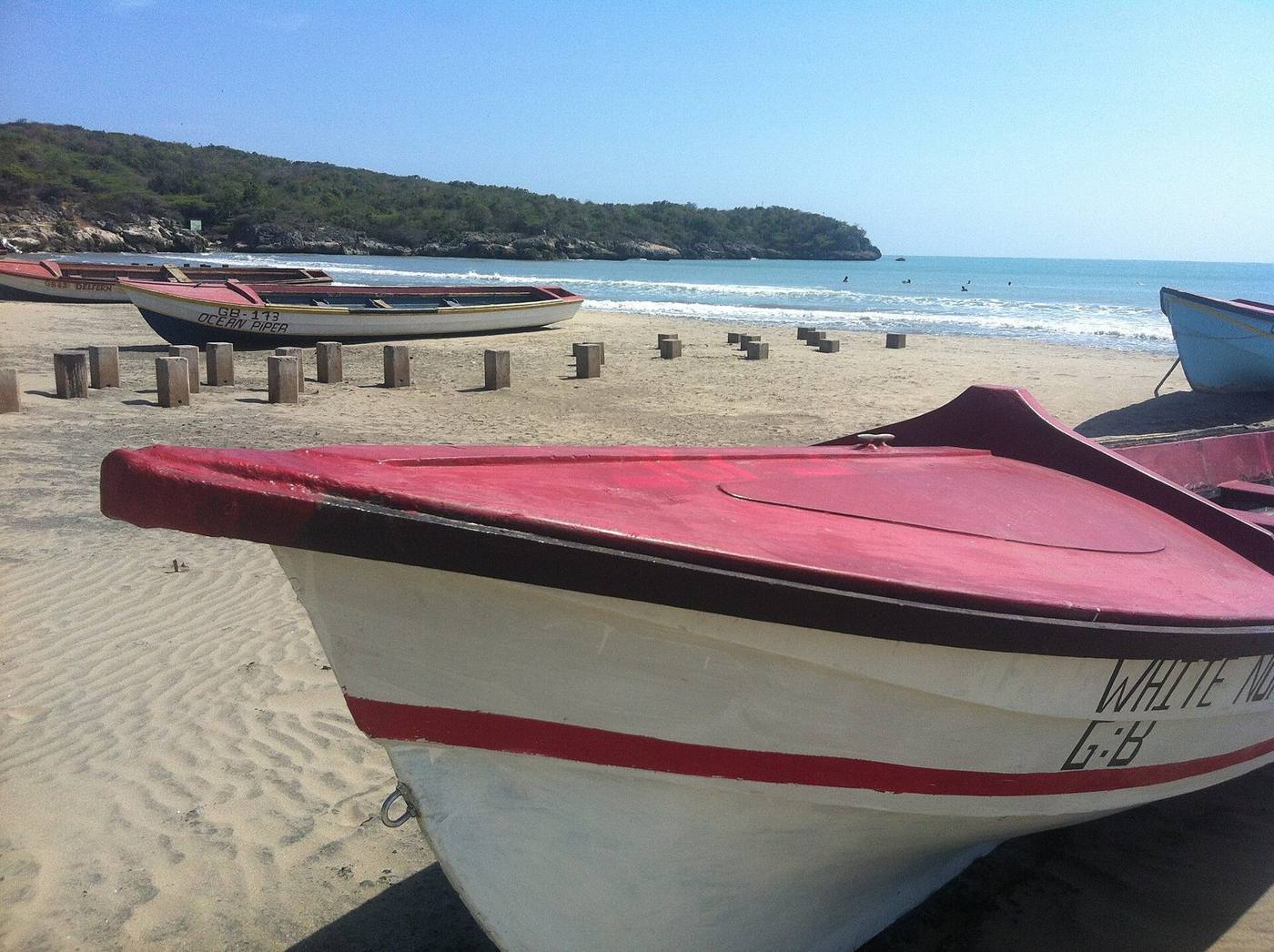
Arrive in Treasure Beach by transfer from Montego Bay or Kingston. It is not a single beach but a string of bays and fishing villages along the coast, with dark sand beaches, colourful boats pulled up on the shore and a drier climate than the rest of the island.
In the afternoon walk along the bays, watch the fishermen mending their nets and swim where the sea is calm.
At sunset sit on the beach: here the sun sets into the sea and the sky turns orange.
In the evening eat freshly caught fish, lobster if it is in season, or escovitch fish, fried and topped with onions, peppers and vinegar.
Sleep in Treasure Beach, for two nights.
Practical tip: currents on some beaches are strong, so ask the fishermen where it is safe to swim.
- Day 2
The shack at sea and the Black River
Today you spend the day on boats, between the sea and the river.
In the morning board a licensed fisherman's boat and cross the sea to the wooden shack on stilts built on a sandbar, some distance from the coast. Around it the water is shallow and clear: you can climb down to swim on the sandbar, have a drink and eat fish or lobster looking out to the open sea. Agree the boat price and return time before you leave.
In the afternoon go to the Black River, one of the longest rivers in Jamaica, and take a boat trip through the mangroves. The tree roots reach down into the dark water, there are herons, kingfishers and other birds, and American crocodiles live on the banks, often seen lying still in the sun. Listen to the guides and do not lean out of the boat. Check prices and times.
The town of Black River was badly hit by the hurricane: look at the rebuilding with respect and buy something from local vendors.
In the evening return to Treasure Beach and have a simple meal of rice and peas with curry chicken.
Sleep in Treasure Beach.
Practical tip: bring sun cream, a hat and water, as the sun on the boat is very strong and there is little shade.
- Day 3
YS Falls and departure
Today is the last day.
In the morning head inland, into the St Elizabeth countryside, to YS Falls, on a farming estate among pastures and trees. From the car park a tractor-drawn trailer takes you close to the falls. The water drops over a series of cascades into cool green pools, surrounded by tall trees. You can swim in the pools, swing out on a rope hanging from a tree or simply rest in the shade. After the hurricane the vegetation is still recovering and opening days may be reduced, so check prices and times.
On the way back stop at Middle Quarters, a village famous for spicy river shrimp, sold in bags by women along the road.
In the afternoon leave for Montego Bay or Kingston airport, with a licensed transfer and time to spare.
In these three days you have seen Jamaica's south coast: the fishing villages of Treasure Beach, the shack in the middle of the sea, the mangroves and crocodiles of the Black River and the pools of YS Falls. It is the calmest side of the island, getting back on its feet after the hurricane.
When to go: from December to April the weather is dry and the sea is calm for boat trips. From June to November it is hurricane season, so always follow the forecasts.
Practical tip: recovery here depends on tourism, so choose accommodation, guides and boats from the local community.
Authentic, quiet Jamaica. This area was the hardest hit by Hurricane Melissa in October 2025 and some places are still being rebuilt: check first. Tourism here helps the recovery.
Before you go
- Documents and visa
- Passport with at least six months' validity on entry; no visa is needed for stays of up to 90 days. You may have to show a return ticket and enough funds. The C5 immigration and customs form must be completed online on the official enterjamaica.com website, up to 30 days before travel.
- Health and vaccines
- There is a risk of dengue and Zika: protect yourself from mosquitoes. Drink bottled water. After Hurricane Melissa in October 2025, healthcare remains limited in some western areas. Treatment is expensive and often paid on the spot: you need insurance covering medical costs and repatriation. Emergencies: 119 police, 110 ambulance.
- Money and payments
- Jamaican dollar. The US dollar is accepted in many tourist places, but change often comes in local currency. Visa and Mastercard work in towns and at accommodation; use cash machines by day and in safe places.
- Power sockets
- Types A and B, 110 volts: you need an adapter for American plugs, and check that your devices accept this voltage.
- Time zone
- UTC-5 all year.
- Safety
- The United States advises reconsidering travel to Jamaica because of crime and bars its staff from some areas, including downtown Kingston with Trench Town and Tivoli Gardens, Spanish Town, most of Clarendon Parish and the inland side of the A1 road in Montego Bay. The United Kingdom advises caution in Kingston, Spanish Town, Savanna-la-Mar and parts of Montego Bay. The government can declare states of emergency in some areas: ask locally. Use only taxis and transfers licensed by the tourist board, with the blue JTB sticker, and do not walk around after dark. Hurricane Melissa hit the western parishes hard in October 2025: check that roads and sites are open. Official advice: GOV.UK.
Information checked in November 2026 for Italian and EU citizens. Rules change: always check before you travel.
Variations
Shorter: two days with Treasure Beach and the boat trip, without YS Falls.
Longer: add two days in Negril, with its cliffs and Seven Mile Beach, to the west.
Frequently asked questions
Has the south coast recovered after Hurricane Melissa?
Largely, yes: in 2026 YS Falls, the shack at sea and many activities in Treasure Beach reopened. Some places are still being rebuilt, so check before you go.
Do you really see crocodiles on the Black River?
Often, yes, especially in the hot hours, lying still on the banks. Stay seated in the boat and follow your guide's instructions.
Is Treasure Beach good for swimming?
Yes, but not everywhere: some beaches have strong currents. Ask locally which bays are calmer.
Indicative itinerary written by World Atlas. Before booking, check timetables, seasonal openings, documents and safety.
 8 daysEasy
The north coast and the Blue Mountains
Dunn's River Falls, Port Antonio and the Blue Lagoon, the Blue Mountains and their coffee, and the Bob Marley Museum in Kingston.
 6 daysEasy
Negril and the South Coast
Negril's cliffs and sunsets, Seven Mile Beach, the village of Treasure Beach, the Pelican Bar at sea and YS Falls.
 5 daysModerate
Montego Bay and Cockpit Country
The karst hills of Cockpit Country, the Maroon community of Accompong, the Luminous Lagoon with glowing plankton and the old Rose Hall plantation.