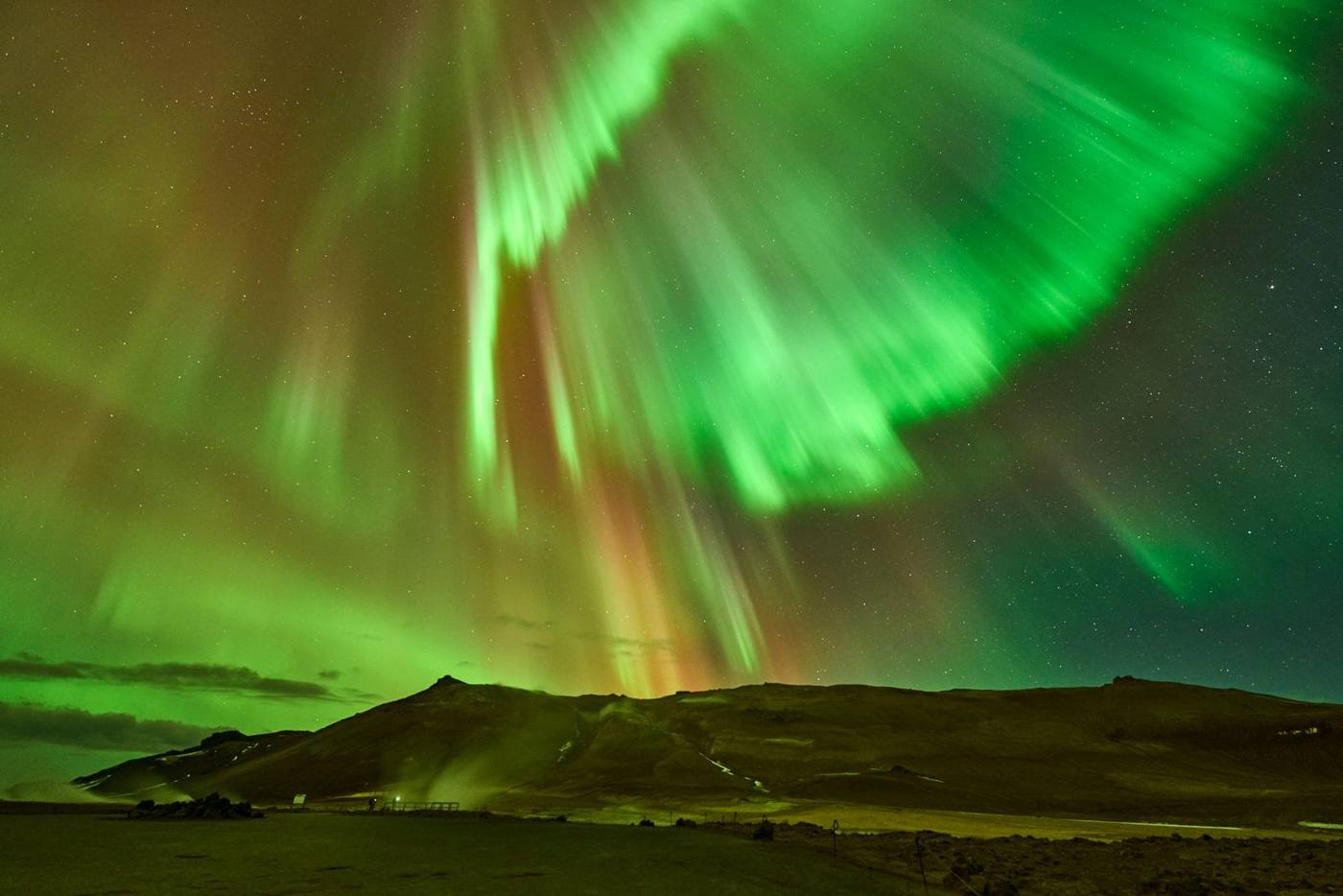
Northern lights in winter
Hunting the aurora away from city lights, ice caves under Vatnajökull and frozen waterfalls on the south coast.
- Reykjavík
- Þingvellir
- Vík
- Skaftafell
- Jökulsárlón
- Reykjavík
Day by day
- Day 1
Arriving in Reykjavík and the first evening out for the aurora
Winter in Iceland is a special season: the days are short, with a few hours of low golden light, the landscapes are covered in snow and ice, the waterfalls partly freeze and, on clear nights, the sky lights up with the aurora borealis, the northern lights, dancing in green and sometimes purple and pink waves. It is also the season of the ice caves inside the glaciers, which can only be visited with guides. In six days you see Reykjavík, the Golden Circle, the south coast, Skaftafell and the Jökulsárlón glacier lagoon.
You arrive at Keflavík airport, about forty minutes from Reykjavík, with direct flights from many European cities. In winter it is best to hire a 4x4 with studded tyres, or to take the trip with an organised tour.
In the afternoon, walk around central Reykjavík, with its colourful corrugated-iron houses, the old harbour and Hallgrímur's church, with its tower shaped like basalt columns, from which you see the whole city. Visit also Harpa, the glass concert hall by the sea.
In the evening, if the forecast is good, leave the city to look for the aurora: you can go on your own towards Grótta lighthouse at the tip of the peninsula, or join a guided trip by bus or boat that takes you away from the lights.
In the evening, sleep in Reykjavík.
Practical tip: the aurora cannot be guaranteed. It needs a clear sky, darkness and solar activity. Check the aurora and cloud forecasts every day on the Icelandic Met Office website, and be ready to go out late.
- Day 2
The Golden Circle in winter and a night in the countryside
In the morning, set off on the Golden Circle, the classic loop east of Reykjavík, which in winter has a different atmosphere, with snow and the dawn light arriving late, around ten or eleven.
The first stop is Þingvellir National Park, a UNESCO World Heritage Site, where in 930 the Althing, one of the oldest parliaments in the world, first met. Here the North American and Eurasian plates are moving apart, and you walk in a great rift between rock walls, the Almannagjá gorge.
Then go to the Geysir geothermal area, where the Strokkur geyser shoots a column of boiling water up to about twenty metres high every few minutes, amid steam rising from the snowy ground.
Not far away is Gullfoss, the golden waterfall, dropping in two steps into a deep gorge. In winter it is surrounded by ice and icicles, with water still flowing under the snow.
In the afternoon, as darkness falls, relax in an open-air geothermal pool, such as those in the Flúðir or Laugarvatn area, in hot water while it snows outside.
In the evening, sleep in a country lodging in the south, far from lights, where you can step outside the door to watch for the aurora.
Practical tip: there is a parking fee at Þingvellir. Roads can be icy: drive slowly, never stop on the road to take photos and check conditions before setting out.
- Day 3
The south coast: waterfalls, Reynisfjara and Vík
In the morning, drive east along the Ring Road, the road around the island, along the south coast.
Stop at Seljalandsfoss, a waterfall about sixty metres high dropping from a cliff. In summer you walk behind the falls, but in winter the path is often closed or icy. Then continue to Skógafoss, a great waterfall about twenty-five metres wide and sixty high, which often makes a rainbow in sunshine. A staircase climbs to a viewpoint at the top.
In the afternoon, go to the black beach of Reynisfjara, near Vík, with black volcanic sand, basalt columns, a cave and the Reynisdrangar sea stacks rising from the sea. The beach is beautiful but dangerous because of sudden sneaker waves, which run much higher up the beach than others and drag people into the sea. At the entrance a system of lights shows the level of danger.
Then stop in Vík, a small village with a red church on the hill above the sea.
In the late afternoon, continue east across Mýrdalssandur and Eldhraun, a huge moss-covered lava field, to Kirkjubæjarklaustur or the Skaftafell area.
In the evening, sleep in the Skaftafell area and, if the sky is clear, watch the aurora above the glaciers.
Practical tip: at Reynisfjara respect the yellow and red lights. With the red light, the columns and the cave are closed. Never turn your back on the sea and keep well away from the water's edge.
- Day 4
Skaftafell and the ice cave with a guide
Today you are at the foot of Vatnajökull, Europe's largest glacier by volume, part of a national park that is a UNESCO World Heritage Site.
In the morning, walk at Skaftafell, a green area of the park between tongues of ice. A trail of about two hours there and back leads to Svartifoss, the black waterfall, which falls from a wall of dark basalt columns resembling organ pipes, surrounded by ice in winter. Another, easier trail leads to the front of the Skaftafellsjökull glacier, with blue and grey ice.
In the afternoon, take the ice cave excursion, the most awaited moment of the trip. The caves form inside the glaciers in summer, when meltwater carves tunnels in the ice, and in winter the cold makes them stable enough to visit. Inside, the ancient compressed ice is an intense blue, with air bubbles, streaks of volcanic ash and translucent walls that let the light through. Every year the caves change shape and position.
The excursion is only done with authorised guides, with crampons and helmet, setting off by 4x4 from meeting points near Jökulsárlón or Skaftafell.
In the evening, sleep in the Skaftafell or Höfn area.
Practical tip: never enter an ice cave alone: it can collapse. Excursions usually run from November to March and may be cancelled because of rain or temperatures that are too high.
- Day 5
Jökulsárlón at dawn and the return
Early in the morning, go to Jökulsárlón, the glacier lagoon, about an hour from Skaftafell. Here the Breiðamerkurjökull glacier breaks into icebergs that float slowly across the lagoon, blue, white and streaked with black, before drifting out to sea. Seals often swim among the ice or rest on the icebergs.
At dawn, which comes late in winter, pink and orange light colours the ice and mountains. Then cross the road and go down to Diamond Beach, where blocks of ice brought back by the sea lie on the black sand and sparkle like crystals in the sun.
Then begin the long drive back west along the south coast to Reykjavík, about five and a half hours without stops. On the way you can stop again at the waterfalls or at Fjaðrárgljúfur, a winding moss-covered canyon, if the path is open.
In the late afternoon you reach Reykjavík. If you still have energy, relax in one of the city's public geothermal pools, used by Icelanders, or in a thermal lagoon.
In the evening, sleep in Reykjavík and, if the sky is clear, go out one last time to look for the aurora.
Practical tip: in Iceland an accommodation tax of 800 krónur per unit per night is charged. Distances take longer in winter because of darkness and snow: avoid driving at night if you do not need to.
- Day 6
Departure
On the last day, depending on your flight time, you can take a final walk in Reykjavík: the seafront with the Sun Voyager steel ship sculpture, the weekend covered market, or the National Museum, with the island's history from the Vikings to today.
If your flight leaves in the afternoon, on the way to the airport you can stop on the Reykjanes peninsula, with its lava fields, the geothermal areas of Seltún and Gunnuhver, with boiling mud pools and steam, and the Bridge Between Continents, a small bridge across the rift between the North American and Eurasian plates.
Before going to this area, check the warnings: the Reykjanes peninsula has had several volcanic eruptions in recent years, and some roads and areas may be closed.
Alternatively, relax in one of the thermal lagoons near the airport before your flight.
Reach Keflavík airport at least two and a half hours early, and return the hire car.
This trip combines well with the Snæfellsnes peninsula north of Reykjavík, or with north Iceland, Akureyri and Lake Mývatn, with natural baths and the aurora, reachable by domestic flight.
Practical tip: before going to the Reykjanes peninsula, check closed areas and warnings on the official travel safety website for Iceland.
A short, magical trip, but the aurora is never guaranteed: it depends on clouds and solar activity. Winter driving is hard, so choose guided tours or a driver if you lack experience on snow and ice. Ice caves can only be visited from November to March.
Before you go
- Documents and visa
- EU citizens need only a valid identity card or passport: Iceland is not in the European Union but is in the Schengen area. The ETIAS authorisation is not yet in operation and need not be requested.
- Health and vaccines
- No vaccines required. EU citizens should carry the European Health Insurance Card, valid in Iceland, plus insurance covering rescue in remote areas. Emergencies: 112.
- Money and payments
- Icelandic króna. Cards are accepted everywhere, even for small sums and at petrol pumps; cash is hardly needed. Tipping is not expected.
- Power sockets
- Types C and F, 230 volts.
- Time zone
- UTC all year round: Iceland does not use daylight saving time.
- Safety
- The country is very safe; the risks are natural: storms, icy roads, sneaker waves on southern beaches, eruptions on the Reykjanes peninsula. Official advice: GOV.UK.
Information checked in November 2026 for Italian and EU citizens. Rules change: always check before you travel.
Variations
In 4 days: Reykjavík, the Golden Circle and the south coast to Vík.
In 8 days: add Snæfellsnes or the north and Lake Mývatn.
Frequently asked questions
When is the best time for the aurora?
From September to March, on dark, clear nights. From November to March you can also visit the ice caves, but the days are very short.
Is driving in winter difficult?
Roads can be icy, with strong winds and storms. You need a car with winter tyres, experience of driving on snow and a daily check of conditions; otherwise an organised tour is better.
Can I go into the ice caves alone?
No, never: they are visited only with authorised guides, with crampons and helmet, because the ice can collapse.
Indicative itinerary written by World Atlas. Before booking, check timetables, seasonal openings, documents and safety.
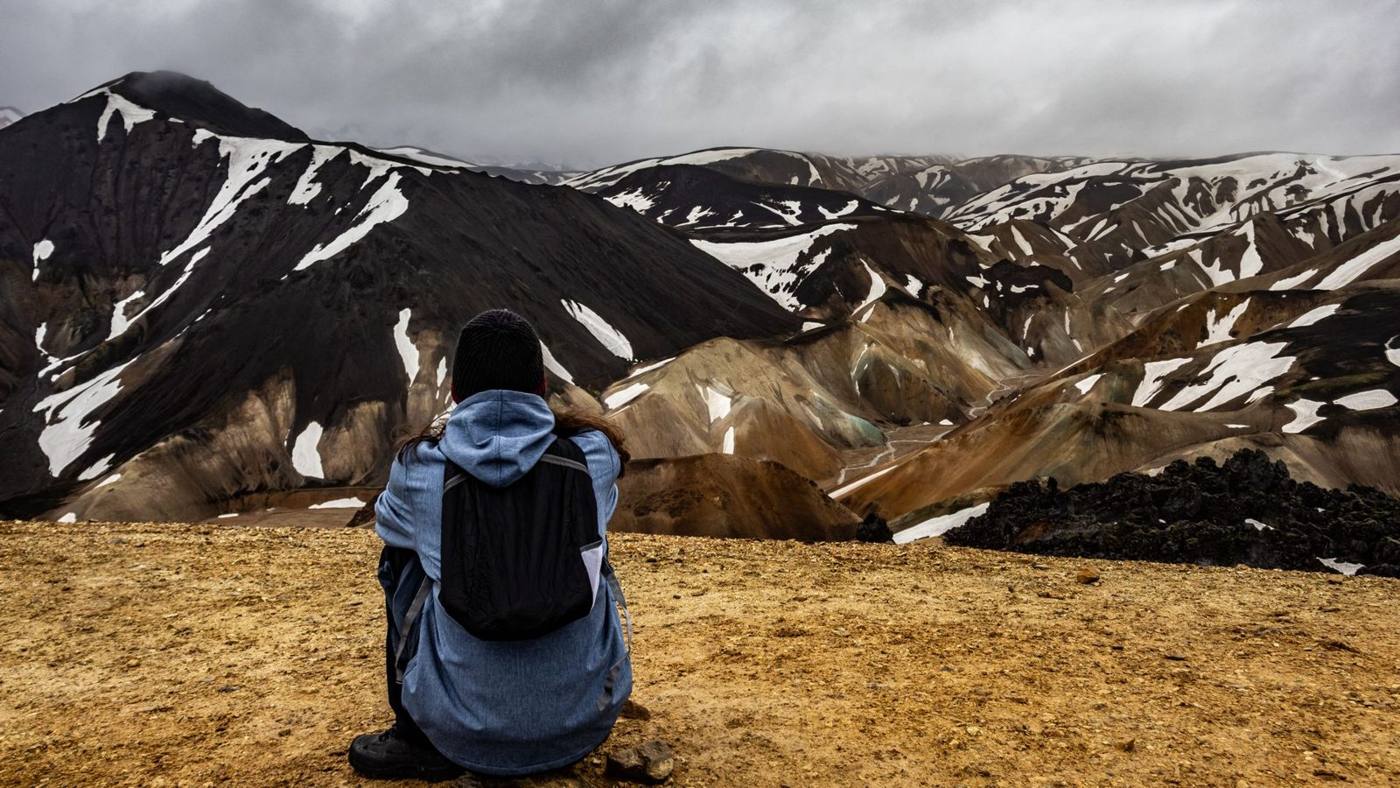 8 daysChallenging
The Laugavegur trek
Four days on foot from Landmannalaugar to Þórsmörk among coloured rhyolite mountains, obsidian fields, glaciers and rivers to ford.
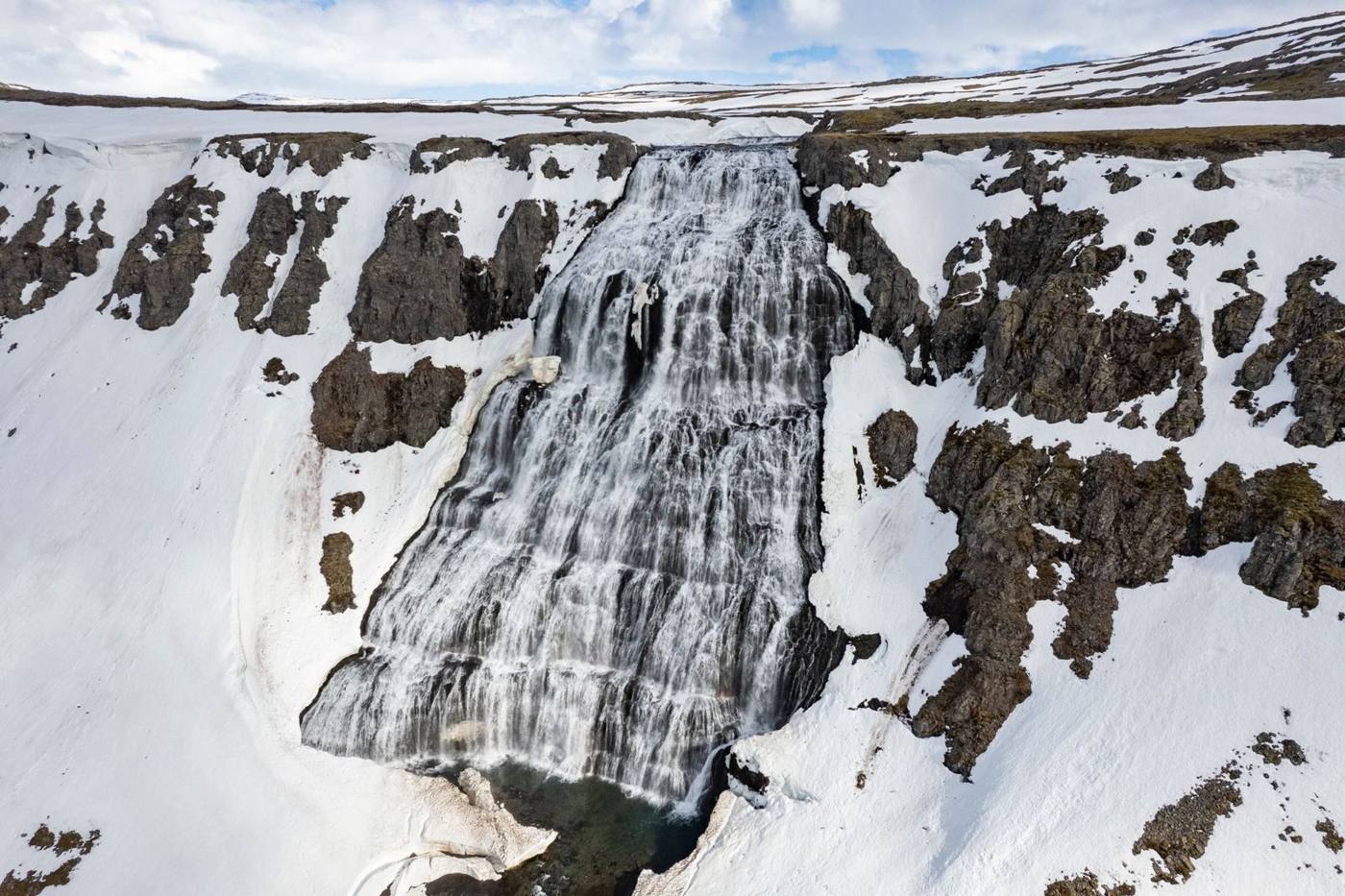 9 daysModerate
The Westfjords
Iceland at its most remote: Dynjandi waterfall, the Látrabjarg cliffs with their puffins, empty fjords and hot pools by the sea.
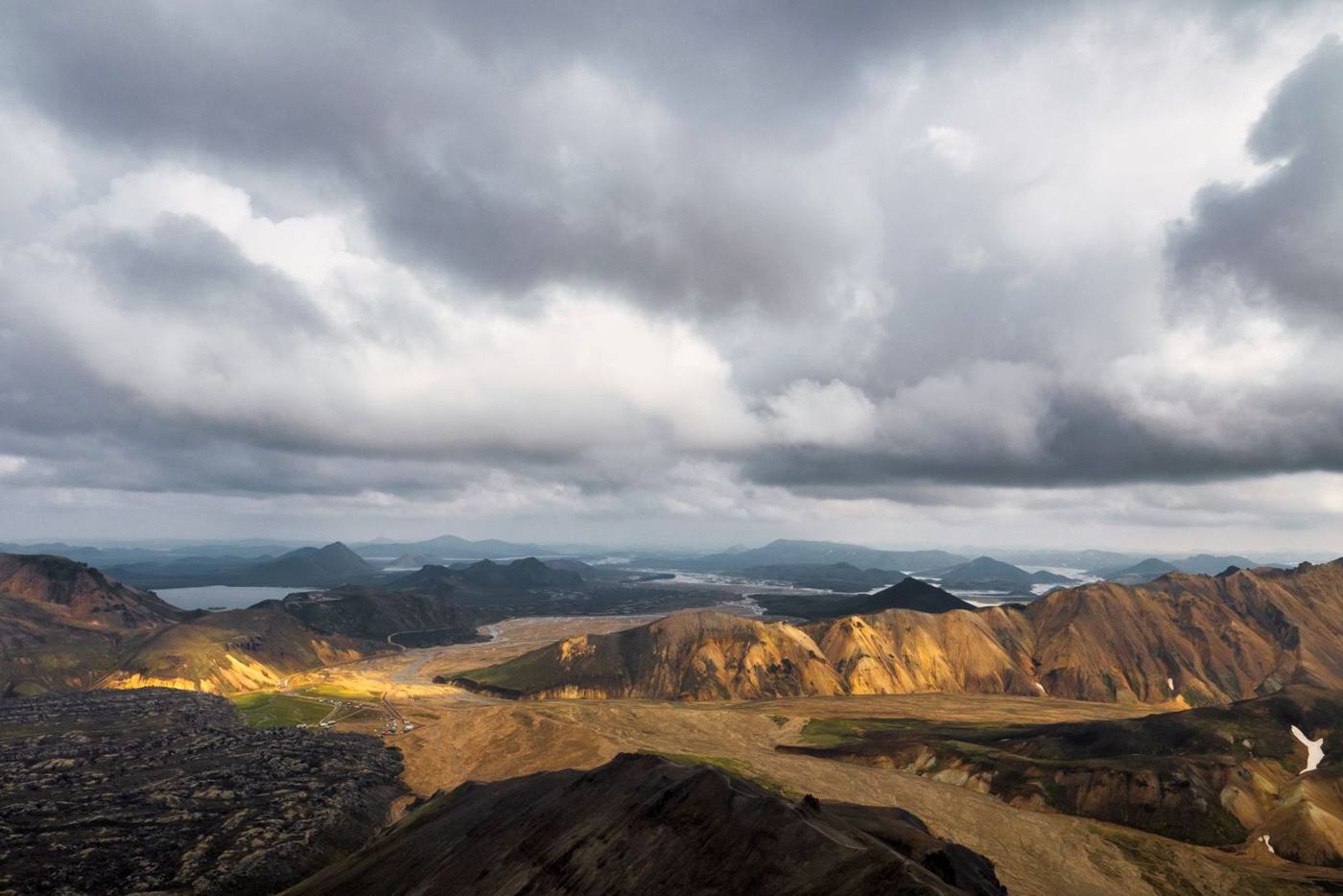 10 daysModerate
The Highlands by 4x4
Iceland's uninhabited interior: Landmannalaugar, the Kerlingarfjöll mountains, Askja crater and the Holuhraun lava field.