The Bohemian spa towns
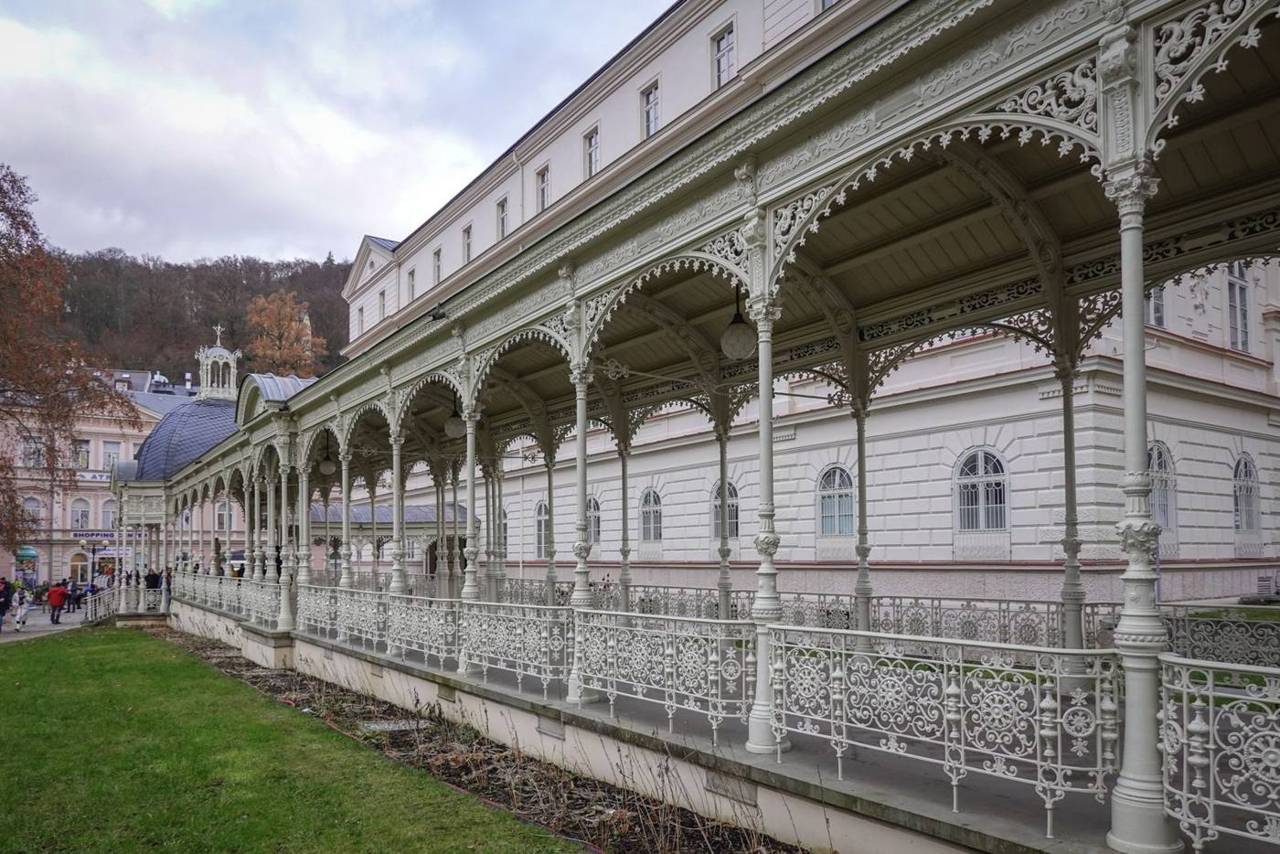
The UNESCO spa triangle: the colonnades of Karlovy Vary, the park and singing fountain of Mariánské Lázně, Františkovy Lázně and the Plzeň brewery.
- Karlovy Vary
- Loket
- Mariánské Lázně
- Františkovy Lázně
- Plzeň
Day by day
- Day 1
Karlovy Vary: the colonnades and the springs
This trip is a four day tour of the spa towns of western Bohemia, three of which belong to the Great Spa Towns of Europe, a UNESCO World Heritage Site: Karlovy Vary, Mariánské Lázně and Františkovy Lázně. Between springs you visit Loket Castle and finish in Plzeň, the city of pale lager.
Before you go: the Czech Republic is part of the European Union and the Schengen area, but it uses the Czech koruna. Italian citizens only need a valid electronic identity card or passport; the paper identity card has not been valid for travel abroad since 3 August 2026. Other nationalities should check their own rules. The United States rates the country level 1, the lowest. If you drive, remember that the alcohol limit is zero and that motorways need an electronic vignette, to be bought only on the official website.
From Prague you reach Karlovy Vary by bus or car in about two hours. The town is squeezed into a valley along the Teplá river, with colourful Belle Époque buildings. Walk along the colonnades: the great Mill Colonnade, with its stone columns, the Market Colonnade, in white wood, and the colonnade of the Vřídlo spring, where hot water shoots up more than ten metres high.
You drink the springs from the public fountains, using the porcelain spa cup with a spout, which you buy in the shops. The water is hot, salty and very mineral: drink a little at a time. Also try oplatky, the large spa wafers, and the herbal liqueur created in the town in the nineteenth century.
Sleep in Karlovy Vary, for two nights.
Practical tip: each spring has a number and a temperature written on the fountain. Start with the cooler ones, because the hottest are over seventy degrees.
- Day 2
Loket Castle on the Ohře
In the morning go to Loket, about twenty minutes from Karlovy Vary by car or bus. It is a small medieval town almost entirely enclosed by a bend of the Ohře river, above which a Gothic castle rises on a granite cliff. The name means elbow, after the shape of the river.
Visit the castle, with its tower, halls, chapel and dungeons. From the tower you see the red roofs of the town and the river all around. The castle also has an exhibition on the porcelain of the region, famous for centuries. Check prices and times. Then walk around the town square, long and gently sloping, with its colourful houses and Baroque column.
In the afternoon take a walk along the river: a path follows the Ohře to the Svatošské skály rocks, oddly shaped granite towers linked to an old legend of a wedding party turned to stone. In summer many people paddle this stretch of river by canoe.
Return to Karlovy Vary for the evening. If you have time, try one of the town's thermal pools or book a treatment at a spa centre.
Practical tip: spa treatments, such as mineral water baths or massages, must be booked ahead. Always ask what the price includes and how long the treatment really lasts.
- Day 3
Mariánské Lázně and Františkovy Lázně
In the morning go to Mariánské Lázně, about an hour from Karlovy Vary. It is a younger spa town, founded in the early nineteenth century, built around a large English-style park, with white and yellow hotels on the hills and forests all around.
The centrepiece is the Colonnade, a long nineteenth century gallery of cast iron and glass, with frescoes on the ceiling. Here you drink the spring water, cooler and lighter than in Karlovy Vary. In front of it is the Singing Fountain: from May to October its jets of water move in time to music, usually on the odd hours. Check the times.
Then walk through the park and up towards the pavilions of the other springs, in the woods. Goethe spent several summers here and many plaques recall famous guests.
In the afternoon continue to Františkovy Lázně, the smallest of the three towns, near the German border. It is a gem of yellow and white neoclassical houses, with straight avenues, parks and pavilions with columns. Next to the main spring stands the small statue of a boy holding a fish: according to tradition, whoever touches it will soon have a child.
Sleep in Mariánské Lázně or Františkovy Lázně.
Practical tip: the water from some springs has a laxative effect. Do not drink large amounts all at once and check the signs or ask at the tourist office.
- Day 4
Plzeň and departure
Last day. In the morning drive to Plzeň, about an hour away. This is the city where bottom-fermented pale lager was born in 1842, the beer the world now calls pils.
The heart of the city is Republic Square, one of the largest in the country, with the Gothic Cathedral of St Bartholomew in the middle. Its bell tower, over a hundred metres tall, is the highest in the Czech Republic: you can climb up to the viewing gallery. Check prices and times. Nearby is the Great Synagogue, one of the largest in Europe.
Then visit the city's historic underground, kilometres of cellars and passages dug beneath the houses in the Middle Ages, used to store beer and food. Check prices and times. If you like, visit the city's historic brewery, with the cellars where the beer matures in wooden barrels. Check prices and times.
Plzeň lies halfway between Prague and the German border: you can return to Prague in an hour and a half or continue into Germany.
In these four days you have seen the spas of Bohemia: the colonnades and springs of Karlovy Vary, Loket Castle on the Ohře, the park and Singing Fountain of Mariánské Lázně, the yellow houses of Františkovy Lázně and the square and beer of Plzeň.
When to go: the best months are May to October, when the parks are green and the fountain is running. In early July Karlovy Vary hosts a major film festival and the town is packed. In winter the spas stay open and the atmosphere is peaceful.
Practical tip: take home a porcelain spa cup and a box of oplatky. They are the classic spa souvenirs and weigh very little.
The Belle Époque of central European spas, elegant and relaxing. The waters are at no cost to drink from the springs, though they taste strong and mineral. Spa treatments must be booked at the hotels. Plzeň lies halfway on the way back towards Germany.
Before you go
- Documents and visa
- EU citizens need a valid identity card or passport: the Czech Republic is in the EU and the Schengen area, so no visa is needed. Always carry your document. Other nationalities should check the Schengen rules.
- Health and vaccines
- No vaccines required. EU citizens should bring their EHIC, which covers urgent care only: insurance with repatriation is recommended. Woods and countryside have ticks that can carry encephalitis: ask your doctor about the vaccine. Emergencies: 112, ambulance 155, police 158, fire 150.
- Money and payments
- Czech koruna, not the euro. Cards are accepted almost everywhere. Avoid street money changers and exchange offices with hidden fees: use bank cash machines or change money at a bank. Motorways need an electronic vignette: buy it only on the official edalnice.cz website. The drink driving limit is zero.
- Power sockets
- Type E, 230 volts: you need an adapter for British plugs.
- Time zone
- Central European Time (UTC+1, summer UTC+2).
- Safety
- A safe country: the United States rates the Czech Republic level 1, the lowest. In Prague pickpocketing is common in Wenceslas Square, on Charles Bridge, at Můstek station, on trams and on airport transport. Do not hail taxis in the street, use known companies or apps. Beware of fake plainclothes police asking to see your passport and money. Official advice: GOV.UK.
Information checked in November 2026 for Italian and EU citizens. Rules change: always check before you travel.
Variations
In 3 days: Karlovy Vary with Loket, then Mariánské Lázně, and back to Prague via Plzeň.
In 6 days: add two days of spa treatments in Mariánské Lázně and a day in Cheb, the medieval town near Františkovy Lázně.
Frequently asked questions
Can you drink the spring water?
Yes, from the public fountains in the colonnades, but in moderation. It has a strong mineral taste, and some springs are very hot. Use a spa cup and drink in small sips.
Do you need to book spa treatments?
Yes. Baths, massages and cures are booked in advance at spa centres. Check prices and times.
Can you do the trip without a car?
Yes. Trains and buses link Prague, Karlovy Vary, Loket, Mariánské Lázně, Františkovy Lázně and Plzeň. Journeys just take a little longer.
Indicative itinerary written by World Atlas. Before booking, check timetables, seasonal openings, documents and safety.
 3 daysEasy
Bohemian Paradise
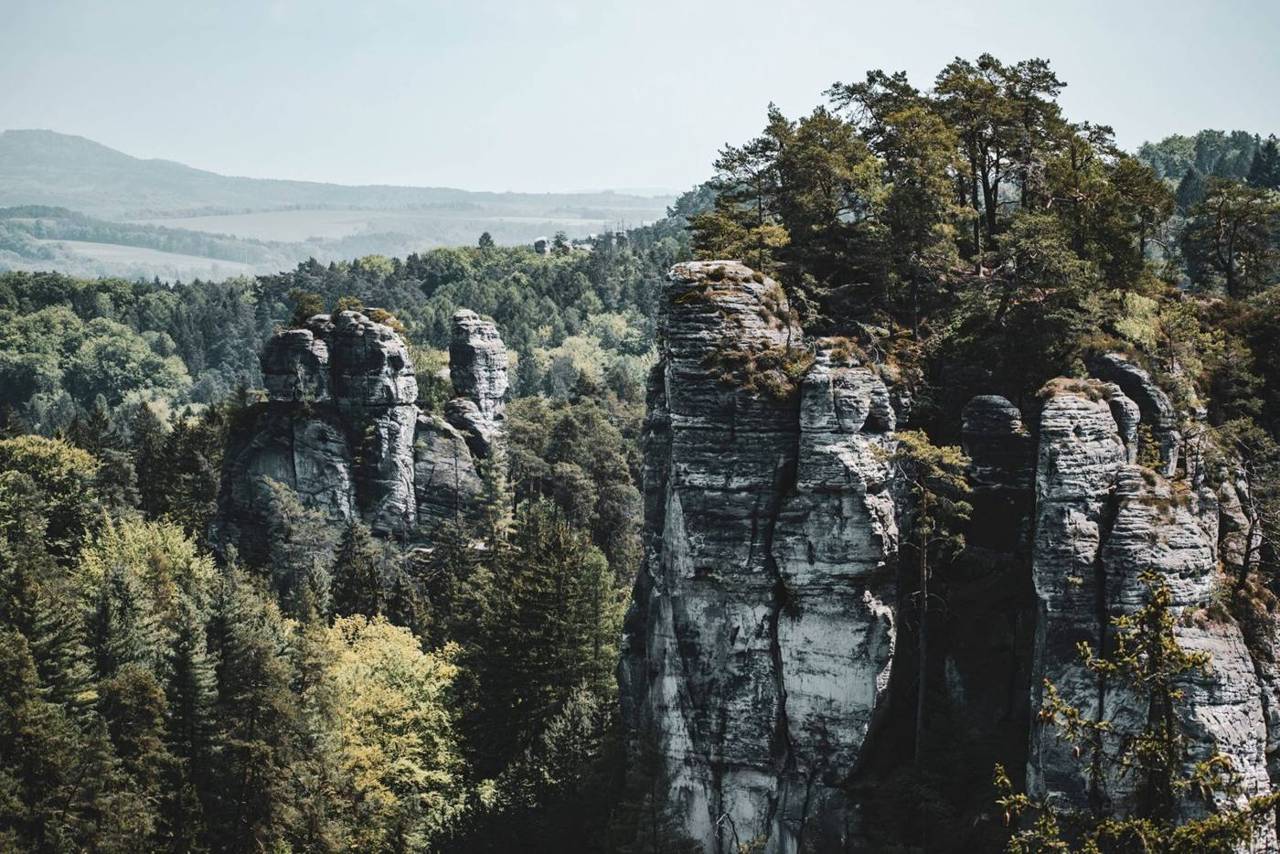
The rock towns of Prachov, the ruins of Trosky Castle on two volcanic towers and Hrubá Skála Castle, an hour from Prague.
 4 daysEasy
Brno and Olomouc
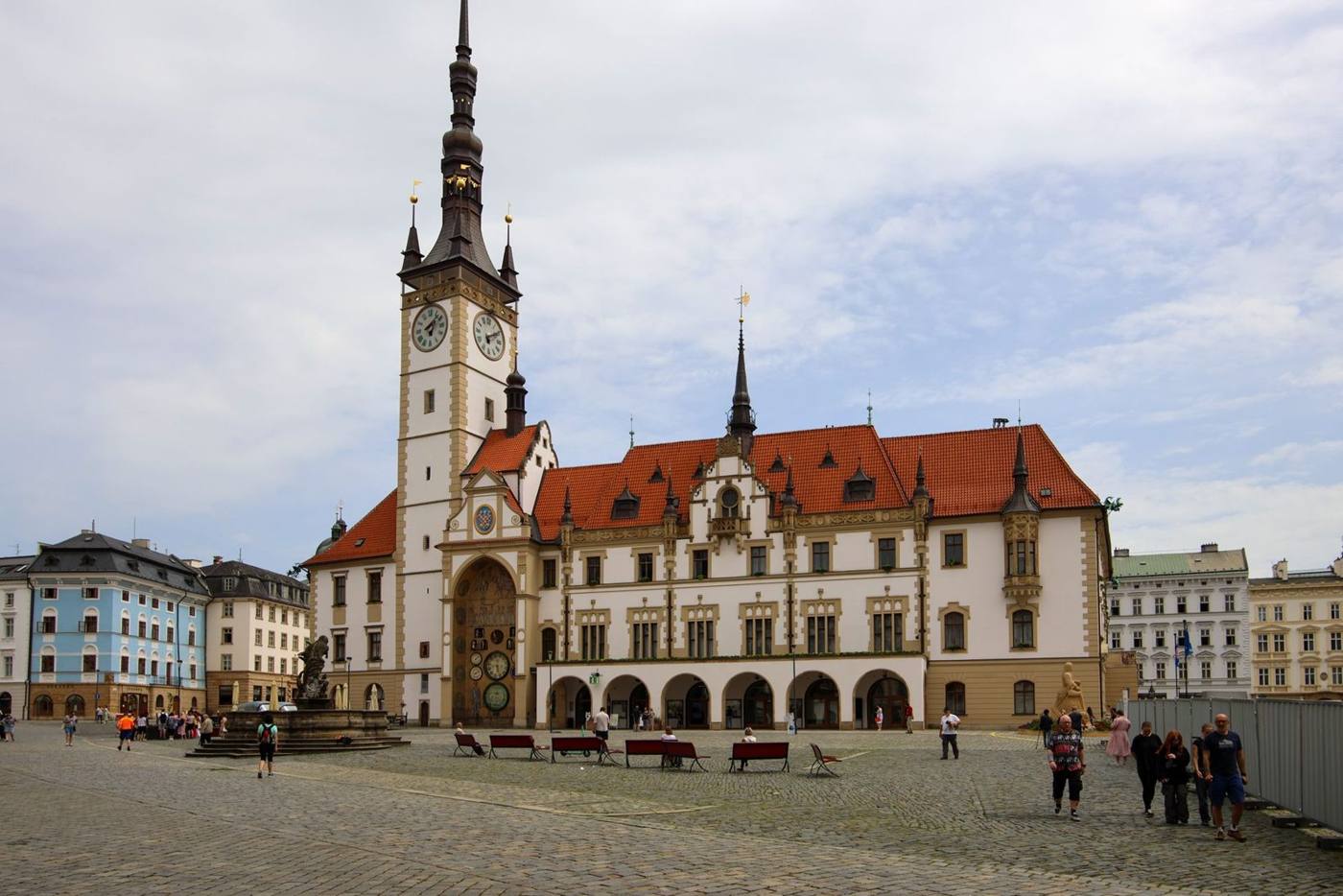
The cities of Moravia: Brno with Villa Tugendhat, the St James ossuary and its cafés, Olomouc with the UNESCO Holy Trinity Column and tvarůžky cheese.
 3 daysEasy
Prague at Christmas
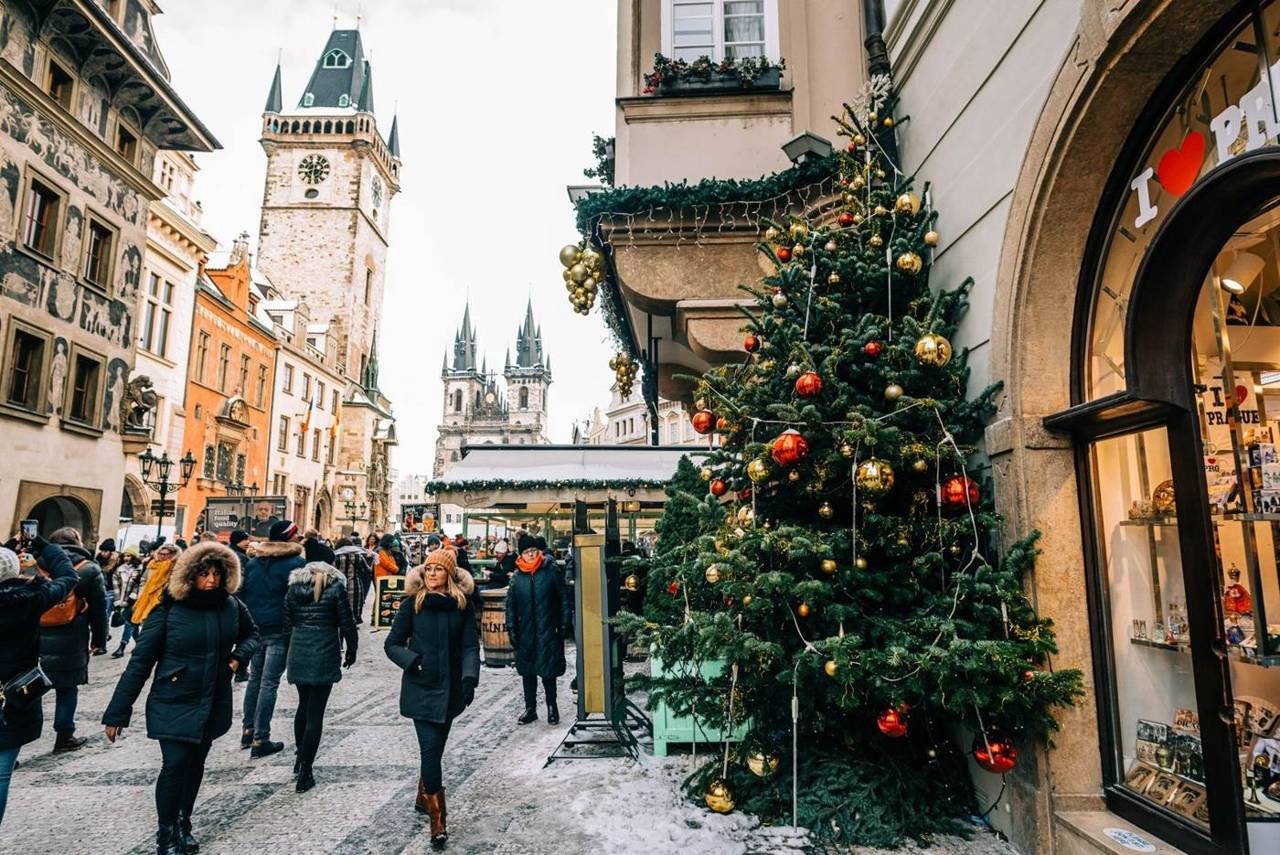
The markets on Old Town Square and Wenceslas Square, Christmas concerts in the churches, mulled wine and trdelník, the city under snow.