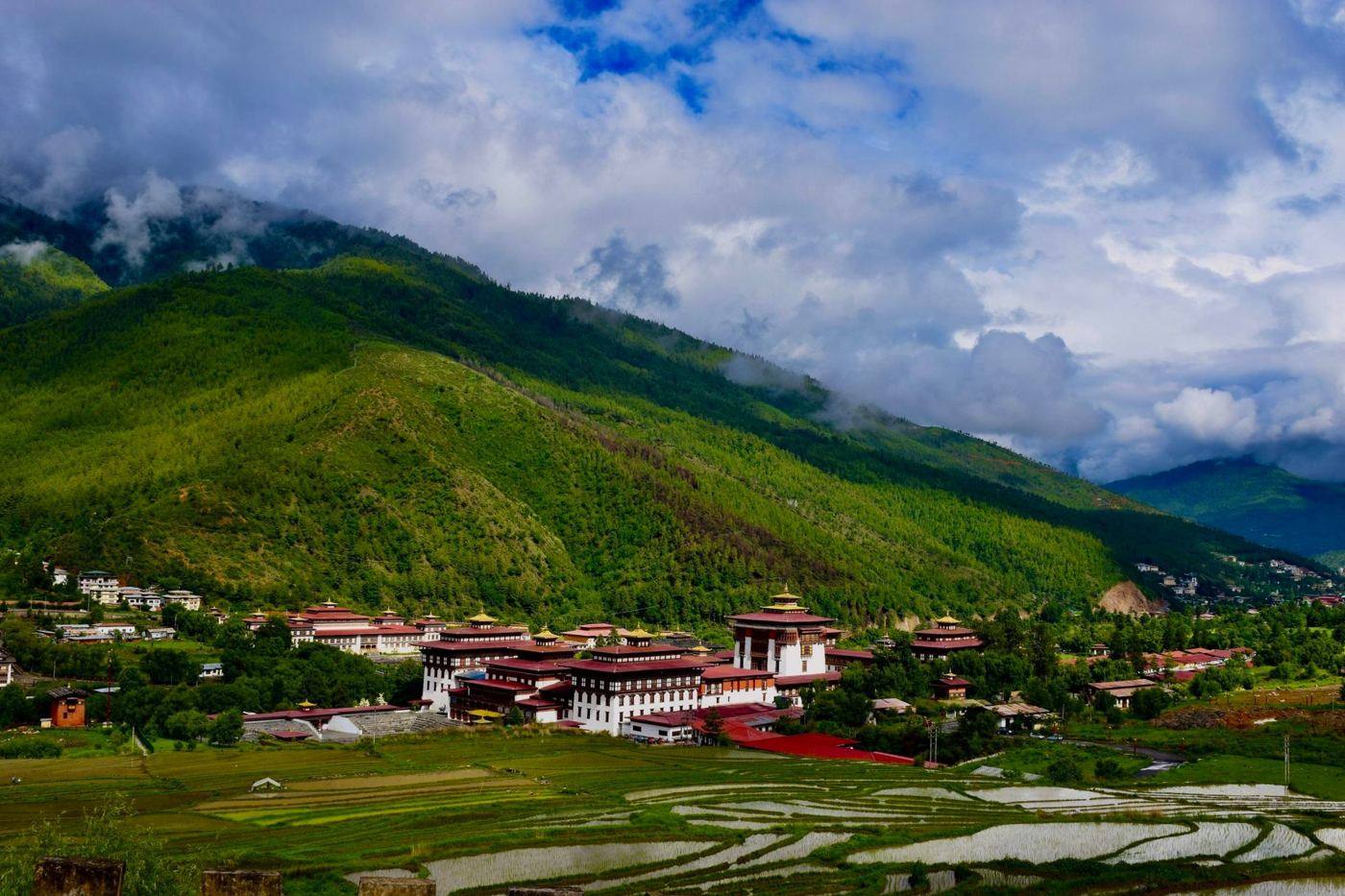
Thimphu and its crafts
The capital without traffic lights: the school of the thirteen arts, the textile museum, the traditional paper factory, the Buddha Dordenma and the weekend market.
- Thimphu
- Buddha Dordenma
- Tashichho Dzong
Day by day
- Day 1
The school of thirteen arts and the textile museum
This three day trip is devoted to Thimphu, the capital of Bhutan, a mountain city at more than 2,000 metres in the valley of the Wang Chhu river, famous for having no traffic lights. It is the best place to understand the country before heading to the valleys: traditional arts, textiles, handmade paper, the great Buddha on the hill and the dzong that houses the government.
Before you go: for Bhutan you need a passport valid for at least six months after you leave the country and a visa, applied for in advance online on the official immigration portal; it costs 40 dollars, non refundable, and is stamped on arrival. For every night you pay the Sustainable Development Fee, the SDF: 100 dollars a night for an adult, 50 for children aged 6 to 11, while children under 6 do not pay; the government has confirmed this rate until 31 December 2029. You must be accompanied at all times by a licensed guide, but you do not have to book through a tour operator: you can arrange certified hotels, a guide and a car yourself. Insurance is strongly recommended. Other nationalities should check their own rules.
In the morning visit the national institute of the thirteen arts, Zorig Chusum: watch students painting thangka, carving wood, embroidering and modelling statues. Check prices and times: it is closed at weekends and during holidays.
In the afternoon go to the textile museum, where you see the kira and gho, the national dress, and weavers at their looms. Check prices and times.
Practical tip: plan the trip from Wednesday to Friday or from Thursday to Saturday. That way you see the school open and the weekend market.
- Day 2
Handmade paper, Buddha Dordenma and the dzong in the evening
In the morning visit the traditional paper factory, where deh-sho, Bhutanese paper, is made from the bark of a mountain shrub. Watch every stage: the bark boiled and beaten, the pulp spread in water over a frame, the sheets laid out to dry. You can try making a sheet yourself and buy paper, notebooks and cards.
Then drive up to Buddha Dordenma, an enormous golden statue of the seated Buddha that dominates the valley from the top of a hill south of the city. It is one of the largest seated Buddha statues in the world and inside it there are thousands of small statues. From the terrace you see the whole of Thimphu. Check prices and times.
In the afternoon stop at the Memorial Chorten, the large white stupa in the centre, where elderly people walk around all day clockwise, turning the prayer wheels. Join them for a circuit, always clockwise.
Towards evening visit Tashichho Dzong, the great fortress monastery on the bank of the river, which houses the King's office, the government and, in summer, the central body of monks. Tourists can go in only at certain times, usually after offices close: your guide will know the day's opening time. At sunset there is the flag lowering ceremony.
Practical tip: in dzongs you need long sleeves, trousers or long skirts and no hat. Your guide will wear a ceremonial scarf.
- Day 3
The weekend market and departure
On the last morning go to the farmers' market on the bank of the Wang Chhu, usually open from Friday to Sunday. On the ground floor there are vegetables, dried chillies hanging in great bunches, red rice, dried yak cheese, mushrooms and fruit from the valleys. Upstairs they sell spices, incense and household goods.
Cross the covered wooden bridge over the river to reach the crafts market, with masks, prayer wheels, textiles and jewellery. Bargain politely and ask whether an item was made in Bhutan.
If you have time before leaving, try ema datshi, the national dish, chillies cooked in cheese, very hot, with red rice. Ask for a milder version if you are not used to it.
Then your guide takes you to Paro airport, about an hour's drive, or to your next stop.
Trip summary: in three days you have seen the thirteen traditional arts at the school in Thimphu, the national textiles in the museum, the handmade paper factory, Buddha Dordenma on the hill, the Memorial Chorten, Tashichho Dzong in the evening and the weekend market. It is a good start before going on to Paro and Punakha.
When to go: Thimphu can be visited all year round; the best months are from March to May and from September to November, with clear skies and pleasant temperatures. In winter the days are sunny but the nights very cold.
Practical tip: keep some ngultrum in cash for the market. Many sellers do not accept cards.
A good start to understanding the country before heading to the valleys. The dzong can only be visited at certain hours. It pairs with Paro and Punakha.
Before you go
- Documents and visa
- Passport valid for at least six months after you leave the country and a visa applied for in advance online on the official immigration portal (40 dollars, non refundable), stamped on arrival. Sustainable Development Fee (SDF): 100 dollars a night per adult, 50 for children aged 6 to 11, nothing under 6, confirmed until 31 December 2029. A licensed guide is compulsory for the whole trip; booking through a tour operator is not.
- Health and vaccines
- No compulsory vaccinations if you arrive from the UK. Watch out for altitude on passes above 3,000 metres: climb slowly and drink plenty. Drink bottled or boiled water. Insurance is no longer compulsory but is strongly recommended, covering medical costs and evacuation. Emergencies: ambulance 112, police 113, fire 110.
- Money and payments
- Ngultrum, equal in value to the Indian rupee, which is accepted almost everywhere. Cards work in hotels and some city shops; elsewhere you need cash. Bring dollars or euros to change.
- Power sockets
- Types D, F and G, 230 volts: British plugs often fit, but bring a universal adapter.
- Time zone
- UTC+6 all year, six hours ahead of the UK in winter, five in summer.
- Safety
- Bhutan is a safe country with low crime, and the UK does not advise against any area. The main risk is the mountain roads, narrow and slow, with landslides in the monsoon: avoid travelling at night. Guides are compulsory for visiting places of interest. Official advice: GOV.UK.
Information checked in November 2026 for Italian and EU citizens. Rules change: always check before you travel.
Variations
Shorter version: two days, with the school of arts, Buddha Dordenma and the dzong in the evening.
Longer version: add Paro and Taktsang, then the Dochu La pass and the Punakha valley.
Frequently asked questions
Can I explore Thimphu on my own?
No: even in the city you must be accompanied by a licensed guide. The guide also arranges the times for the dzong and the museums.
When is the market open?
Usually from Friday to Sunday. Plan the trip so that your last day falls at the weekend.
How should I dress in temples and dzongs?
Long sleeves, trousers or long skirts, no hat and no shorts. Take off your shoes where indicated.
Indicative itinerary written by World Atlas. Before booking, check timetables, seasonal openings, documents and safety.
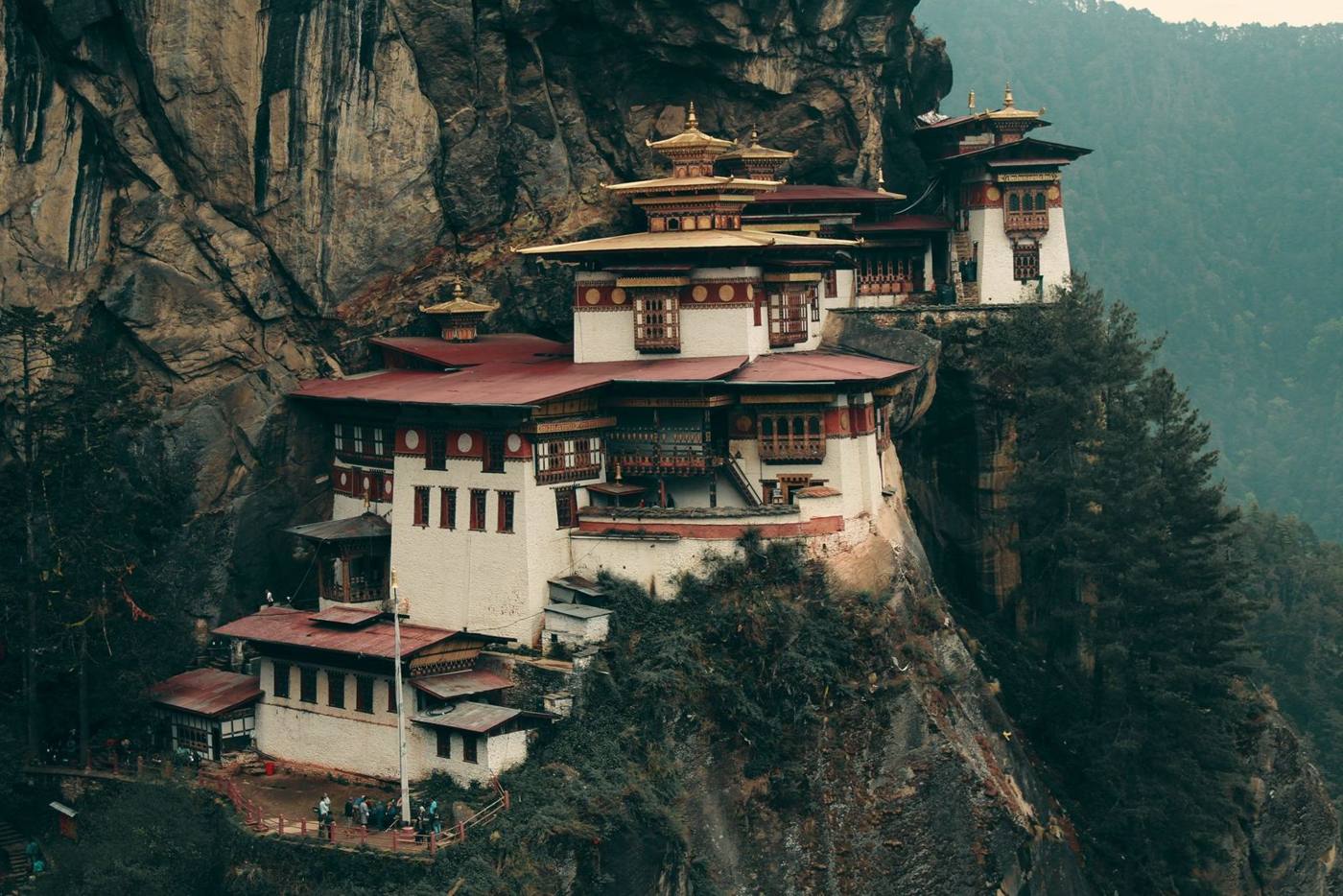 7 daysModerate
Paro, Thimphu and Punakha
Punakha Dzong at the meeting of two rivers, the Dochula pass with its 108 chortens, Thimphu and the hike to Tiger's Nest monastery.
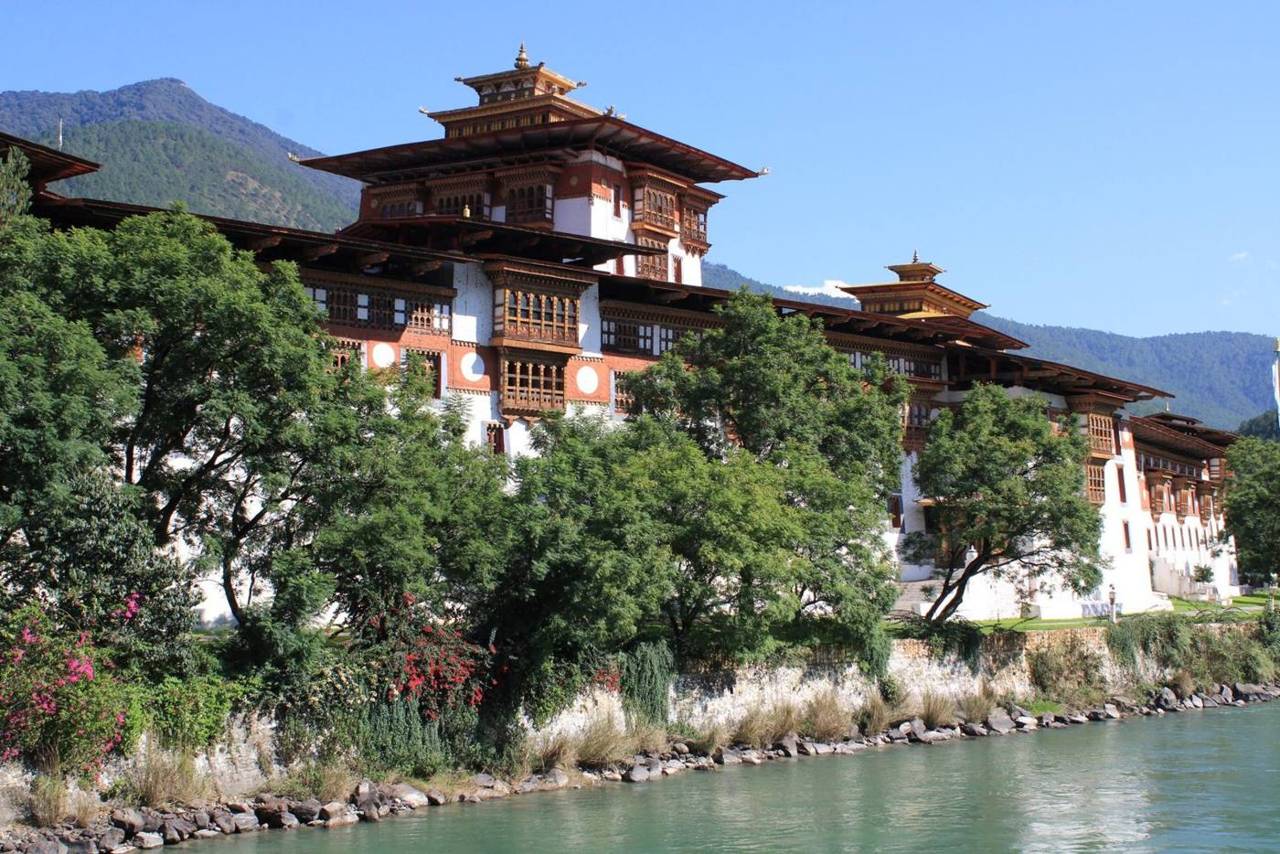 9 daysModerate
The Bumthang valley
Central Bhutan: the Phobjikha valley with its black-necked cranes, Trongsa, the ancient temples of Bumthang and its tsechu festivals.
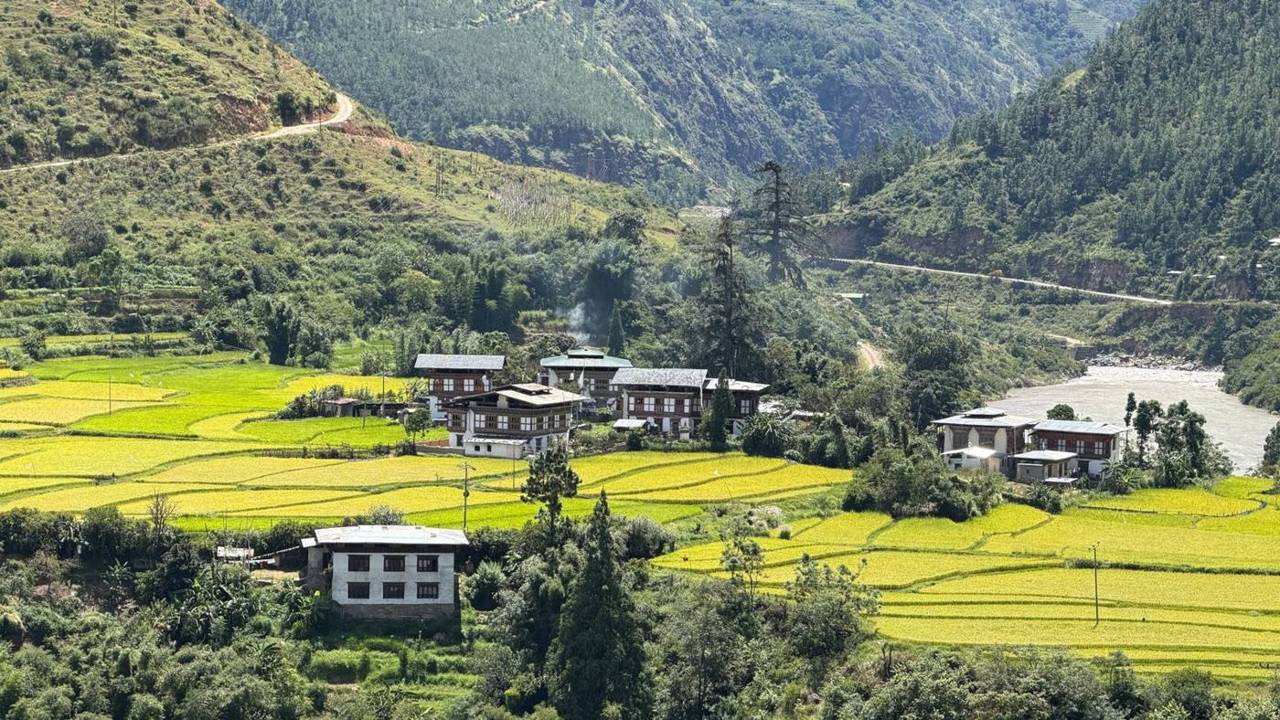 8 daysChallenging
The Druk Path trek
The classic trek from Paro to Thimphu past high lakes, rhododendron forests and Himalayan views.