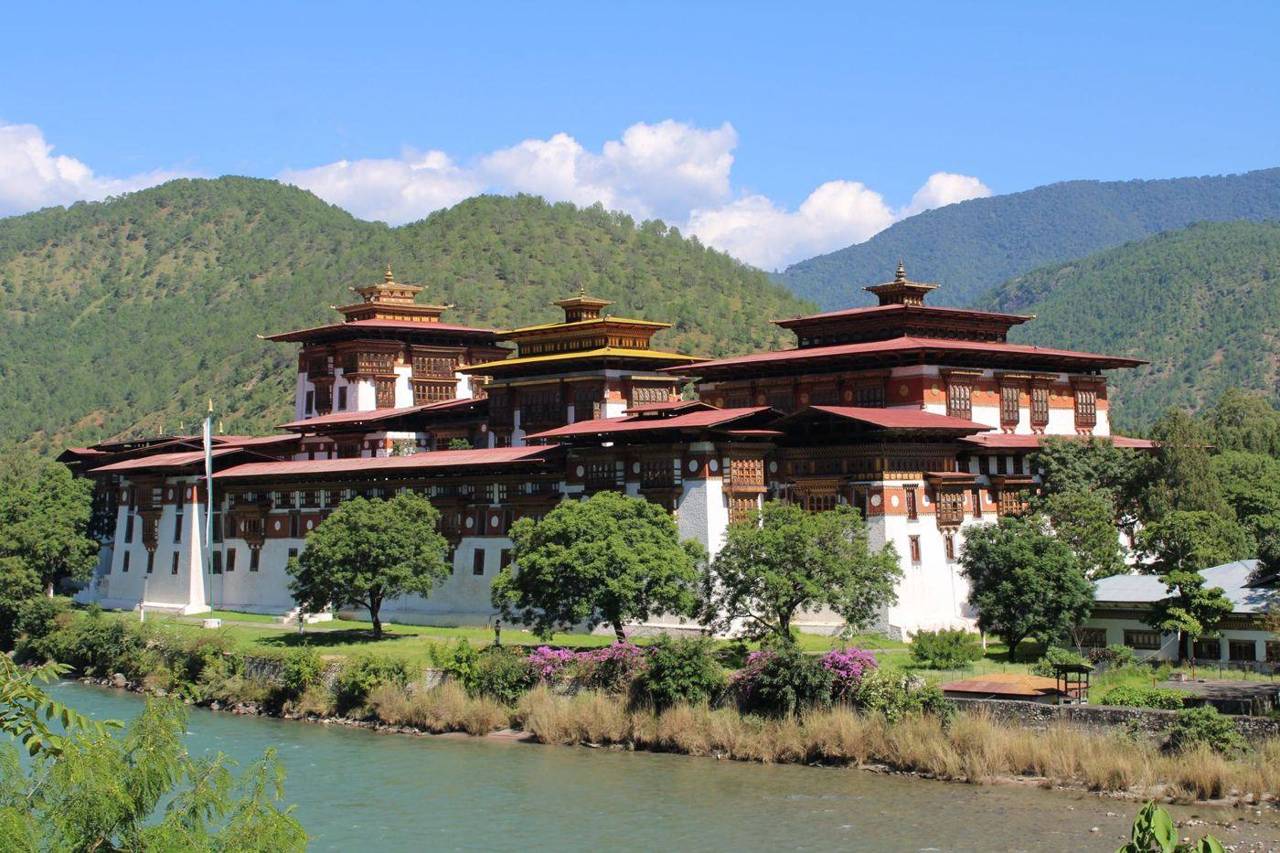
Bhutan in winter
Clear skies and few tourists: the black-necked cranes in Phobjikha valley, mild Punakha among orange trees and the Trongsa or Punakha festival depending on the year.
- Paro
- Punakha
- Phobjikha
- Trongsa
Day by day
- Day 1
Arrival in Paro
This six day trip shows Bhutan in winter, with clear skies, sharp mountains and few tourists: Paro, the mild Punakha valley among rice fields and orange trees, the glacial valley of Phobjikha where black-necked cranes spend the winter and, depending on the year, one of the religious festivals of Trongsa or Punakha.
Before you go: for Bhutan you need a passport valid for at least six months after you leave the country and a visa, applied for in advance online on the official immigration portal; it costs 40 dollars, non refundable, and is stamped on arrival. For every night you pay the Sustainable Development Fee, the SDF: 100 dollars a night for an adult, 50 for children aged 6 to 11, while children under 6 do not pay; the government has confirmed this rate until 31 December 2029. You must be accompanied at all times by a licensed guide, but you do not have to book through a tour operator: you can arrange certified hotels, a guide and a car yourself. Insurance is not compulsory, but it is strongly recommended. Other nationalities should check their own rules.
The landing at Paro is spectacular: the plane descends between forested mountains into a narrow valley. Your guide will be waiting at the airport.
In the afternoon visit Rinpung Dzong, the fortress monastery above the river, and cross the covered wooden bridge. Then stroll along the main street of Paro.
Sleep in Paro, one night.
Practical tip: in winter the evenings are cold and hotels are not always well heated. Bring a down jacket, a woolly hat and wool socks.
- Day 2
Dochu La pass and the Punakha valley
Today you cross the country heading east. The road passes through Thimphu and then climbs to Dochu La, a pass at about 3,100 metres with 108 small white chorten built in memory of fallen soldiers. On clear winter mornings, the sharpest of the year, you can see a long line of snow covered Himalayan peaks from here. Stop for a hot tea and a walk among the prayer flags and, if there is time, go into the small temple on the pass, decorated with recent paintings that tell the history of the country.
Then the road winds down through many bends into the Punakha valley, much lower and warmer. In a few hours you go from snow to rice fields, cactus and orange trees, which in winter are heavy with fruit. Along the road many families sell oranges in bags.
In the afternoon walk through the rice fields to Chimi Lhakhang, a small temple on a hill linked to Drukpa Kunley, the eccentric fifteenth century saint much loved by Bhutanese people. Couples come here to ask for a blessing to have children. In the nearby village the houses are decorated with very explicit symbolic paintings: your guide will explain their meaning.
Sleep in Punakha, two nights.
Practical tip: the Dochu La road can be icy in the morning. Let the driver decide when to leave and do not be in a hurry.
- Day 3
Punakha Dzong and the festival
In the morning visit Punakha Dzong, the most beautiful fortress monastery in Bhutan, built in the seventeenth century where two rivers meet, the Pho Chhu and the Mo Chhu, the father river and the mother river. It was the capital of the country until the 1950s and in winter it houses the central body of monks, who come down here from Thimphu for the milder climate. Cross the wooden bridge, climb the steep stairs and look at the courtyards, the towers and the temple paintings. Check prices and times.
If your trip coincides with the Punakha festival, usually held towards the end of winter according to the lunar calendar, you will see the masked dances of the monks in the courtyard of the dzong, the music of horns and drums and families in festive clothes. Ask your guide for the dates of the year: they change every time.
In the afternoon take a walk of about an hour through the fields and up a path to the Khamsum Yulley Namgyal chorten, built in recent times on a hill above the river. From the top you see the valley and the Mo Chhu river flowing between the rice fields.
On the way back you can walk across the long suspension bridge near the dzong, covered in prayer flags.
Practical tip: at festivals people wear their best clothes. Dress with care, sit where your guide tells you and never point your feet towards the altar.
- Day 4
To Phobjikha and the black-necked cranes
Today the road climbs again, towards the centre of the country. You pass Wangdue Phodrang and climb through forests of oak and rhododendron; before the Pele La pass the road to Phobjikha leaves the main road and climbs further through woods of pine and dwarf bamboo.
Suddenly the Phobjikha valley opens up: wide, flat, at about 3,000 metres, with meadows, marshes and small wooden villages. It is a glacial valley and the most important place in Bhutan for black-necked cranes, which arrive from Tibet at the end of October and stay until February. Bhutanese people consider them sacred, and tradition says that when they arrive they circle three times around Gangtey monastery before landing.
In the afternoon visit the crane visitor centre, with a small museum and telescopes trained on the marsh, and watch the cranes walking and feeding in the grass. Keep your distance and do not go into the wetlands.
At sunset climb to Gangtey monastery, on the hill above the valley, one of the most important of the Nyingma school in the country, with a small community of monks.
Sleep in Phobjikha, two nights.
Practical tip: in Phobjikha the evenings are very cold and there are sometimes power cuts. Bring a torch and a hot water bottle.
- Day 5
The Gangtey trail and, depending on the year, Trongsa
Early in the morning, with frost on the meadows, go out to see the cranes: at dawn they rise from the marsh where they spent the night and fly towards the fields, with a long, high call. It is the most beautiful moment of the day.
Then walk the Gangtey nature trail, an easy walk of about two hours that starts near the monastery, goes down through pine woods and meadows and crosses the valley to a small village. The trail passes close to the cranes' fields, with wide views over the whole valley.
If in your year the Trongsa festival falls on these days, usually in winter according to the lunar calendar, leave instead in the morning for Trongsa, a few hours' drive to the east. Trongsa Dzong, a huge fortress built on a ridge above a deep gorge, is the ancestral home of the royal family. In the courtyard you will see the masked dances, the monks and the village families. In the evening return to Phobjikha.
Otherwise, in the afternoon visit a farmhouse in the valley. Many families grow potatoes, the main crop of Phobjikha, and will offer you butter tea or a plate of red rice with chillies and cheese.
Practical tip: to see the cranes at dawn, bring binoculars and dress in layers. Before sunrise it is many degrees below zero.
- Day 6
Back to Paro
This is the day of the long return. From Phobjikha to Paro it takes many hours by road, with the Dochu La pass and Thimphu along the way. Leave early and stop for lunch in Thimphu or in a village along the route.
If you reach Paro in the afternoon, stroll around the town or visit Kyichu Lhakhang, one of the oldest temples in Bhutan, which according to tradition dates back to the seventh century. Around the temple there is a small garden and prayer wheels, and the winter sunset light is soft and golden.
Trip summary: in six days you have seen Paro and Rinpung Dzong, the snowy peaks from Dochu La, the mild Punakha valley with its dzong where the rivers meet, Chimi Lhakhang among the rice fields, the glacial valley of Phobjikha with the black-necked cranes and Gangtey monastery, and perhaps one of the masked festivals of Punakha or Trongsa. It is the best season to see the mountains clearly.
When to go: from December to February, with clear skies and few tourists. The cranes are in Phobjikha from the end of October to February. It is cold in the evening and the passes can have snow: always allow extra time for the road.
If your flight is tomorrow, pack this evening: flights from Paro almost always leave in the morning, when the weather is more stable.
Practical tip: arrive at Paro airport well in advance. It is small, but checks and formalities take time.
The best time for crisp mountain views. Evenings are cold and hotels are not always well heated. The cranes are present from late October to February.
Before you go
- Documents and visa
- Passport valid for at least six months after you leave the country and a visa applied for in advance online on the official immigration portal (40 dollars, non refundable), stamped on arrival. Sustainable Development Fee (SDF): 100 dollars a night per adult, 50 for children aged 6 to 11, nothing under 6, confirmed until 31 December 2029. A licensed guide is compulsory for the whole trip; booking through a tour operator is not.
- Health and vaccines
- No compulsory vaccinations if you arrive from the UK. Watch out for altitude on passes above 3,000 metres: climb slowly and drink plenty. Drink bottled or boiled water. Insurance is no longer compulsory but is strongly recommended, covering medical costs and evacuation. Emergencies: ambulance 112, police 113, fire 110.
- Money and payments
- Ngultrum, equal in value to the Indian rupee, which is accepted almost everywhere. Cards work in hotels and some city shops; elsewhere you need cash. Bring dollars or euros to change.
- Power sockets
- Types D, F and G, 230 volts: British plugs often fit, but bring a universal adapter.
- Time zone
- UTC+6 all year, six hours ahead of the UK in winter, five in summer.
- Safety
- Bhutan is a safe country with low crime, and the UK does not advise against any area. The main risk is the mountain roads, narrow and slow, with landslides in the monsoon: avoid travelling at night. Guides are compulsory for visiting places of interest. Official advice: GOV.UK.
Information checked in November 2026 for Italian and EU citizens. Rules change: always check before you travel.
Variations
Shorter version: four days, with Paro, Dochu La and Punakha, without Phobjikha.
Longer version: add Thimphu on the way out and a day in Paro to climb to Taktsang, the Tiger's Nest.
Frequently asked questions
When are the cranes in Phobjikha?
From the end of October to February. They are best seen at dawn and dusk, when they move between the marsh and the fields.
When are the Punakha and Trongsa festivals?
They follow the lunar calendar and change every year: the Trongsa festival usually falls in winter, the Punakha festival towards the end of winter. Ask your guide for the dates before booking.
Is it very cold?
By day the sun is warm, especially in Punakha. In the evening and at night, in Paro and Phobjikha, the temperature drops below zero: you need a down jacket, a hat and gloves.
Indicative itinerary written by World Atlas. Before booking, check timetables, seasonal openings, documents and safety.
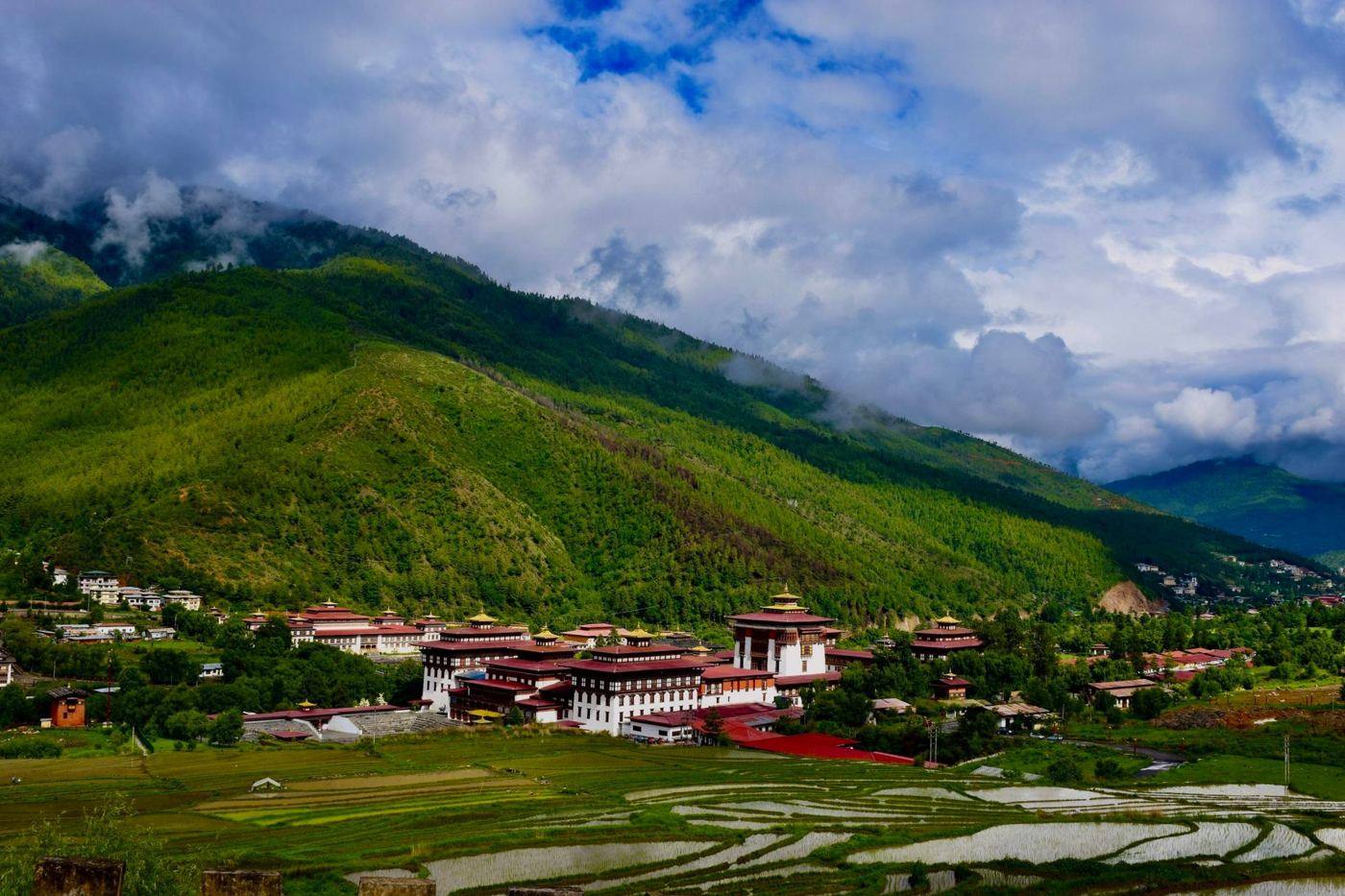 3 daysEasy
Thimphu and its crafts
The capital without traffic lights: the school of the thirteen arts, the textile museum, the traditional paper factory, the Buddha Dordenma and the weekend market.
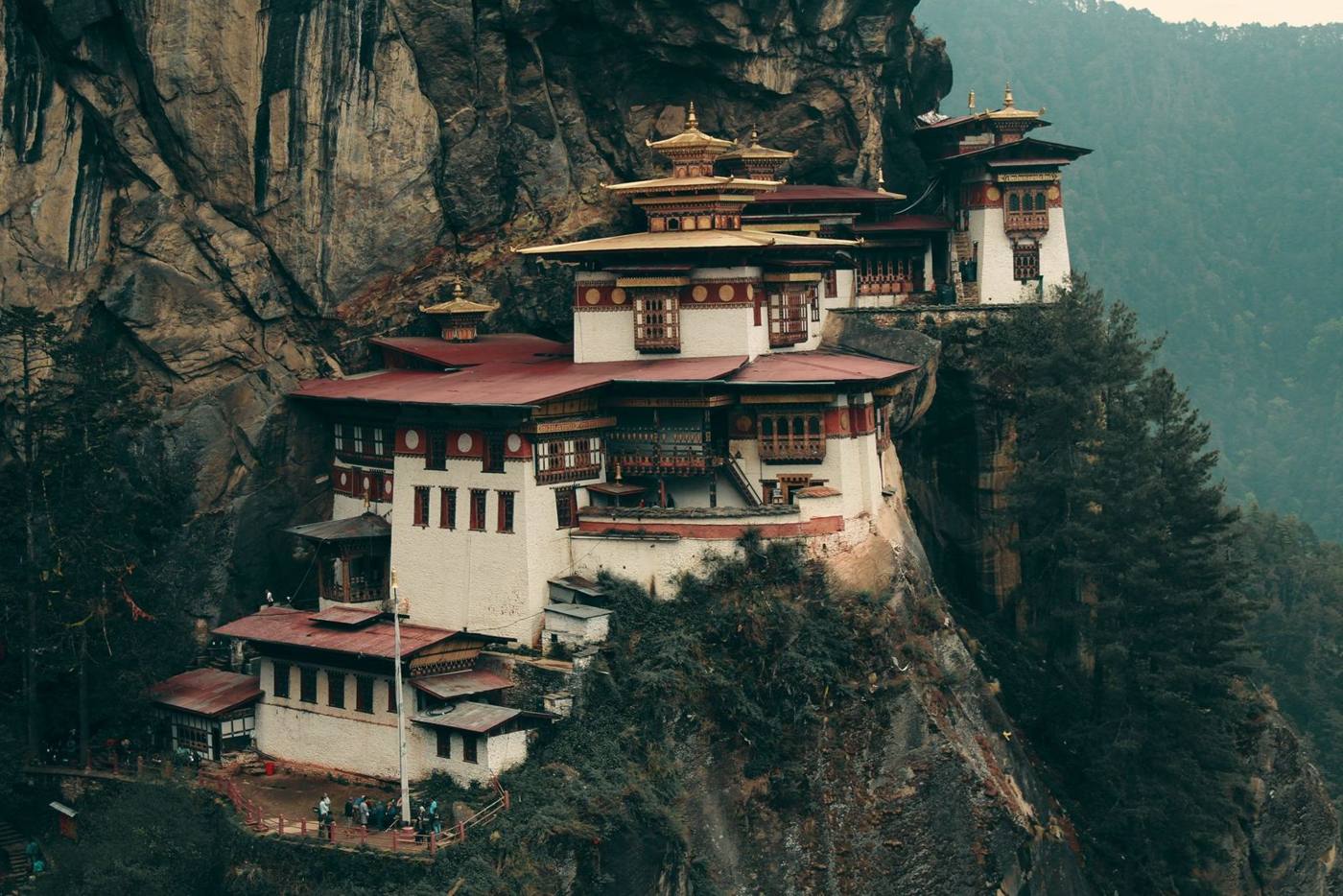 7 daysModerate
Paro, Thimphu and Punakha
Punakha Dzong at the meeting of two rivers, the Dochula pass with its 108 chortens, Thimphu and the hike to Tiger's Nest monastery.
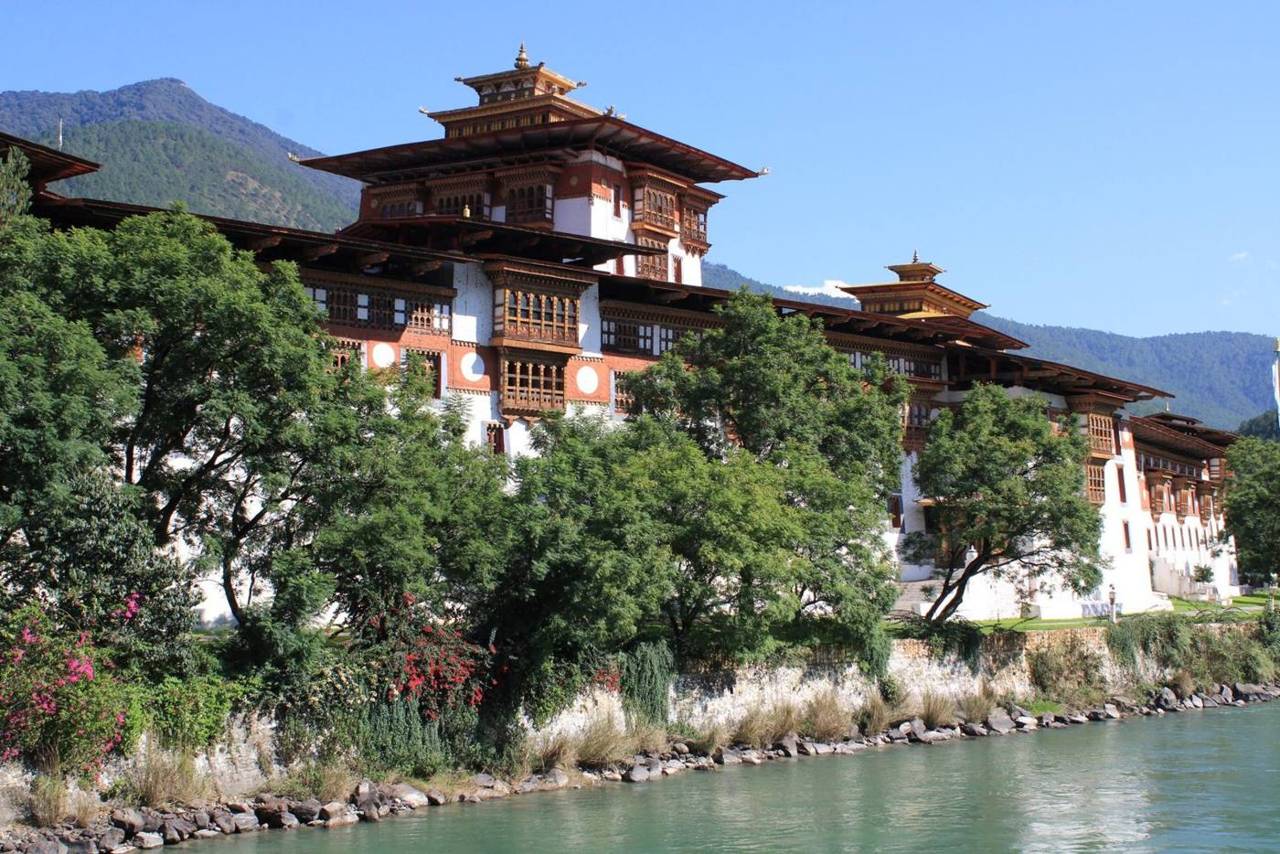 9 daysModerate
The Bumthang valley
Central Bhutan: the Phobjikha valley with its black-necked cranes, Trongsa, the ancient temples of Bumthang and its tsechu festivals.