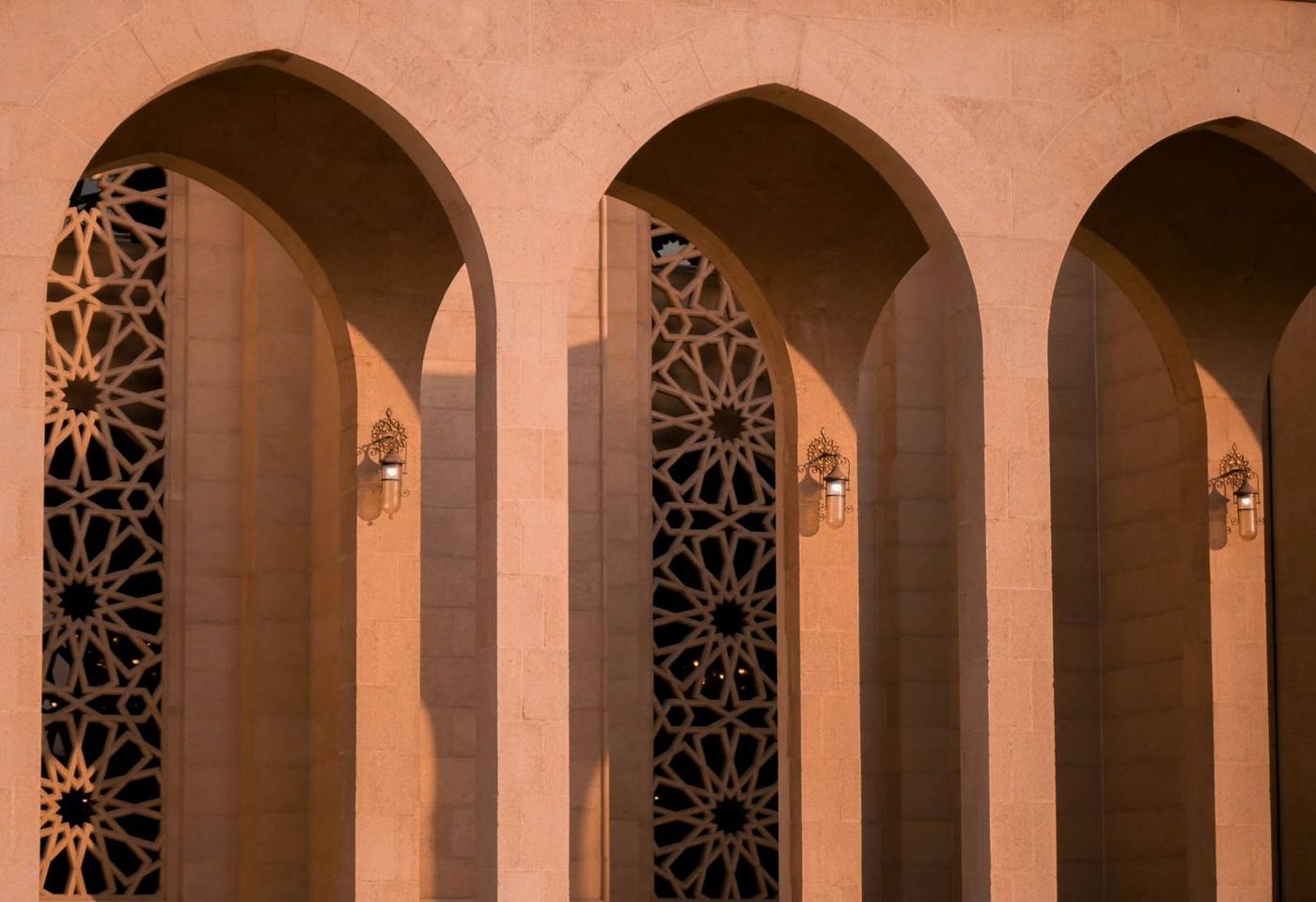
Manama and the Pearling Path
UNESCO-listed Bahrain Fort, the Pearling Path in Muharraq, Manama souk, Al Fateh Mosque and the Tree of Life in the desert.
- Manama
- Qal'at al-Bahrain
- Muharraq
- Al Fateh
- Tree of Life
Day by day
- Day 1
The souk, Bab al-Bahrain and the national museum
This three-day trip introduces you to Bahrain, a small kingdom of islands in the Gulf with a very ancient history, that of Dilmun, a Bronze Age trading civilisation. You visit the Manama souk, the national museum, the Pearling Path in Muharraq, the fort of Qal'at al-Bahrain, the great Al Fateh Mosque and the Tree of Life in the desert.
Before you go: Italian citizens enter Bahrain with a passport valid for at least six months from the date of arrival; an identity card is not enough. You need a visa, applied for online on the official Bahrain government portal; check on the portal whether it is also available on arrival for your nationality. Other nationalities should check their own rules.
Some areas on this trip are close to borders or places where the situation changes often: check your government's travel advice before booking and again before you leave.
In the morning start at Bab al-Bahrain, the white arched gateway built in the middle of the twentieth century, which once faced the sea. Behind it opens the Manama souk, with lanes full of shops selling fabrics, spices, perfumes, gold and sweets, such as halwa, a sweet jelly flavoured with saffron and cardamom.
In the afternoon visit the Bahrain National Museum, on the waterfront. The galleries tell the story of Dilmun, the island's thousands of burial mounds, pearl diving and traditional crafts. Check prices and times.
Sleep in Manama, for two nights.
Practical tip: always carry your passport: in Bahrain photo ID is compulsory and the police may ask for it.
- Day 2
Muharraq, the Pearling Path and Qal'at al-Bahrain at sunset
Today you see Bahrain's two UNESCO World Heritage Sites.
In the morning cross the bridge to Muharraq, the old capital and the most authentic part of the country. Follow the Pearling Path, a route of a few kilometres among the houses of pearl merchants, warehouses, mosques and divers' homes, telling the story of the economy on which Bahrain lived for centuries. The route starts near Bu Maher Fort, on the sea.
Along the way go into Siyadi House, the home of a merchant family with stucco, coloured glass and a small mosque, and into the house of Sheikh Isa bin Ali, with its wind towers. Check prices and times.
At midday have lunch in the lanes of Muharraq: try fish machboos and bread baked in the neighbourhood ovens.
In the afternoon go to Qal'at al-Bahrain, on the north coast. The fort you see was built by the Portuguese in the sixteenth century, but it stands on an artificial mound formed by four thousand years of towns built one on top of another, from the time of Dilmun. The site's small museum shows the excavations. Check prices and times.
Stay until sunset, when the walls turn golden and the lights of Manama come on.
Practical tip: in Muharraq dress modestly and ask permission before photographing people in the residential lanes.
- Day 3
Al Fateh Mosque, the Tree of Life and departure
On the last day you see a great mosque and a curiosity in the desert.
In the morning visit Al Fateh Mosque, one of the largest in the country, with a large dome and two minarets. Non-Muslim visitors can enter outside prayer times, on a guided tour that explains prayer and architecture. Long clothes are required; women cover their hair, and suitable clothing is often available at the entrance. Check times and rules.
Late in the morning drive south, into the desert near Jebel Dukhan, the highest point of the island. Here stands the Tree of Life, a prosopis tree about four hundred years old growing alone, green in the middle of the sand, and nobody knows for certain where it finds water. It is a curiosity, not a marvel: the visit is short, but the empty landscape around it is unusual.
Along the road you see oil wells and installations: do not photograph them.
In the afternoon head back to the airport, which is in Muharraq.
In these three days you have seen a small country with a very long history: Dilmun, pearls, forts and mosques. Muharraq is the most authentic part; the Tree of Life is just a stop.
When to go: from November to March, with warm, pleasant days.
Practical tip: in Bahrain demonstrations can start suddenly, especially in some villages: if you see groups of people in the street, move away and follow local news.
A small kingdom with an ancient, little-known history, that of Dilmun. Muharraq is the most authentic part. The Tree of Life is a curiosity, not a wonder.
Before you go
- Documents and visa
- Passport valid for at least six months from the date of arrival. You need a visa, applied for online on the official Bahrain government portal before travelling, or obtained on arrival for eligible nationalities: check on the official portal which procedure applies to you. You may be asked for a return or onward ticket.
- Health and vaccines
- No compulsory vaccinations, except a yellow fever certificate if you arrive from a risk country. Healthcare is good but expensive: get insurance with medical cover. From May to September the heat is extreme: drink often. Emergencies: 999.
- Money and payments
- Bahraini dinar, pegged to the US dollar. Cards work almost everywhere; cash is useful in the Manama souk and for taxis without card readers.
- Power sockets
- Type G, 230 volts: the same sockets as in the UK.
- Time zone
- UTC+3 all year, three hours ahead of the UK in winter and two in summer.
- Safety
- The situation in the Gulf region can change quickly, including sudden airspace closures: check the advice and the status of your flights before leaving. Always carry your passport, as photo ID is compulsory. Alcohol: legal in licensed venues, but being drunk in public is an offence that can bring fines, prison or deportation. Clothing: dress modestly, especially at religious sites; women cover shoulders and knees; nudity is banned, including topless sunbathing. Ramadan: during the day do not eat, drink, smoke or chew gum in public, even in your car. Photos: it is illegal to photograph or film military or security sites and operations, or to share images of attacks or incidents. Public displays of affection can cause offence. Disrespecting religion is an offence. Zero tolerance for drugs, even traces. Demonstrations can start with little warning: move away from any crowd. Official advice: GOV.UK.
Information checked in November 2026 for Italian and EU citizens. Rules change: always check before you travel.
Variations
In two days you can see the souk, the national museum, Muharraq and Qal'at al-Bahrain.
With two more days add Qatar and Doha with its museums.
Frequently asked questions
Can you drink alcohol in Bahrain?
Yes, in licensed venues; but being drunk in public is an offence and can lead to fines or deportation.
How do you get around?
By taxi or ride-hailing apps: distances are short. For the Tree of Life a car or a taxi for half a day is best.
Do I need a guide for the Pearling Path?
No, the route is signposted; a guide helps you understand the story of the families and the pearl trade.
Indicative itinerary written by World Atlas. Before booking, check timetables, seasonal openings, documents and safety.